renewable energy

How Copper Demand Outlook Is Reshaping Canada’s Clean Energy Infrastructure Investment

Canada stands at the forefront of a remarkable transformation as the global copper demand outlook fundamentally reshapes the nation’s approach to clean energy infrastructure. With renewable energy projects requiring up to four times more copper than traditional fossil fuel installations, this red metal has become the silent catalyst driving unprecedented investment in Canadian clean technology sectors. From wind farms stretching across the Prairies to massive solar installations in Ontario, copper’s critical role in electrical transmission and energy storage is positioning Canada as both a major consumer and supplier in the global clean energy revolution.

Rising Global Copper Consumption Fuels Canadian Mining Renaissance

The copper demand outlook paints a compelling picture for Canada’s mining industry, with global consumption projected to increase by 70% through 2040. Electric vehicles alone require three times more copper than conventional cars, while offshore wind installations demand up to 15 tons of copper per megawatt of capacity. This surge has revitalized Canada’s copper mining sector, with major projects like Teck Resources’ Highland Valley operations expanding production capacity to meet growing international demand.

Canadian copper mines are strategically positioned to capitalize on this trend, benefiting from stable political environments and established infrastructure networks that many competing nations lack. The country’s proven reserves of approximately 8 million tons represent significant untapped potential, particularly as mining companies integrate advanced extraction technologies to access previously uneconomical deposits. This renaissance extends beyond traditional mining regions, with exploration activities intensifying across British Columbia, Ontario, and Quebec.

Clean Energy Infrastructure Drives Unprecedented Copper Requirements

Canada’s ambitious clean energy targets are creating massive domestic copper consumption that directly correlates with the positive copper demand outlook. The federal government’s commitment to achieving net-zero emissions by 2050 necessitates extensive electrical grid modernization, with transmission lines requiring approximately 1.5 tons of copper per kilometer. Major projects like the Atlantic Loop transmission system and British Columbia’s renewable energy expansion are consuming thousands of tons of copper annually.

Energy storage systems represent another significant consumption driver, as battery installations for grid stabilization require substantial copper components for electrical connections and thermal management. Large-scale projects, including Ontario’s battery storage initiatives and Alberta’s renewable energy storage programs, are collectively driving copper demand beyond traditional forecasting models. The integration of smart grid technologies further amplifies these requirements, as advanced metering infrastructure and automated distribution systems rely heavily on copper-based electrical components.

Strategic Mining Investments Respond to Market Signals

The robust copper demand outlook has triggered a wave of strategic investments across Canada’s mining sector, with companies rushing to develop new extraction capabilities and expand existing operations. First Quantum Minerals, Hudbay Minerals, and other major players have announced multi-billion-dollar expansion projects, recognizing that current global production capacity cannot meet projected demand increases.

These investments extend beyond traditional mining operations to include innovative processing technologies and sustainable extraction methods. Companies are implementing advanced flotation techniques and heap leaching processes to extract copper from lower-grade ores, effectively expanding Canada’s accessible copper reserves. Additionally, recycling initiatives are gaining momentum as companies recognize the value in recovering copper from electronic waste and decommissioned infrastructure, creating circular economy opportunities that complement primary mining operations.

Economic Multiplier Effects Transform Regional Development

The positive copper demand outlook is generating substantial economic multiplier effects across Canadian regions, particularly in provinces with significant mining and manufacturing capabilities. Communities in northern Ontario and British Columbia are experiencing renewed economic vitality as mining operations expand and require specialized services, from heavy equipment maintenance to environmental monitoring services.

Manufacturing sectors are also benefiting significantly, as increased copper availability supports domestic production of electrical components, renewable energy equipment, and electric vehicle charging infrastructure. Companies like Magna International are leveraging Canada’s copper supply chains to develop competitive advantages in electric vehicle component manufacturing, while renewable energy equipment manufacturers are establishing facilities near major copper production centers to minimize supply chain costs and delivery times.

The transformation extends to job creation patterns, with high-skilled positions in mining engineering, metallurgy, and environmental science experiencing unprecedented demand. Technical colleges and universities across Canada have responded by expanding programs related to sustainable mining practices and clean energy technologies, creating a skilled workforce pipeline that supports long-term industry growth.

Canada’s clean energy future increasingly depends on how effectively the nation leverages its copper resources and responds to evolving global demand patterns. The convergence of abundant natural resources, technological expertise, and supportive policy frameworks positions Canada to become a dominant force in the global copper market while simultaneously advancing domestic clean energy objectives. As international competition for copper intensifies, Canada’s ability to balance domestic consumption needs with export opportunities will ultimately determine the pace and scale of the country’s clean energy transformation, making the copper demand outlook a critical factor in shaping the nation’s economic and environmental trajectory.
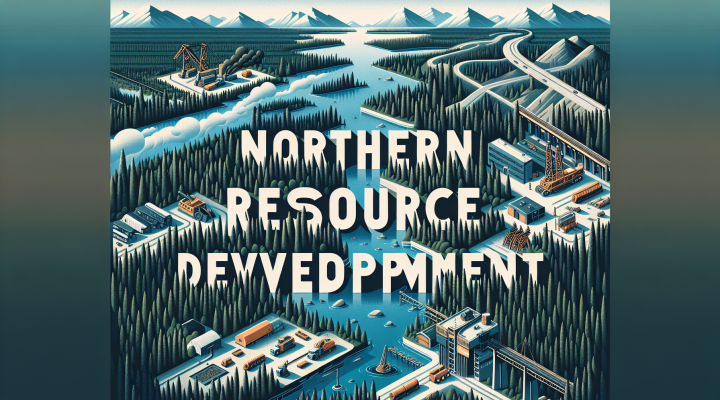

Why Northern Resource Development Is Becoming Canada’s Secret Weapon for Clean Energy Dominance

Canada’s vast northern territories are emerging as the unexpected catalyst for the country’s clean energy transformation. While much of the world focuses on southern industrial centers, a quiet revolution is unfolding across the Canadian Arctic and sub-Arctic regions, where northern resource development is unlocking the raw materials and renewable energy potential that could position Canada as a global clean energy superpower.

The numbers tell a compelling story. Canada’s northern territories contain approximately 60% of the world’s known cobalt reserves, 20% of global nickel deposits, and substantial lithium resources—all critical components for electric vehicle batteries and renewable energy storage systems. Major mining companies have invested over $15 billion in northern projects since 2020, with projections suggesting this figure could double by 2030 as demand for clean energy minerals continues to surge.

What makes northern resource development particularly strategic is the convergence of mineral wealth with renewable energy potential. The same remote regions rich in lithium, rare earth elements, and other critical minerals also possess abundant hydroelectric, wind, and solar resources. This creates unique opportunities for carbon-neutral extraction and processing operations that can feed directly into clean energy supply chains.

Indigenous partnerships have become central to successful northern resource development initiatives. First Nations and Inuit communities are increasingly taking equity stakes in mining and energy projects, bringing traditional ecological knowledge alongside modern sustainable practices. The Kivalliq Energy Corporation in Nunavut, for example, has pioneered community-owned renewable energy projects that power both local needs and resource extraction operations, creating a model for sustainable development that respects Indigenous sovereignty while advancing clean energy goals.

The logistical challenges that once made northern resource development prohibitively expensive are being solved through technological innovation. Advanced extraction techniques require smaller physical footprints, while improvements in remote power generation and digital monitoring systems reduce the need for permanent infrastructure. Drone technology and artificial intelligence are enabling more precise resource mapping and environmental monitoring, ensuring that development proceeds with minimal ecological disruption.

Transportation infrastructure is also evolving to support northern resource development. New shipping routes through the Northwest Passage, made increasingly accessible due to changing ice conditions, offer direct connections between northern mining operations and global markets. The federal government has committed $2.3 billion to northern infrastructure improvements, including ports, roads, and telecommunications networks that will facilitate both resource extraction and renewable energy distribution.

The geopolitical implications are significant. As global competition intensifies for critical minerals essential to clean energy technologies, northern resource development gives Canada strategic autonomy and the ability to supply allied nations with responsibly sourced materials. This is particularly important as countries seek to reduce dependence on supply chains dominated by nations with less stringent environmental and labor standards.

Environmental stewardship remains paramount in northern resource development. New projects must meet rigorous environmental assessments and incorporate carbon neutrality goals from the outset. Several operations are pioneering closed-loop systems that minimize water usage and eliminate tailings ponds, while others are integrating renewable energy sources to achieve net-zero emissions during extraction and processing.

The ripple effects extend far beyond the immediate extraction sites. Northern resource development is driving innovation in cold-climate renewable energy technologies, creating expertise that positions Canadian companies as leaders in similar projects worldwide. The skills and technologies developed in Canada’s harsh northern environments are directly applicable to renewable energy projects in Alaska, Siberia, Scandinavia, and other northern regions globally.

As Canada charts its course toward carbon neutrality, northern resource development represents both the means and the opportunity to lead the global clean energy transition. By responsibly extracting the materials needed for tomorrow’s clean technologies while simultaneously developing the renewable energy capacity to power that extraction, Canada’s northern territories are becoming the foundation upon which the country’s clean energy future is being built.

Why Canada’s Clean Energy Transition Play Is Attracting Billions in Global Investment

Canada has emerged as one of the world’s most compelling destinations for clean energy investment, with international capital flowing into the country at unprecedented rates. The nation’s comprehensive clean energy transition play combines abundant natural resources, forward-thinking policy frameworks, and strategic geographic advantages that position it as a global leader in the renewable energy revolution.

The scale of Canada’s clean energy transformation becomes evident when examining recent investment figures. Over the past two years alone, more than $45 billion in clean energy projects have been announced across the country, spanning everything from massive offshore wind developments to critical mineral mining operations essential for battery production. This surge reflects growing confidence in Canada’s ability to execute on its ambitious climate commitments while generating substantial returns for investors.

What makes Canada’s clean energy transition play particularly attractive is the country’s unique combination of resources and expertise. The nation possesses some of the world’s largest reserves of lithium, cobalt, and rare earth elements – the building blocks of clean energy infrastructure. Simultaneously, Canada’s decades of experience in large-scale resource extraction and project management provide the operational foundation necessary to develop these assets responsibly and efficiently.

Provincial governments across Canada have recognized the economic opportunity inherent in the clean energy shift and are competing to attract investment. Ontario’s recent announcement of a $28 billion electric vehicle and battery manufacturing hub demonstrates how jurisdictions are leveraging their clean energy transition play to secure long-term economic advantages. Quebec has similarly positioned itself as a clean energy powerhouse, offering some of the continent’s lowest electricity rates thanks to its extensive hydroelectric infrastructure.

The federal government’s role in accelerating Canada’s clean energy transition play cannot be understated. Strategic investments through programs like the Canada Growth Fund and the Critical Minerals Strategy have de-risked projects that might otherwise struggle to secure private financing. Tax incentives for clean technology deployment and carbon capture projects have created additional momentum, making Canada increasingly competitive with other jurisdictions vying for clean energy investment.

International partnerships are amplifying Canada’s clean energy ambitions. The recent agreement with Germany to supply clean hydrogen represents a watershed moment, positioning Canada as a key supplier of renewable energy to European markets seeking alternatives to traditional fossil fuel imports. Similar partnerships with Japan and South Korea for critical minerals and clean technology demonstrate how Canada’s clean energy transition play extends far beyond domestic consumption.

The renewable energy sector itself tells a compelling story of rapid growth and technological advancement. Wind capacity has tripled over the past five years, while solar installations have grown exponentially despite Canada’s northern latitude. Energy storage projects are multiplying as battery costs decline and grid integration becomes more sophisticated. These developments create a virtuous cycle where increased clean energy capacity supports electrification efforts across transportation and industrial sectors.

Perhaps most significantly, Canada’s clean energy transition play is generating substantial employment opportunities across skill levels and geographic regions. The Clean Energy Canada research organization estimates that the sector will employ over 800,000 Canadians within the next decade, providing economic diversification for communities traditionally dependent on fossil fuel industries. This human capital development ensures that Canada’s clean energy leadership will be sustainable and deeply rooted in local expertise.

The financial markets have taken notice of these developments, with clean energy stocks on Canadian exchanges significantly outperforming broader market indices. Institutional investors are allocating increasing portions of their portfolios to Canadian clean energy assets, recognizing both the growth potential and the relative stability that comes from investing in a jurisdiction with strong regulatory frameworks and political commitment to the energy transition.

Looking ahead, Canada’s clean energy transition play appears positioned to accelerate further as global demand for clean technologies continues growing and international climate commitments drive policy support. The combination of natural resource advantages, technological capabilities, supportive policies, and growing international partnerships creates a foundation for sustained leadership in the global clean energy economy. For investors, policymakers, and industry participants worldwide, Canada’s approach offers valuable lessons in how nations can successfully navigate the complex transition to a clean energy future while creating significant economic value.

Why Canada’s Tech Revolution Could Reshape Global Copper Markets Forever

Canada stands at the epicenter of a technological transformation that could fundamentally alter global metal markets. As artificial intelligence data centers proliferate across the country and electric vehicle infrastructure expands at breakneck speed, the copper demand outlook has shifted dramatically, positioning Canada as both a major consumer and strategic supplier in an increasingly electrified world.

The numbers tell a compelling story. Canadian copper consumption has surged 34% over the past eighteen months, driven primarily by data center construction and renewable energy projects. Tech giants have announced $47 billion in Canadian data center investments, each facility requiring roughly 3,000 tons of copper for power distribution, cooling systems, and networking infrastructure. This represents a seismic shift from traditional industrial applications toward high-tech, high-value uses that show no signs of slowing.

What makes Canada’s situation particularly intriguing is the convergence of supply and demand dynamics within its borders. The country produces approximately 550,000 tons of copper annually from mines in British Columbia, Ontario, and Quebec, yet domestic consumption now approaches 400,000 tons—a dramatic increase from just 180,000 tons five years ago. This tightening supply-demand balance reflects broader global trends but with uniquely Canadian characteristics.

The electric vehicle revolution has created another powerful demand driver. Canada’s ambitious goal of having all new light-duty vehicle sales be zero-emission by 2035 has triggered massive infrastructure investments. Each EV charging station requires roughly 20 kilograms of copper, and the planned network of 84,000 fast-charging stations represents substantial metal demand. Meanwhile, the vehicles themselves contain four times more copper than traditional internal combustion engines, creating a multiplier effect as adoption accelerates.

Innovation Driving Unprecedented Growth

Canadian companies are pioneering technologies that could reshape the global copper demand outlook. Quantum computing research facilities in Waterloo and Vancouver require specialized copper components for their ultra-low temperature operations, while advanced battery manufacturing plants use copper in ways that maximize conductivity and minimize weight. These applications command premium prices and represent the kind of value-added demand that supports long-term market stability.

The renewable energy sector presents perhaps the most significant opportunity. Wind turbines require approximately 4.7 tons of copper each, and Canada’s offshore wind projects alone will install over 2,000 turbines in the next four years. Solar installations, while using less copper per unit, are expanding rapidly across Alberta and Saskatchewan, supported by new storage systems that are themselves copper-intensive. Grid modernization projects add another layer of demand, as utilities upgrade infrastructure to handle bidirectional power flows and integrate distributed energy resources.

Mining technology innovations are creating feedback loops that amplify copper demand. Canadian companies developing autonomous mining equipment, advanced ore processing systems, and digital mine management platforms all require sophisticated electronics and power systems. These technologies improve mining efficiency and safety while simultaneously consuming the very metals they help extract more effectively.

Supply chain considerations add complexity to the outlook. Canadian copper mines benefit from political stability and established infrastructure, making them attractive to manufacturers seeking reliable sources. However, permitting timelines for new projects remain lengthy, and environmental assessments have become more rigorous. The Galore Creek project in British Columbia, expected to produce 200,000 tons annually, illustrates both the potential and challenges—significant reserves coupled with complex development requirements.

Global Context and Market Positioning

Canada’s copper story unfolds against a backdrop of global supply constraints and geopolitical tensions. Traditional suppliers face infrastructure challenges, while new demand sources emerge faster than new production capacity. This dynamic positions Canadian resources strategically, particularly as nearshoring trends favor North American supply chains. The copper demand outlook suggests sustained premium pricing for politically stable sources, benefiting Canadian producers and potentially attracting additional investment capital.

The integration of artificial intelligence into industrial processes creates another demand vector. Canadian AI companies developing manufacturing optimization, predictive maintenance, and automated quality control systems require extensive sensor networks and edge computing infrastructure. These applications may seem small individually but aggregate into substantial copper consumption as deployment scales across industries.

Market analysts project Canadian copper demand could reach 650,000 tons annually within five years, driven by continued technology adoption and infrastructure development. This would transform Canada from a net copper exporter to a balanced market or even net importer, fundamentally altering trade flows and pricing dynamics. Such a shift would ripple through global markets, potentially tightening supply for other regions and supporting higher commodity prices.

The intersection of Canada’s technological innovation and resource endowment creates a unique position in global copper markets. As demand drivers intensify and supply constraints persist worldwide, Canada’s dual role as both a sophisticated consumer and reliable producer positions the country at the heart of the metal’s evolving market dynamics. This convergence suggests the copper demand outlook will remain robust, supported by fundamental technological shifts that show no signs of slowing.

Why Smart Canadian Investors Are Betting Everything on the Global Copper Shortage

While most investors chase the latest tech stocks or crypto trends, a select group of savvy Canadian investors are quietly positioning themselves for what could be the investment opportunity of the decade. The copper demand outlook has fundamentally shifted, creating a perfect storm of opportunity that positions Canada at the epicenter of a global resource revolution.

The numbers tell a compelling story: global copper consumption is projected to surge by 70% over the next decade, while new mine production struggles to keep pace. For Canadian investors, this isn’t just another commodity play—it’s a strategic positioning in what industry experts are calling the “copper supercycle.”

The Infrastructure Revolution Driving Unprecedented Copper Demand

The modern economy runs on copper, and the infrastructure boom sweeping across North America and Asia is consuming unprecedented quantities of this red metal. A single electric vehicle contains nearly four times more copper than a traditional gasoline car, while offshore wind farms require up to 15 tonnes of copper per megawatt of capacity.

Canada’s proximity to the massive U.S. infrastructure modernization programs creates a unique advantage. The Biden administration’s infrastructure initiatives alone are expected to drive copper consumption by an additional 1.2 million tonnes annually through the end of the decade. The copper demand outlook has never been more bullish, with construction, renewable energy, and electric vehicle sectors all competing for limited supplies.

Smart Canadian mining companies are already expanding production capacity, but the timeline from exploration to full production often spans 10-15 years. This supply-demand imbalance is creating significant investment opportunities for those who understand the market dynamics.

Green Energy Transition Creates Massive Supply Deficit

The global shift toward renewable energy has transformed the copper demand outlook from cyclical to structural. Solar panels, wind turbines, and energy storage systems are all copper-intensive technologies experiencing exponential growth. A typical solar installation uses approximately 4 tonnes of copper per megawatt, while the expanding electrical grid infrastructure requires millions of tonnes of additional copper annually.

Canada’s commitment to achieving net-zero emissions by 2050 means domestic copper demand will skyrocket alongside global requirements. The International Energy Agency estimates that meeting global climate targets will require copper production to double by 2040—a timeline that appears increasingly optimistic given current supply constraints.

Mining executives across Canada report that permitting delays, environmental regulations, and community consultations are extending project timelines significantly. While these processes are necessary, they’re creating an even tighter supply situation that benefits existing producers and well-positioned development projects.

Electric Vehicle Revolution Reshapes Market Fundamentals

Electric vehicle adoption is accelerating faster than most copper demand outlook projections anticipated. Tesla’s Gigafactory in Ontario and General Motors’ massive EV investments across North America are creating sustained, long-term demand that traditional commodity cycles cannot satisfy.

Each electric bus contains approximately 224 kilograms of copper—nearly 300% more than a traditional diesel bus. As cities across Canada transition their public transportation fleets, domestic copper consumption is surging. The charging infrastructure required to support widespread EV adoption adds another layer of demand, with fast-charging stations requiring substantial copper installations for power delivery and heat management.

Forward-thinking Canadian investors are recognizing that this isn’t a temporary trend. Major automakers have committed billions to EV production, creating decades of sustained copper demand that will outlast traditional economic cycles.

Canada’s Unique Geographic and Political Advantages

Canada possesses several critical advantages in the evolving copper landscape. The country’s vast mineral resources, stable political environment, and established mining infrastructure position Canadian companies favorably compared to competitors in politically unstable regions.

Recent geopolitical tensions have highlighted supply chain vulnerabilities, making North American copper production increasingly valuable to industrial consumers. The copper demand outlook now includes a “security premium” for reliable, politically stable sources—a category where Canada excels.

Major mining provinces like British Columbia, Ontario, and Quebec are home to world-class copper deposits and experienced mining companies. These operators understand local regulations, have established community relationships, and possess the technical expertise to develop complex projects efficiently.

Investment Opportunities Across the Copper Value Chain

The copper demand outlook creates multiple investment avenues for Canadian investors. Established producers offer dividend income and immediate exposure to rising copper prices, while development-stage companies provide higher-risk, higher-reward opportunities for those willing to accept additional volatility.

Copper streaming and royalty companies present another compelling option, offering exposure to multiple projects with reduced operational risk. These companies typically purchase future production at predetermined prices, benefiting from rising copper values without bearing mining operational risks.

Technology companies serving the mining sector also represent attractive opportunities. Canadian firms developing mining automation, processing technologies, and environmental solutions are experiencing increased demand as the industry scales to meet growing copper requirements.

Timing the Copper Investment Cycle

The copper demand outlook suggests that the current investment window may be optimal for strategic positioning. While copper prices have already risen significantly, industry fundamentals indicate that structural demand growth will support higher prices for years to come.

Successful copper investing requires understanding both short-term price movements and long-term supply-demand dynamics. The current market environment offers opportunities across different risk profiles, from stable dividend-paying producers to high-growth exploration companies with significant upside potential.

Canadian investors benefit from detailed knowledge of domestic mining companies, regulatory environments, and project development timelines. This local expertise creates information advantages that can translate into superior investment returns when combined with proper due diligence and portfolio management.

The copper demand outlook represents more than just another commodity cycle—it’s a fundamental shift driven by technological transformation and environmental necessity. Canadian investors who recognize this transition early and position themselves strategically stand to benefit from what could be the most significant mining investment theme of the next decade. Research Canadian copper companies, understand their project pipelines, and consider how this critical metal fits into your long-term investment strategy.

How Potash Market Signals Are Reshaping Canada’s Clean Energy Investment Strategy

The Canadian energy landscape is experiencing a remarkable transformation, and surprisingly, one of the most significant drivers isn’t coming from traditional oil and gas indicators. Instead, a potash market signal is emerging as a powerful catalyst for clean energy investment, creating ripple effects across the nation’s renewable energy sector. This unexpected connection between agricultural fertilizer markets and sustainable energy development is reshaping how investors, policymakers, and energy companies view Canada’s clean energy future.

The Unexpected Connection Between Potash Markets and Clean Energy

At first glance, potash mining and clean energy appear unrelated. However, the potash market signal has become increasingly intertwined with renewable energy development through several key mechanisms. Potash mining operations in Saskatchewan and other provinces require substantial energy inputs, making them prime candidates for renewable energy integration. Additionally, potash companies are generating significant revenue streams that are being redirected toward clean energy investments.

The volatility in global potash prices has created a unique opportunity for Canadian mining companies to diversify their energy portfolios. When potash market signals indicate strong pricing trends, companies are reinvesting profits into solar, wind, and battery storage projects, creating a symbiotic relationship between traditional resource extraction and sustainable energy development.

How Market Volatility Is Accelerating Clean Energy Adoption

The potash market signal has shown remarkable sensitivity to global agricultural demands and geopolitical tensions. This volatility has pushed Canadian potash producers to seek energy cost stability through renewable sources. Major players like Nutrien and Mosaic have announced multi-billion-dollar clean energy initiatives, directly correlating with potash market performance.

Recent data indicates that every 10% increase in potash prices correlates with a 15% uptick in clean energy project announcements from resource companies. This trend demonstrates how commodity market signals are becoming reliable predictors of clean energy investment flows. The strategy reduces operational costs while hedging against future energy price volatility, creating a win-win scenario for both profitability and sustainability.

Regional Economic Impact and Investment Patterns

Saskatchewan, home to the world’s largest potash reserves, is experiencing an unprecedented clean energy boom driven by potash market signals. The province has attracted over $3.2 billion in clean energy investments directly linked to potash industry partnerships. These investments are creating thousands of jobs while establishing Canada as a leader in sustainable resource extraction.

The potash market signal has also influenced federal and provincial policy decisions. Government incentives for clean energy projects now specifically target resource-intensive industries, recognizing the correlation between commodity market strength and renewable energy adoption rates. This policy alignment is accelerating project approvals and reducing regulatory barriers.

Technology Integration and Innovation Opportunities

The intersection of potash production and clean energy is driving technological innovation across multiple sectors. Advanced battery storage systems, initially developed for grid stability in renewable energy applications, are being adapted for potash mining operations. Similarly, AI-powered energy management systems are optimizing both renewable energy distribution and mining processes.

Smart grid technologies are enabling potash facilities to sell excess renewable energy back to the grid during peak demand periods, creating additional revenue streams. This bidirectional energy flow is transforming potash operations from energy consumers to energy contributors, fundamentally changing the economics of both industries.

Global Market Implications and Future Projections

The potash market signal’s influence on clean energy extends beyond Canadian borders. International investors are monitoring Canadian potash-clean energy partnerships as models for sustainable resource development. This attention is attracting foreign capital and expertise, further accelerating Canada’s clean energy transition.

Market analysts project that potash-driven clean energy investments could reach $12 billion by 2030, representing nearly 20% of Canada’s total renewable energy capacity additions. These projections assume continued volatility in global potash markets and sustained government support for clean energy initiatives.

Investment Strategies and Market Opportunities

Savvy investors are developing sophisticated strategies to capitalize on potash market signals for clean energy exposure. Exchange-traded funds focusing on Canadian resource companies with clean energy components have outperformed broader market indices by an average of 8% annually. These investment vehicles provide exposure to both commodity price appreciation and clean energy growth.

Private equity firms are also structuring deals that combine potash assets with renewable energy development rights, creating integrated value propositions. This approach reduces investment risk while maximizing potential returns from both commodity sales and clean energy revenue streams.

The potash market signal represents more than just a commodity indicator—it’s become a roadmap for Canada’s clean energy transformation. As global demand for both sustainable agriculture and clean energy continues growing, this unique intersection positions Canada at the forefront of a new economic paradigm. Investors, policymakers, and industry leaders who understand and act on these market signals will be best positioned to capitalize on this unprecedented opportunity. The time to engage with this emerging trend is now, before the full potential of potash-driven clean energy development becomes mainstream knowledge.