
commodity investing

Smart Investors Turn to Resource Royalty Opportunities as Technology Transforms Mining Economics

The convergence of advanced technology and natural resource extraction is creating unprecedented investment potential in the royalty sector. As mining operations become increasingly sophisticated and efficient, the resource royalty opportunity landscape is attracting institutional and individual investors seeking exposure to commodity upside without operational risks. This transformation represents one of the most compelling investment themes in today’s evolving resource markets.

Traditional mining investments have long carried significant operational, environmental, and capital allocation risks. Resource royalties offer a fundamentally different approach, providing investors with exposure to commodity price appreciation while avoiding the complexities of mine management, labor disputes, and regulatory compliance. This structural advantage becomes even more pronounced as technological innovations drive down extraction costs and improve resource recovery rates.

Technology-Driven Efficiency Gains Boost Royalty Values

Modern mining operations are leveraging artificial intelligence, autonomous equipment, and advanced data analytics to optimize extraction processes. These technological advances directly benefit royalty holders by increasing the volume and value of extracted resources without requiring additional capital investment from royalty owners. Automated drilling systems can now identify high-grade ore deposits with remarkable precision, while AI-powered logistics optimize transportation and processing workflows.

The implementation of Internet of Things (IoT) sensors throughout mining operations provides real-time monitoring of equipment performance, geological conditions, and safety parameters. This connectivity enables predictive maintenance protocols that minimize downtime and maximize production consistency. For royalty investors, these improvements translate directly into more stable and potentially higher cash flows from their resource royalty opportunity positions.

Machine learning algorithms are revolutionizing geological surveying and resource estimation, leading to more accurate reserve calculations and improved mine planning. Companies utilizing these technologies report extraction efficiency improvements of 15-30% compared to traditional methods, significantly enhancing the underlying value proposition for royalty stakeholders.

Diversified Commodity Exposure Through Strategic Royalty Portfolios

The modern resource royalty opportunity extends beyond traditional precious metals to include critical minerals essential for renewable energy infrastructure. Lithium, cobalt, rare earth elements, and copper royalties have gained substantial investor attention as global electrification trends accelerate. This diversification provides royalty investors with exposure to multiple commodity cycles and reduces concentration risk.

Leading royalty companies are actively expanding their portfolios to include battery metals and technology minerals, recognizing the long-term demand drivers associated with electric vehicle adoption and renewable energy storage solutions. These strategic acquisitions often occur during early-stage development phases, allowing royalty investors to benefit from the full value creation cycle as projects advance toward production.

Geographic diversification within royalty portfolios adds another layer of risk mitigation, with exposure across stable mining jurisdictions in North America, Australia, and select emerging markets. This approach helps insulate investors from region-specific political or regulatory risks while maintaining broad commodity market participation.

Capital Efficiency and Cash Flow Advantages

Resource royalty investments demonstrate superior capital efficiency compared to traditional mining equity investments. Royalty companies typically maintain lean operational structures with minimal capital expenditure requirements, resulting in higher free cash flow conversion rates. This efficiency enables consistent dividend payments and opportunistic portfolio expansion through strategic acquisitions.

The cash flow profile of a well-structured resource royalty opportunity provides predictable income streams with built-in inflation protection through commodity price exposure. Unlike fixed-income investments, royalty payments fluctuate with underlying commodity values, offering natural hedging against currency debasement and inflationary pressures.

Additionally, royalty agreements often include minimum payment provisions and escalation clauses that provide downside protection while maintaining full upside participation. These structural features create asymmetric risk-reward profiles that appeal to income-focused and growth-oriented investors alike.

ESG Considerations and Sustainable Resource Development

Environmental, social, and governance factors increasingly influence resource investment decisions, and royalty structures offer unique advantages in this evolving landscape. Royalty companies can influence operational practices through their agreements while avoiding direct responsibility for environmental compliance and community relations.

Many royalty agreements now include specific provisions requiring adherence to international environmental standards and sustainable mining practices. This approach allows investors to participate in resource development while supporting responsible extraction methods and community engagement initiatives.

The resource royalty opportunity model aligns particularly well with ESG investment mandates, as royalty companies typically maintain smaller environmental footprints and can leverage their financial influence to promote best practices across their portfolio assets. This positioning becomes increasingly valuable as institutional investors integrate sustainability criteria into their allocation decisions.

Technology-enhanced resource royalty investments represent a compelling intersection of traditional commodity exposure and modern operational efficiency. As mining operations continue adopting advanced technologies and sustainable practices, the underlying economics supporting royalty investments strengthen considerably. Investors seeking diversified commodity exposure with superior capital efficiency should carefully evaluate the expanding resource royalty opportunity landscape, which offers unique advantages in today’s evolving investment environment.

Smart Investors Are Discovering Why Resource Royalty Opportunities Represent Canada’s Most Compelling Investment Theme

While institutional investors have quietly been positioning themselves in Canadian resource royalty streams, retail investors are just beginning to recognize the compelling investment thesis that has emerged. The convergence of rising commodity prices, stable regulatory frameworks, and an unprecedented demand for critical minerals has created what many analysts consider the most attractive resource royalty opportunity environment in decades.

Resource royalty investments represent a unique asset class that provides exposure to commodity price appreciation while maintaining significantly lower operational risk compared to traditional mining equities. Unlike mining companies that face operational challenges, capital expenditure pressures, and execution risks, royalty holders receive a percentage of revenue or production from mining operations without bearing the costs of extraction, processing, or environmental remediation.

Canada’s position as a global leader in mining production creates an exceptionally favorable environment for resource royalty opportunity investments. The country produces over 60 minerals and metals, ranking among the top five global producers for 15 key commodities including gold, copper, nickel, and uranium. This diversified resource base provides multiple avenues for royalty investment across different commodity cycles.

The structural shift toward electrification and renewable energy has fundamentally altered the demand dynamics for critical minerals. Battery metals like lithium, cobalt, and nickel are experiencing unprecedented demand growth, while traditional precious metals continue to serve as inflation hedges and store-of-value assets. This dual demand driver creates multiple expansion opportunities within the resource royalty opportunity landscape.

What makes the current environment particularly compelling is the capital-light nature of royalty investments during a period when mining companies face increasing capital constraints. Environmental, social, and governance (ESG) requirements have significantly increased development costs and timelines for new mining projects. Resource royalty companies benefit from this dynamic by providing essential capital to miners while securing long-term revenue streams tied to production.

The Advantage of Diversified Royalty Portfolios

Leading resource royalty opportunity platforms have evolved beyond single-asset exposure to create diversified portfolios spanning multiple commodities, jurisdictions, and mine life cycles. This diversification provides several key advantages for investors seeking exposure to the commodity supercycle while managing individual project risks.

Geographic diversification across Canada’s mining-friendly provinces reduces regulatory and operational risks. From the gold-rich regions of Ontario and Quebec to the base metal deposits of British Columbia and Saskatchewan, diversified royalty portfolios capture value across Canada’s most productive mining regions. This approach also provides natural hedging against commodity price volatility through exposure to different metals and mining cycles.

The revenue model of resource royalty investments creates compelling cash flow characteristics that distinguish this asset class from traditional equity investments. Royalty payments typically begin as soon as commercial production starts, providing immediate cash flow returns. Many royalty agreements include inflation escalators and minimum payment provisions that protect investors during commodity downturns while maximizing upside participation during price rallies.

Advanced royalty companies are also capitalizing on the streaming opportunity, where they provide upfront capital to mining companies in exchange for the right to purchase a portion of future production at predetermined prices. This hybrid model combines the steady cash flows of traditional royalties with the additional upside of commodity price appreciation through discounted purchase arrangements.

Institutional Recognition Drives Market Expansion

The institutional adoption of resource royalty opportunity investments has accelerated significantly as pension funds and endowments recognize the asset class’s inflation protection characteristics and portfolio diversification benefits. Major Canadian pension funds have increased their allocation to resource royalties as part of broader alternative investment strategies, providing validation and liquidity to the sector.

This institutional interest has catalyzed the development of more sophisticated royalty investment vehicles, including publicly traded royalty companies and private royalty funds targeting different risk-return profiles. The increased capital availability has enabled royalty companies to compete more effectively for high-quality assets and expand their geographic and commodity diversification.

Market data indicates that resource royalty companies have consistently outperformed broader mining indices during both commodity upturns and downturns, demonstrating the defensive characteristics of the royalty model. The combination of steady cash flows, commodity price exposure, and lower operational risk creates an attractive risk-adjusted return profile that appeals to both income-focused and growth-oriented investors.

The resource royalty opportunity in Canada represents more than just another investment theme—it embodies a fundamental shift toward capital-efficient exposure to the commodity supercycle. As traditional mining investments face increasing operational and regulatory challenges, royalty investments offer a sophisticated alternative that captures commodity upside while providing downside protection through diversified, cash-generating assets. For investors seeking to participate in Canada’s resource wealth without the operational complexities of mining operations, resource royalties present a compelling strategic allocation that aligns with both current market dynamics and long-term commodity trends.

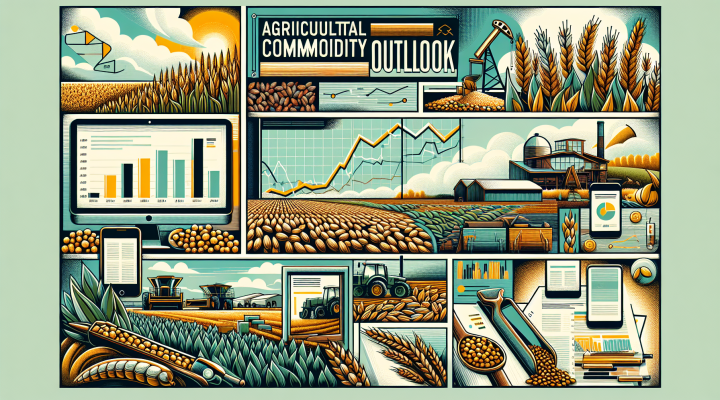
Smart Investors Track Agricultural Commodity Outlook to Maximize Canadian Portfolio Returns

Canadian investors seeking diversification and inflation protection increasingly turn their attention to agricultural commodities, yet many overlook the critical importance of understanding market forecasts. The agricultural commodity outlook serves as a compass for navigating volatile markets, helping investors capitalize on opportunities while managing risks inherent in this essential sector.

Agricultural commodities represent one of the most fundamental asset classes, with demand driven by population growth, changing dietary preferences, and climate-related supply disruptions. For Canadian portfolios, these investments offer unique advantages including natural inflation hedging, low correlation with traditional equity markets, and exposure to global food security trends.

Understanding Market Drivers Behind Agricultural Commodity Forecasts

The agricultural commodity outlook depends on multiple interconnected factors that savvy investors must monitor closely. Weather patterns remain the primary catalyst, with droughts, floods, and extreme temperatures directly impacting crop yields across major producing regions. Canadian investors benefit from tracking global weather data, as domestic agricultural exports—particularly canola, wheat, and barley—respond to both local and international growing conditions.

Currency fluctuations add another layer of complexity to commodity forecasting. A strengthening Canadian dollar can reduce the competitiveness of domestic agricultural exports, while a weaker loonie enhances profitability for Canadian producers. Geopolitical tensions, trade agreements, and export restrictions further influence commodity prices, making comprehensive market analysis essential for portfolio success.

Commodity Price Cycles and Portfolio Timing Strategies

Agricultural markets follow distinct cyclical patterns that informed investors can leverage for optimal portfolio positioning. The agricultural commodity outlook typically reflects seasonal planting and harvesting cycles, with prices often reaching peaks during planting season when supply concerns dominate market sentiment.

Successful Canadian investors recognize that agricultural commodities often outperform during inflationary periods when traditional assets struggle. Historical data shows that commodity exposure helps preserve purchasing power during economic uncertainty, making timing based on macroeconomic indicators crucial for portfolio optimization. Smart investors also consider inventory levels, with lower global stockpiles typically supporting higher prices and improved investment returns.

Direct and Indirect Agricultural Investment Approaches

Canadian investors can gain agricultural commodity exposure through various investment vehicles, each offering distinct risk-return profiles. Exchange-traded funds (ETFs) tracking agricultural indices provide diversified exposure without the complexity of futures trading, while individual commodity futures allow targeted positions in specific crops.

Agricultural stocks represent an indirect approach, with Canadian companies like Nutrien and Potash Corporation offering exposure to fertilizer demand trends. The agricultural commodity outlook directly influences these companies’ profitability, as higher crop prices typically drive increased fertilizer usage. Real Estate Investment Trusts (REITs) focused on farmland provide another avenue for agricultural exposure, combining commodity price appreciation with rental income streams.

Risk Management and Diversification Benefits

While agricultural commodities offer compelling diversification benefits, investors must carefully manage inherent risks through proper position sizing and risk controls. Commodity markets exhibit high volatility, with prices capable of significant swings based on weather events, policy changes, or demand shifts in major consuming countries.

The agricultural commodity outlook helps investors anticipate potential downturns and adjust portfolio allocations accordingly. Diversification across multiple commodities—grains, livestock, soft commodities—reduces concentration risk while maintaining exposure to the sector’s growth potential. Canadian investors should also consider the impact of currency hedging, particularly when investing in commodity funds denominated in foreign currencies.

Agricultural commodity outlook analysis provides Canadian investors with essential insights for building resilient, diversified portfolios capable of weathering economic uncertainty while capitalizing on global food demand trends. By understanding market drivers, timing strategies, and risk management principles, investors can harness the power of agricultural commodities to enhance long-term portfolio performance while contributing to food security investments that align with sustainable development goals.

Smart Investors Track the Uranium Bull Cycle as Nuclear Energy Demand Soars

Canadian investors are increasingly turning their attention to uranium markets as a powerful confluence of factors drives what many analysts believe is the most compelling uranium bull cycle in decades. With global nuclear energy demand reaching new heights and uranium supply constraints tightening, the stage appears set for sustained price appreciation in this critical commodity.

The current uranium market dynamics represent a dramatic shift from the post-Fukushima era when prices languished near production costs for nearly a decade. Today’s uranium bull cycle is being fueled by a perfect storm of increasing demand from both existing nuclear facilities and ambitious new reactor construction programs worldwide, particularly in Asia and emerging markets. Countries like China, India, and several Eastern European nations are aggressively expanding their nuclear capacity to meet growing energy needs while reducing carbon emissions.

What makes this uranium bull cycle particularly attractive to Canadian investors is the nation’s dominant position in global uranium production. Canada houses some of the world’s highest-grade uranium deposits, with Saskatchewan’s Athabasca Basin leading global production efficiency. Companies operating in this region benefit from exceptional ore grades that can be 100 times richer than typical uranium mines elsewhere, creating significant competitive advantages during periods of rising uranium prices.

Supply-side fundamentals strongly support the current uranium bull cycle thesis. Years of underinvestment in new uranium projects, combined with mine closures and production cuts during the previous bear market, have created a structural supply deficit. Meanwhile, existing nuclear reactors continue consuming uranium at steady rates, and new reactor constructions are accelerating globally. The International Atomic Energy Agency projects nuclear capacity to grow by 2.5% annually through the next decade, translating directly into increased uranium demand.

Financial markets are beginning to recognize these fundamentals, with uranium prices climbing steadily from their post-2011 lows. The Sprott Physical Uranium Trust and similar investment vehicles have further tightened physical uranium availability by removing material from spot markets, creating additional upward pressure on prices. This dynamic has particularly benefited Canadian uranium exploration and development companies, many of which have seen their valuations multiply as the uranium bull cycle gains momentum.

Government policies worldwide are providing additional tailwinds for uranium investments. Nuclear energy is increasingly viewed as essential for achieving carbon neutrality goals, with many countries reversing previous phase-out plans. The European Union’s recent classification of nuclear energy as a sustainable investment, combined with substantial government support for nuclear programs in the United States and Canada, creates a favorable regulatory environment for uranium producers.

Canadian investors are also attracted to uranium’s inflation-hedging characteristics during periods of economic uncertainty. As a hard commodity with limited substitutes, uranium tends to maintain purchasing power during inflationary periods while providing portfolio diversification benefits. The current uranium bull cycle offers exposure to a commodity that’s both essential for global energy security and positioned to benefit from long-term decarbonization trends.

The investment case for uranium becomes even more compelling when considering the typical duration of commodity super-cycles. Historical uranium bull markets have often lasted 5-7 years, suggesting the current cycle may have significant room to run. With nuclear fuel representing a tiny fraction of total electricity generation costs, utilities can absorb substantial uranium price increases without significantly impacting their operations, providing further upside potential.

As global energy markets continue evolving toward cleaner alternatives and energy security becomes paramount, the uranium bull cycle represents more than just a commodity trade—it’s an investment in the future of clean energy infrastructure. For Canadian investors seeking exposure to this transformative trend, the combination of domestic resource advantages, favorable market fundamentals, and supportive policy environments creates a compelling investment thesis that extends well beyond traditional cyclical opportunities.

Smart Investors Discover Untapped Wealth in Resource Royalty Streams

The global shift toward renewable energy and advanced mining technologies has created an unprecedented landscape for investors seeking stable, long-term returns through resource royalty investments. As traditional equity markets experience heightened volatility, sophisticated investors are increasingly turning their attention to royalty streams that provide consistent cash flows from natural resource extraction projects worldwide.

Understanding the fundamentals of royalty investing reveals why this asset class has gained significant traction among institutional and individual investors alike. Unlike direct ownership in mining or energy companies, royalty holders receive a percentage of revenue generated from resource extraction without bearing operational risks, capital expenditure burdens, or commodity price volatility exposure. This unique structure positions each resource royalty opportunity as a defensive investment that can weather economic downturns while providing steady income generation.

The technological revolution transforming resource extraction industries has fundamentally enhanced the attractiveness of royalty investments. Advanced drilling techniques, artificial intelligence-powered geological surveys, and automated mining equipment have dramatically improved extraction efficiency and reduced operational costs. These innovations translate directly into higher revenue streams for royalty holders, as improved productivity increases the total value of resources extracted from each project.

Modern portfolio diversification strategies increasingly incorporate royalty investments as a hedge against inflation and currency devaluation. Resource royalties typically maintain their value during inflationary periods, as commodity prices generally rise alongside broader economic price increases. This inflation protection characteristic makes royalty investments particularly attractive for long-term wealth preservation strategies and retirement portfolio construction.

The due diligence process for evaluating royalty investments requires careful analysis of multiple factors that determine long-term viability and return potential. Geological assessments, regulatory environments, operator track records, and reserve estimates all play crucial roles in determining the quality of any resource royalty opportunity. Investors must also consider jurisdiction stability, environmental regulations, and local community relations that could impact future extraction activities.

Geographic diversification within royalty portfolios provides additional risk mitigation benefits while maximizing exposure to global resource development trends. North American shale formations, Australian mineral deposits, and emerging market mining projects each offer distinct advantages and risk profiles. Strategic allocation across multiple jurisdictions and commodity types creates a balanced approach that captures various market cycles and regional economic developments.

The emergence of royalty-focused investment vehicles has democratized access to this traditionally institutional asset class. Public royalty companies, exchange-traded funds, and private placement opportunities now provide multiple avenues for investors to participate in resource royalty investments with varying risk tolerances and capital requirements. These investment vehicles often employ professional management teams with specialized expertise in resource evaluation and portfolio optimization.

Environmental, social, and governance considerations have become increasingly important factors in royalty investment evaluation. Modern resource extraction projects must meet stringent environmental standards and maintain positive community relationships to ensure long-term operational success. Investors focusing on ESG-compliant royalty opportunities often discover projects with superior long-term sustainability and reduced regulatory risks.

Market timing considerations for royalty investments differ significantly from traditional equity investments due to the long-term nature of resource extraction projects. While short-term commodity price fluctuations may impact immediate returns, the multi-decade lifespan of most resource projects provides natural smoothing of market volatility. This characteristic makes dollar-cost averaging particularly effective for building royalty investment positions over time.

As global energy transition accelerates and technology continues revolutionizing resource extraction, the investment landscape for royalties continues expanding with new opportunities emerging across traditional and alternative energy sectors. From lithium extraction supporting battery technology to rare earth mining enabling renewable energy infrastructure, each resource royalty opportunity represents a potential pathway to participate in long-term economic trends while generating consistent investment returns that can form the foundation of a well-diversified investment portfolio.

Canadian Mining Stocks Surge as Uranium Bull Cycle Reaches New Heights

The Canadian equity market is experiencing a remarkable transformation as the uranium bull cycle continues to gain momentum, creating substantial opportunities for investors focused on the country’s abundant mining resources. This surge in uranium prices and demand has positioned Canadian mining companies at the forefront of a global energy transition that shows no signs of slowing down.

Canada’s uranium sector has become increasingly attractive to both institutional and retail investors as nuclear energy regains its status as a critical component of clean energy strategies worldwide. The current uranium bull cycle has been fueled by a perfect storm of supply constraints, growing nuclear capacity additions globally, and renewed government support for nuclear power as a carbon-free baseload energy source. Canadian companies, which control some of the world’s highest-grade uranium deposits, are uniquely positioned to capitalize on these favorable market dynamics.

Major Canadian uranium producers have seen their stock prices multiply several times over as the uranium bull cycle has intensified. Cameco Corporation, the world’s second-largest uranium producer, has experienced remarkable gains as institutional investors recognize the long-term value proposition of uranium assets. The company’s flagship McArthur River mine in Saskatchewan, which contains some of the richest uranium ore globally, represents a strategic asset in an increasingly supply-constrained market.

The exploration and development segment of Canadian uranium equities has proven even more volatile and rewarding for risk-tolerant investors. Junior mining companies with promising uranium projects across Saskatchewan’s Athabasca Basin have attracted significant capital inflows as investors seek exposure to the uranium bull cycle’s upside potential. These smaller companies often experience amplified price movements compared to their larger counterparts, reflecting both the speculative nature of early-stage mining investments and the substantial leverage they provide to underlying uranium price movements.

Financial markets have responded enthusiastically to the fundamental drivers supporting the uranium bull cycle. Global uranium inventories have declined significantly over the past decade, while nuclear reactor construction has accelerated in key markets including China, India, and several Eastern European countries. This supply-demand imbalance has created a structural foundation for sustained higher uranium prices, directly benefiting Canadian equity holders in the sector.

The geopolitical landscape has further strengthened the investment thesis for Canadian uranium companies. Western governments increasingly view Canadian uranium as a reliable alternative to supplies from geopolitically sensitive regions. This strategic consideration has translated into policy support and long-term contracting opportunities that provide revenue visibility for Canadian producers, enhancing their equity valuations during the current uranium bull cycle.

Investment fund flows into Canadian uranium equities have reached unprecedented levels as portfolio managers seek to capture the sector’s momentum. Exchange-traded funds focused on uranium and nuclear energy have accumulated significant positions in Canadian mining stocks, creating additional buying pressure that has amplified the equity price appreciation associated with the uranium bull cycle. This institutional adoption has also improved liquidity and reduced volatility for many Canadian uranium stocks.

The ripple effects of the uranium bull cycle extend beyond pure-play uranium companies to benefit related Canadian equities in the mining services, equipment, and logistics sectors. Companies providing specialized services to uranium miners have experienced increased demand for their offerings, creating a broader ecosystem of beneficiaries within the Canadian equity market. This multiplier effect demonstrates how commodity bull cycles can generate widespread economic benefits across interconnected industries.

As the uranium bull cycle continues to evolve, Canadian equities in the sector appear well-positioned to maintain their outperformance relative to broader market indices. The combination of world-class geological assets, stable regulatory environments, and growing global demand for clean energy solutions creates a compelling long-term investment narrative. For investors seeking exposure to the ongoing energy transition and the uranium bull cycle’s potential, Canadian mining equities offer both established producers and emerging development opportunities that could deliver substantial returns as nuclear energy reclaims its position in the global energy mix.