commodity markets

Record Potash Prices Are Reshaping Canada’s Energy Transition Strategy

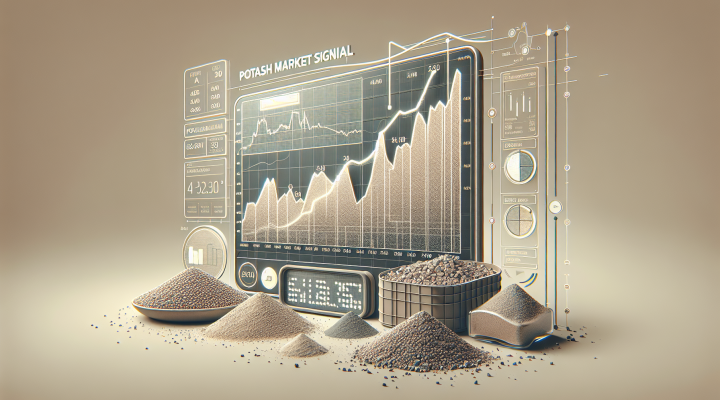
The dramatic surge in global potash prices throughout the past year has created an unexpected catalyst for Canada’s clean energy transformation. As the world’s largest potash producer, Canada is leveraging this powerful potash market signal to accelerate investments in renewable energy infrastructure while maintaining its agricultural export dominance.

Recent commodity data shows potash prices reaching historic highs, with muriate of potash trading at levels not seen since the 2008 commodity supercycle. This price momentum reflects growing global food security concerns and increased demand for sustainable agricultural practices. The revenue windfall from these elevated prices is now funding innovative clean energy projects across Saskatchewan and New Brunswick, home to Canada’s major potash operations.

Mining giants like Nutrien and Mosaic are responding to this potash market signal by implementing comprehensive electrification programs at their facilities. These companies are investing billions in solar installations, wind power integration, and battery storage systems to reduce the carbon footprint of potash extraction and processing. The transition is particularly significant given that potash mining traditionally relies heavily on natural gas for heating and electricity generation.

The economic logic behind this green transition extends beyond environmental considerations. Energy costs represent approximately 20-25% of total potash production expenses, making renewable energy adoption a strategic imperative as fossil fuel prices remain volatile. Companies reporting third-quarter earnings have highlighted how renewable energy investments are improving profit margins while positioning them favorably with ESG-focused institutional investors.

Government policy is amplifying the impact of this potash market signal through targeted incentive programs. The federal Critical Minerals Strategy, updated earlier this year, specifically identifies potash as essential for both food security and clean energy storage applications. New lithium-potassium battery technologies are creating additional demand streams for Canadian potash producers, further strengthening the economic case for sustainable extraction methods.

Agricultural end-users are also driving demand for sustainably produced potash. Major food companies and agricultural cooperatives are increasingly requiring supply chain transparency and carbon footprint documentation from fertilizer suppliers. This market pressure creates a premium pricing opportunity for potash produced using renewable energy, reinforcing the business case for clean energy investments.

The ripple effects extend beyond mining operations into supporting industries and communities. Clean energy infrastructure developed for potash operations is creating excess renewable capacity that can be fed into provincial electrical grids. Saskatchewan’s provincial utility has reported that mining industry renewable projects could contribute significantly to the province’s goal of achieving net-zero electricity generation by 2030.

Financial markets are taking notice of this transformation. Potash company stock valuations increasingly reflect clean energy adoption rates, with investors pricing in both commodity exposure and ESG credentials. Analysts tracking the sector note that companies demonstrating leadership in renewable energy integration are commanding valuation premiums compared to traditional mining peers.

The convergence of robust potash pricing, clean energy economics, and regulatory support is creating a self-reinforcing cycle of investment and innovation. As this potash market signal continues to strengthen, Canada’s position as both a critical minerals supplier and clean energy leader becomes increasingly entrenched, demonstrating how commodity market dynamics can drive broader economic transformation in unexpected directions.

Data Shows the Uranium Bull Cycle Could Transform Canadian Mining Portfolios

Canadian investors are witnessing something extraordinary unfold in the commodities market as the uranium bull cycle gains unprecedented momentum. After years of stagnant prices and cautious sentiment, uranium has emerged as one of the most compelling investment themes, driven by a perfect storm of supply constraints, surging nuclear energy demand, and shifting global energy policies.

The current uranium bull cycle represents more than just another commodity upturn—it signals a fundamental shift in how the world views nuclear energy. With governments worldwide prioritizing carbon-free baseload power generation, uranium demand is experiencing its strongest growth trajectory in over a decade. This transformation has captured the attention of institutional investors and retail traders alike, particularly those focused on Canadian mining opportunities.

Canada’s position in this unfolding uranium bull cycle cannot be overstated. The nation controls approximately 13% of global uranium reserves, with Saskatchewan’s Athabasca Basin hosting some of the world’s highest-grade deposits. Companies like Cameco Corporation and NexGen Energy have become household names among resource investors, their stock prices reflecting the broader optimism surrounding nuclear fuel markets.

Market fundamentals supporting the uranium bull cycle are remarkably robust. Global uranium production has struggled to keep pace with reactor requirements, creating a supply deficit that continues to widen. The closure of Kazakhstan’s key mining operations due to various disruptions, combined with production cuts at other major facilities worldwide, has tightened available supply significantly. Meanwhile, countries like China, India, and several European nations are accelerating their nuclear power programs, adding substantial long-term demand pressure.

Financial markets have responded decisively to these uranium bull cycle dynamics. The Sprott Physical Uranium Trust has accumulated substantial uranium stockpiles, effectively removing material from an already constrained spot market. This institutional buying activity has created additional upward pressure on prices, reinforcing the bullish sentiment that pervades the sector.

Canadian uranium companies are uniquely positioned to benefit from this uranium bull cycle. Their projects often feature exceptional grade profiles that translate into lower production costs and higher profit margins. As uranium prices continue climbing, these cost advantages become increasingly valuable, potentially generating substantial returns for shareholders who recognize the opportunity early.

Geopolitical considerations further strengthen the uranium bull cycle thesis. Energy security concerns have prompted Western nations to reduce their dependence on uranium supplies from politically unstable regions. Canada’s stable regulatory environment and friendly mining policies make it an attractive alternative source, potentially commanding premium pricing for its uranium output.

The environmental angle adds another compelling dimension to the uranium bull cycle narrative. As climate change mitigation efforts intensify, nuclear power’s role as a reliable, carbon-free energy source becomes increasingly recognized. Unlike renewable sources that depend on weather conditions, nuclear plants provide consistent baseload power, making them indispensable components of future energy grids.

Investment vehicles for participating in the uranium bull cycle have multiplied rapidly. Beyond individual mining stocks, investors can access uranium exposure through specialized ETFs, physical uranium funds, and uranium royalty companies. This diversification of investment options has democratized access to the uranium market, enabling broader participation in the bull cycle.

Technical analysis reinforces the fundamental case for the uranium bull cycle. Price charts show uranium breaking through multi-year resistance levels, establishing new uptrend patterns that suggest continued momentum. Trading volumes in uranium-related securities have surged, indicating strong investor interest and conviction in the sector’s prospects.

Risk factors within the uranium bull cycle deserve consideration despite the overwhelmingly positive outlook. Regulatory changes, potential new supply discoveries, or shifts in nuclear energy policies could impact price trajectories. However, the structural nature of current supply-demand imbalances suggests that any setbacks would likely prove temporary rather than trend-ending.

The uranium bull cycle represents a generational opportunity for Canadian investors willing to embrace the nuclear energy renaissance. With supply constraints deepening, demand accelerating, and Canadian companies holding world-class assets, the convergence of factors supporting higher uranium prices appears sustainable for years to come. Those who recognize the significance of this uranium bull cycle today may find themselves well-positioned for the energy transformation that lies ahead.

Canadian Markets Experience Unprecedented Commodity Super Cycle Momentum

Across Canada’s vast economic landscape, a powerful force is reshaping markets, driving investment decisions, and capturing the attention of economists worldwide. The current commodity super cycle represents more than just another market trend—it’s a fundamental shift that’s positioning Canada as a global powerhouse in natural resources and creating unprecedented opportunities for growth.

A commodity super cycle occurs when commodity prices experience sustained increases over extended periods, typically lasting one to two decades. Unlike regular market fluctuations, these cycles are driven by structural changes in global demand, supply constraints, and major economic transformations. Canada, with its abundant natural resources ranging from oil and gas to critical minerals and agricultural products, sits at the epicenter of this phenomenon.

The current commodity super cycle has been fueled by several converging factors that particularly benefit Canadian markets. The global transition to clean energy has created insatiable demand for critical minerals like lithium, cobalt, and rare earth elements—resources that Canada possesses in abundance. Simultaneously, geopolitical tensions have highlighted the importance of supply chain security, making Canada an attractive alternative to traditional resource suppliers in politically unstable regions.

Canadian mining companies have witnessed extraordinary valuation increases as investors recognize the long-term potential of this commodity super cycle. Companies operating copper mines in British Columbia, potash facilities in Saskatchewan, and gold operations across multiple provinces have seen their market capitalizations soar. The Toronto Stock Exchange’s materials sector has outperformed most global indices, reflecting international confidence in Canada’s resource sector.

Energy markets have also played a crucial role in Canada’s commodity super cycle story. Despite the global push toward renewable energy, oil and natural gas prices have remained elevated due to underinvestment in new production capacity and continued global demand. Canadian oil sands producers and natural gas exporters have capitalized on these conditions, generating substantial cash flows that are being reinvested in both traditional and renewable energy projects.

Agricultural commodities represent another pillar of Canada’s commodity super cycle advantage. Climate change has disrupted traditional growing regions worldwide, while Canada’s northern territories are becoming increasingly viable for agriculture. Wheat, canola, and other crop prices have reached levels not seen in decades, benefiting Canadian farmers and agribusiness companies. The country’s vast agricultural potential positions it as a critical food supplier in an increasingly food-insecure world.

The infrastructure implications of this commodity super cycle extend far beyond individual companies or sectors. Canadian ports, railways, and pipelines are experiencing capacity constraints as global demand for Canadian commodities intensifies. Government officials and private investors are collaborating on massive infrastructure projects designed to maximize Canada’s ability to export resources to hungry international markets.

Financial markets have responded enthusiastically to Canada’s commodity super cycle positioning. The Canadian dollar has strengthened against most major currencies, reflecting increased foreign investment and robust export revenues. Canadian pension funds and institutional investors are allocating larger portions of their portfolios to domestic resource companies, recognizing the long-term nature of current market dynamics.

Perhaps most significantly, this commodity super cycle is coinciding with global recognition that Canada possesses many of the materials essential for the clean energy transition. Battery metals, rare earth elements, and other critical minerals required for electric vehicles, wind turbines, and solar panels are increasingly being sourced from Canadian operations. This trend positions Canada not just as a beneficiary of current high prices, but as a strategic partner in the global economy’s transformation.

The convergence of favorable geology, political stability, advanced mining technology, and global demand trends has created a perfect storm that’s driving Canada’s commodity super cycle to unprecedented heights. As international investors and governments recognize Canada’s unique position in this evolving landscape, the country is experiencing a resources boom that promises to generate wealth, create jobs, and establish Canada as an indispensable player in the global commodity markets for years to come.

Smart Investors Are Eyeing Canada’s Copper Advantage as Global Demand Transforms Mining Portfolios

Canada’s mining sector stands at the precipice of a transformational opportunity as global markets signal an unprecedented shift toward electrification and renewable energy infrastructure. The copper demand outlook has never looked more promising, with industry analysts forecasting supply deficits that could reshape investment landscapes across North America. For astute investors, Canada’s abundant copper reserves and established mining infrastructure present a compelling case for portfolio diversification into this critical commodity.

The convergence of electric vehicle adoption, renewable energy expansion, and global infrastructure modernization has created what many experts consider a perfect storm for copper consumption. Canada, with its world-class deposits and mining-friendly regulatory environment, appears uniquely positioned to capitalize on this seismic market shift.

Electric Vehicle Revolution Drives Unprecedented Copper Consumption

The automotive industry’s rapid transition to electric vehicles represents the single largest driver behind the optimistic copper demand outlook. Each electric vehicle requires approximately four times more copper than traditional internal combustion engines, with high-end EVs containing up to 180 pounds of the metal. Tesla’s continued expansion, coupled with legacy automakers’ aggressive electrification timelines, has created sustained pressure on global copper supplies.

Canada’s proximity to major North American automotive manufacturing hubs provides a strategic advantage for domestic copper producers. Major mining companies operating in British Columbia, Ontario, and Quebec have already begun expanding production capacity to meet this surging demand. The federal government’s recent infrastructure investments and streamlined permitting processes have further enhanced Canada’s competitive position in the global copper market.

Infrastructure Modernization Creates Long-Term Demand Fundamentals

Beyond the automotive sector, massive infrastructure projects across developed and emerging economies continue to underpin the robust copper demand outlook. Smart grid implementations, 5G network rollouts, and renewable energy installations all require substantial copper inputs. The International Copper Association estimates that wind and solar installations use five times more copper per megawatt than conventional power generation.

Canadian mining operations benefit from this trend through established trade relationships and reliable supply chains. The country’s stable political environment and adherence to international environmental standards make Canadian copper increasingly attractive to infrastructure developers prioritizing supply chain security. Major construction projects across Asia and Europe specifically seek Canadian-sourced materials, creating premium pricing opportunities for domestic producers.

Supply Constraints Amplify Investment Opportunities

While demand continues accelerating, global copper supply faces significant constraints that enhance the investment thesis for Canadian mining assets. Many of the world’s largest copper mines are experiencing declining ore grades, while new project development faces increasingly complex environmental and permitting challenges. This supply-demand imbalance has created favorable market conditions that could persist for years.

Canadian mining companies possess several advantages in this environment. Established operations can expand production more efficiently than greenfield developments, while the country’s skilled workforce and advanced mining technologies enable higher productivity rates. Additionally, Canada’s commitment to sustainable mining practices aligns with growing environmental, social, and governance requirements from institutional investors and end-users alike.

Strategic Positioning in Critical Minerals Supply Chains

Government initiatives recognizing copper as a critical mineral have strengthened Canada’s long-term prospects in this sector. The federal Critical Minerals Strategy provides targeted support for exploration, development, and processing activities, while provincial governments offer attractive incentives for mining investments. These policy frameworks create a supportive environment that enhances the copper demand outlook for Canadian operations.

International partnerships, particularly with allies seeking to diversify supply chains away from geopolitically sensitive regions, position Canada as a preferred supplier. The recent Canada-United States Critical Minerals Action Plan exemplifies this trend, establishing frameworks for increased cooperation and investment in North American copper production capacity.

The convergence of surging global demand, constrained supply, and Canada’s strategic advantages creates a compelling investment narrative that extends well beyond typical commodity cycles. As the world transitions toward a more electrified future, Canada’s copper resources represent not just an investment opportunity, but a cornerstone of the clean energy economy. Investors seeking exposure to this transformational trend would be wise to consider Canada’s unique position in the evolving copper demand outlook, where geological abundance meets political stability and operational excellence.

Smart Investors Decode the Potash Market Signal That’s Reshaping Canadian Agriculture Investment

A powerful shift is emerging in global commodity markets, and astute investors are taking notice. The potash market signal coming out of Canada represents more than just another cyclical commodity play—it’s a fundamental restructuring of how the world sources this critical agricultural nutrient. As geopolitical tensions reshape supply chains and climate pressures intensify farming demands, Canada’s vast potash reserves are positioning the country at the center of a multi-billion dollar investment opportunity.

The numbers tell a compelling story. Global potash consumption has surged beyond pre-pandemic levels, driven by rising food security concerns and the urgent need to maximize crop yields on existing farmland. Traditional supply routes from Eastern Europe have become unreliable, creating supply gaps that Canadian producers are uniquely positioned to fill. This disruption has generated what market analysts are calling the clearest potash market signal in decades—a sustained price environment that supports massive capital investment in Canadian mining operations.

Saskatchewan alone holds approximately 70% of the world’s recoverable potash reserves, making it the Saudi Arabia of this essential fertilizer component. Major mining companies have responded to the potash market signal by announcing expansion projects worth over $15 billion collectively. These aren’t speculative ventures; they’re strategic responses to long-term supply-demand imbalances that appear structurally entrenched rather than cyclically driven.

What makes this potash market signal particularly attractive to investors is the stability of underlying demand drivers. Unlike other commodities subject to substitution or technological displacement, potash remains irreplaceable for modern agriculture. Potassium is one of three primary nutrients essential for plant growth, and synthetic alternatives simply don’t exist at scale. As global population growth continues and arable land becomes increasingly scarce, the intensity of potash application per hectare must increase to maintain food security.

Infrastructure Investments Signal Long-Term Commitment

The investment theme extends far beyond mining operations themselves. Rail networks, port facilities, and processing plants are all receiving substantial capital commitments as companies position for sustained higher demand. Canadian Pacific Railway has allocated hundreds of millions toward potash-specific infrastructure improvements, while port authorities in Vancouver and Prince Rupert are expanding fertilizer handling capabilities to accommodate increased export volumes.

This infrastructure development creates what economists call positive feedback loops—the more capacity that gets built, the more cost-effective Canadian potash becomes relative to competing sources. Transportation costs represent a significant portion of delivered fertilizer prices, so proximity to major agricultural markets in the United States provides Canadian producers with structural advantages that compound over time.

The potash market signal also reflects changing trade relationships and supply chain security priorities. Countries that previously relied on imports from politically unstable regions are actively diversifying their supplier bases. Long-term supply contracts with Canadian producers offer agricultural buyers price predictability and delivery certainty that justify premium pricing structures.

Technology and Sustainability Create Additional Value

Modern potash extraction and processing technologies are dramatically more efficient than legacy operations elsewhere. Canadian producers are implementing precision application systems, reduced-emission processing methods, and integrated logistics platforms that deliver higher margins while meeting increasingly stringent environmental standards. These technological advantages create moats around Canadian operations that competitors struggle to replicate.

The sustainability angle adds another layer to the investment thesis. Agriculture accounts for significant global carbon emissions, but optimized fertilizer application can actually improve soil carbon sequestration while boosting crop yields. Canadian potash producers are developing carbon-tracking systems and partnering with agricultural technology companies to demonstrate measurable environmental benefits from their products.

Forward-thinking investors recognize that the current potash market signal represents more than commodity speculation—it’s an early indicator of how global food systems will adapt to climate change, population growth, and geopolitical instability. Canadian potash assets offer exposure to these secular trends through established companies with proven reserves, existing infrastructure, and expanding production capacity. As traditional investment themes face headwinds from technological disruption and economic uncertainty, potash provides tangible value creation tied to humanity’s most fundamental need: food security.

Copper Demand Outlook Positions Canada as Tomorrow’s Mining Powerhouse

Canada’s mining sector stands at the precipice of unprecedented opportunity as global economic forces converge around one critical metal: copper. While investors have long recognized gold and oil as Canadian strongholds, the copper demand outlook reveals a transformative investment landscape that positions the nation as a global mining superpower for decades to come.

The urgency surrounding copper isn’t merely about traditional industrial applications. Electric vehicles, renewable energy infrastructure, and data centers require exponentially more copper than their conventional counterparts, creating supply-demand dynamics that mining executives describe as “generational.” For Canadian investors, this represents more than market timing—it’s about positioning within a fundamental economic shift.

Electrification Drives Unprecedented Copper Consumption

The copper demand outlook fundamentally hinges on the world’s rapid electrification. Electric vehicles consume approximately four times more copper than traditional gasoline vehicles, with each EV requiring roughly 85 kilograms of the metal for batteries, motors, and charging infrastructure. Wind turbines demand even more, utilizing up to 5 tons of copper per megawatt of capacity.

Canada’s strategic advantage becomes evident when examining global electrification targets. Major economies have committed to carbon neutrality by 2050, requiring massive infrastructure overhauls that depend heavily on copper. The International Energy Agency projects copper demand could double by 2040, with renewable energy and electric transportation accounting for 60% of this growth. This surge creates sustained demand that extends far beyond typical commodity cycles.

Supply Constraints Amplify Investment Opportunities

While the copper demand outlook points toward exponential growth, supply-side realities intensify the investment thesis. New copper mine development requires 15-20 years from discovery to production, creating structural supply deficits that benefit existing producers. Environmental regulations, permitting delays, and declining ore grades at established mines compound these challenges.

Canada’s established mining infrastructure provides crucial competitive advantages. The nation hosts approximately 10% of global copper reserves, with provinces like British Columbia and Quebec offering world-class deposits alongside supportive regulatory frameworks. Canadian mining companies possess decades of operational expertise, advanced extraction technologies, and established relationships with international buyers—assets that become increasingly valuable as copper scarcity intensifies.

Green Technology Investments Reshape Market Dynamics

The copper demand outlook reflects broader technological transitions that create multiple investment vectors. Data centers supporting artificial intelligence and cloud computing require extensive copper wiring, with major tech companies expanding operations across Canada. Smart grid technologies, essential for renewable energy integration, depend on copper’s superior conductivity properties.

Battery storage systems, crucial for renewable energy reliability, represent another significant demand driver. These installations require substantial copper components for inverters, transformers, and grid connections. As energy storage costs decline and deployment accelerates, copper consumption in this sector could increase tenfold over the next decade, according to industry analysts.

Canadian Mining Companies Capitalize on Strategic Positioning

Forward-thinking Canadian mining companies are already positioning themselves within this transformed copper demand outlook. Major producers are expanding operations, while junior miners with promising copper assets attract significant investor interest. The Toronto Stock Exchange hosts numerous copper-focused companies, providing Canadian investors with direct exposure to this growth trajectory.

Government support further strengthens Canada’s copper investment appeal. Federal and provincial incentives for critical mineral development, combined with infrastructure investments in northern regions, reduce operational costs and development risks. These policy frameworks recognize copper’s strategic importance for economic competitiveness and energy security.

The copper demand outlook presents Canadian investors with a rare convergence of technological necessity, supply constraints, and domestic advantages. As global electrification accelerates and traditional copper sources face mounting challenges, Canada’s mining sector emerges as both a beneficiary and enabler of this transformation. Smart investors recognize that positioning within this trend today could define portfolio performance for the next two decades, making Canadian copper exposure not just an opportunity, but an imperative for forward-looking investment strategies.