Archives for March 31, 2026

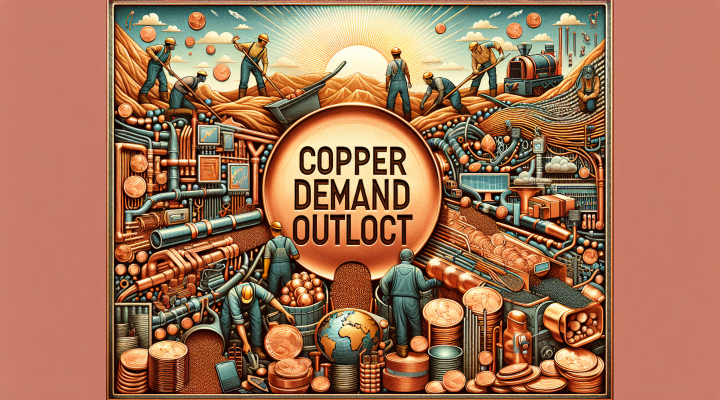
Surging Copper Demand Outlook Transforms Global Technology and Mining Investment Strategies

The global copper market stands at a transformative inflection point, with unprecedented demand drivers reshaping investment landscapes across technology and resource sectors. As the world’s most critical industrial metal, copper’s trajectory has become inextricably linked to humanity’s technological evolution, creating compelling opportunities and challenges that extend far beyond traditional mining operations.

The current copper demand outlook reflects a perfect storm of technological advancement and infrastructure transformation. Electric vehicle production has emerged as the dominant growth catalyst, with each electric car requiring approximately 180 pounds of copper compared to just 50 pounds in conventional vehicles. This dramatic increase multiplies across millions of vehicles as automotive manufacturers commit to electrification timelines that seemed impossible just five years ago.

Renewable energy infrastructure presents an equally compelling demand driver within the copper demand outlook framework. Wind turbines and solar installations consume copper at extraordinary rates, with offshore wind farms requiring up to 15 tons of copper per megawatt of capacity. As governments worldwide accelerate renewable energy mandates and phase out fossil fuel dependencies, copper consumption in this sector alone is projected to triple over the next decade.

Data centers and artificial intelligence infrastructure represent emerging demand vectors that many analysts initially underestimated. The exponential growth of AI computing requirements has created unprecedented electricity consumption patterns, necessitating massive copper investments in power distribution systems, cooling infrastructure, and high-performance computing hardware. Major technology companies are securing long-term copper supply agreements, recognizing the metal’s critical role in their expansion strategies.

Supply constraints continue to challenge the positive copper demand outlook, with new mine development facing increasingly complex regulatory environments and declining ore grades at existing facilities. Traditional copper-producing regions are experiencing resource depletion, while promising deposits often exist in geopolitically sensitive areas or environmentally protected zones. This supply-demand imbalance has attracted significant investment capital toward both traditional mining operations and innovative extraction technologies.

Investment strategies are evolving rapidly in response to these market dynamics. Resource companies are prioritizing copper assets over other commodities, while technology firms are establishing direct relationships with mining operations to secure supply chains. Private equity and sovereign wealth funds have increased allocations to copper-focused investments, recognizing the metal’s strategic importance in global decarbonization efforts.

Recycling technologies are gaining substantial investment attention as secondary copper sources become increasingly valuable. Advanced sorting and processing techniques can recover copper from electronic waste streams at purities approaching newly mined material. These circular economy approaches not only address supply constraints but also align with environmental sustainability objectives that drive regulatory and consumer preferences.

Geopolitical considerations add complexity to the copper demand outlook, as major consuming nations seek to diversify supply sources and reduce dependencies on potentially unstable regions. This has sparked investment in domestic mining capabilities and strategic partnerships with allied countries, creating new market dynamics that extend beyond traditional economic factors.

The intersection of artificial intelligence and copper mining operations themselves presents intriguing investment opportunities. Predictive analytics, autonomous mining equipment, and optimized processing techniques are increasing extraction efficiency while reducing environmental impact. These technological applications create value throughout the copper supply chain and attract investment from both mining companies and technology innovators.

Looking ahead, the copper demand outlook suggests sustained growth that could fundamentally reshape global commodity markets. The convergence of electrification, renewable energy deployment, and digital infrastructure expansion creates multiple reinforcing demand streams that appear immune to traditional cyclical pressures. For investors and industry participants, copper represents not just a commodity investment but a strategic position in the world’s technological and environmental transformation. Success in this evolving landscape requires understanding both the technical requirements driving demand and the complex supply chain challenges that will define market dynamics for decades to come.


Smart Investors Are Banking on Canada’s Copper Revolution as Global Demand Soars

The global economy is witnessing an unprecedented transformation, and at the heart of this revolution lies one critical metal: copper. As electrification accelerates worldwide and renewable energy infrastructure expands at breakneck speed, the copper demand outlook has never been more compelling. For astute investors, this presents a golden opportunity, and Canada stands uniquely positioned to capitalize on this seismic shift.

The numbers tell a remarkable story. Global copper consumption is projected to surge by over 70% through the next decade, driven primarily by the energy transition and electric vehicle adoption. Every electric vehicle requires approximately 180 pounds of copper compared to just 50 pounds in traditional internal combustion engines. When you multiply this by the projected 145 million electric vehicles expected to be sold annually by 2030, the scale of demand becomes staggering.

Canada’s mining sector is experiencing a renaissance as international investors recognize the country’s vast copper reserves and mining-friendly regulatory environment. The nation holds approximately 8% of global copper reserves, ranking fourth worldwide, but more importantly, Canada offers political stability and established mining infrastructure that emerging market competitors cannot match. This combination creates a compelling investment thesis that institutional investors are increasingly embracing.

The copper demand outlook extends far beyond electric vehicles, encompassing the massive infrastructure investments required for renewable energy generation and transmission. Wind turbines require up to 15 tons of copper each, while solar installations demand significant copper wiring and components. As governments worldwide commit to net-zero emissions targets, these infrastructure projects represent multi-trillion-dollar opportunities that will sustain copper demand for decades.

Canadian mining companies are responding aggressively to these market signals. Major players like Teck Resources and First Quantum Minerals are announcing billion-dollar expansion projects, while junior miners are attracting record venture capital investments. The Toronto Stock Exchange has become the de facto global hub for copper mining investments, with over 60% of the world’s publicly traded mining companies listing their shares in Canada.

Supply constraints are simultaneously tightening the market dynamics that make the copper demand outlook so attractive to investors. Many of the world’s largest copper mines are aging, with ore grades declining and extraction costs rising. Political instability in major copper-producing regions like Chile and Peru has created supply disruptions, while environmental regulations are limiting new mine development in traditional mining jurisdictions. Canada’s stable political environment and streamlined permitting processes provide a stark contrast to these challenges.

The investment implications extend beyond direct mining stocks. Canadian companies specializing in mining technology, equipment manufacturing, and mineral processing are experiencing unprecedented growth as the industry modernizes to meet surging demand. This creates a diversified investment ecosystem that reduces risk while maximizing exposure to the copper supercycle.

Institutional investors are taking notice of these fundamentals. Pension funds, sovereign wealth funds, and private equity firms are allocating record amounts to Canadian copper projects. The Canada Pension Plan Investment Board recently announced a $2.8 billion commitment to mining investments, with copper projects representing the largest allocation. This institutional backing provides the capital foundation necessary for large-scale mine development and expansion.

The technological advantages of Canadian mining operations further enhance the investment appeal. Advanced mining techniques, including autonomous equipment and AI-powered optimization systems, are improving efficiency and reducing environmental impact. These innovations position Canadian copper producers as low-cost leaders in an increasingly competitive global market, ensuring sustained profitability even during price volatility.

Market analysts are projecting copper prices could reach $15,000 per ton within the next five years, driven by the fundamental supply-demand imbalance. Current prices around $9,000 per ton already reflect some of this optimism, but the copper demand outlook suggests significantly higher valuations as electrification accelerates and supply constraints intensify.

The convergence of surging global copper demand, supply constraints, and Canada’s unique competitive advantages creates an investment opportunity of generational significance. As the world transitions to a clean energy economy, copper will serve as the essential building block, and Canada’s mining sector stands ready to supply this critical resource. For investors seeking exposure to one of the most compelling commodity themes of the coming decade, Canadian copper investments represent not just an opportunity, but a necessity in any forward-thinking portfolio. The question isn’t whether to invest in this theme, but rather how quickly investors can position themselves to benefit from this unprecedented demand surge.

Smart Canadians Are Maximizing TFSA Returns With These Investment Strategies

The Tax-Free Savings Account represents one of Canada’s most powerful wealth-building tools, yet many Canadians are leaving money on the table by treating their TFSA like a traditional savings account. With contribution room accumulating year after year and investment gains completely shielded from taxation, developing a sophisticated TFSA investment strategy can dramatically accelerate your path to financial independence.

The mathematics are compelling: a $6,500 annual contribution growing at 7% annually becomes over $180,000 after 15 years, with every penny of that growth remaining in your pocket. Compare this to a taxable account where similar returns could be reduced by 20-50% depending on your marginal tax rate, and the advantage becomes crystal clear.

The foundation of any effective TFSA investment strategy begins with maximizing your contribution room. Many Canadians focus solely on current-year contributions while ignoring accumulated room from previous years. If you haven’t maximized your TFSA since its inception, you likely have substantial unused contribution space that represents missed opportunity for tax-free growth.

Asset allocation within your TFSA requires careful consideration of tax efficiency. Since TFSA gains are never taxed, this account becomes the ideal home for your highest-growth potential investments. Growth stocks, emerging market funds, and small-cap equity funds that might generate significant capital gains in taxable accounts can compound freely within your TFSA. Conversely, investments that generate regular income streams, such as dividend-paying stocks or bonds, might be better placed in taxable accounts where dividend tax credits can provide additional benefits.

Geographic diversification plays a crucial role in TFSA portfolio construction, but foreign withholding taxes add complexity. U.S. stocks held directly in a TFSA face a 15% withholding tax that cannot be recovered, while the same investments held in an RRSP are protected by tax treaty provisions. However, this doesn’t mean avoiding international exposure entirely – Canadian-listed ETFs that hold foreign stocks often provide more tax-efficient international diversification for TFSA investors.

Timing Your TFSA Investment Strategy

The timing of contributions and investment decisions can significantly impact long-term results. Dollar-cost averaging remains a proven approach for most investors, spreading purchases across market cycles to reduce timing risk. However, those with lump-sum amounts available might consider contributing early in the year to maximize time in the market, particularly during market downturns when investment valuations are more attractive.

Rebalancing within a TFSA offers unique advantages since no tax consequences arise from selling appreciated assets. This allows for more frequent portfolio adjustments to maintain target allocations without the tax drag that inhibits rebalancing in taxable accounts. Consider rebalancing quarterly or semi-annually, selling high-performing assets and redirecting proceeds to underperforming categories.

Advanced TFSA strategies involve careful coordination with other registered accounts. The optimal approach often involves holding growth-oriented investments in your TFSA while placing income-generating assets in your RRSP, where the immediate tax deduction provides additional benefit. This strategy becomes particularly powerful for high-income earners who face substantial marginal tax rates on investment income.

Avoiding Common TFSA Investment Pitfalls

Several mistakes can undermine an otherwise sound TFSA investment strategy. Over-trading represents one of the most costly errors – while transactions don’t trigger taxes, excessive trading can erode returns through commission costs and poor timing decisions. Maintain a long-term perspective and avoid the temptation to constantly adjust your holdings based on short-term market movements.

Another common pitfall involves holding inappropriate investments within the TFSA structure. Cash and GICs, while safe, fail to capitalize on the account’s tax-free growth potential. These conservative investments might be appropriate for short-term goals or as part of a broader asset allocation, but shouldn’t dominate a TFSA intended for long-term wealth building.

Contribution room management requires ongoing attention to avoid costly over-contribution penalties. The Canada Revenue Agency imposes a 1% monthly tax on excess contributions, which can quickly erode investment gains. Track your available room carefully, remembering that withdrawals only restore contribution room in the following calendar year.

The withdrawal flexibility that makes TFSAs attractive can also become a weakness if not managed properly. Unlike RRSPs, TFSA withdrawals don’t trigger immediate tax consequences, making these accounts tempting targets during financial emergencies. However, early withdrawals sacrifice years or decades of potential tax-free growth, undermining the account’s wealth-building potential.

A well-executed TFSA investment strategy represents far more than tax-efficient investing – it’s a cornerstone of comprehensive financial planning that can fund major life goals, supplement retirement income, or create generational wealth. By maximizing contributions, optimizing asset allocation, and maintaining disciplined investment practices, Canadians can harness the full power of this remarkable account structure. The key lies in viewing your TFSA not as a savings account, but as a sophisticated investment vehicle deserving of your most promising growth opportunities.

Smart Investors Are Banking on Agricultural Commodities Despite Market Volatility

The agricultural commodities market presents one of the most compelling investment opportunities in today’s economic landscape, yet many investors overlook its potential due to perceived complexity and volatility. While traditional asset classes struggle with uncertainty, agricultural commodities offer a unique combination of essential demand drivers and strategic diversification benefits that sophisticated investors are increasingly recognizing.

Understanding the agricultural commodity outlook requires a deep appreciation for the fundamental forces that drive these markets. Unlike stocks or bonds, agricultural commodities are tied directly to human survival needs, making them inherently valuable regardless of economic cycles. Global population growth continues to accelerate, with projections indicating we’ll need to feed nearly 10 billion people by mid-century, while arable land remains finite and climate challenges intensify.

The current market dynamics reveal several compelling trends that savvy investors can leverage. Supply chain disruptions have highlighted the critical importance of food security, leading governments worldwide to prioritize agricultural stability. This policy shift translates into more predictable demand patterns and potentially higher price floors for key commodities. Additionally, technological advances in farming equipment, precision agriculture, and biotechnology are creating new investment subcategories within the broader agricultural space.

Weather patterns remain the wild card in any agricultural commodity outlook, but rather than viewing this as pure risk, experienced investors recognize it as an opportunity for strategic positioning. El Niño and La Niña cycles follow somewhat predictable patterns, and those who study these phenomena can anticipate potential supply shortages or surpluses months in advance. Drought conditions in major producing regions like the American Midwest or Brazil’s soy belt can create significant price movements that prepared investors can capitalize on.

Diversification Strategies That Actually Work

The key to maximizing returns lies not in betting on individual commodities, but in building a diversified portfolio that balances different agricultural sectors and geographic exposures. Grain markets behave differently from livestock futures, and soft commodities like coffee and cocoa respond to entirely different supply and demand factors. A well-constructed agricultural commodity outlook incorporates seasonal variations, storage costs, and transportation logistics that can significantly impact profitability.

Exchange-traded funds focused on agricultural commodities offer retail investors exposure without the complexity of direct futures trading. These instruments provide professional management and diversification while maintaining liquidity. However, more sophisticated investors often prefer direct commodity exposure through futures contracts or physical ownership, which can offer superior returns but require deeper market knowledge and risk tolerance.

Timing plays a crucial role in agricultural commodity investments. Planting seasons, harvest periods, and weather-sensitive growing phases create predictable volatility patterns throughout the year. The agricultural commodity outlook becomes most valuable when investors can identify these cyclical opportunities and position themselves accordingly. Spring planting reports, summer weather forecasts, and fall harvest estimates all provide crucial data points for investment decisions.

Technology and Innovation Drive New Opportunities

Modern agricultural investing extends far beyond traditional crop and livestock markets. Precision agriculture technologies, sustainable farming solutions, and alternative protein sources represent emerging subsectors with tremendous growth potential. The agricultural commodity outlook increasingly includes investments in companies developing drought-resistant seeds, automated farming equipment, and innovative food production methods.

Risk management remains paramount in agricultural commodity investing. Price volatility can be extreme, and leverage amplifies both gains and losses. Successful investors typically allocate a specific percentage of their portfolio to agricultural commodities rather than making concentrated bets. Stop-loss orders, position sizing, and correlation analysis help protect against catastrophic losses while preserving upside potential.

The intersection of environmental, social, and governance factors with agricultural investing creates additional considerations for the modern agricultural commodity outlook. Sustainable farming practices, carbon credit systems, and regenerative agriculture represent not just ethical imperatives but potentially profitable investment themes. Companies and commodities aligned with sustainability trends often command premium valuations and enjoy more stable long-term demand.

Agricultural commodity investing rewards patience, research, and strategic thinking over short-term speculation. The most successful participants in these markets combine fundamental analysis of supply and demand factors with technical analysis of price trends and sentiment indicators. By maintaining a disciplined approach and staying informed about global agricultural developments, investors can harness the powerful trends reshaping food production and capitalize on one of humanity’s most essential economic sectors.