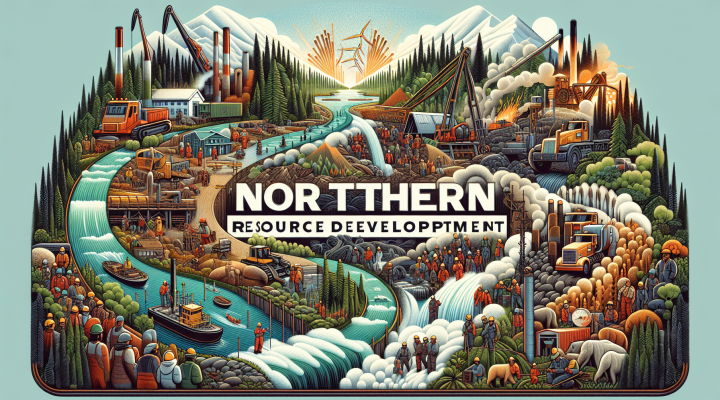
The frozen frontiers of the Arctic are experiencing an unprecedented technological revolution. As traditional resource deposits become increasingly difficult to access, northern resource development has emerged as one of the most capital-intensive yet promising sectors for investors seeking long-term growth opportunities. The convergence of advanced extraction technologies, climate adaptation solutions, and strategic geopolitical positioning is creating a perfect storm of investment potential in these previously untouchable regions.
Modern northern resource development projects are fundamentally different from their predecessors. Gone are the days when companies could rely solely on brute force extraction methods in harsh climates. Today’s successful operations integrate artificial intelligence-powered geological surveys, autonomous mining equipment designed for extreme temperatures, and sophisticated logistics networks that can operate year-round despite challenging weather conditions. These technological advances have reduced operational costs by up to 40% while simultaneously increasing safety standards and environmental compliance.
The investment landscape reflects this transformation. Major mining corporations are allocating billions toward northern resource development initiatives, with particular emphasis on rare earth elements, lithium deposits, and untapped oil reserves. Canadian and Scandinavian projects are leading the charge, benefiting from political stability and established regulatory frameworks that provide investor confidence. Meanwhile, breakthrough technologies in ice-road alternatives and modular processing facilities are making previously uneconomical deposits viable for commercial extraction.
Emerging Technologies Reshape Arctic Operations
The backbone of modern northern resource development lies in its technological sophistication. Satellite-guided drilling systems now operate with precision unimaginable just a decade ago, while machine learning algorithms predict equipment failures before they occur, minimizing costly downtime in remote locations. Advanced materials science has produced equipment capable of functioning reliably at temperatures below -50°C, extending operational seasons and improving project economics.
Renewable energy integration represents another crucial advancement. Solar panel arrays designed for low-light conditions and wind turbines engineered for arctic conditions are reducing diesel dependency by up to 60% in some northern resource development projects. This shift not only cuts operational costs but also addresses environmental concerns that have historically plagued resource extraction in sensitive northern ecosystems. Battery storage systems specifically designed for extreme cold ensure continuous power supply during the harshest weather conditions.
Transportation innovations are equally transformative. All-season ice roads constructed with advanced polymers extend access periods, while drone delivery systems handle smaller equipment and supply runs without requiring full convoy deployments. Some operations now utilize underground conveyor systems that remain functional regardless of surface weather conditions, ensuring consistent material flow from extraction point to processing facility.
Investment Outlook and Market Dynamics
The financial metrics supporting northern resource development investment are compelling. Despite higher upfront capital requirements, these projects often deliver superior long-term returns due to the premium quality of untapped northern deposits and reduced competition compared to traditional mining regions. Infrastructure investments made today create lasting competitive advantages, as established operations benefit from economies of scale that make it difficult for new entrants to compete effectively.
Geopolitical factors add another dimension to investment appeal. As global supply chains seek diversification away from politically unstable regions, northern resource development offers access to critical materials within stable democratic nations. This strategic value often translates into favorable government policies, tax incentives, and streamlined permitting processes that enhance project viability.
Risk management strategies have evolved significantly, with sophisticated weather prediction models, redundant supply chains, and comprehensive insurance products specifically designed for arctic operations. These developments have made northern resource development projects more predictable and attractive to institutional investors who previously viewed the sector as too volatile.
The convergence of technological advancement, favorable economics, and strategic positioning makes northern resource development one of the most compelling investment themes in the natural resources sector. As climate change ironically makes northern regions more accessible while simultaneously increasing demand for the critical materials found there, investors who position themselves early in this transformation stand to benefit from both immediate returns and long-term strategic value creation. The Arctic’s resource wealth is no longer locked away by technological limitations—it’s simply waiting for the right investment approach.