
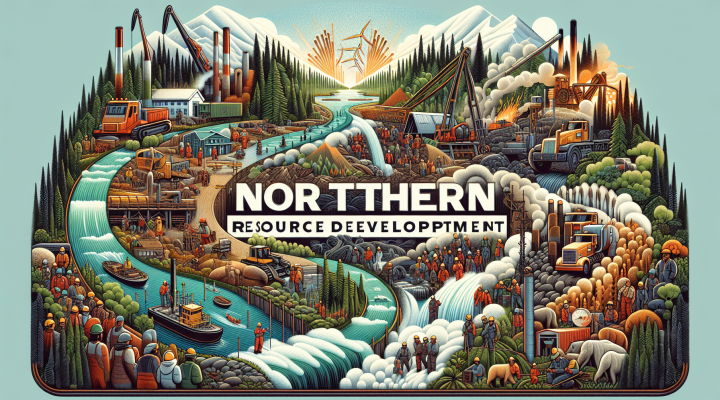
Canada’s northern territories are experiencing an unprecedented transformation that’s capturing the attention of sophisticated investors worldwide. While many markets face uncertainty, northern resource development has emerged as a compelling investment theme backed by geopolitical shifts, technological advances, and surging global demand for critical materials.
The investment landscape for northern resource development has fundamentally changed over the past few years. What was once considered a high-risk, high-cost venture is now viewed as essential to North America’s economic security and energy independence. The Canadian government’s strategic initiatives, combined with private sector innovation, have created a perfect storm of opportunity in regions previously deemed too challenging to develop.
Critical mineral extraction stands at the forefront of this northern expansion. Canada’s Arctic and sub-Arctic regions contain vast reserves of lithium, cobalt, nickel, and rare earth elements—materials essential for everything from electric vehicle batteries to renewable energy infrastructure. Unlike many global competitors, Canada offers political stability, established mining expertise, and proximity to major North American markets, making northern resource development particularly attractive to institutional investors.
The numbers tell a compelling story. Recent geological surveys have identified mineral deposits worth potentially trillions of dollars across northern Canada. The Mackenzie Mountains alone contain enough critical minerals to supply North American battery manufacturers for decades. Meanwhile, established northern mining operations have reported production costs declining by an average of 15% annually as new technologies and improved logistics reduce operational challenges.
Infrastructure development has become a key catalyst driving northern resource development forward. The federal government’s northern infrastructure fund has allocated billions toward transportation corridors, power generation, and telecommunications networks. These investments directly address the historical barriers that made northern projects financially challenging. New all-weather roads, expanded port facilities, and reliable power grids are transforming remote northern regions into viable investment destinations.
Energy projects represent another major component of northern resource development opportunities. Hydroelectric potential in northern Quebec and Labrador could generate enough clean electricity to power major industrial operations while exporting surplus capacity to southern markets. Natural gas reserves in the Northwest Territories and northern British Columbia are positioning Canada as a major supplier to Asian markets through planned LNG export facilities.
The geopolitical dimension adds urgency to northern resource development initiatives. Supply chain disruptions and international tensions have highlighted North America’s dependence on foreign sources for critical materials. Investors increasingly view northern Canadian projects as strategic assets that offer both financial returns and supply chain security. This dual benefit has attracted interest from sovereign wealth funds, pension funds, and multinational corporations seeking long-term resource partnerships.
Technology advancement has dramatically improved the economics of northern resource development. Remote sensing, artificial intelligence, and automated equipment allow companies to operate efficiently in harsh northern environments. Drone surveys, satellite monitoring, and predictive maintenance systems reduce operational risks while improving safety outcomes. These technological solutions have cut development timelines by years and reduced capital requirements by millions of dollars per project.
First Nations partnerships have become integral to successful northern resource development strategies. Progressive benefit-sharing agreements, employment opportunities, and environmental stewardship programs ensure that indigenous communities participate meaningfully in northern development. These partnerships provide social license for projects while creating sustainable economic opportunities in traditionally underserved regions.
Environmental considerations, rather than hindering development, are actually driving innovation in northern resource development. Companies are implementing carbon-neutral operations, advanced waste management systems, and ecosystem restoration programs. These environmental commitments attract ESG-focused investors while ensuring long-term project sustainability. Clean technology applications in northern operations often become exportable innovations, creating additional revenue streams.
The investment timeline for northern resource development projects typically spans decades, making them particularly suitable for institutional investors with long-term mandates. Pension funds, insurance companies, and endowments are increasingly allocating capital to northern projects that offer inflation protection, steady cash flows, and portfolio diversification benefits. The predictable regulatory environment and established legal framework in Canada provide additional investor confidence.
Market dynamics strongly favor northern resource development as global demand for Canadian resources continues accelerating. Electric vehicle adoption, renewable energy expansion, and industrial decarbonization are creating sustained demand for materials found abundantly in northern Canada. This demand growth, combined with limited new supply sources globally, suggests strong pricing power for northern Canadian producers over the coming decades.
As traditional investment themes face increasing volatility and uncertainty, northern resource development offers a rare combination of strategic importance, strong fundamentals, and long-term growth potential. The convergence of government support, technological innovation, and market demand has created an investment opportunity that extends far beyond typical commodity cycles. For investors seeking exposure to Canada’s resource economy, northern development projects represent the next generation of value creation in one of the world’s most resource-rich regions.
