
copper demand

Record Copper Shortages Position Canada as the World’s Next Mining Superpower

Global markets are experiencing an unprecedented copper supply crunch, and savvy investors are turning their attention to Canada’s untapped mining potential. As electrification accelerates worldwide and infrastructure demands soar, the copper demand outlook has never been more bullish—positioning Canada’s vast mineral reserves as a strategic goldmine for forward-thinking investment portfolios.

The numbers tell a compelling story. Industry analysts project global copper consumption will surge by 70% over the next decade, driven primarily by the renewable energy transition and electric vehicle revolution. Each electric vehicle requires approximately 180 pounds of copper compared to just 50 pounds in traditional combustion engines. Meanwhile, wind turbines demand up to 15 tons of copper per megawatt of capacity, while solar installations require significant copper infrastructure for power transmission and storage systems.

Canada sits atop some of the world’s most promising undeveloped copper deposits, particularly in British Columbia, Ontario, and Quebec. The country’s stable political environment, established mining infrastructure, and proximity to major North American markets create an ideal foundation for capitalizing on the evolving copper demand outlook. Unlike copper-rich regions plagued by political instability or regulatory uncertainty, Canada offers investors the security and transparency essential for long-term mining investments.

What makes this opportunity particularly compelling is the timing. Major global copper mines are facing depletion, with several key producers experiencing declining ore grades and increased extraction costs. Chile’s copper output, representing nearly 30% of global production, has plateaued despite significant investment in new technologies. Peru and the Democratic Republic of Congo face ongoing political and logistical challenges that threaten supply stability. This supply constraint, combined with surging demand, creates a perfect storm that Canadian mining companies are uniquely positioned to navigate.

The Infrastructure Investment Catalyst

Government infrastructure spending across North America is supercharging the copper demand outlook beyond even the most optimistic projections. The ongoing continental infrastructure renewal programs are allocating hundreds of billions toward grid modernization, broadband expansion, and transportation electrification—all copper-intensive initiatives. Canada’s mining sector stands to benefit not only from increased commodity prices but also from preferential sourcing policies that favor North American suppliers for critical infrastructure projects.

Canadian mining companies are already responding to these market signals. Several junior miners have accelerated exploration programs, while established players are revisiting previously marginal deposits that now appear economically viable given current price projections. The combination of advanced mining technologies, improved extraction methods, and favorable commodity prices is unlocking resources that were previously considered uneconomical.

The investment thesis extends beyond simple supply and demand fundamentals. Environmental, social, and governance considerations are increasingly driving procurement decisions for major copper consumers. Canadian mines typically operate under stringent environmental standards and maintain strong community relationships—factors that are becoming decisive competitive advantages as global companies prioritize sustainable supply chains.

Strategic Positioning for Long-Term Growth

Smart money is already flowing into Canadian copper exploration and development projects. Private equity firms, sovereign wealth funds, and institutional investors are quietly building positions in promising Canadian copper assets, recognizing that the current copper demand outlook represents a generational investment opportunity. Early-stage investments in exploration companies with proven management teams and strategic land positions offer the potential for exceptional returns as projects advance through development phases.

The sector’s appeal is amplified by Canada’s mining expertise and established supply chains. The country’s century-long mining heritage has created deep pools of technical talent, specialized service providers, and financial infrastructure specifically designed to support resource development. This ecosystem advantage means Canadian copper projects can move from discovery to production more efficiently than comparable projects in less developed mining jurisdictions.

As global copper inventories continue declining and the electrification megatrend accelerates, Canada’s copper mining sector represents one of the most compelling investment themes of the decade. The convergence of supply constraints, surging demand, and Canada’s strategic advantages creates a rare opportunity for investors willing to position themselves ahead of the crowd. The copper demand outlook isn’t just bullish—it’s pointing directly toward Canada as the world’s next great copper investment destination.

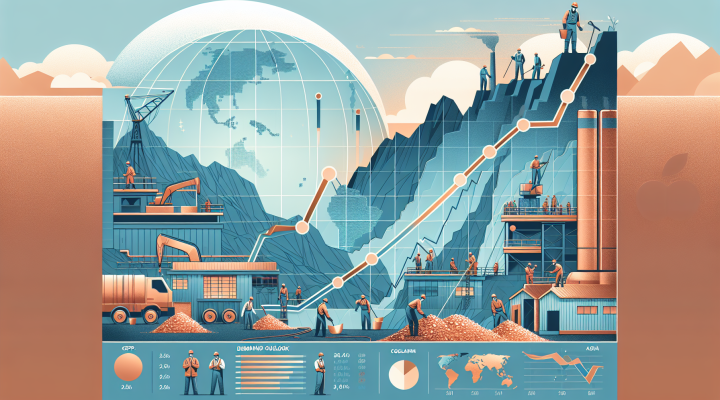
How Copper Demand Outlook Is Reshaping Canada’s Clean Energy Infrastructure Investment

Canada stands at the forefront of a remarkable transformation as the global copper demand outlook fundamentally reshapes the nation’s approach to clean energy infrastructure. With renewable energy projects requiring up to four times more copper than traditional fossil fuel installations, this red metal has become the silent catalyst driving unprecedented investment in Canadian clean technology sectors. From wind farms stretching across the Prairies to massive solar installations in Ontario, copper’s critical role in electrical transmission and energy storage is positioning Canada as both a major consumer and supplier in the global clean energy revolution.

Rising Global Copper Consumption Fuels Canadian Mining Renaissance

The copper demand outlook paints a compelling picture for Canada’s mining industry, with global consumption projected to increase by 70% through 2040. Electric vehicles alone require three times more copper than conventional cars, while offshore wind installations demand up to 15 tons of copper per megawatt of capacity. This surge has revitalized Canada’s copper mining sector, with major projects like Teck Resources’ Highland Valley operations expanding production capacity to meet growing international demand.

Canadian copper mines are strategically positioned to capitalize on this trend, benefiting from stable political environments and established infrastructure networks that many competing nations lack. The country’s proven reserves of approximately 8 million tons represent significant untapped potential, particularly as mining companies integrate advanced extraction technologies to access previously uneconomical deposits. This renaissance extends beyond traditional mining regions, with exploration activities intensifying across British Columbia, Ontario, and Quebec.

Clean Energy Infrastructure Drives Unprecedented Copper Requirements

Canada’s ambitious clean energy targets are creating massive domestic copper consumption that directly correlates with the positive copper demand outlook. The federal government’s commitment to achieving net-zero emissions by 2050 necessitates extensive electrical grid modernization, with transmission lines requiring approximately 1.5 tons of copper per kilometer. Major projects like the Atlantic Loop transmission system and British Columbia’s renewable energy expansion are consuming thousands of tons of copper annually.

Energy storage systems represent another significant consumption driver, as battery installations for grid stabilization require substantial copper components for electrical connections and thermal management. Large-scale projects, including Ontario’s battery storage initiatives and Alberta’s renewable energy storage programs, are collectively driving copper demand beyond traditional forecasting models. The integration of smart grid technologies further amplifies these requirements, as advanced metering infrastructure and automated distribution systems rely heavily on copper-based electrical components.

Strategic Mining Investments Respond to Market Signals

The robust copper demand outlook has triggered a wave of strategic investments across Canada’s mining sector, with companies rushing to develop new extraction capabilities and expand existing operations. First Quantum Minerals, Hudbay Minerals, and other major players have announced multi-billion-dollar expansion projects, recognizing that current global production capacity cannot meet projected demand increases.

These investments extend beyond traditional mining operations to include innovative processing technologies and sustainable extraction methods. Companies are implementing advanced flotation techniques and heap leaching processes to extract copper from lower-grade ores, effectively expanding Canada’s accessible copper reserves. Additionally, recycling initiatives are gaining momentum as companies recognize the value in recovering copper from electronic waste and decommissioned infrastructure, creating circular economy opportunities that complement primary mining operations.

Economic Multiplier Effects Transform Regional Development

The positive copper demand outlook is generating substantial economic multiplier effects across Canadian regions, particularly in provinces with significant mining and manufacturing capabilities. Communities in northern Ontario and British Columbia are experiencing renewed economic vitality as mining operations expand and require specialized services, from heavy equipment maintenance to environmental monitoring services.

Manufacturing sectors are also benefiting significantly, as increased copper availability supports domestic production of electrical components, renewable energy equipment, and electric vehicle charging infrastructure. Companies like Magna International are leveraging Canada’s copper supply chains to develop competitive advantages in electric vehicle component manufacturing, while renewable energy equipment manufacturers are establishing facilities near major copper production centers to minimize supply chain costs and delivery times.

The transformation extends to job creation patterns, with high-skilled positions in mining engineering, metallurgy, and environmental science experiencing unprecedented demand. Technical colleges and universities across Canada have responded by expanding programs related to sustainable mining practices and clean energy technologies, creating a skilled workforce pipeline that supports long-term industry growth.

Canada’s clean energy future increasingly depends on how effectively the nation leverages its copper resources and responds to evolving global demand patterns. The convergence of abundant natural resources, technological expertise, and supportive policy frameworks positions Canada to become a dominant force in the global copper market while simultaneously advancing domestic clean energy objectives. As international competition for copper intensifies, Canada’s ability to balance domestic consumption needs with export opportunities will ultimately determine the pace and scale of the country’s clean energy transformation, making the copper demand outlook a critical factor in shaping the nation’s economic and environmental trajectory.

Why Canadian Innovation Could Drive the Next Copper Supercycle

The global copper market stands at a fascinating inflection point, with Canadian companies emerging as unexpected catalysts in what many analysts believe could be the most significant shift in copper demand outlook in decades. While traditional mining regions grab headlines, Canada’s unique combination of technological innovation, vast mineral resources, and strategic positioning in the clean energy transition is quietly reshaping how the world thinks about copper consumption patterns.

Canada’s tech sector has become a surprising driver of copper demand forecasting, particularly through breakthrough developments in electric vehicle infrastructure and renewable energy storage. Companies like Quebec-based lithium producer Nemaska and Ontario’s battery technology firms are creating integrated supply chains that consume copper at rates far exceeding traditional projections. These innovations aren’t just incremental improvements—they represent fundamental shifts in how copper gets utilized across multiple industrial applications.

The mining sector itself tells an equally compelling story about the evolving copper demand outlook. Canadian mining companies have invested heavily in automated extraction technologies and AI-driven ore processing, dramatically improving recovery rates while reducing environmental impact. Rio Tinto’s operations in British Columbia and Teck Resources’ copper mines have deployed autonomous trucks and real-time ore analysis systems that optimize extraction efficiency. These technological advances mean Canadian mines can respond more dynamically to market signals, creating a more elastic supply response that affects global pricing dynamics.

Perhaps most intriguingly, Canadian research institutions are pioneering copper recycling technologies that could fundamentally alter demand patterns. The University of Toronto’s metallurgy department recently announced breakthroughs in urban mining techniques that can extract copper from electronic waste at purities previously achievable only through traditional mining. McGill University’s engineering faculty has developed proprietary processes for recovering copper from industrial slag with 98% efficiency rates. These innovations suggest the copper demand outlook must account for dramatically increased secondary supply sources.

The infrastructure implications extend far beyond mining operations. Canada’s commitment to building comprehensive EV charging networks across its vast geography creates unique copper intensity requirements. Unlike densely populated regions where charging stations serve high user volumes, Canadian infrastructure must account for long distances between population centers, requiring more extensive copper-intensive transmission infrastructure per capita. Transport Canada’s latest infrastructure plans call for charging station density that would consume an estimated 2.3 million tonnes of copper through the remainder of this decade.

Energy storage presents another dimension where Canadian innovation influences the broader copper demand outlook. The country’s abundant renewable energy resources—particularly hydroelectric and wind power—require sophisticated grid balancing solutions that rely heavily on copper-intensive battery storage systems. Provincial utilities from British Columbia to Nova Scotia are implementing grid-scale battery projects that consume copper in quantities that weren’t factored into traditional demand modeling. These projects often require specialized copper alloys developed by Canadian metallurgy companies specifically for extreme weather conditions.

The geopolitical aspect cannot be overlooked when evaluating how Canadian developments affect the copper demand outlook. As global supply chains seek alternatives to traditional copper sources, Canada’s political stability and established trade relationships make it an increasingly attractive partner for long-term copper supply agreements. Major technology companies are signing direct procurement contracts with Canadian miners, creating demand patterns that bypass traditional commodity markets entirely.

Financial markets are beginning to recognize these structural shifts in copper demand fundamentals. Canadian pension funds and sovereign wealth funds have increased their copper exposure significantly, not just through traditional mining investments but through venture capital positions in copper-intensive technology companies. This capital allocation suggests sophisticated institutional investors view the current copper demand outlook as fundamentally underestimating future consumption patterns driven by technological innovation.

The convergence of Canadian technological innovation, resource abundance, and strategic infrastructure development creates a compelling narrative around future copper consumption that extends well beyond traditional demand drivers. As global markets grapple with energy transition requirements and supply chain resilience concerns, Canadian innovations in copper utilization, extraction, and recycling could prove decisive in determining whether the world faces copper shortages or abundance in the coming decade. For investors and industry analysts tracking commodity trends, understanding these Canadian developments may be essential for accurately forecasting the copper demand outlook through this transformative period.

Why Canada’s Tech Revolution Could Reshape Global Copper Markets Forever

Canada stands at the epicenter of a technological transformation that could fundamentally alter global metal markets. As artificial intelligence data centers proliferate across the country and electric vehicle infrastructure expands at breakneck speed, the copper demand outlook has shifted dramatically, positioning Canada as both a major consumer and strategic supplier in an increasingly electrified world.

The numbers tell a compelling story. Canadian copper consumption has surged 34% over the past eighteen months, driven primarily by data center construction and renewable energy projects. Tech giants have announced $47 billion in Canadian data center investments, each facility requiring roughly 3,000 tons of copper for power distribution, cooling systems, and networking infrastructure. This represents a seismic shift from traditional industrial applications toward high-tech, high-value uses that show no signs of slowing.

What makes Canada’s situation particularly intriguing is the convergence of supply and demand dynamics within its borders. The country produces approximately 550,000 tons of copper annually from mines in British Columbia, Ontario, and Quebec, yet domestic consumption now approaches 400,000 tons—a dramatic increase from just 180,000 tons five years ago. This tightening supply-demand balance reflects broader global trends but with uniquely Canadian characteristics.

The electric vehicle revolution has created another powerful demand driver. Canada’s ambitious goal of having all new light-duty vehicle sales be zero-emission by 2035 has triggered massive infrastructure investments. Each EV charging station requires roughly 20 kilograms of copper, and the planned network of 84,000 fast-charging stations represents substantial metal demand. Meanwhile, the vehicles themselves contain four times more copper than traditional internal combustion engines, creating a multiplier effect as adoption accelerates.

Innovation Driving Unprecedented Growth

Canadian companies are pioneering technologies that could reshape the global copper demand outlook. Quantum computing research facilities in Waterloo and Vancouver require specialized copper components for their ultra-low temperature operations, while advanced battery manufacturing plants use copper in ways that maximize conductivity and minimize weight. These applications command premium prices and represent the kind of value-added demand that supports long-term market stability.

The renewable energy sector presents perhaps the most significant opportunity. Wind turbines require approximately 4.7 tons of copper each, and Canada’s offshore wind projects alone will install over 2,000 turbines in the next four years. Solar installations, while using less copper per unit, are expanding rapidly across Alberta and Saskatchewan, supported by new storage systems that are themselves copper-intensive. Grid modernization projects add another layer of demand, as utilities upgrade infrastructure to handle bidirectional power flows and integrate distributed energy resources.

Mining technology innovations are creating feedback loops that amplify copper demand. Canadian companies developing autonomous mining equipment, advanced ore processing systems, and digital mine management platforms all require sophisticated electronics and power systems. These technologies improve mining efficiency and safety while simultaneously consuming the very metals they help extract more effectively.

Supply chain considerations add complexity to the outlook. Canadian copper mines benefit from political stability and established infrastructure, making them attractive to manufacturers seeking reliable sources. However, permitting timelines for new projects remain lengthy, and environmental assessments have become more rigorous. The Galore Creek project in British Columbia, expected to produce 200,000 tons annually, illustrates both the potential and challenges—significant reserves coupled with complex development requirements.

Global Context and Market Positioning

Canada’s copper story unfolds against a backdrop of global supply constraints and geopolitical tensions. Traditional suppliers face infrastructure challenges, while new demand sources emerge faster than new production capacity. This dynamic positions Canadian resources strategically, particularly as nearshoring trends favor North American supply chains. The copper demand outlook suggests sustained premium pricing for politically stable sources, benefiting Canadian producers and potentially attracting additional investment capital.

The integration of artificial intelligence into industrial processes creates another demand vector. Canadian AI companies developing manufacturing optimization, predictive maintenance, and automated quality control systems require extensive sensor networks and edge computing infrastructure. These applications may seem small individually but aggregate into substantial copper consumption as deployment scales across industries.

Market analysts project Canadian copper demand could reach 650,000 tons annually within five years, driven by continued technology adoption and infrastructure development. This would transform Canada from a net copper exporter to a balanced market or even net importer, fundamentally altering trade flows and pricing dynamics. Such a shift would ripple through global markets, potentially tightening supply for other regions and supporting higher commodity prices.

The intersection of Canada’s technological innovation and resource endowment creates a unique position in global copper markets. As demand drivers intensify and supply constraints persist worldwide, Canada’s dual role as both a sophisticated consumer and reliable producer positions the country at the heart of the metal’s evolving market dynamics. This convergence suggests the copper demand outlook will remain robust, supported by fundamental technological shifts that show no signs of slowing.

Why Canada’s Copper Boom Could Transform North America’s Energy Independence

Canada stands at the precipice of an unprecedented economic transformation, driven by a global appetite for copper that shows no signs of slowing. As electric vehicles, renewable energy systems, and smart grid technologies reshape the world’s energy landscape, the copper demand outlook has never been more compelling—and no country is better positioned to capitalize on this shift than Canada.

The International Energy Agency’s latest projections paint a striking picture: global copper demand will surge by 70% by 2040, with clean energy technologies accounting for the lion’s share of this growth. A single electric vehicle requires four times more copper than a conventional car, while offshore wind farms demand up to five times more copper per megawatt than gas-fired power plants. This insatiable hunger for copper is reshaping investment priorities across North America, with Canadian mining operations becoming the crown jewels of institutional portfolios.

Canada’s geological advantages run deeper than mere mineral deposits. The country hosts some of the world’s most stable and accessible copper reserves, from British Columbia’s Highland Valley to Quebec’s emerging copper belt. Unlike many copper-rich nations plagued by political instability, Canada offers mining companies and investors the rare combination of abundant resources, robust infrastructure, and regulatory certainty. This stability premium has become increasingly valuable as supply chain disruptions continue to highlight the risks of over-dependence on politically volatile regions.

The ripple effects of the positive copper demand outlook extend far beyond mining operations themselves. Canadian provinces are witnessing unprecedented infrastructure investments as companies scramble to expand processing capabilities and transportation networks. British Columbia alone has approved over $8 billion in copper-related infrastructure projects, while Ontario’s Ring of Fire region is experiencing a mining renaissance that promises to reshape the province’s economic landscape. These investments are creating thousands of high-paying jobs and revitalizing communities that have struggled with economic transitions.

What makes Canada’s position particularly compelling is the convergence of domestic demand with export opportunities. As the country accelerates its own clean energy transition, Canadian copper producers enjoy the dual benefit of serving both hungry international markets and rapidly growing domestic consumption. The federal government’s commitment to net-zero emissions has triggered massive infrastructure spending on electric vehicle charging networks, smart grids, and renewable energy installations—all copper-intensive projects that create a natural hedge for Canadian producers against global market volatility.

Mining companies are responding to this copper demand outlook with aggressive expansion plans that would have seemed fantastical just a decade ago. Major players like Teck Resources and First Quantum Minerals are investing billions in new extraction technologies and mine expansions. These investments are particularly focused on sustainable mining practices, recognizing that environmental stewardship has become a competitive advantage in attracting both capital and talent. Advanced extraction techniques are allowing companies to profitably mine lower-grade deposits while minimizing environmental impact, effectively expanding Canada’s economically viable copper reserves.

The financing landscape reflects this optimism about copper’s future. Canadian mining companies are accessing capital at rates not seen since the commodities supercycle of the early 2000s, but with a crucial difference: today’s investors are betting on sustained demand rather than speculative bubbles. Green bonds and ESG-focused investment funds are pouring money into Canadian copper operations, viewing them as essential infrastructure for the global energy transition rather than traditional commodity plays.

Perhaps most significantly, the copper demand outlook is positioning Canada as a critical partner for the United States in achieving energy security. As both countries seek to reduce dependence on Chinese supply chains, Canadian copper has become a strategic asset for North American energy independence. This geopolitical dimension adds a layer of long-term stability to demand projections that extends well beyond market fundamentals, creating what many analysts view as a generational investment opportunity that will continue driving Canada’s economic growth for decades to come.