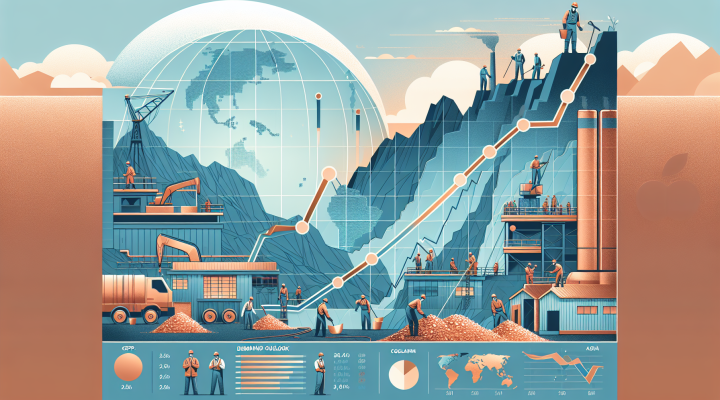
Canada stands at the epicenter of North America’s copper consumption revolution, driven by an unprecedented convergence of mining expansion, electric vehicle manufacturing, and renewable energy infrastructure development. The nation’s strategic position in the global copper market has evolved dramatically, with domestic demand patterns reflecting broader shifts toward electrification and sustainable technology adoption.
The copper demand outlook for Canada reveals a compelling narrative of industrial transformation. Mining operations across British Columbia, Ontario, and Quebec are experiencing their most robust expansion cycle in decades, fueled by copper prices that have maintained strength above historical averages. Major projects like the Highland Valley Copper expansion and new developments in the Ring of Fire region are reshaping production capacity, while simultaneously driving substantial copper consumption for equipment, infrastructure, and processing facilities.
Electric vehicle battery manufacturing represents perhaps the most significant driver reshaping Canada’s copper demand outlook. Ford’s expansion of EV production in Ontario, alongside emerging battery gigafactory projects, requires massive copper inputs for motor windings, charging infrastructure, and grid connections. Each electric vehicle contains approximately 80 kilograms of copper compared to 20 kilograms in conventional vehicles, creating a multiplier effect as Canadian automotive production transitions toward electrification.
Renewable energy infrastructure development adds another substantial layer to domestic copper consumption. Wind farms across Alberta and Saskatchewan, along with solar installations in Ontario, require extensive copper wiring and grid integration systems. The federal government’s commitment to achieving net-zero emissions by 2050 has accelerated these projects, with copper-intensive transmission line upgrades connecting remote renewable generation to population centers.
Technology Sector Driving Unprecedented Consumption Patterns
Canada’s thriving technology sector contributes significantly to evolving copper demand patterns, particularly in data center construction and telecommunications infrastructure. The expansion of 5G networks across major metropolitan areas requires substantial copper for both traditional wiring applications and hybrid fiber-copper systems. Toronto, Vancouver, and Montreal are experiencing data center construction booms, each facility requiring thousands of kilograms of copper for power distribution, cooling systems, and connectivity infrastructure.
Artificial intelligence and high-performance computing facilities represent an emerging segment within Canada’s copper demand outlook. These specialized data centers consume significantly more copper per square foot than traditional facilities due to enhanced power requirements and cooling systems. Major technology companies are establishing Canadian operations to leverage the country’s abundant clean electricity, creating sustained demand for copper-intensive infrastructure.
The aerospace sector, concentrated in Quebec and Ontario, continues evolving toward more copper-intensive applications. Next-generation aircraft designs incorporate increased electrical systems, replacing traditional hydraulic mechanisms with copper-based electrical alternatives. Bombardier and other Canadian aerospace manufacturers are adapting production processes that require substantial copper inputs for both manufacturing equipment and final products.
Resource Sector Innovation Reshaping Market Dynamics
Canadian mining companies are pioneering technologies that simultaneously increase copper demand while improving extraction efficiency. Automated mining equipment, electric mining vehicles, and advanced processing systems all require significant copper content. Vale’s operations in Sudbury and Teck’s Highland Valley facility exemplify this trend, implementing copper-intensive automation systems that reduce operational costs while increasing metal consumption for equipment and infrastructure.
Hydrometallurgical processing innovations developed by Canadian research institutions are creating new copper demand streams. These advanced extraction techniques require specialized equipment with substantial copper components, while enabling extraction from previously uneconomical ore bodies. The integration of artificial intelligence and machine learning in mineral processing further increases copper requirements for sophisticated control systems and sensors.
Green hydrogen production facilities represent an emerging factor in Canada’s copper demand outlook, particularly in provinces with abundant renewable energy resources. Electrolyzers require substantial copper for electrical connections and heat management systems. Several proposed green hydrogen projects in Newfoundland and British Columbia could collectively consume thousands of tonnes of copper annually once operational.
The confluence of these demand drivers positions Canada as a critical player in global copper markets, with domestic consumption growth outpacing traditional industrial economies. Mining expansion, clean technology adoption, and infrastructure modernization are creating sustained demand growth that extends well beyond typical commodity cycles. This transformation reflects Canada’s evolution toward a more electrified, technology-driven economy where copper serves as the fundamental building block for sustainable industrial development. The copper demand outlook suggests this trend will continue strengthening as federal and provincial governments maintain commitments to clean energy transitions while supporting domestic manufacturing capabilities across multiple sectors.