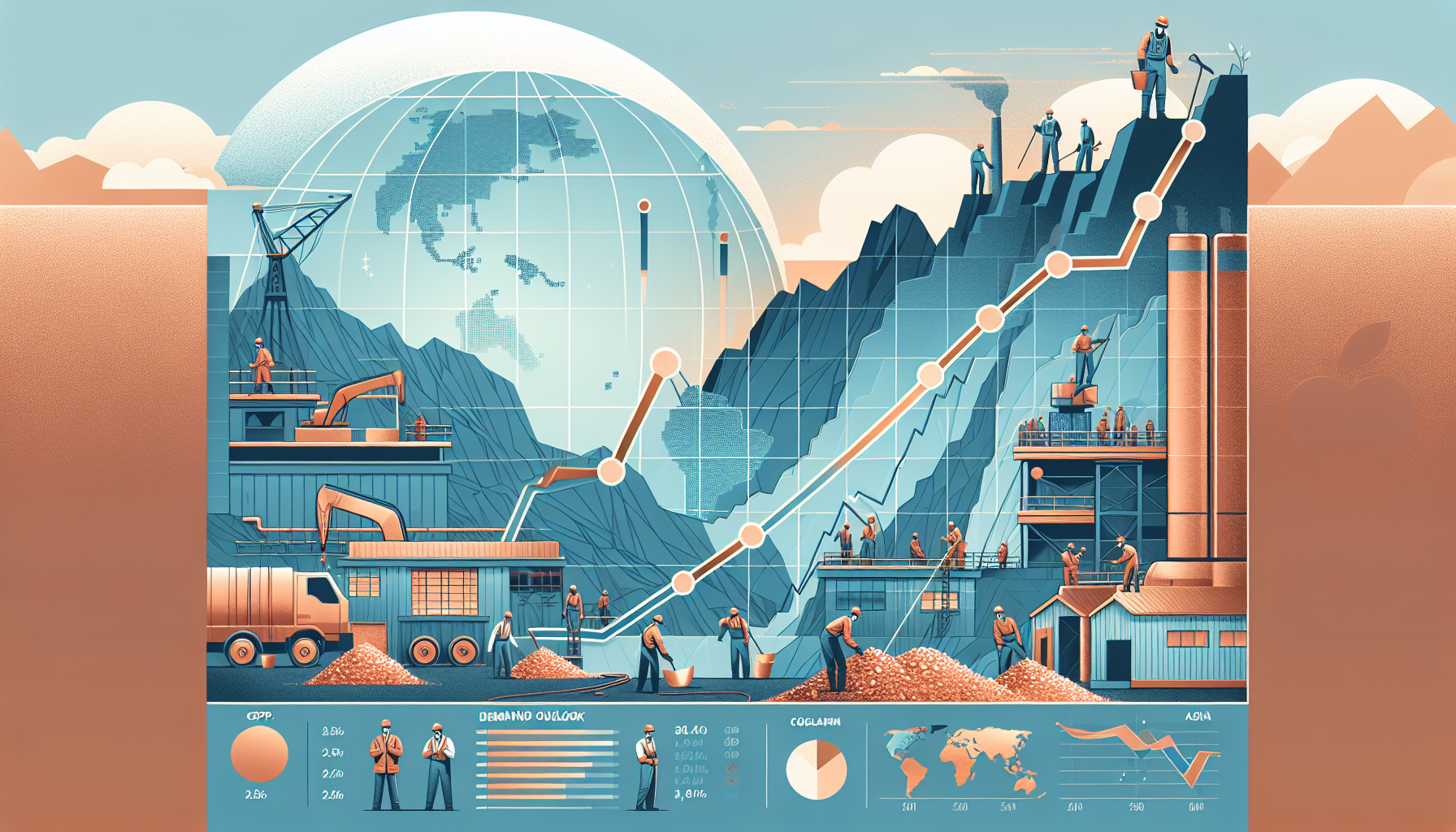
The global copper market stands at a fascinating inflection point, with Canadian companies emerging as unexpected catalysts in what many analysts believe could be the most significant shift in copper demand outlook in decades. While traditional mining regions grab headlines, Canada’s unique combination of technological innovation, vast mineral resources, and strategic positioning in the clean energy transition is quietly reshaping how the world thinks about copper consumption patterns.
Canada’s tech sector has become a surprising driver of copper demand forecasting, particularly through breakthrough developments in electric vehicle infrastructure and renewable energy storage. Companies like Quebec-based lithium producer Nemaska and Ontario’s battery technology firms are creating integrated supply chains that consume copper at rates far exceeding traditional projections. These innovations aren’t just incremental improvements—they represent fundamental shifts in how copper gets utilized across multiple industrial applications.
The mining sector itself tells an equally compelling story about the evolving copper demand outlook. Canadian mining companies have invested heavily in automated extraction technologies and AI-driven ore processing, dramatically improving recovery rates while reducing environmental impact. Rio Tinto’s operations in British Columbia and Teck Resources’ copper mines have deployed autonomous trucks and real-time ore analysis systems that optimize extraction efficiency. These technological advances mean Canadian mines can respond more dynamically to market signals, creating a more elastic supply response that affects global pricing dynamics.
Perhaps most intriguingly, Canadian research institutions are pioneering copper recycling technologies that could fundamentally alter demand patterns. The University of Toronto’s metallurgy department recently announced breakthroughs in urban mining techniques that can extract copper from electronic waste at purities previously achievable only through traditional mining. McGill University’s engineering faculty has developed proprietary processes for recovering copper from industrial slag with 98% efficiency rates. These innovations suggest the copper demand outlook must account for dramatically increased secondary supply sources.
The infrastructure implications extend far beyond mining operations. Canada’s commitment to building comprehensive EV charging networks across its vast geography creates unique copper intensity requirements. Unlike densely populated regions where charging stations serve high user volumes, Canadian infrastructure must account for long distances between population centers, requiring more extensive copper-intensive transmission infrastructure per capita. Transport Canada’s latest infrastructure plans call for charging station density that would consume an estimated 2.3 million tonnes of copper through the remainder of this decade.
Energy storage presents another dimension where Canadian innovation influences the broader copper demand outlook. The country’s abundant renewable energy resources—particularly hydroelectric and wind power—require sophisticated grid balancing solutions that rely heavily on copper-intensive battery storage systems. Provincial utilities from British Columbia to Nova Scotia are implementing grid-scale battery projects that consume copper in quantities that weren’t factored into traditional demand modeling. These projects often require specialized copper alloys developed by Canadian metallurgy companies specifically for extreme weather conditions.
The geopolitical aspect cannot be overlooked when evaluating how Canadian developments affect the copper demand outlook. As global supply chains seek alternatives to traditional copper sources, Canada’s political stability and established trade relationships make it an increasingly attractive partner for long-term copper supply agreements. Major technology companies are signing direct procurement contracts with Canadian miners, creating demand patterns that bypass traditional commodity markets entirely.
Financial markets are beginning to recognize these structural shifts in copper demand fundamentals. Canadian pension funds and sovereign wealth funds have increased their copper exposure significantly, not just through traditional mining investments but through venture capital positions in copper-intensive technology companies. This capital allocation suggests sophisticated institutional investors view the current copper demand outlook as fundamentally underestimating future consumption patterns driven by technological innovation.
The convergence of Canadian technological innovation, resource abundance, and strategic infrastructure development creates a compelling narrative around future copper consumption that extends well beyond traditional demand drivers. As global markets grapple with energy transition requirements and supply chain resilience concerns, Canadian innovations in copper utilization, extraction, and recycling could prove decisive in determining whether the world faces copper shortages or abundance in the coming decade. For investors and industry analysts tracking commodity trends, understanding these Canadian developments may be essential for accurately forecasting the copper demand outlook through this transformative period.