
Editor

Supercharge Your TFSA With These 3 Dividend-Paying Stocks

It’s the most wonderful time of the year. I am, of course, talking about TFSA investing time! As the calendar switches over to 2018, Canadian investors can make another $5,500 contribution to their TFSAs.

Some might argue that with interest rates currently on the rise (both the Federal Reserve and the Bank of Canada have hiked the key interest rate in 2017, and more increases are expected in 2018), dividend-paying stocks are not as appealing, but I disagree, and I have history to back me up.

According to data compiled by Professors Fama & French, dividend-paying stocks have outperformed non-dividend payers, averaging 10.4% annual growth vs. 8.5% from 1927 to 2014 and have also exhibited lower volatility. You can bet against that long-term trend if you wish, but I think every portfolio should include at least some dividend-paying stocks. Today, let’s take a closer look at three stocks that are worthy of consideration to invest your fresh TFSA capital in 2018.

Genworth MI Canada (TSX:MI)

The company is the largest private residential mortgage insurer in Canada and is a dividend-paying machine. In 2017, the company hiked its dividend for an eighth consecutive year since its IPO in 2009 and currently yields over 4.3%. With a current payout ratio of only 35%, the dividend appears sustainable, and future increases are also a possibility.

The company is up over 28% year to date, but it still looks relatively cheap, trading very close to book value (1.03) and at 7.42 times earnings.

Killam Apartment REIT (TSX:KMP.UN)

Our next contestant is one of Canada’s largest residential landlords, owning and operating 184 apartment properties and 35 manufactured home communities.

Owning shares of a real estate investment trust (REIT) is a great way to gain exposure to real estate and offers some advantages over direct real estate investing. These advantages include greater liquidity (you can sell your shares almost instantly and at a very low fee) and the ability to collect your income (dividends) without having to deal directly with bad tenants.

This REIT offers a yield of 4.36% and hands out distributions on a monthly basis.

BCE Inc. (TSX:BCE)(NYSE:BCE)

Finally, we have Canada’s largest communications company, the well-known BCE.

This is by no means what you might call an exciting company in terms of growth, and it won’t make you rich overnight, but it’s as steady as it gets when it comes to paying out dividends. The company has increased its dividend every year since 2009, sometimes more than once a year, and it has a yield of 4.75% as of this writing.

The telecommunications industry might seem saturated, but BCE keeps finding ways to add to its top line. One such example is its recent acquisition of Manitoba Telecom Services.

The payout ratio of 86% is a little high, but it’s not unusual for a mature company and is also in line with its peers in the industry. The dividend should remain sustainable, as long as BCE maintains or increases its market share and continues to increase its yearly revenue. It has done a remarkable job on both counts in recent years.

Foolish bottom line

These three companies currently yield over 4% and provide diversification benefits for investors, given that they operate in three different sectors. Do yourself a favour in 2018: add those solid companies to your TFSA and collect fat dividend cheques for years to come.


3 Reasons to Hold Gold Throughout 2018

Last year, gold increased by close to 13%. The shiny metal finally seems to have found a bottom after declining by close to 35% in the preceding years. Investors have had very little utility for the metal during an expanding economic period, as stocks performed so well. In spite of acting as a hedge against inflation and safety in the wake of any major calamity throughout numerous generations, it never ceases to amaze just how fast the metal can be thrown aside, and yet it never loses its lustre.

Coming into 2018, investors have not had it this good in a very long time. With close to a decade between now and the previous recession, gold may see a lot of interest for a variety of reasons over the next year.

Cryptocurrency

As many investors have used this new currency to diversify their portfolios and hedge against market fluctuations, the running to the exits? may create a huge demand for gold, which may act as a catalyst for investors to see massive gains from the metal. Although there are very few productive uses for gold, it will not stop investors from considering investing in companies such as Goldcorp Inc. (TSX:G)(NYSE:GG), which currently trades close to tangible book value.

North Korea

With the potential for governments, companies, and investors alike to get spooked, the uncertainty between countries (even if it is insignificant to the greater economy) has historically been a reason for investors to rush into gold. With relations between North Korea and the United States in a very delicate state, it could take no more than a tweet to send the price of gold up by another 10%.

As a reminder, the smaller the gold company, the more sensitive it is to the overall price change of the metal itself. In the case of Eldorado Gold Corp. (TSX:ELD)(NYSE:EGO), the amount of tangible book value per share is nothing short of $4.49, as the current share price sits at less than $2. Investors can reap the huge potential that this name has to offer should gold increase further in value.

Higher interest rates

With interest rates on the rise, investors will need to familiarize themselves with this terminology: backwardation and contango.

As gold is a commodity that can be stored, the price for delivery in the future will be higher than the current spot price. This is contango. In the event that the price for delivery in the future is set at a lower rate than the spot rate, it would be known as backwardation.

In the case of gold, higher interest rates may cause a gap in the spot and future prices and a higher future price will be needed to justify tying up money in a transaction. Although the jury remains out on this particular point, the expectation is that this aspect has properly been priced into the market over the past few years, making gold a very attractive investment for 2018.

Cougar Hunt in Alberta Sparks Debate Among Scientists, Hunters and Activists

Cougar hunt in Alberta sparks debate among scientists, hunters and activists

EDMONTON — Hunters have been killing cougars in Alberta for decades.

They often follow prints in the snow or use dogs to track the big cats before they are shot with guns or bows.

Last month, outdoor television host Steve Ecklund’s cougar hunt led to online threats and criticisms — including a penis comment from Laureen Harper, wife of former prime minister Stephen Harper — after he bragged about it on social media.

Similar outrage followed the killing of No. 148, a well-known Banff grizzly bear, by a hunter in British Columbia last summer.

Both kills were legal.

Scientists say a cultural divide still exists — even within their own community — about hunting large carnivores.

“It’s seeing a much greater value on an individual animal rather than a population, but the system is set up for us to manage populations, not individuals,” said Adam Ford, an assistant professor of biology at University of British Columbia Okanagan.

“You see this come up when the individual-focus conservation people see a dead cougar and call people out for having a small penis.

“The way hunting has been designed for a long time is to not have an impact on the population.”

Alberta has regulated its cougar population since 1969. An annual quota allows up to 155 animals to be hunted each year.

The province estimates there are 2,000 to 3,500 cougars.

Both the government’s top carnivore expert and University of Alberta biologist Mark Boyce have said it’s a sustainable population that must be managed because cougars can prey on cattle or become a public safety risk.

Similar debates have taken place around grizzly bears. The hunt in B.C. was banned last month after surveys showed it wasn’t supported by most residents.

Although people are concerned about “beautiful cuddly carnivores” being shot, Ford said he worries scientists have been weighing in on the ethical debate over hunting.

“My morals are different than yours, but facts should be facts,” he said, noting he’s working on a paper looking at the growing divide between scientists on issues such as hunting.

Hunters have defended the hunt as a tradition.

“As outdoor enthusiasts, we look for opportunities to get into the outdoors,” said Wayne Lowry, a hunter and past president of the Alberta Fish and Game Association. “The cougar season offers a very late-season hunting opportunity.”

Lowry, who killed a cougar near Crowsnest Pass about 15 years ago, said it’s unlike any hunt he’s experienced.

“It took me two years,” he said. “For me, it was a once-in-a-lifetime kind of event.

He still has the mounted cat in his home.

“It was a great experience … You see the dogs get excited and you get excited as well.”

Lowry admitted there’s a lot of controversy about hunting.

“The debate is the same regardless of who it is, where it happens and what the species is. You have people who don’t like it and people who do.”

One scientist said the outrage is not generally with hunting, but an ethical debate over killing large carnivores that can suffer. Chris Darimont, associate professor of geography at the University of Victoria, said hunting for sport makes people uncomfortable.

“They cannot accept the idea that people kill carnivores not to feed their families, but to feed their egos,” said Darimont, who is opposed to killing animals other than for food or protection.

Ecklund said in a social media post that he made a stir-fry from the cougar, although eating the meat isn’t required by law.

Darimont, who hunts one elk or deer a year for food, said it’s a “thin veil of deception” for hunters to say they’re eating the animals, because predator meat isn’t very tasty.

“Wildlife managers for decades have acknowledged that these (animals) are not killed for their meat, but for their trophy items.”

The cougar hunt in Alberta should be re-evaluated, Darimont suggested. Science shows there are risks in overharvesting, because it’s tough to count carnivores and get a clear picture of the population, he said.

“There’s lots of uncertainty. Managers can and do make mistakes, and then we are just starting to learn of the evolutionary and social costs of killing large carnivores.”

The Alberta government says it hasn’t received any calls to end the hunt since the cougar controversy hit.

The province did ban the grizzly bear hunt in 2006 due to concerns about a dwindling population — although recent increases in some areas have led to calls to allow it to return in Alberta.

Bombardier, Inc. Reminds Investors Why it’s Still a Bad Buy

Bombardier, Inc. (TSX:BBD.B) has managed to disappoint investors yet again. While the company planned to deliver between 20 and 22 CSeries jets in 2017, the final number came in at just 17. However, Bombardier maintains that it should still be able to meet its goal of delivering 40 jets this year.

The problem is that Bombardier’s reputation has been problematic, which serves as a reminder that even though it partnered with Airbus earlier in the year to produce its jets, Bombardier can’t miraculously heal all that ails the manufacturer.

Investors initially responded positively to the news of the partnership, as it was expected to create efficiency and avoid costly tariffs south of the border. Although it may be too early to judge the strength of the new partnership, investors should not be too quick to trust the company’s projections and expectations.

The company is known for being late and unreliable

New York’s Metropolitan Transportation Authority (MTA) didn’t even consider Bombardier for a bid on its subway cars because of Bombardier’s reputation for being late on its deliveries. The contract was worth as much as US$3.2 billion, and MTA wasn’t the only customer that sought out other vendors.

Metrolinx, Ontario’s largest transit authority, followed a similar path when it refused to let Bombardier bid on a contract for the operator’s GO Transit trains. The company even tried to get out of an existing contract with Bombardier as a result of that company’s manufacturing and quality issues.

The company’s poor reputation is just one of many reasons why Bombardier is a bad buy.

Stock is back on the decline

Bombardier had a strong 2017 that saw its share price rise by as much as 40%. However, in the past month, the stock has lost more than 10% of its value.

Lack of profitability should be a big concern

Despite help from the government, Bombardier continues to be plagued with losses in each of the last four quarters, and there is no reason to expect that to change anytime soon.

The company’s revenue was up less than 3% in its most recent quarter, and although working with Airbus has helped bring in more deals for its CSeries jets, Bombardier will have to share those sales and profits (if any) under a partnership agreement.

Bombardier is a speculative investment at best

Although investors may point out that returns were very strong in 2017, Bombardier’s share price has dropped more than 26% over the past five years.

With no profits, limited sales growth and negative equity, it’s hard to find a reason to buy shares of the company’s stock unless you’re a speculator. In the short term, Bombardier could offer you some returns if you’re able to pick low entry points, but this is not a stock that holds much promise over the long term.

What should investors do?

The safest thing investors can do at this stage is to adopt a wait-and-see approach. Until Bombardier can prove that it can kick its old habits and turn its business around, it will still be a high-risk investment.

Men Rescued From Lake Near Montreal After Vehicle Falls Through Ice

An ice rescue team near Montreal saved a city worker after he fell through the ice while operating a small tractor on Lac Saint-Louis.

POINTE-CLAIRE, Que. — A man was rescued from the icy waters of a lake near Montreal on Saturday evening after the small tractor he was driving fell through the ice.

A spokesman for Montreal’s fire department says he believes the man was working to remove the snow on a boat ramp in the western suburb of Pointe-Claire when the vehicle went into the lake at about 5 p.m.

Operations Chief Ian Ritchie says the man was able to climb onto the roof of the vehicle and wait for help.

The fire department’s ice rescue team was able to extend a ladder to the man, who was taken to hospital as a precautionary measure.

The Canadian Press

Bank of Canada Sees Capacity Pressure, Setting up Another Rate Hike

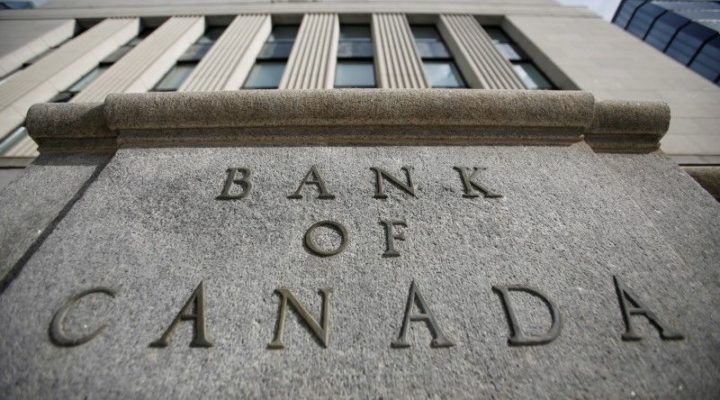
FILE PHOTO – A sign is pictured outside the Bank of Canada building in Ottawa, Ontario, Canada, May 23, 2017.

OTTAWA (Reuters) – Canadian companies remain optimistic about future sales despite some moderation from highs, and signs of capacity pressures and labor shortages have picked up, the Bank of Canada said on Monday, reinforcing expectations for an interest rate hike.

Little economic slack remains, with companies expected to expand operations to accommodate demand as the job market tightens and expectations for U.S. demand remain firm, the central bank said in its quarterly Business Outlook Survey.

“The (survey) was the last key piece of the puzzle for a rate hike this month, with the focus on diminished excess capacity,” CIBC Economics chief economist Avery Shenfeld wrote in a note to clients.

The business survey added to evidence of a tightening job market after back-to-back employment reports showed strong hiring, boosting expectations the bank will continue to raise interest rates to head off inflation after two hikes in 2017.

The chance of a rate hike on Jan. 17 jumped to 86 percent after the report while the two-year yield pushed to its highest since June 2011 at 1.795 percent. Expectations for a hike hit nearly 80 percent on Friday after data showed the economy added almost 80,000 jobs in December

Pressure on production capacity continued, with the share of firms reporting they would have some or significant difficulty meeting an unanticipated increase in demand hitting its highest level since the 2008-2009 recession, the bank said.

Still, the survey noted increasing concern about the renegotiation of NAFTA, which U.S. President Donald Trump has threatened to terminate. Negotiations are ongoing.

“While respondents are increasingly concerned about the renegotiation of the North American Free Trade Agreement and rising protectionism more generally, most see healthy U.S. growth and the low Canadian dollar benefiting their sales over the next 12 months,” the bank said.

Inflation expectations were modest and unchanged from the third quarter, the survey showed, suggesting corporate Canada has not been able to raise prices despite the economic strength.

“One notable feature in the survey is that despite the capacity constraints and growing labor shortages, inflation expectations are still quite muted,” said Doug Porter, chief economist at BMO Capital Markets.

Bank of Canada Governor Stephen Poloz has said the bank needs to tighten monetary policy gradually before inflation bubbles up, rather than slam on the brakes when it appears.

Firms said competitive pressures dampen their ability to raise output prices despite the acceleration in input prices, the survey showed.