Editor

Mark Zuckerberg’s goal for 2018: ‘Fixing’ Facebook

Each year, Facebook CEO Mark Zuckerberg gives himself a personal challenge. Run one mile a day. Read a book every other week. Eat only what he kills.

Mark Zuckerberg speaks during a town hall Q&A in Berlin

For 2018, however, Zuckerberg is essentially challenging himself to do better at his day job.

Zuckerberg said Thursday his personal challenge for 2018 is working to prevent Facebook from being misused in ways that potentially do harm to its billions of users and to society at large.

“The world feels anxious and divided, and Facebook has a lot of work to do — whether it’s protecting our community from abuse and hate, defending against interference by nation states, or making sure that time spent on Facebook is time well spent,” Zuckerberg wrote in a Facebook post Thursday. “My personal challenge for 2018 is to focus on fixing these important issues.”

Zuckerberg continued: “We won’t prevent all mistakes or abuse, but we currently make too many errors enforcing our policies and preventing misuse of our tools. If we’re successful this year then we’ll end 2018 on a much better trajectory.”

The admission of Facebook’s shortcomings in protecting its platform, and Zuckerberg’s goal to double down on addressing them, comes after a bruising year for the company.

Related: Silicon Valley’s ‘gut-wrenching’ year confronting its dark side

Facebook, along with Twitter (TWTR) and Google (GOOGL), has come under fire since the 2016 presidential election for its role in spreading fake news, enabling polarizing filter bubbles, and not catching Russian propaganda campaigns.

Late last year, executives from Facebook (FB), Twitter (TWTR) and Google (GOOG) were grilled by Congress over their role in the 2016 election. Some in Congress raised alarms about the immense power of these platforms and their seeming inability to police themselves.

There have also been troubling headlines for Facebook from abroad. Facebook has been described as enabling ethnic cleansing in Myanmar. And Facebook’s WhatsApp was cited as a cause of beatings in India after a fake news story went viral on the messaging service.

After years of maintaining an unwavering optimism about the social network, Zuckerberg and other Facebook insiders have been forced to confront the dark side of what they built.

In one remarkably candid post for Yom Kippur last year, Zuckerberg apologized for “the ways my work was used to divide people rather than bring us together.”

Acknowledging a problem is one thing, finding a solution is another.

In the post Thursday, Zuckerberg admitted Facebook’s problems touch on “questions of history, civics, political philosophy, media, government, and of course technology.”

“I’m looking forward to bringing groups of experts together to discuss and help work through these topics,” he said.

The New Year’s challenge is just the latest example of a shift in Zuckerberg’s public posture about Facebook. In the first days after the 2016 election, Zuckerberg dismissed as “crazy” the idea that fake news on the social network influenced the outcome.

Yet, Facebook spent much of 2017 trying to address exactly that concern. The company waged a global fight against fake news by cracking down on tens of thousands of fraudulent accounts, partnering with fact checkers and running full-page ads in newspapers with tips to spot fabricated stories.

Zuckerberg also made it his personal challenge for 2017 to break out of the Silicon Valley bubble and meet with people in every state. The move fueled speculation Zuckerberg wanted to run for president, but some in the tech industry instead saw it as an attempt to assess the unintended consequences of his company.

“Zuck isn’t running for President,” Nathan Hubbard, a former Twitter executive, tweeted last June. “He’s trying to understand the role the product he created played in getting this one elected.


Canada Olympic House Plans Unveiled for South Korea

Gathering place will be located near Gangneung Olympic Park

An inside look at Canada Olympic House for the upcoming Games in Pyeongchang, South Korea.

The Canadian Olympic Committee unveiled plans for Canada Olympic House, which will serve as a gathering place for athletes, fans and supporters at the Games in Pyeongchang, South Korea.

The house will be located on the east coast of South Korea near Gangneung Olympic Park. A ceremonial opening is set for Feb. 7 and the 12,000-square-foot house will officially open to fans on Feb. 10.

“We are so excited to welcome Team Canada fans to Canada Olympic House in a bigger way than we ever have before,” Derek Kent, chief marketing officer for the COC, said in a press release. “We are rolling out the welcome mat to the world.”

The COC still has yet to provide a firm number for its medal aspirations at the Winter Games. Chef de mission Isabelle Charest said Monday that Canada hopes to contend for the top spot.

“We’ve been performing so well on the international circuit,” Charest said. “We know that we can compete against all the countries and we’re aiming to be first. We’re going for podiums.”

Tesla Stock: The New Big Short?

Tesla unveils a new electric semi-truck

Wall Street appears to be tired of Elon Musk overpromising and underdelivering on Tesla’s new affordable Model 3 electric car.

Shares of Tesla (TSLA) fell 3% Thursday after the company disclosed that it is still having a tough time getting its Model 3 to customers on time. Tesla is way behind on its ambitious production goals.

The stock has now plunged more than 20% from the all-time high it set last year, which means that Tesla is technically now its own little bear market.

Short sellers, investors who bet that a stock will go down and profit when the price falls, have piled into Tesla lately.

According to research firm S3 Partners, which tracks short selling, Tesla has been an extremely profitable trade for the past few months.

Ihor Dusaniwsky, managing director of predictive analytics for S3 Partners, tweeted after Tesla’s disappointing outlook that short sellers were set to make nearly $240 million from the stock’s most recent decline.

Even big, well-known Wall Street firms are souring on Tesla.

JPMorgan analyst Ryan Brinkman wrote in a report last month that he thinks Tesla stock could fall 40% in 2018 due to the Model 3 difficulties.

Competition could be another big problem.

While Tesla is the clear leader with higher-end, luxury electric vehicles thanks to its Model S sedan and Model X crossover, it’s unclear if Tesla will be able to sell as many cheaper Model 3s as needed to truly become a true mass market auto company.

Nissan (NSANF) already is selling the Leaf. And GM (GM) has a big lead over Tesla with its Bolt. General Motors (GM) said Wednesday that it delivered more than 3,200 Bolts to customers in December — more than double the number of Model 3s that Tesla delivered for the entire fourth quarter.

There’s also the issue of whether Tesla (and Musk for that matter) are overextended.

Tesla is also busy ramping up production of a semitruck for big corporate customers (Walmart and UPS have already placed orders) and integrating the SolarCity solar panel acquisition.

This wouldn’t necessarily be a problem if Tesla was already a profitable market leader.

But the company is continuing to lose money, raising fears that Tesla may need to sell more stock to fund its ambitious plans. Doing that would reduce the value of shares for Tesla’s existing investors.

Finally, Musk also runs rocket company SpaceX and tunneling business The Boring Company.

So it’s reasonable for Wall Street to wonder if Musk simply has too much on his plate. Tesla is a classic cult stock. There is considerable hype and it may be impossible for Tesla to live up to it.

Holiday Debt Piles onto Already-High Credit Card Balances

Holiday debt piles onto already-high credit card balances

Strong holiday sales and some consumers saying they turned to plastic to fund those purchases, it looks like 2018 will be the year that credit card debt crosses $1 trillion.

“The scary number — $1 trillion — we’ll definitely hit in 2018,” said Jill Gonzalez, an analyst with WalletHub. “It seems to say a lot of American consumers did not learn their lesson from the recession and are returning to living beyond their means.”Credit card debt stood at $808 billion on Sept. 30, the end of the third quarter, according to the most recent data from the Federal Reserve Bank of New York. That’s $280 billion more than the previous high hit in 2008, at the height of the financial crisis that led to the Great Recession.Updated numbers for the fourth quarter of 2017, which ended Dec. 31, should be released in mid-February.

Nevertheless, U.S. consumers have continued racking up debt.

An annual post-holiday survey by MagnifyMoney shows people who used credit cards for holiday purchases charged an average of $1,054, about 5 percent more than last year.

As consumers keep spending away on their credit cards — which typically come with interest rates starting at about 16 percent — the Federal Reserve is expected to have two or three quarter-point hikes this year to a key rate that affects consumer debt. It did so three times in 2017.

“Every time there is a Federal Reserve rate hike, that adds about $1.5 billion to our collective financing rates,” Gonzalez said. “That has to do with these delinquency rates rising. And when you factor in mortgages, student loans and auto loans, that becomes a scary picture.”If you are among those facing mounting credit card bills, Gonzalez offers the following tips to pare down your debt: Consider transferring your balance

If your credit score is high enough to qualify for a zero percent balance-transfer offer, consider taking it.

“The offers with 18 or 21 months with zero percent interest are reserved for those with excellent credit,” Gonzalez said.While these deals typically come with a balance-transfer fee, the zero percent interest rate can last anywhere from a few months or a year to a couple of years. At the end of the deal, the remaining balance begins accruing interest at the then-current rate.Not only do you avoid paying interest on the debt, you can potentially pay it down more quickly because all of your payment will go toward the balance instead of some going toward interest.Strategize your repayment efforts

If you have multiple credit cards, start by funneling most of your repayments toward the one with the highest interest rate. In other words, pay the minimum on the lower-rate cards and put any extra you possibly can toward the debt that’s costing you the most in interest.

“Once that most expensive debt is paid off, go to the card with the next highest rate and do that until you are debt free,” Gonzalez said.”On the Money” airs on CNBC Saturdays at 5:30 a.m. ET. Check listings for air times in local markets.

Justin Trudeau Needs to Expand the Role of Science in Government in a Big Way

Dr. Mona Nemer was introduced as Canada’s new Chief Science Advisor in September 2017. Researchers propose that Canada create “Departmental Chief Science Advisors” to help complement and extend the reach of the newly created position.

While the federal Liberal government has shown support for science by appointing a Chief Science Advisor for the Prime Minister, a new report suggests additional science advisers in individual departments of the government could do more to ensure that political decisions are based on good scientific evidence.

Most politicians do not have a science background, yet many decisions over issues such as climate change, environment, food safety, fisheries, agriculture, space exploration and public health, involve scientific concepts that are often overlooked or misrepresented during the political decision-making process. That’s because the science is only one of many factors politicians must consider: there’s also the effect on the economy, loss of jobs, business interests, and perhaps the biggest factor in the political world, public perception. If those other factors are considered to be more important, then science can be pushed aside, despite good evidence to the contrary.

It was because of these other factors that the previous Conservative government under Stephen Harper reportedly eliminated the position of science adviser, cut back on science funding, and muzzled federal scientists from speaking about their work, for the sake of preserving the economy, in part, supported by the fossil fuel industry.

A similar effect is currently at work in the U.S., where President Donald Trump has pulled out of the Paris Climate Accord and believes that climate change is a hoax. And globally, carbon emissions continue to climb worldwide despite highly publicized international agreements with promises to cut back.

To help keep good science at the forefront of Canadian political decisions, a report in FACETS — a new Canadian, open access, multidisciplinary science journal — is suggesting a host of specialist science advisors to work in departments such as Environment Canada, the Canadian Space Agency, Fisheries and Oceans Canada, or Health Canada. They could be called upon by the Chief Science Advisor to provide advice in those specific areas. This makes sense since one scientist cannot be expected to be an expert in all fields of science.

In addition to providing accurate scientific information internally for the government, the report’s authors also suggest that these departmental advisers provide:

  • Outreach services.
  • Communicate to the public about Canadian scientific research.
  • Provide expert opinions when issues such as food safety or environmental concerns arise in the media.

This last function is important because there is a wealth of misinformation out there misleading the public. From the idea that the moon landings were faked, to chem-trails in the atmosphere controlling our minds, most of them are harmless entertainment.

Jennifer Wonnacott holds her son Gavin as he points to a sign showing support of a measure requiring nearly all California school children to be vaccinated. The bill was in response to a measles outbreak in Disneyland in 2014.

But some can have serious consequences, such as the effect of a single scientific paper that came out in 1998 linking vaccines to autism. Even though this report has been proven to be poorly done, wrong in its conclusions and even fraudulent, and despite strong scientific evidence that vaccines are effective in preventing disease, the idea spread, generating fear and confusion among parents who decided to avoid vaccinations for their children just to be safe. As a result, new outbreaks of measles are now appearing among children, including in the U.S.

As a society, we face some hard decisions about how we proceed in the 21st century in a sustainable way without compromising the environment, resources of food, water, or land, while controlling disease, providing clean energy, and basically ensuring the survival of the human species.

Science has already pointed the way to many solutions to these issues, but the scientific perspective has often been ignored for a “business as usual” approach that does not disturb the status quo. With proper scientific information, both for the public and politicians, intelligent decisions can be made to advance our civilization without going bankrupt in the process.

Rescuers Find 2 Missing Snowmobilers Near Revelstoke, B.C.

2 men from Kelowna, B.C., went missing Saturday on Boulder Mountain

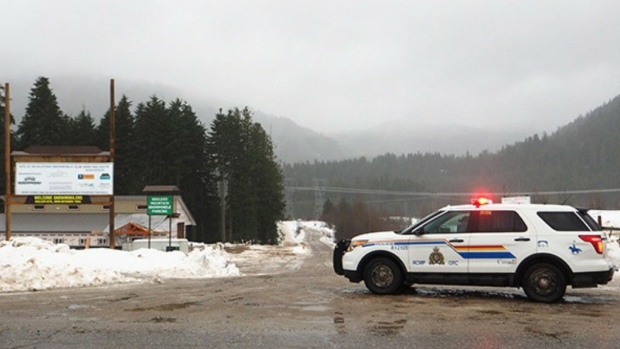
RCMP officers in Revelstoke, B.C., closed Boulder Mountain on Sunday morning in support of an ongoing search for a pair of missing snowmobilers.

Police say two young men are lucky to have survived after they got lost snowmobiling and were forced to spend the night on a mountain near Revelstoke, B.C.

RCMP Cpl. Thomas Blakney said the men, both 24-year-old Kelowna, B.C., residents, were reported missing Saturday afternoon when they failed to return to their rented sleds after spending the day on Boulder Mountain in eastern B.C.

Rescue crews spent about five hours searching for the pair in the dark Saturday night, but had nothing to go on, other than the fact that they were on the mountain, Blakney said.

“It’s a needle in a haystack,” he said.

Officials closed public access to the area Sunday so rescuers could search using helicopter and sled teams.

Boulder Mountain, four kilometres west of the town of Revelstoke, is a popular snowmobiling destination.

Around 1 p.m., the men were found. They were cold, but in good health. Revelstoke Search and Rescue transported the snowmobilers off of the mountain.

Blakney said it appears that one of the two sleds ran out of fuel Saturday, and when the men tried to get out on the other machine, they got lost.

The pair created a make-shift snow fort where they stayed for the night before trying to walk out Sunday morning, he said.

The snowmobilers got lost again on Sunday, Blakney said, but rescuers saw their footprints and were able to track them down.

“They’re safe and sound, so it’s a good ending,” he said, noting that the terrain and conditions in the area are unpredictable, and the situation could have been much worse.

The snowmobilers had an avalanche kit with the basics, but did not have the food or supplies required to spend a night on the mountain, Blakney said.

Police are reminding recreational sledders of the importance of appropriate equipment and training when going into the back country.

The temperature on the mountain was around -4 C Sunday morning and was below freezing overnight Saturday.