
Archives for April 19, 2026

Emerging TSX Breakout Candidate Companies Drive Economic Growth Across Key Sectors

Canada’s capital markets are witnessing a remarkable transformation as emerging companies position themselves for significant growth trajectories. The identification of a strong TSX breakout candidate has become increasingly crucial for investors and economic analysts tracking the nation’s financial health. These rapidly ascending companies are not merely generating impressive returns for shareholders—they’re fundamentally reshaping how Canada competes on the global economic stage.

The current market environment has created fertile ground for breakthrough performances among mid-cap and emerging large-cap companies listed on the Toronto Stock Exchange. Several sectors are producing compelling TSX breakout candidate opportunities, with technology, clean energy, and resource extraction leading the charge. These companies typically exhibit strong revenue growth, expanding market share, and innovative business models that position them to capture disproportionate value in their respective industries.

Technology firms represent perhaps the most dynamic segment of potential breakout performers. Canadian software companies specializing in artificial intelligence, cybersecurity, and cloud infrastructure are experiencing unprecedented demand from both domestic and international markets. These organizations are creating high-value jobs, attracting foreign investment, and establishing Canada as a legitimate competitor to Silicon Valley in specific technological niches.

The clean energy transition has spawned another category of promising TSX breakout candidate companies that are simultaneously driving economic growth and environmental progress. Battery technology manufacturers, renewable energy developers, and energy storage solution providers are scaling rapidly as global demand for sustainable alternatives intensifies. These companies are benefiting from substantial government incentives, private capital flows, and strategic partnerships with established multinational corporations.

Resource and mining companies continue to represent significant breakout potential, particularly those focused on critical minerals essential for the global energy transition. Lithium, cobalt, and rare earth element producers are experiencing robust demand growth, while traditional oil and gas companies are diversifying into carbon capture technologies and renewable energy projects. This evolution is creating hybrid business models that appeal to both value-oriented and ESG-focused investors.

Economic Impact Beyond Market Performance

The influence of a successful TSX breakout candidate extends far beyond stock price appreciation and investor returns. These companies are becoming significant contributors to employment growth, particularly in high-skilled technical positions that command premium wages. The multiplier effect of their expansion creates opportunities throughout their supply chains and geographic regions, supporting everything from specialized manufacturing to professional services.

Regional economic development has become increasingly tied to the success of these emerging market leaders. Cities like Toronto, Vancouver, Calgary, and Montreal are experiencing technology-driven economic diversification as breakout companies establish headquarters, research facilities, and operational centers. This geographic distribution of economic activity is reducing Canada’s historical dependence on resource extraction while maintaining the country’s natural resource advantages.

International competitiveness represents another crucial dimension of how breakout companies are shaping the broader economy. Canadian firms that achieve significant scale and market recognition become attractive acquisition targets for global corporations, often resulting in substantial premiums for Canadian shareholders and increased foreign direct investment. Alternatively, these companies may pursue aggressive international expansion strategies that establish Canadian brands in global markets.

Investment Capital and Innovation Ecosystem

The emergence of credible TSX breakout candidate opportunities has attracted increased attention from institutional investors, including pension funds, sovereign wealth funds, and international asset managers. This capital influx is creating more liquid markets, reducing financing costs for growing companies, and enabling more ambitious expansion plans. The virtuous cycle of investment success is encouraging entrepreneurship and risk-taking across multiple sectors.

Innovation ecosystems are strengthening as successful companies reinvest profits into research and development, acquire smaller innovative firms, and establish corporate venture capital arms. These activities are accelerating technological advancement, creating intellectual property assets, and fostering collaboration between academic institutions and private enterprise.

The transformation occurring within Canada’s public equity markets reflects a broader economic evolution toward higher-value industries and innovative business models. As TSX breakout candidate companies continue to mature and achieve sustainable growth trajectories, they are establishing Canada as an increasingly attractive destination for global capital and talent. This dynamic is positioning the Canadian economy for sustained competitiveness in an rapidly evolving global marketplace, while creating substantial wealth for domestic investors and contributing to long-term economic prosperity across multiple sectors and regions.
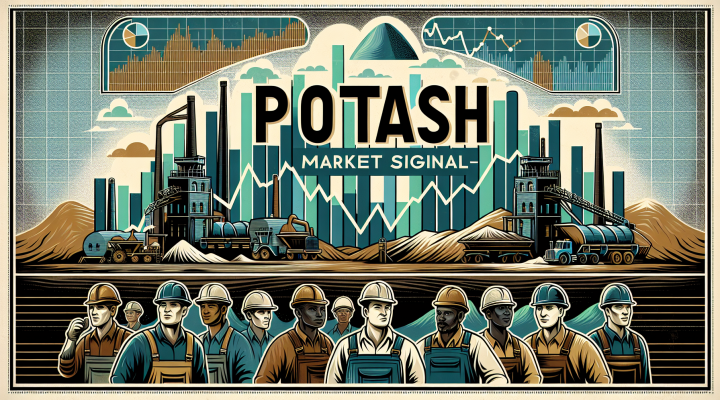

Revolutionary Mining Technology Transforms Canada’s Potash Market Signals for Global Agriculture

Canada’s mining sector is experiencing a technological renaissance that’s sending ripple effects through global commodity markets. The latest potash market signal emerging from Saskatchewan’s mining heartland suggests a fundamental shift in how this critical agricultural fertilizer reaches worldwide consumers. As precision agriculture demands grow and geopolitical tensions reshape supply chains, Canadian innovations in potash extraction and processing are positioning the nation as an even more dominant force in feeding the world’s growing population.

The convergence of advanced mining techniques, artificial intelligence, and sustainable extraction methods is creating unprecedented opportunities for investors and agricultural stakeholders alike. These developments are generating clear potash market signals that savvy industry observers are closely monitoring.

Advanced Extraction Technologies Reshape Production Efficiency

Canadian potash producers have deployed cutting-edge solution mining technologies that dramatically reduce environmental impact while increasing yield efficiency. These systems utilize sophisticated sensors and AI-driven optimization algorithms to maximize potash recovery rates from underground deposits. The technology represents a significant leap forward from traditional shaft mining methods, offering production cost reductions of up to 30% while minimizing surface disruption.

The latest potash market signal from these technological advances indicates that Canadian producers can now respond more rapidly to global demand fluctuations. Real-time monitoring systems provide unprecedented visibility into extraction rates, allowing companies to adjust production schedules dynamically based on market conditions. This agility gives Canadian producers a competitive advantage over traditional mining operations that require longer lead times for production adjustments.

Digital Supply Chain Integration Enhances Market Responsiveness

Blockchain-based tracking systems and IoT sensors throughout the supply chain are creating transparency levels never before seen in the potash industry. These technologies enable producers to trace their products from extraction through final delivery, providing customers with detailed quality assurance data and origin verification. The integration of these systems creates a powerful potash market signal regarding product authenticity and quality standards.

Canadian companies are leveraging predictive analytics to anticipate global agricultural demand patterns, particularly in emerging markets where food security concerns drive fertilizer consumption. Machine learning algorithms analyze weather patterns, crop yield forecasts, and economic indicators to generate sophisticated demand projections. This data-driven approach allows producers to optimize inventory levels and transportation logistics, reducing costs while ensuring adequate supply availability.

Sustainable Innovation Drives Long-term Competitive Advantages

Environmental stewardship has become a crucial differentiator in the global potash market, with Canadian producers leading sustainability initiatives through innovative waste reduction technologies and renewable energy integration. Solar-powered extraction facilities and closed-loop water systems are becoming standard across major operations, appealing to environmentally conscious agricultural buyers worldwide.

The potash market signal from these sustainability investments suggests that premium pricing opportunities exist for producers who can demonstrate environmental responsibility throughout their operations. European and North American agricultural buyers increasingly prioritize suppliers with strong environmental credentials, creating market segmentation opportunities for forward-thinking Canadian producers.

Strategic Resource Partnerships Amplify Innovation Impact

Collaborative ventures between Canadian mining companies and technology firms are accelerating innovation deployment across the sector. These partnerships combine deep geological expertise with cutting-edge software development capabilities, resulting in breakthrough applications that optimize every aspect of potash production and distribution.

Government support through research grants and tax incentives has fostered an ecosystem where mining companies can experiment with emerging technologies without shouldering excessive financial risk. This supportive environment has attracted international technology partners who view Canada as an ideal testing ground for next-generation mining solutions.

The transformation occurring within Canada’s potash industry represents more than incremental improvement—it signals a fundamental reimagining of how critical agricultural resources reach global markets. As food security concerns intensify and agricultural productivity requirements grow, the potash market signal from Canadian innovation suggests that technology-driven efficiency and sustainability will determine market leadership. Investors and agricultural stakeholders who recognize these emerging trends position themselves advantageously within an evolving landscape where Canadian ingenuity continues reshaping global commodity markets.

Smart Canadians Are Maximizing Their RRSP Returns With These Advanced Strategies

Most Canadians treat their Registered Retirement Savings Plan as a simple tax deduction, contributing whatever they can afford before the deadline and calling it a day. But this approach leaves thousands of dollars on the table. Strategic RRSP optimization goes far beyond basic contributions—it’s about timing, investment selection, income splitting, and coordinating with other retirement vehicles to create a powerful wealth-building engine.

The difference between basic RRSP use and true optimization can mean the difference between a comfortable retirement and financial stress in your golden years. With contribution room accumulating at 18% of earned income annually and lifetime limits now exceeding $3 million for high earners, the stakes have never been higher.

Contribution Timing That Maximizes Tax Benefits

The most overlooked aspect of RRSP optimization involves strategic contribution timing rather than simply maxing out before the deadline. High-income earners should contribute during peak earning years when marginal tax rates are highest, potentially saving 40-50% in taxes versus contributing during lower-income periods.

Consider the “gross-up” strategy: if you’re expecting a significant income increase—perhaps a promotion or bonus—delay your contribution until that higher tax bracket kicks in. A $10,000 contribution at a 43% marginal rate saves $4,300 versus $2,600 at a 26% rate. For business owners with variable income, this timing flexibility becomes even more valuable.

Equally important is the borrowed money strategy. Taking an investment loan to contribute the maximum amount can accelerate wealth building, especially when investment returns exceed borrowing costs. While loan interest isn’t tax-deductible for RRSP contributions, the immediate tax refund can help offset interest payments.

Investment Selection and Asset Location Strategies

Effective RRSP optimization requires treating your retirement accounts as part of a coordinated investment ecosystem. Asset location—deciding which investments go in which account types—can significantly impact long-term returns.

Hold your highest-growth potential investments outside your RRSP in taxable accounts, where capital gains receive preferential tax treatment. Inside your RRSP, focus on income-generating assets like bonds, REITs, and dividend-paying stocks that would otherwise be heavily taxed. This approach maximizes the tax shelter’s value while optimizing your overall tax efficiency.

International investing within RRSPs offers unique advantages. Foreign withholding taxes on international stocks are often reduced or eliminated within registered accounts, making your RRSP an ideal location for global diversification. U.S. stocks, in particular, face no withholding tax in RRSPs due to tax treaty provisions.

Income Splitting and Spousal RRSP Strategies

One of the most powerful RRSP optimization techniques involves spousal contributions to balance retirement income between partners. The higher-earning spouse contributes to a spousal RRSP, claiming the immediate deduction while building retirement income for the lower-earning spouse.

This strategy becomes particularly valuable when one spouse has significantly higher lifetime earnings. By equalizing RRSP balances, couples can minimize their combined tax burden in retirement, keeping both partners in lower tax brackets rather than having one spouse face higher marginal rates.

The attribution rules require a three-year waiting period before spousal RRSP funds can be withdrawn without being taxed in the contributor’s hands. However, this limitation disappears at retirement, making spousal RRSPs ideal for long-term wealth building rather than short-term access.

Strategic Withdrawal Planning and RRIF Conversion

True RRSP optimization extends into retirement through strategic withdrawal planning. Rather than waiting until the mandatory RRIF conversion at age 71, consider voluntary conversions during low-income years to smooth out your lifetime tax burden.

The key insight: RRSP withdrawals are taxed as ordinary income, so managing withdrawal timing can keep you in lower tax brackets. If you have several years of lower income before other retirement benefits kick in, voluntary RRSP withdrawals during this period can be more tax-efficient than being forced into higher withdrawals later.

Consider the “bridge” strategy: use RRSP funds to bridge the gap between early retirement and when CPP/OAS benefits begin. This approach can optimize your lifetime tax efficiency while providing retirement income flexibility.

RRSP optimization isn’t about following a one-size-fits-all formula—it requires a personalized approach that considers your income patterns, family situation, and long-term goals. The most successful retirement savers treat their RRSP as part of a comprehensive wealth-building strategy, coordinating contributions, investments, and withdrawals to maximize every tax-advantaged dollar. Start implementing these advanced strategies now, and your future self will thank you for the extra decades of compound growth and tax savings.

The Hidden Power of Canadian Dividend Aristocrats in Building Wealth

Smart investors understand that building wealth isn’t just about chasing the latest hot stock or timing market movements perfectly. It’s about finding reliable companies that consistently reward shareholders through thick and thin. Enter the Canadian dividend aristocrat – a select group of publicly traded companies that have demonstrated unwavering commitment to shareholders by increasing their dividends for at least five consecutive years.

Unlike their American counterparts that require 25 years of consecutive dividend increases, a Canadian dividend aristocrat earns its title with a shorter but still impressive track record. This distinction matters because it opens up opportunities to invest in proven performers that might still be in their growth phase, offering both income and capital appreciation potential.

The appeal of these dividend-growing companies extends far beyond their regular payouts. When you invest in a Canadian dividend aristocrat, you’re essentially buying into a business model that prioritizes financial discipline, sustainable growth, and shareholder value creation. These companies typically operate in stable industries with predictable cash flows, from utilities and telecommunications to banks and consumer staples.

Consider the mathematics of dividend growth investing. A company that starts with a 3% dividend yield and grows that dividend by 7% annually will double your income stream in roughly ten years. Meanwhile, the stock price often follows suit, as investors typically value companies with growing dividend streams at premium valuations. This dual benefit of rising income and capital appreciation forms the cornerstone of many successful long-term investment strategies.

Canadian dividend aristocrats also provide valuable diversification benefits for portfolios heavily weighted toward growth stocks or international investments. These companies often operate in sectors that perform well during different economic cycles, helping smooth out portfolio volatility. The telecommunications sector, for instance, provides essential services that consumers continue paying for regardless of economic conditions, while banks benefit from rising interest rate environments.

The tax advantages of dividend investing in Canada add another layer of appeal. The dividend tax credit system means that eligible dividends from Canadian corporations receive preferential tax treatment compared to interest income or foreign dividends. This tax efficiency can significantly enhance after-tax returns, especially for investors in higher tax brackets.

Perhaps most importantly, a Canadian dividend aristocrat represents management teams that understand capital allocation. Companies that consistently raise dividends must generate reliable cash flows and maintain conservative debt levels. They can’t rely on financial engineering or one-time gains to sustain their dividend policies. This operational excellence often translates into superior long-term stock performance.

The screening process for identifying quality dividend aristocrats involves examining more than just the dividend track record. Savvy investors look at payout ratios to ensure sustainability, free cash flow generation to confirm the ability to fund both dividends and growth investments, and debt levels to assess financial stability. Companies with payout ratios below 70% of earnings generally provide more safety margin for dividend continuation during challenging periods.

Sector diversification within your Canadian dividend aristocrat holdings provides additional portfolio resilience. While utility companies offer stability and reliable yields, pipeline companies might provide higher yields with inflation protection through regulated rate structures. Meanwhile, bank dividend aristocrats can benefit from economic growth and rising interest rates, though they typically carry more cyclical risk.

The power of reinvesting dividends from these aristocratic companies cannot be overstated. Through dividend reinvestment plans, investors can purchase additional shares automatically, often without commission fees. This compound growth mechanism has historically been responsible for a significant portion of total stock market returns over extended periods.

For Canadian investors seeking to build sustainable wealth while generating reliable income, allocating a meaningful portion of their portfolio to dividend aristocrats represents a time-tested strategy. These companies offer the rare combination of current income, tax efficiency, and long-term growth potential that forms the foundation of many successful investment portfolios. In an era of market uncertainty and low interest rates, the steady march of dividend increases from these proven performers provides both financial returns and peace of mind that few other investment strategies can match.

Smart Investors Unlock Agricultural Commodity Profits Through Strategic Market Analysis

Agricultural commodities represent one of the most dynamic and potentially profitable investment sectors, yet many investors struggle to capitalize on their opportunities. Understanding how to interpret market signals and leverage an agricultural commodity outlook effectively can transform your investment portfolio from mediocre to exceptional. The key lies in developing a comprehensive approach that combines fundamental analysis, seasonal patterns, and global economic indicators.

The foundation of successful commodity investing begins with recognizing that agricultural markets operate differently from traditional equities. Weather patterns, geopolitical events, and supply chain disruptions create volatility that, while risky, presents substantial profit opportunities for prepared investors. When developing your agricultural commodity outlook, focus on the interconnected nature of global food systems. A drought in Argentina affects soybean prices worldwide, while political instability in major wheat-producing regions can send grain futures soaring within hours.

Diversification within the agricultural sector amplifies returns while managing risk. Rather than concentrating on a single commodity, construct a portfolio that spans grains, livestock, soft commodities, and agricultural technology stocks. Corn and wheat provide stability and consistent demand, while coffee and cocoa offer higher volatility and profit potential. Livestock futures, including cattle and hogs, move independently of crop prices, creating natural hedging opportunities within your agricultural commodity outlook.

Seasonal patterns form the backbone of profitable agricultural investing. Spring planting reports, summer growing conditions, and harvest yields create predictable price movements that savvy investors exploit. Monitor the USDA’s monthly supply and demand reports, which provide crucial data for refining your agricultural commodity outlook. These reports often trigger significant price movements, especially when actual numbers deviate from analyst expectations. Similarly, weekly export sales data reveals international demand trends that influence long-term commodity prices.

Global population growth and changing dietary preferences in emerging markets create sustained demand for agricultural products. As middle-class populations expand in Asia and Africa, protein consumption increases, driving demand for feed grains and livestock. This demographic shift supports a bullish long-term agricultural commodity outlook, even amid short-term price volatility. Additionally, the growing biofuels industry creates alternative demand sources for corn, soybeans, and other agricultural products, providing price support during traditional surplus periods.

Technology integration revolutionizes how investors approach agricultural markets. Satellite imagery tracks crop conditions in real-time, while artificial intelligence algorithms process vast amounts of weather data to predict yield outcomes. Incorporate these technological tools into your agricultural commodity outlook to gain competitive advantages. Weather derivatives and crop insurance markets provide additional insights into professional traders’ expectations, helping individual investors make more informed decisions.

Currency fluctuations significantly impact agricultural commodity returns, particularly for internationally traded crops. A weakening dollar typically boosts commodity prices by making American agricultural products more attractive to foreign buyers. Monitor major currency pairs, especially the dollar index, when formulating your agricultural commodity outlook. Exchange-traded funds and mutual funds specializing in agricultural commodities offer exposure without the complexity of futures trading, making commodity investing accessible to retail investors.

Risk management separates successful commodity investors from those who experience devastating losses. Set strict position sizes, typically no more than 5-10% of your portfolio in any single commodity. Use stop-loss orders to limit downside exposure, and consider options strategies to hedge positions during uncertain market conditions. The volatile nature of agricultural markets means that even accurate long-term outlooks can experience significant short-term adverse movements.

Maximizing returns from your agricultural commodity outlook requires patience, discipline, and continuous learning. Stay informed about global weather patterns, trade policies, and technological developments that influence agricultural production and demand. Successful commodity investing rewards those who combine fundamental analysis with technical trading skills, creating a comprehensive approach that capitalizes on both short-term opportunities and long-term trends. By implementing these strategies consistently, you’ll position yourself to profit from the essential and ever-growing global demand for agricultural products.

Smart Investors Are Banking on These TSX Uranium Stocks as Nuclear Demand Surges

The global energy landscape is witnessing a remarkable transformation as nuclear power emerges from the shadows of public skepticism to become a cornerstone of clean energy strategies worldwide. This shift has ignited a powerful uranium bull cycle that’s capturing the attention of savvy investors and energy analysts alike. With uranium prices climbing steadily and supply constraints tightening, the Toronto Stock Exchange has become a hunting ground for investors seeking exposure to this critical commodity through some of the world’s most promising uranium producers.

The fundamentals driving the current uranium bull cycle are nothing short of compelling. Countries across the globe are embracing nuclear energy as an essential component of their carbon reduction strategies, with over 60 reactors currently under construction worldwide and hundreds more in the planning stages. This unprecedented demand surge comes at a time when uranium supply remains constrained, creating a perfect storm for price appreciation that could persist for years to come.

Leading the charge on the TSX is Cameco Corporation, the world’s second-largest uranium producer, which has demonstrated remarkable resilience and strategic positioning throughout various market cycles. The Saskatchewan-based company has been methodically ramping up production at its Cigar Lake mine while maintaining disciplined cost management. Cameco’s recent quarterly results have exceeded analyst expectations, with production increases coinciding perfectly with rising uranium prices. The company’s long-term contracts with utilities provide revenue stability while still allowing participation in spot price improvements, making it an attractive play for investors seeking exposure to the uranium bull cycle.

Another standout performer capturing investor attention is Nexgen Energy, whose Wheeler River project in Saskatchewan’s Athabasca Basin represents one of the highest-grade uranium deposits discovered in recent decades. The company has made significant progress toward production, with environmental assessments advancing and preliminary economic assessments showing robust economics even at conservative uranium price assumptions. As the uranium bull cycle gains momentum, Nexgen’s development timeline positions it perfectly to benefit from sustained higher prices once production begins.

Denison Mines Corporation has emerged as a unique player in the uranium space, combining traditional mining assets with innovative in-situ recovery technology. The company’s Wheeler River project, being developed jointly with Nexgen, showcases cutting-edge extraction methods that could revolutionize uranium production efficiency. Denison’s diversified approach, including its ownership stake in the McClean Lake mill, provides multiple revenue streams and strategic optionality as the uranium bull cycle unfolds.

The geopolitical dimensions of uranium supply have added another layer of complexity and opportunity to the current market dynamics. Recent disruptions in traditional supply chains have highlighted the critical importance of secure, domestically-controlled uranium sources for Western nuclear programs. This reality has elevated the strategic value of North American uranium assets, particularly those located in politically stable jurisdictions like Canada’s Athabasca Basin, where many TSX-listed uranium companies operate.

Market analysts point to several catalysts that could further accelerate the uranium bull cycle in the coming months. The restart of additional nuclear reactors, continued supply discipline from major producers, and increasing recognition of nuclear energy’s role in achieving net-zero emissions targets all contribute to a bullish outlook. Financial markets have begun to reflect this optimism, with uranium-focused ETFs experiencing significant inflows and institutional investors increasing their allocations to nuclear energy investments.

The supply-demand imbalance driving the uranium bull cycle shows little sign of immediate resolution. Years of underinvestment in new uranium projects, combined with mine closures and production cuts during the previous bear market, have created a supply deficit that will take years to address. Meanwhile, demand continues to accelerate as countries recognize nuclear power’s unique ability to provide reliable, carbon-free baseload electricity.

For investors considering exposure to the uranium bull cycle through TSX-listed stocks, timing and selection remain crucial. The sector’s inherent volatility means that while the potential rewards are substantial, so too are the risks. Companies with proven management teams, high-quality assets, and strong balance sheets are best positioned to navigate the inevitable fluctuations while capitalizing on the long-term growth trajectory. As nuclear energy reclaims its position as a vital component of the global energy mix, the uranium bull cycle represents one of the most compelling investment themes in the commodities space, with Canadian companies leading the charge toward a nuclear-powered future.