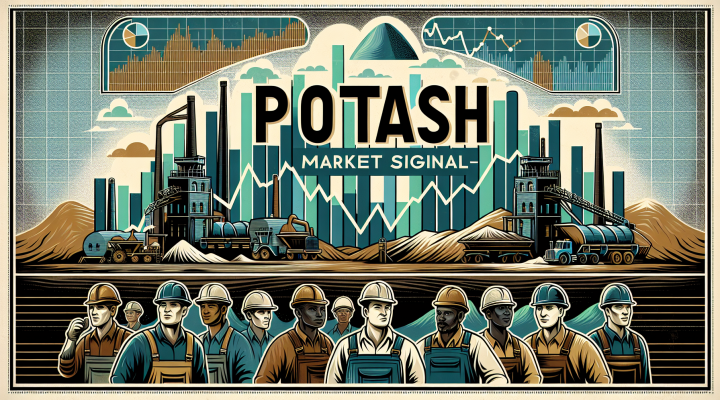
Canada’s mining sector is experiencing a technological renaissance that’s sending ripple effects through global commodity markets. The latest potash market signal emerging from Saskatchewan’s mining heartland suggests a fundamental shift in how this critical agricultural fertilizer reaches worldwide consumers. As precision agriculture demands grow and geopolitical tensions reshape supply chains, Canadian innovations in potash extraction and processing are positioning the nation as an even more dominant force in feeding the world’s growing population.
The convergence of advanced mining techniques, artificial intelligence, and sustainable extraction methods is creating unprecedented opportunities for investors and agricultural stakeholders alike. These developments are generating clear potash market signals that savvy industry observers are closely monitoring.
Advanced Extraction Technologies Reshape Production Efficiency
Canadian potash producers have deployed cutting-edge solution mining technologies that dramatically reduce environmental impact while increasing yield efficiency. These systems utilize sophisticated sensors and AI-driven optimization algorithms to maximize potash recovery rates from underground deposits. The technology represents a significant leap forward from traditional shaft mining methods, offering production cost reductions of up to 30% while minimizing surface disruption.
The latest potash market signal from these technological advances indicates that Canadian producers can now respond more rapidly to global demand fluctuations. Real-time monitoring systems provide unprecedented visibility into extraction rates, allowing companies to adjust production schedules dynamically based on market conditions. This agility gives Canadian producers a competitive advantage over traditional mining operations that require longer lead times for production adjustments.
Digital Supply Chain Integration Enhances Market Responsiveness
Blockchain-based tracking systems and IoT sensors throughout the supply chain are creating transparency levels never before seen in the potash industry. These technologies enable producers to trace their products from extraction through final delivery, providing customers with detailed quality assurance data and origin verification. The integration of these systems creates a powerful potash market signal regarding product authenticity and quality standards.
Canadian companies are leveraging predictive analytics to anticipate global agricultural demand patterns, particularly in emerging markets where food security concerns drive fertilizer consumption. Machine learning algorithms analyze weather patterns, crop yield forecasts, and economic indicators to generate sophisticated demand projections. This data-driven approach allows producers to optimize inventory levels and transportation logistics, reducing costs while ensuring adequate supply availability.
Sustainable Innovation Drives Long-term Competitive Advantages
Environmental stewardship has become a crucial differentiator in the global potash market, with Canadian producers leading sustainability initiatives through innovative waste reduction technologies and renewable energy integration. Solar-powered extraction facilities and closed-loop water systems are becoming standard across major operations, appealing to environmentally conscious agricultural buyers worldwide.
The potash market signal from these sustainability investments suggests that premium pricing opportunities exist for producers who can demonstrate environmental responsibility throughout their operations. European and North American agricultural buyers increasingly prioritize suppliers with strong environmental credentials, creating market segmentation opportunities for forward-thinking Canadian producers.
Strategic Resource Partnerships Amplify Innovation Impact
Collaborative ventures between Canadian mining companies and technology firms are accelerating innovation deployment across the sector. These partnerships combine deep geological expertise with cutting-edge software development capabilities, resulting in breakthrough applications that optimize every aspect of potash production and distribution.
Government support through research grants and tax incentives has fostered an ecosystem where mining companies can experiment with emerging technologies without shouldering excessive financial risk. This supportive environment has attracted international technology partners who view Canada as an ideal testing ground for next-generation mining solutions.
The transformation occurring within Canada’s potash industry represents more than incremental improvement—it signals a fundamental reimagining of how critical agricultural resources reach global markets. As food security concerns intensify and agricultural productivity requirements grow, the potash market signal from Canadian innovation suggests that technology-driven efficiency and sustainability will determine market leadership. Investors and agricultural stakeholders who recognize these emerging trends position themselves advantageously within an evolving landscape where Canadian ingenuity continues reshaping global commodity markets.