Archives for June 17, 2018

Samsung targets 100 percent renewable energy use by 2020

It’s got some catching up to do.
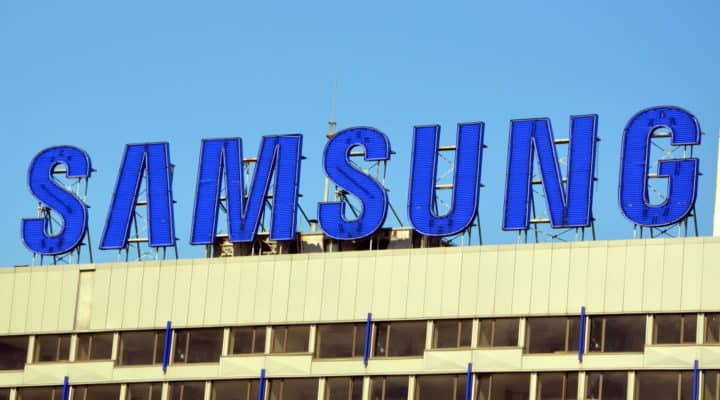
Samsung has announced plans to power its US, Europe and China operations entirely by renewable energy sources within two years. It’s already making good on its sustainability commitment in Korea, where the company is installing 42,000 square meters of solar panels in its Digital City, and is working on generating geothermal power at Pyeongtaek campus and Hwaseong campus by 2020.

It’s an ambitious but achievable goal, no doubt spurred by the environmental credentials its rivals already boast in this area. Apple says it’s now powered entirely by renewable energy, Google is offsetting all of its operational energy through wind and solar, and T-Mobile has already announced plans for 100 percent renewable energy by 2021. It makes financial sense, too, given reports that renewables will likely be cheaper than fossil fuels in just a couple of years’ time. Samsung has some catching up to do, but better late than never.


This article originally appeared on Engadget.

Quantum entanglement on demand could lead to a super-secure internet

If you’re going to create virtually unbreakable quantum networks, you need to create quantum entanglement so that particles, and thus pieces of data, are intertwined at long distances. There hasn’t been a reliable way to make that happen, however, until now. Scientists at TU Delft have produced the first entanglement on demand — that is, they can reliably trigger the quantum pairing effect and make it last long enough to be meaningful. The effect only worked across two nodes and a modest distance of about 6.6 feet, but it raises the possibility of a quantum internet that’s far more secure than what you see today.

The breakthrough started with a new entanglement method that ensnares particles in diamond chips at 40 times per second — about 1,000 times faster than before. Previous approaches were slow enough to lose the entanglement more quickly than scientists could create it. The team also found a way to shield entanglements from noise, preventing them from degrading as quickly as they have in the past.

There’s a lot of work to be done before there’s honest-to-goodness networking in place. TU Delft can theoretically add a third node and create a true network, but it has yet to reach that point. And if there’s going to be a real quantum internet, distances have to be measured in kilometers and miles. Researcher have already achieved basic entanglement at distances of about 4,200 feet, though, and hope to connect four Dutch cities through entanglement in 2020. This latest development takes them considerably closer to that goal.


This article originally appeared on Engadget.

3 High-Growth Stocks That Could Soar

High-growth stocks can actually come in all shapes and sizes. They are often expected to be brand-new, tiny companies, but in some cases, a business that’s been around for nearly a century could have its best days still ahead. Sometimes it’s a tech company, but in other cases, it might operate in an industry you never expected to hear associated with growth.

Case in point: We asked three Motley Fool investors for their best high-growth stock ideas, and they gave us some unexpectedly insightful ideas: A small-cap upstart in a multi-trillion dollar industry, NV5 Global Inc (NASDAQ:NVEE), nearly 90-year-old uniform supplier Cintas Corporation (NASDAQ:CTAS), and video game and esports giant Activision Blizzard, Inc. (NASDAQ:ATVI). Keep reading to learn why these high-growth stocks are set to continue soaring in the years to come.

IMAGE SOURCE: GETTY IMAGES.

A tiny player in a megaindustry

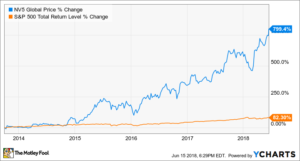
Jason Hall (NV5 Global): Since going public in 2013, infrastructure engineering and consulting company NV5 Global has already made for an incredible investment:

NVEE STOCK PRICE CHANGE CHART. DATA SOURCE: YCHARTS.

Yet even after generating nearly eight-fold gains, investors should put it on their shortlist of high-growth stocks.

With 2017 revenue of $333 million and a market cap below $800 million, NV5 is a tiny speck in the global infrastructure industry, which tops $3 trillion in yearly revenues. But it is growing at a remarkable rate, having reported a 45% increase in sales in the first quarter, and earnings per share up 86% year over year. This led to a double-digit increase in the company’s own guidance for full year sales and earnings.

So what’s driving the growth, and how can management keep it up? In short, a combination of organic growth, as well as acquisitions. Frankly, growth via acquisition can be very difficult to effectively sustain, but NV5’s founder and CEO, Dickerson Wright, has a long history of success in his industry as a successful consolidator. And with more than 140,000 engineering firms in the U.S. alone (most of which are small, privately owned businesses) it’s not unreasonable to expect Wright — who owns over 20% of NV5 — to continue succeeding at what he’s proven good at. With global infrastructure spending set for multiple decades of growth, I’m personally invested in NV5’s ability to keep it up.

Trading for between 27 and 30 times company guidance for 2018 earnings, NV5 isn’t a bargain-bin stock. But high-growth small-cap stocks with a heavily invested founder running the show don’t often come cheap. Based on the potential for massive long-term returns, NV5 is probably worth paying a premium for.

Dull business, exciting growth

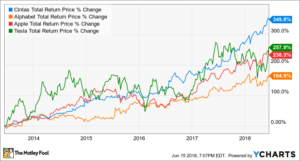
John Bromels (Cintas): When most people think “high-growth,” they’re thinking tech. But it might surprise you to learn that uniform rental and business services company Cintas has actually outperformed major tech companies like Apple, Google/Alphabet, and Tesla over the last five years:

CTAS TOTAL RETURN PRICE. DATA SOURCE: YCHARTS.

Nearly 90 years old, Cintas has grown its business the old fashioned way: by expanding its core uniform rental service into more markets; by snapping up smaller competitors like G&K Services, which Cintas bought last year; and by launching new services that are easy to add to its existing offerings.

Cintas’ business model — operating a fleet of trucks that picks up dirty uniforms and drops off clean ones at business locations on a regular schedule — has turned out to be easy to apply to other services, like floor mats, restroom supplies, and first aid and safety equipment. By cross-promoting these services, Cintas has an advantage against smaller competitors. That explains why the company’s smallest division — first aid and safety services — has been growing at an even faster clip than the rest of the company.

With Cintas the clear leader in a fractured nationwide market, there are plenty of further growth opportunities available through acquisitions or organic growth. Cintas is a strong bet for future growth.

A new growth story

Daniel Miller (Activision-Blizzard): Whether you’ve played an Activision-Blizzard game — which includes franchises such as Overwatch, World of Warcraft, and Call of Duty, among many others — or simply know it as a gaming stock, the company could soon become even more of a household name as esports continues to gain popularity.

Newzoo, a global leader in esports and mobile intelligence, estimates the total esports audience will post 14.4% compound annual growth rate between 2016 and 2021. That growth is expected to push total audience to 380 million viewers in 2018. Further, esports revenue streams are exploding with Newzoo estimating the global esports economy will grow to $905.6 million in 2018 which would be an incredible 38% year-over-year growth — revenue could reach $1.65 billion by 2021.

Esports is a significant opportunity with millions of highly engaged viewers and players, and Activision Blizzard is tapping into that opportunity with its Call of Duty World League, MLG Network and Overwatch League. The gaming company also has a merchandising program designed for the global gaming audience, and is taking advantage of its popular content through licensing. Overwatch’s merchandising program alone has a long list of partners including Hasbro (Master Toy); NERF (Blasters); LEGOGroup (Construction), among others.

Activision-Blizzard already has a wildly successful business — including the next highly anticipated installment of its Call of Duty franchise, Black Ops 4, which launches in October — and a stock price that’s soared 442% over the past five years, but if it continues to find ways to generate revenue from the surging esports economy, it could be a whole new growth story for investors.

This article originally appeared on Motley Fool.

Better Buy: Pfizer Inc. vs. Johnson & Johnson

The two biggest U.S.-based drugmakers are household names. Pfizer (NYSE:PFE) and Johnson & Johnson (NYSE:JNJ) have been in business since the 19th century. Both big pharma stocks have been longtime winners. But which is the better pick for investors now?

To answer that question, you need to know about each company’s growth prospects and the strength of their dividends. Both factors contribute to the stocks’ total return over the long run. Here’s how Pfizer and Johnson & Johnson compare on these key criteria.

The case for Pfizer

Pfizer’s top-selling products are Lyrica and pneumococcal vaccine Prevnar 13. However, the company is enjoying faster sales growth from blood thinner Eliquis, breast cancer drug Ibrance, and arthritis treatment Xeljanz.

In addition, Pfizer has several newer drugs on the market that could become big winners over time. Type 2 diabetes drugs Steglatro, Steglujan, and Segluromet, all of which Pfizer co-markets with Merck, are expected to together become a blockbuster franchise. Eczema drug Eucrisa has had a slow start since being approved in late 2016, but analysts think it could eventually generate annual sales of around $2 billion.

Pfizer’s pipeline includes 29 late-stage programs. Pfizer’s head of research and development, Mikael Dolsten, said earlier this year that over the next five years, the company hopes to win approval for as many as 15 new drugs or new indications for existing drugs with blockbuster potential. Two candidates that look especially promising in helping Pfizer achieve that goal are breast cancer drug talazoparib and pain drug tanezumab, which the company is developing with Lilly.

Wall Street analysts project that Pfizer will grow earnings by more than 6.5% annually on average over the next five years, a big improvement from the drugmaker’s recent growth. This estimate is pretty good considering that Pfizer continues to be weighed down by declining sales for several of its older drugs.

One thing that isn’t weighed down, though, is Pfizer’s dividend. The company’s dividend currently yields 3.71%. The company has increased its dividend by nearly 42% over the last five years. It appears to be in solid position to keep the dividend hikes coming.

The case for Johnson & Johnson

Johnson & Johnson is more than just a big pharma. It’s a big medical-device maker and a big player in consumer healthcare. However, the company’s pharmaceuticals segment is expected to continue to be its primary growth driver.

Sales for the company’s top product, autoimmune disease drug Remicade, are slipping in the wake of biosimilar competition from Pfizer and other drugmakers. However, Johnson & Johnson has a couple of other solid immunology drugs with Stelara and Simponi. J&J also has a strong oncology lineup with prostate cancer drugs Darzalex and Zytiga, and blood cancer drug Imbruvica, which the company co-markets with AbbVie.

The company has at least 35 late-stage programs. If you look closely at its late-stage pipeline, you’ll probably notice a lot of new indications targeted for existing drugs. This is a key part of the company’s growth strategy, according to J&J pharmaceuticals head Joaquin Duato.

Another important way that J&J will grow is through acquisitions. The company bought Swiss drugmaker Actelion last year, picking up a strong pulmonary hypertension franchise. The addition of Actelion’s drugs contributed significantly to J&J’s Q1 sales growth.

Wall Street analysts think that Johnson & Johnson will increase earnings by nearly 8% annually over the next five years. It seems reasonable to expect that the company’s pharmaceuticals segment will grow at an even faster rate.

J&J should also grow its dividend — just as it has for the last 56 consecutive years. Over the last five years, the company has boosted its dividend by 36%. J&J’s dividend yield currently stands at a little under 3%.

Better buy

Johnson & Johnson has just begun to experience the drag of sales declines for Remicade. Pfizer, on the other hand, should feel less of an impact over the next few years from its older drugs that have lost exclusivity. I also think that Pfizer will resolve some of the product shortage issues that have plagued its sterile injectables business, clearing the way for stronger growth.

In addition, it wouldn’t surprise me if Pfizer opens up an even greater lead over J&J on the dividend front. The company’s yield is already significantly higher. Pfizer’s track record in recent years of dividend hikes is also a little better than J&J’s.

I know that Wall Street thinks more highly of J&J’s growth prospects. My view, though, is that Pfizer could have a slight edge over the next few years. With its stronger dividend, I think the nod goes to Pfizer as the better stock. It’s only a nod, however. I think that both of these healthcare giants are solid picks for long-term investors.


This article originally appeared on Motley Fool.

1 Under-the-Radar Dividend Growth Stock to Buy Right Now

Dividend growth investing can be a great way to boost your passive income over time. To do it right, though, you have to find stocks that can both grow their dividends faster than inflation and have sustainable free cash flows for the long haul.

Gilead Sciences (NASDAQ:GILD), a blue chip biotech stock, meets both of these critical criteria. Even so, this top biotech is rarely considered purely for its prospects as a dividend growth stock. The reason? Gilead only started doling out a dividend approximately three years ago this month. As a result, the company has yet to shed its well-earned image as a top growth stock within the broader investing community.

However, I think this underappreciated dividend growth play is worth adding to your portfolio right now. Here’s why.

Gilead’s risks are overstated

There are two big knocks against Gilead as a dividend growth stock. First off, the company’s hepatitis C franchise has literally imploded since hitting a high watermark in late 2015. Gilead has thus had to rely on its core HIV franchise to pick up the slack, and that strategy has so far failed to keep the company’s top line moving in the right direction. Despite several new product launches in HIV, the biotech’s top line remains on track to drop by a disastrous 20.3% this year.

Secondly, the Street is deeply concerned about the company’s potential cash outflows going forward. Gilead has been plowing money into its nascent cell-based immuno-oncology franchise in recent months, and this herculean effort isn’t expected to truly contribute from a top-line standpoint for perhaps another three to five years. The bottom line here is that the cell-based cancer therapy space still has a lot of growing up to do before it can become a cornerstone franchise for Gilead, or really any biotech company for that matter.

All that being said, I think these two risk factors are overstated. Gilead’s newly approved HIV medicine Biktarvy appears more than capable of returning the biotech to growth in both the short and longer term. Specifically, industry insiders expect this key growth driver to generate sales in excess of $6 billion per year by 2024. As a result, Gilead’s top line should start to reverse course — albeit modestly — as early as next year, according to Wall Street’s consensus estimate.

Gilead also has a truly astonishing amount of cash in the bank at the moment. Specifically, the biotech exited the last quarter with a breathtaking $32.1 billion of cash, cash equivalents and marketable securities. So there’s little reason to think Gilead can’t continue to be aggressive on the mergers and acquisitions (M&A) front and support its top-notch dividend program at the same time.

How does Gilead’s dividend stack up?

When assessing the attractiveness of any dividend growth stock, I believe it’s important to consider three core metrics: the stock’s annualized dividend yield, its sustainability, and of course, how quickly the company has been growing its dividend over a certain period of time. To measure sustainability, the norm is to use a metric known as the payout ratio, which expresses the total amount of dividends paid out relative to a company’s earnings over the last 12 months.

So how does Gilead fare compared to its peer group within the biopharmaceutical space? As the table below shows, Gilead’s forward-looking yield, payout ratio, and dividend growth rate (over the past three years) are all below average.

What this table really shows, though, is that Gilead has a decent yield that’s been growing modestly since inception and that it’s more sustainable than almost all of its peers. In fact, AbbVie and Pfizer are the only two companies listed below that have dividend programs in better shape than Gilead based on these three core metrics.

Company                Dividend Yield                Payout Ratio            Dividend Growth  Rate
AbbVie                            3.73%                              66%                               29.4%
AstraZeneca                  3.97%                               118%                                     —
Bristol-Myers Squibb   3.07%                                257%                               2.7%
Gilead Sciences             3.17%                               81%                                  10.8%
Johnson & Johnson      2.57%                              706%                                20%
GlaxoSmithKline            5.26%                             384%                                     —
Pfizer                                   3.71%                            36.1%                                21.4%
Sanofi                                  4.64%                             98.1%                                     —
Average                                 3.77%                           218%                              16.8%

Key takeaways

In one sense, Gilead might not strike you as a top dividend growth stock, thanks to its fairly high payout ratio in absolute terms. But I think that dire interpretation of the data would be misleading. Not only is Gilead performing better as a dividend growth stock than most of its peers, but the company has done so during one of the most chaotic periods in its existence.

Moving forward, Gilead’s HIV franchise should return the company to modest levels of revenue growth and its stellar clinical pipeline that sports multiple potential blockbusters should eventually boost top-line growth into the high-single-digit neighborhood within a reasonable amount of time. As such, Gilead’s payout ratio appears set to improve markedly from here on out, which bodes well for further increases in the years ahead.


This article originally appeared on Motley Fool.

Is Ziopharm Oncology Inc. a Buy?

Ziopharm Oncology Inc. (NASDAQ:ZIOP) shareholders have been on a roller coaster ride this year. The stock soared 16% in May, but the ride promptly went downhill in June, with the biotech’s share price dropping more than 10%. The first four months of 2018 featured more of the same up-and-down action.

But does the latest pullback present a great buying opportunity? Or are the risks for Ziopharm too great? Here’s what you need to know in determining whether or not to buy this small-cap biotech stock.

IMAGE SOURCE: GETTY IMAGES.

Potential

Ziopharm is unusual to some extent for a small biotech in that it has two different drug platforms. The company’s most advanced platform focuses on controlling interleukin-12 (IL-12), a protein made by white blood cells that Ziopharm calls the “master regulator of the immune system.”

The lead candidate — actually, the only candidate — in Ziopharm’s controlled IL-12 platform is Ad-RTS-hIL-12. While the drug’s name doesn’t exactly roll off the tongue, the company thinks its controlled IL-12 therapy has tremendous potential. In earlier testing, Ad-RTS-hIL-12 showed promise in turning cold tumors hot. The immune system attacks cancer cells in hot tumors but doesn’t do so in cold tumors. This means that controlled IL-12 could help turn the body’s immune system into a weapon to fight cancer.

Controlled IL-12 has significant potential in treating brain cancer. Ziopharm is evaluating Ad-RTS-hIL-12 as a monotherapy and in combination with Bristol-Myers Squibb’s Opdivo in treating glioblastoma multiforme (GBM), the most aggressive type of brain cancer. Around 70,000 new cases of GBM are diagnosed each year across the world.

The biotech’s other platform has an easy-to-remember name: Sleeping Beauty. With this platform, Ziopharm hopes to engineer T cells to fight cancer at the point of care.

Current chimeric antigen receptor T cell (CAR-T) therapies require T cells to be modified using gene therapy and multiplied outside the patient’s body. Ziopharm’s goal with Sleeping Beauty is to eliminate the need to grow T cells outside the body. This would speed up the treatment and reduce the cost.

Sleeping Beauty currently includes two clinical-stage programs: a CAR-T therapy, and a T cell receptor (TCR) therapy. Ziopharm is working with Intrexon, Germany-based Merck KGaA, the National Cancer Institute, and the University of Texas MD Anderson Cancer Center on these programs.

The biotech expects to begin phase 1 clinical studies of its point-of-care CAR-T therapy targeting treatment of CD19-positive leukemia and lymphoma in the second half of the year. Enrollment is already underway for a phase 1 study of its CAR-T therapy targeting treatment of patients with acute myeloid leukemia that expresses the CD33 protein.

Problems

As promising as Ziopharm’s platforms are, achieving success is easier said than done. The biotech has already run into one major problem. Ziopharm stated in early May that it was “pausing plans” for a pivotal phase 3 clinical study for its controlled IL-12 therapy. The company has to resolve some technical manufacturing issues before moving forward.

Historically speaking, the odds of success for the Sleeping Beauty platform are really low. From 2006 to 2015, only one out of every 20 cancer therapies entering phase 1 clinical studies went on to win regulatory approval, according to a Biotechnology Innovation Organization report.

There’s plenty of pessimism about Ziopharm’s chances. Over 28% of the stock’s float is currently sold short. That reflects some big bets that the stock will continue to go down rather than move higher.

Some of that negativity could be more related to finances than clinical prospects. Ziopharm reported cash and cash equivalents of $51.1 million at the end of March. The company thinks that amount will fund operations into Q2 2019. However, Ziopharm won’t be able to wait until then to raise more cash. That means it’s highly likely, if not inevitable, that the company will issue more shares, which would dilute the value of existing shares.

To buy or not to buy?

I think that Ziopharm’s pipeline is intriguing and could have tremendous potential down the road. More effective treatments for brain cancer are sorely needed. Controlled IL-12 holds the promise of extending survival for patients with GBM. Ziopharm’s point-of-care therapies could be game-changers if they’re successful.

The reality, though, is that there’s a long way to go — and Ziopharm doesn’t have enough cash to reach the finish line. My view is to cheer for the biotech’s success on the sidelines until after the next dilution-causing stock offering and we see what happens with the pivotal study for Ziopharm’s controlled IL-12 therapy.


This article originally appeared on Motley Fool.