Archives for June 17, 2018

Nearly Half of U.S. Households Aren’t on Track for Retirement

We’re told of the importance of saving for retirement, yet an alarming number of workers aren’t listening. Only about 57% of U.S. households aged 35 to 64 are on track to cover 100% of the average costs retirees face, according to the Employee Benefit Research Institute. This means that almost half of today’s workers are at risk of running out of money in the future and suffering for it at the worst possible time in life.

Social Security just won’t cut it

One factor that prompts many workers to not save for retirement, or not save adequately, is an overreliance on Social Security. So here’s a reality check: Though Social Security does help millions of seniors manage their living expenses in retirement, it’s extremely difficult, if not downright impossible, for most people to live on those benefits alone.

In a best-case scenario, Social Security will replace about 40% of the average worker’s pre-retirement income. Most seniors, however, need roughly double that amount to pay the bills once they’re no longer employed full-time.

Why is this the case? It’s simple: Retirement isn’t going to alter the bulk of the living expenses you find yourself paying during your working years. Sure, you’ll eliminate your commute once you retire, which means you might save a few hundred dollars a month on transportation. But you’ll still need a car to get around town, a roof over your head, and food on the table. These major expenses exist regardless of whether you’re working.

And let’s not forget about healthcare, because that’s one cost that actually increases substantially for many seniors in retirement. Though you may come to find that your Medicare premiums are lower than what you paid for health insurance during your working years, there are many commonly utilized services not covered by Medicare, like dental, hearing, and vision, that you’ll need to pay for on your own. When you factor in these expenses, plus the copays and deductibles that come with Medicare, you might easily discover that you’re spending more on healthcare as a senior — especially since your health is also more likely to decline when you’re older.

And that’s why it’s so important to build ample savings during your working years. Like it or not, you’ll need to replace the bulk of your paycheck once you leave your career, and the sooner you start funding or boosting your nest egg, the greater your chances of retiring in a reasonably comfortable fashion.

Save now, enjoy later

Another factor that inhibits retirement savings is our collective tendency to max out our paychecks on living expenses. The majority of workers today live paycheck to paycheck, which means they eliminate the option to save completely. But if you’re willing to cut back on expenses ever so slightly, you can build a decent nest egg without having to part with too much money month after month.

Check out the following table, which shows what sort of impact a $300 monthly contribution to your nest egg might have over time:

Now clearly, you’ll be in a lot better shape if you enter retirement with nearly $500,000, as opposed to just under $150,000. So if your savings window is relatively short, you’ll need to set aside more money on a monthly basis to compensate. The point, however, is that it can be done, so if you’d rather avoid a scenario where you find yourself unable to pay the bills as a senior, you’ll need to take steps to get your retirement savings on track. That could mean saving some money as opposed to none at all, or saving more than what you’re managing at present. But the sooner you make that effort, the fewer financial worries you’re apt to face when you’re older.

3 Reasons Your Retirement Savings Isn’t as Big as You Think

When it comes to saving for retirement, the more money you can set aside, the more financially secure you’ll be. If you diligently save over the course of your career, you’ll find that by the time you retire, the size of your retirement nest egg can grow to a number that’s a lot bigger than you might have thought possible. For many, the $1 million mark is a simple target to shoot for, while others use the 4% rule or similar methods to estimate a more precise number that they want to save before they call it quits for their careers.

Yet before you get too attached to the idea that you’re retiring rich, you should consider whether whatever number shows up at the bottom of your retirement account statement is really as big as it looks. There are several things that retirees often ignore in deciding whether they’re truly financially ready for retirement, and that ignorance can prove costly. It’s essential to take the following three factors into account when considering your true financial status in preparing to retire.

1. Don’t forget taxes

The most important thing that’s easy to neglect when you’re looking at your retirement savings is what impact taxation will have on your ability to draw money to cover living expenses. Millions of Americans have access to 401(k) plans or similar retirement accounts at work, and for many, their 401(k) balance is the biggest pot of retirement assets that they have. The tax-deferred growth that 401(k)s, IRAs, and other retirement accounts offer is invaluable in helping you accumulate as much in savings as you possibly can.

However, the IRS always wants what’s coming to it, and for retirement accounts, that often means paying taxes. For traditional IRA and 401(k) accounts, because you got an upfront deduction when you made contributions to the plan, then you’ll have to pay taxes on the money when it comes out. That includes not only the withdrawn contributions but also the income and gains that your investments have produced. For most people, 100% of their withdrawals must be included in taxable income.

Depending on your tax rate, that can mean that your savings are a lot less valuable than you thought. As an extreme example, say you’re in the top 37% tax bracket and decide to take out $1 million in retirement withdrawals all at once. Your taxes on that withdrawal would amount to $370,000, meaning that what you thought was $1 million would really only be worth $630,000 after taxes. That example’s not realistic, and many people are fortunate to be in lower tax brackets in retirement. Nevertheless, even taking 10% or 12% off the top — the current bottom tax brackets under tax reform — can be a large blow to where you thought you were in retirement.

2. Think about inflation

From year to year, the impact of inflation is hardly noticeable. Recent rates of inflation have been extremely low, but even at historical rates closer to 3%, you have to watch carefully to see that the price of your favorite grocery item rose from $3.89 to $3.99 or that the size of the package shrank from 16 ounces to 15.5 ounces.

Over time, though, inflation adds up. It takes less than 25 years for purchasing power to get cut in half when inflation averages 3% annually. Many need to plan for a retirement that could be at least 25 years long and make sure they won’t run out of money even as the prices they pay on necessary living expenses inexorably rises.

Put simply, 25 years from now, a $1 million nest egg might only have the value that $500,000 in savings currently has. Structuring your investments appropriately can help you fight off inflation’s negative impact, but that only works if you’re aware of it.

3. Beware long-term care costs

No matter how big your nest egg is, a medical tragedy can wipe you out more quickly than you’d imagine. Nursing home costs can exceed $10,000 a month in some high-priced areas, and with Medicare not covering most long-term care expenses, a need for such a facility can wipe out even a $1 million portfolio in just eight years.

You can obtain long-term care insurance to help protect you against these costs, but the premiums themselves can be highly costly. Taking whatever measures you can to stay as healthy as possible can pay off in the long run, but beyond that, the key here is not to assume that you’ll be able to spend every penny of your retirement nest egg on things that you really want.

Save smarter

It’s important to save as much as you can for retirement to ensure that you’ll have what you need. By keeping these three things in mind, you won’t get lulled into a false sense of security only to find out later that what looked like a huge amount of retirement savings proved in the end not to be enough to meet all of your needs.

3 basic rules for entrepreneurs who want to expand internationally

Understand your markets and customers

If you don’t take the time to understand how countries differ from one another, it will be an uphill battle to launch your product. There are vast cultural differences that can impact your growth.

Take a mobile product for example. It’s imperative that you consider the behavior of local smartphone users, as well as data costs and plans. It’s surprising how much this can vary across different geographies and it will have an obvious impact on product uptake.

For example, the cost of mobile data in South Africa is high on an absolute basis. When you combine that higher cost with a lower GDP per capita, it means you need to help your customers find ways to reduce their mobile data cost. That’s why early on in our history, my team and I introduced the ability to download content.

Think about the channels you use to market your product. Remember, Facebook targeting and clever ads won’t necessarily have the same impact as they did in your home country. To target your campaign in the right way, you must know the nuances of what and who you’re working with.

Also, audiences for specific channels in other countries may not convert as easily as in the United States or your home country, so you need to aggressively test and carefully consider the right acquisition channels for the country you are targeting.

Understanding customer perception is vital

Never assume that a design which has proven successful in one market will seamlessly integrate in another. WeChat, for example, has a user interface and experience that has proven incredibly popular in China, but not so much in other parts of the world. Much of this success is because it has been tailored to both the Chinese language and local mobile phone usage.

When expanding into France and Japan, the team at Pinterest assumed that translating the product language would be enough to make it a success. Wrong. Ultimately, the company had to retrace their steps and improve their understanding of the language, user experience and targeting to make it work.

It turned out that while users had similar goals, they wanted to share or pin items that were slightly different. Talking to your customer and getting a direct understanding from them is key to expanding your product to other geographies.

Find products that are already successful in your target market

This might sound rudimentary, but it can be a major stumbling point for a lot of businesses. You could develop a product that you’re convinced will revolutionize the market by following the two guidelines above, only to find that an almost identical product already exists.

Research, research, and more research is the only way to identify what will work. Consider developing relationships with successful local companies to get a sense of how they work with their customer base.

Then, consider partnering with a local company to help you launch. Oftentimes, working with a company that understands the market, the customer, and the trends, will help you avoid any initial stumbles as you expand into a new market. We did this in our expansion by hiring a great local Polish team which had previously launched and scaled technical and mobile products and who had a deep understanding of the Polish market.

The steps outlined above are the bread and butter of all successful market expansions. Although every expansion project is different and will encompass a unique set of requirements, customer and market research are fundamental.

And last, but not least, expect to fail nine times before you finally succeed on the tenth. Market expansion is hard, it takes time and you can plan on making some mistakes. Don’t expect any quick wins!

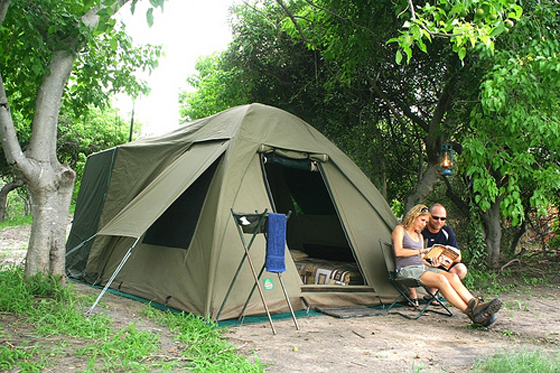
5 survival strategies for camping on a budget

Exploring nature and sleeping under the stars can be viewed as an economical vacation. But buying gear and booking campsites or renting an RV can add up.

With some cost-saving strategies, camping can fit a variety of budgets, whether you’re planning a car or RV camping trip or backpacking. Try these tips to enjoy the outdoors free of technology, traffic and a big tab.

1. Search for free campsites

Don’t unplug just yet — before you leave, put your phone to good use by finding a campsite on sites like Campendium.com or FreeCampsites.net.

Many campgrounds charge a nightly fee, but you’ll also find free camping options, says Brian Easterling, co-founder and president of Campendium, a campsite review app and website.

Campendium provides information on over 27,000 campsites (free and paid), including national and state parks and RV parks. Listings include user reviews, fees, photos, cell coverage and other details. Some sites have no nightly rate but may require a paid pass to gain access.

Word to the wise: Free campsites don’t always include the amenities of paid campgrounds, says Kristin Addis, CEO of Be My Travel Muse, a travel blog. If you choose a free site, locate a place close by where you can clean up; Addis says she’s paid for a shower at campgrounds near free sites for less than the campgrounds’ overnight fee.

2. Check the weather

Look up the forecast for your destination, including nightly lows, says Addis, who’s camped on every continent except Antarctica and has learned the value of an insulated sleeping bag.

“The most important thing is staying warm and comfortable in your tent,” Addis says. “So maybe the tent doesn’t need to be super fancy or expensive, but I would maybe spend a bit more on your sleeping bag so you’re not freezing.”

“The sleeping mat is important, too, that it’s insulated and keeps you enough off the ground (so) that you’re not getting bruised by rocks or roots,” she says.

Investing in good gear from the outset — even if it’s expensive — could save you money in the long run, rather than buying something that’s not quite right and having to replace it later.

3. Travel with less

Travel light, says Tom Lionvale, a backpacking instructor and adjunct faculty member at College of the Sequoias in California. You don’t want too much to carry; 20 pounds not including food and water is a good guideline for backpacking, he says. Even if you’re not backpacking, camping with less means purchasing less gear.

For equipment deals, check out online sales. REI.com features REI Garage, where you’ll find discounted clothing and gear. Backcountry.com showcases markdowns at its discount division Steep and Cheap.

And don’t forget about seasonal sales. For example, REI has an Anniversary Sale each May. You’ll also traditionally find lower prices on outdoor gear in October, the tail end of peak camping season. Another cost-saving option: Consider renting gear from an outdoor equipment store, particularly if you’re new to the experience.

“Borrow your equipment or rent your equipment because maybe you won’t like it after the first trip and then you’re stuck with all of that,” Lionvale says.

4. Find a place to rest

Whether you’re camping by car or RV, plan the route you’ll take and the stops you’ll make to and from your destination.

If you’re traveling by RV, Easterling recommends looking for dump stations for waste disposal ahead of time. If you’ll need to get some sleep along the journey, search online for free overnight RV parking, such as at rest areas and truck stops. Be sure to check local rules, since policies on if and how long you can park can vary.

“If you’re going on a road trip from San Francisco and you want to get to the Grand Canyon, and you want to do it cheaply, utilize rest areas and utilize free campsites for just your quick overnighters as you’re trying to make those miles with your family,” Easterling says.

5. Make your own rules

There are many ways to camp, so plan a trip that fits your budget. Skip the things you don’t need — like the latest camera if your smartphone will do.

“Anything goes,” Lionvale says. “I’ve seen men and women with World War I army surplus doing a good job and having a good time, and I’ve seen men and women with ultralight equipment having a miserable time.”

Canada’s first retail hydrogen fuelling station opens in Vancouver

Shell has opened a public hydrogen fuelling station in Vancouver, with plans for 2 more

Oliver Bishop, general manager of hydrogen at Shell, manipulates a hydrogen refuelling station in Vancouver while a photographer takes a photo during the station’s launch. (Rafferty Baker/CBC)

Canada’s fledgling hydrogen-fuelled vehicle industry took a significant step forward on Friday, as Shell opened the country’s first publicly accessible hydrogen fuelling station in Vancouver.

The station is nestled between traditional fuel pumps at a Shell outlet in Vancouver’s Marpole neighbourhood. The company has plans for two more in the city.

The modest, but noteworthy piece of hydrogen fuel infrastructure was opened with some fanfare, as auto manufacturers Honda, Hyundai, and Toyota had vehicles on hand for test drives.

“It’s a great day for Shell, but it’s also a great day for society,” said Shell’s general manager of hydrogen, Oliver Bishop, who travelled from Europe for the launch.

Bishop highlighted the lack of greenhouse gas emissions from hydrogen fuel cell vehicles, and the abundance of the element in the universe.

But it’s unclear how ready the consumer market is for the new technology. Refuelling options are limited to the new station for now, and a couple of privately-accessed stations in other provinces.

“The customer, by and large, is not aware of fuel cell electric vehicles,” said Bishop. “These are electric vehicles. That’s what a hydrogen car is … They function in a very similar way to a battery electric vehicle. They have an electric motor.”

While Hyundai Canada CEO Don Romano took a shot at Tesla electric cars during Friday’s launch event, Bishop declined to pit hydrogen against battery powered electric cars, saying Shell will provide whatever sort of energy the consumer demands, and offers electric fast-charging stations in some markets.

But he touted the short amount of time it takes to refuel a hydrogen tank — about five minutes — and the range the vehicles can travel before refuelling — hundreds of kilometres.

And Bishop defended the safety of of the technology, dismissing associations with the 1937 Hindenberg disaster, when a hydrogen-filled airship burst into flames, killing dozens.

“Hydrogen is as safe as any other fuel. If you mishandle any form of energy which is being stored, you may get hurt, and so of course, this is all about treating energy carefully,” he said.

“That’s the same whether it’s gasoline, or diesel or [liquefied petroleum gas], or lithium ion battery. If you mistreat it, it could hurt you.”

Province aims to strengthen legacy tree policy meant to preserve old growth giants

Environmentalists say B.C. Timber Sales allowing massive fir and cedar trees to be cut on Vancouver Island

The Ancient Forest Alliance and Sierra Club B.C. says this old growth yellow cedar tree is slated for logging near Schmidt Creek on northeast Vancouver Island. (Mark Worthing/ Sierra Club B.C.)

The B.C. Ministry of Forests says there will be a review of a policy put in place in January to preserve large and old trees from being cut down.

The move comes after environmentalists decried government agency B.C. Timber Sale’s auction of cutting areas on Vancouver Island that include massive, old growth fir and cedar trees.

B.C Timber Sales or BCTS manages timber cut on public land in B.C.

The Ancient Forest Alliance, Sierra Club B.C. and the Wilderness Committee want old growth trees — some up to 1,000 years old — protected because they are an integral part of B.C. ecosystems and have cultural significance for First Nations.

“We are running out of time to protect B.C.’s most productive ancient forests, where some of the biggest, oldest trees on Earth are found,” said Andrea Inness with the Ancient Forest Alliance in a statement.

In January, the BCTS put into place a best management practice for large and old trees, described as legacy trees.

“Legacy trees are exceptionally large and old and a unique feature of British Columbia’s coastal forests,” reads the policy.

Retaining legacy trees

The policy agrees that the trees have important cultural, aesthetic and ecological value. It sets out protocols so that when loggers come across the trees in cut blocks, they will make an effort to leave them standing.

The protocols include measurements for yellow cedar, coastal Douglas fir, Sitka spruce and Western red cedar, which should be retained if they meet or exceed the size.

“However, despite best efforts, it is also recognized that it may not be possible to retain all legacy trees,” reads the policy.

Make policy stronger

Environmentalists say the policy has too many loopholes that allow loggers to bypass it.

In May, the Ancient Forest Alliance says loggers did not follow the policy in the Nahmint Valley outside of Port Alberni, where massive trees, some as tall as 70 metres and three metres in diameter, were cut.

The ministry says the best management practice came into effect after that specific timber sale was laid out.

Now, it says the policy will be reviewed to make it stronger but has not said how that will be done or when the review will be complete.

Environmentalists argue that up to 90 per cent of old growth forests on Vancouver Island have been logged.

Meanwhile, the ministry says that there about 520,000 hectares of old growth forests that will never be logged on Vancouver Island.

In the Nahmint Valley on Vancouver Island near Port Alberni where environmentalists documented old growth logging, the ministry says the BCTS has identified 250 old-growth, large-diameter cedar trees to preserve.

“Government is continuously reviewing practices to ensure healthy ecosystems and that logging is sustainable,” it said in a statement.