
Editor

Why ‘The Job Interview’ Is Only Part of the Story When Looking for a Job

Make sure to do a thorough read-through of the company’s website and fully understand their products or services.

The new CNBC show “The Job Interview” puts the spotlight on a stressful situation that everyone worries about – sitting across from a potential employer, trying to simultaneously impress them and make sure you don’t say the wrong thing. The fact that this show even exists underscores how heated and competitive the job market has become.

Of course, the interview is all-important when it comes to getting a job. But smart employers know that anybody can perform in their assigned role for half an hour. Anyone can “act the part.” That’s why employers are going beyond the basic interview, even while recognizing that it remains critical to making a hiring choice. And if employers are looking further, you need to be prepared for that. That means taking some key steps to maximize your interview opportunities.

Research carefully. Don’t get caught unprepared. “The Job Interview” is full of “gotcha” moments, and real-life interviews can have those, too. You’ll need to be able to ride them out. Make sure to do a thorough read-through of the company’s website and fully understand their products or services. Look online – have they ever been in the news? Who are their major competitors? Who are the key players in the organization? These are the kinds of questions you should be ready and able to answer.

Be ready for the unexpected. Employers are shaking up the traditional interview. In some cases, this may just mean that more than one person will be interviewing you at one time. But some companies are taking it several steps further and conducting interviews during walks, while exercising, sometimes even during competitive basketball games. If there are activities that make you uncomfortable or you feel are downright inappropriate, that may point to a culture or work environment that is not a great fit or potentially worse.

Tell a fuller story about yourself. Take advantage of other ways to tell your story beyond the interview. Your job references can help do this for you. If possible, have references who can speak to different aspects of your career. Consider having at least one co-worker serve as a reference and, if possible, have more than one previous manager provide a reference, too. While managers will speak to your skills and abilities, a co-worker can provide more insights about your office presence and effectiveness as a teammate. In fact, we know based on job reference feedback that managers share different types of information than co-workers, based on our research published in Harvard Business Review.

This matters because in a fast-paced and team-based workplace, employers are no longer just interested in your skills (even though these are certainly important). They also want to know how well you get along with your teammates.

Be yourself. Interviewers can tell if you are being authentic. While you need to be professional, make sure to let some of your personality slip into the conversation. Employers value candidates who can be comfortable in a stressful situation. Talk about your hobbies outside of the office or about organizations that you volunteer for. You not only have to be a quality employee, but a culture fit as well. If you are looking for permanent employment, you have to work somewhere that’s going to want the real you.

Relax. Everyone has at least one really bad job interview experience. One great thing about “The Job Interview” is that on its website it has plenty of video examples of interviews that go well and those that don’t, as well as information from experts who analyze some of the interviews and offer advice. For example, how do you prepare for the question “Tell us about yourself”? It is more effective to prepare a personal “elevator pitch” that starts by highlighting your strengths versus simply listing a chronological work history, as one candidate did.

It’s a job seeker’s market right now. Even though “The Job Interview” highlights the stressful nature of the interview, you should feel good knowing that companies are competing aggressively for talent. This can translate into a better job search experience and a better hiring process. So if you come to the interview confident, prepared and armed with the right knowledge and outlook, it doesn’t matter what crazy hurdle the interviewer throws at you – you’ll be ready.


This Futuristic Salon Lets You Preview Hair Colors Virtually

Henkel’s salon of the future

A trip to the hair salon can be nerve wracking: how short should you go? Is that the right hair color?

German consumer goods giant Henkel will soon let you preview looks with augmented reality to alleviate that stress. It also offers an in-depth analysis of your hair’s health and will customize shampoos based on those results.

Henkel, which owns salon brand Schwarzkopf Professional, plans to offer this experience to select salons in U.S. and Europe later this year. The company is teasing its vision for salons at CES 2018 in Las Vegas this week.

Founded in 1876, Henkel — which is also behind brands such as Dial soap and Purex laundry detergent — reported sales of 18.7 billion euros ($22.3 billion) last year. Its hair care products are in tens of thousands of salons worldwide.

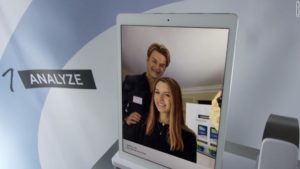
The salon experience starts with a personalized assessment of your hair’s health by using a high-tech device outfitted with infrared and light sensors. The handheld device — called the SalonLab Analyzer — analyzes the inner hair condition, moisture level and “true color” of your hair.

The readings from the device are analyzed by a proprietary algorithm developed by Henkel’s scientists. It uses digitalized hair model based on thousands of reference measurements.

During a demo, it measured my roots and ends, and determined my hair needs more moisture.

The reading was processed by an algorithm and combined with a hairdresser’s own assessment of my hair. A stylist viewed my hair data via an iPad app and gave me a color consultation using augmented reality.

Augmented reality, which shows digital objects on top of the real world, allows you to preview different hair colors to see how they would look on you before coloring.

I was able to see what my hair, typically blonde, looked like with red and brown tones. The shades were realistic. I could even run my fingers through my hair and move my head around with the color staying in tact. The most surprising part: It didn’t look cartoonish or like I was wearing a wig.

“We want to take the guesswork out of the process for the hairdresser,” Nils Daecke, head of digital marketing at Henkel Beauty Care, told CNN Tech. “We don’t want something that takes away their expertise or the magic of the consultation process. But [we’re providing] something that really enhances the process and distinguishes them from other hairdressers who might not have the service.”.

The company’s “SalonLab Customizer” machine also created a personalized shampoo based on my hair health data. It offers 128 different shampoo combinations, and it eventually will serve up custom conditioners, too.

My custom shampoo was made in about 30 seconds. It arrived with my initials on the label and a barcode in case I wanted to reorder more of it online.

Individual salons will determine the pricing for these services.

This isn’t the first time some beauty brands have used augmented reality. L’Oreal has an app called MakeupGenius that lets you try on cosmetics like eye shadow and lipstick on your skin virtually. Sephora has a similar feature in its app called Virtual Artist.

But Henkel said it’s the first to introduce augmented reality, a hair analyzer and personalized shampoos to the professional hair care space.

“We want to be the first to disrupt the hair care industry,” Daecke said. “We are also willing to disrupt ourselves and change the way we [create] products.”

More Than 100 birds Rescued From ‘Hoarding Situation’ in Ottawa

An American gold finch is shown in this image posted on Instagram by the Ottawa Valley Wild Bird Care Centre.

An animal rescue group is working to rehome more than 100 small birds found in a foreclosed house in Ottawa.

Jill Woods, who runs the Feathered Haven Parrot Rescue in Smiths Falls, Ont., said the birds — 106 finches and two canaries — were rescued from a “hoarding situation” on Sunday.

She said a family member of a woman evicted from the home last week contacted the Wild Bird Care Centre in Ottawa, which then contacted Feathered Haven.

Woods said it took a co-ordinated effort to get the birds out of the home, where some of the finches were in cages and others were flying free.

Volunteers had to use blankets like nets to corral the free-flying birds into cages to be rescued, she said.

“At one point there were 24 of us, including people keeping vehicles warm in case birds needed emergency transport,” Woods said in a phone interview Wednesday.

The rescued birds weren’t in good shape, Woods said. Two have since died and the rest are being monitored by vets, she said.

“Finches eat an awful, awful lot. They’re small, they’re very hyper. We found dishes of what looked like seed, but it was actually just husks. They had eaten the seeds,” she said of the scene in the home, adding that seeds alone don’t have enough nutritional value to keep birds healthy.

“They were stressed. The woman had been locked out of her home on Thursday, so a stranger had been trying to go in and feed them water.”

Woods said she opted not to contact authorities to report the birds’ former owner for negligence because it seemed as though mental illness may have been involved.

She said 10 birds have been seen by a veterinarian so far with more still to go. Veterinary fees are already at $1,700, Woods said, adding that the rescue group is struggling to keep up with costs.

After the birds are cleared by vets, Woods said she’ll have to wade through adoption applications looking for people with a good understanding of finches’ needs.

It’s a huge undertaking, she said.

“It has to be done, though,” she said. “It’s just one of those things in life.”

Renault-Nissan-Mitsubishi wants to spend up to $1 billion on start-ups over next 5 years

CEO Carlos Ghosn wants to create a one-stop shop for entrepreneurs working on mobility tech

Renault-Nissan-Mitsubishi Alliance CEO Carlos Ghosn elaborated on the alliance’s plans to start a corporate venture fund intended to invest up to $1 billion over five years in start-ups developing appealing new mobility technologies.

The fund expects to invest up to $200 million in start-ups making new mobility technologies, such as vehicle electrification, autonomous systems, connectivity and artificial intelligence. It is a step toward fulfilling the group’s Alliance 2022 strategy to improve cooperation and cost sharing between the three companies, and boost sales.

“We want to create a platform for a start-up to speak to the three companies, which was not always the case,” Ghosn told reporters at the Consumer Electronics Show in Las Vegas on Tuesday.

The plan is to create a group that can enable the large corporate alliance to work nimbly and quickly with far smaller start-ups.

“We understand CVC’s have sometimes a bad reputation among entrepreneurs” partly due to a perception that they move and make decisions too slowly said Francois Dossa, the current president of Nissan Brazil, who will lead the fund.

To combat this perception, the group will be a separate legal entity, and will have its own processes for working with start-ups. The fund will have offices in many of the major tech hubs around the world, such as the Silicon Valley region, Paris, Tel Aviv, Tokyo/Yokohama, and Beijing, Dossa said.

Renault and Nissan will each have 40 percent stakes in the fund, with Mitsubishi Motors funding the remaining 20 percent.

The alliance plans to launch 12 all-electric models over the next six years, and also plans to market vehicles with autonomous drive technology and develop robo-vehicle ride-hailing services.

Renault-Nissan-Mitsubishi expects combined revenues to reach $240 billion, with annual unit sales of more than 14 million by the end of 2022. The alliance sold 10 million vehicles in 2017.

Human Antibodies Made in Cows Could Be Developed to Treat MERS

Passengers wearing masks as a precaution against the MERS virus make their way after they got off a train at a subway station in Seoul, South Korea, June 18, 2015.

LONDON — Human antibodies made in genetically engineered cows have proved safe in an early stage clinical trial, U.S. scientists said on Wednesday, and could be developed into a treatment for the fatal viral disease, MERS.

MERS, or Middle East Respiratory Syndrome, is a SARS-like viral infection first identified in Saudi Arabia in 2012 that has caused deadly outbreaks in the Middle East as well as sporadic cases around the world.

Despite more than five years of waves of infection, no effective treatment or vaccine has been developed against MERS, which has a 35 percent case fatality rate and has so far killed at least 740 people worldwide.

More than 80 percent of MERS cases have been reported in Saudi Arabia, according to the World Health Organization.

Muslim pilgrims wear surgical masks to prevent infection from respiratory virus known as the Middle East respiratory syndrome (MERS) in the holy city of Mecca, Saudi Arabia.

In research published in the Lancet Infectious Diseases journal on Wednesday, scientists found that human antibodies called SAB-301 generated in so-called transchromosomic cattle — animals with human DNA incorporated into their genome — were safe in healthy volunteers.

The antibodies also persisted for more time than the MERS virus typically remains in the body, the study found, with antibodies still detected in bloodstream after 90 days.

This points a way ahead for the antibodies — which offer immunity against an invading infection — to be tested in further trials in people infected with MERS, the researchers said.

“This is the first study to show the safety and immune effects of a potential treatment for MERS,” said John Beigel at Leidos Biomedical Research, who co-led the U.S. government-funded study. “The data from our study suggest that SAB-301 is safe, and further research into the treatment is warranted.”

The idea of using human antibodies has developed in recent years in a variety of severe and emerging diseases, including flu, severe acute respiratory syndrome (SARS), MERS and Ebola.

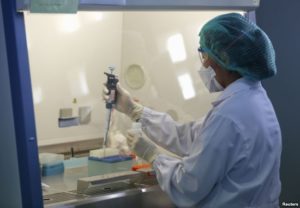
A scientist is testing a sample from the people, who is recently returned from South Korea and suspecting of MERS infection, inside a Sample Preparation lab, at the National Institute of Health Department of Medical Sciences in Nonthaburi.

Blood plasma harvested from people whose immune systems have successfully fought the disease contains the right antibodies and can be given to other patients to help their immune systems fight the virus.

But harvesting human plasma is not always easy or swift when a new disease emerges, so scientists turned to the idea of transchromosomic cattle as a way of manufacturing specific antibodies in larger amounts.

Transchromosomic cattle have human DNA that codes for human antibodies incorporated into their genome. To make SAB-301, they were injected with a part of the MERS virus, stimulating their immune systems to produce antibodies against it. The antibodies were then extracted from the cattle’s blood and purified.

“The process of creating antibody treatments by harvesting antibodies from human donors is slow and often small-scale,” said Beigel. “However, the cattle-produced antibodies could be created as soon as three months.”

Invest Like Bill Gates With These 2 Canadian Dividend-Growth Kings

Not only is Bill Gates a tech titan and the second-richest man in the world, but he’s also a very smart investor who knows how to grow and preserve his wealth in a safe manner. He’s friends with Warren Buffett, the greatest investor of our time, and if you take a look at Gates’s investment fund, Cascade Investments, you’ll see that Buffett was a huge influence on his portfolio.

It’s not just Gates’s large investment of Berkshire Hathaway Inc. that was influenced by the Oracle of Omaha. If you take a closer look at the other stocks in his fund, you’ll see that he’s made very smart long-term investments that follow the principals of Warren Buffett very closely.

Gates, like Buffett, is a value investor with an extremely long-term mindset and a preference for stocks with wide moats? something that investors should not be afraid to pay up for, especially if they’re long-term investors like Buffett and Gates.

While many other investors are euphoric over get-rich-quick? scenarios like Bitcoin, Ripple, or cannabis stocks, it’s a much smarter move to buy low-risk, long-term stocks, so you can maximize your returns without risking your shirt. Gates is a tech guy, but you don’t see him jumping in to Bitcoin and the like; instead, he prefers good, old-fashioned, boring businesses. Here’s a closer look at two Canadian stocks that you should think about owning if you want to invest like Bill Gates.

Canadian National Railway Company (TSX:CNR)(NYSE:CNI)

Bill Gates loves CN Rail. He’s accumulated a tonne of shares over the last decade, and as a result, he hit the upper limit of how many shares he is able to own. At one point, he owned nearly 15% worth of CN Rail’s outstanding shares, but more recently, this ownership limit was lifted to 25%.

Given CN Rail’s industry-leading efficiency results and several tailwinds that are on the horizon, it’s not a mystery as to why Gates loves CN Rail. I think it’s very likely that he’ll continue to add to his already massive position over the next few years should an attractive entry point present itself.

At current levels, shares of CN Rail are fairly valued, but should a meaningful dip occur throughout the year, you may want to take a page out of Bill Gates’s book and back up the truck, while you have the opportunity to pick up shares at a rare discount to their intrinsic value.

Waste Connections Inc. (TSX:WCN)(NYSE:WCN)

Yes, I know; waste service firms are probably the furthest thing from ?sexy.? In terms of sexiness, cryptocurrencies and cannabis are where you’ll want to be, but smart, prudent investors stay away from the sexy, play for a good reason. They’re usually highly speculative plays that will result in you losing your shirt!

Bill Gates isn’t buying the hype. Instead, he goes for the most stable businesses out there with the widest of moats. When it comes to defensive growth, it’s hard to better waste management companies like Waste Connections, a Canadian way to play Gates’s affinity for Waste Management Inc., one of his top holdings.

Waste Connections offers a very necessary, albeit gross, service for the communities it serves. It doesn’t matter if there’s a stock market crash or a war. Someone will still need to take out the trash, and rubbish will still need to be treated. That’s exactly why waste services companies are such fantastic holdings, and why Bill Gates owns such a gigantic stake in one.

Bottom line

Many people know that Bill Gates is a genius, but many people don’t realize that he’s also an investment genius with his very smart investments that’ll likely make him the richest man in the world again, even with his huge philanthropic contributions to the world.

Like Gates, you don’t need to invest in many stocks. You just need to back up the truck with a few winners. Hang on to them for the long term, and the dividends will snowball along with your capital gains.

That’s how geniuses get rich safely.

Stay hungry. Stay Foolish.