Archives for April 11, 2026

Canada’s TSX Venture Explorer Becomes the Engine Behind Small-Cap Market Innovation

Canada’s economic landscape is experiencing a remarkable transformation, driven largely by an often-overlooked powerhouse that connects ambitious entrepreneurs with forward-thinking investors. The TSX Venture Explorer has emerged as the critical bridge between emerging companies seeking capital and investors hunting for the next breakthrough opportunity, fundamentally reshaping how Canadian businesses scale and compete globally.

This dynamic platform serves as more than just a stock exchange—it functions as the beating heart of Canada’s innovation economy. By providing smaller, growth-oriented companies with access to public markets, the TSX Venture Explorer has democratized capital raising in ways that traditional banking and private funding simply cannot match. Companies that might otherwise struggle to secure institutional backing now find themselves with direct access to retail and institutional investors eager to participate in Canada’s entrepreneurial success stories.

The numbers tell a compelling story of economic impact. Since its evolution into its current form, the platform has facilitated billions of dollars in capital formation, with particularly strong performance in technology, mining, energy, and life sciences sectors. These industries represent the backbone of Canada’s future economic competitiveness, and the TSX Venture Explorer has become their primary launching pad for accessing growth capital. The platform’s emphasis on transparency and regulatory compliance has attracted both domestic and international investors who view Canadian venture companies as attractive alternatives to more established, but potentially overvalued, large-cap opportunities.

Mining companies, in particular, have found the TSX Venture Explorer to be an invaluable resource for financing exploration and development projects. Canada’s vast mineral wealth requires significant upfront investment before generating returns, making traditional debt financing impractical for many projects. The venture exchange provides these companies with patient capital from investors who understand the long-term nature of resource development. This relationship has positioned Canada as a global leader in mining innovation and sustainable resource extraction technologies.

Technology startups represent another crucial segment driving economic growth through the platform. As Canadian cities like Toronto, Vancouver, and Montreal establish themselves as major tech hubs, the TSX Venture Explorer offers these companies a path to public markets without requiring the massive revenues typically demanded by senior exchanges. This accessibility has created a vibrant ecosystem where innovative companies can maintain their growth trajectory while providing investors with exposure to cutting-edge sectors like artificial intelligence, clean technology, and biotechnology.

The platform’s role extends beyond simple capital formation. Companies listed on the TSX Venture Explorer gain credibility and visibility that proves invaluable when pursuing partnerships, recruiting talent, and expanding into new markets. Public listing requirements force emerging companies to implement robust governance structures and financial reporting systems, creating a more mature and accountable business environment. This professionalization effect ripples throughout the broader economy as these companies become more sophisticated operators and employers.

International investors have taken notice of the opportunities presented by the TSX Venture Explorer, bringing foreign capital into the Canadian economy while providing domestic companies with global exposure. The platform’s reputation for regulatory integrity and transparent operations has made it attractive to institutional investors from the United States, Europe, and Asia who seek diversification and growth opportunities outside their home markets. This international interest has strengthened the Canadian dollar and increased the country’s profile as an investment destination.

The economic multiplier effects created by successful companies graduating from the TSX Venture Explorer cannot be overstated. These businesses become job creators, tax contributors, and innovation drivers that strengthen entire regional economies. Cities and provinces across Canada have recognized this impact, implementing policies and incentives designed to support companies throughout their venture exchange journey. The result is a more distributed economic growth pattern that reduces Canada’s historical dependence on natural resources and creates opportunities in previously underserved markets.

Looking ahead, the TSX Venture Explorer appears positioned to play an even more significant role in shaping Canada’s economic future. As global markets become increasingly volatile and investors seek alternatives to traditional asset classes, the platform’s focus on emerging companies with significant growth potential becomes more attractive. The ongoing digital transformation of financial markets has also made venture exchange investing more accessible to retail investors, expanding the potential investor base and creating new opportunities for capital formation.

The success of the TSX Venture Explorer demonstrates that Canada’s economic strength lies not just in its natural resources or established industries, but in its ability to nurture and scale innovative companies. By providing a robust, transparent platform for emerging businesses to access public capital markets, the venture exchange has created a sustainable engine for economic growth that will continue driving Canadian prosperity for decades to come. This transformation from a resource-dependent economy to an innovation-driven one may well be remembered as one of the most significant economic developments in modern Canadian history.


Surging Oil Sands Production Creates New Investment Opportunities for Energy Sector Bulls

The energy sector is experiencing a remarkable transformation as recent oil sands production data reveals unprecedented growth patterns that are reshaping investor sentiment across North American markets. This comprehensive oil sands production update demonstrates how technological advances and operational efficiencies are driving profitability to new heights, creating compelling investment opportunities for those positioned to capitalize on these trends.

Current production figures from major oil sands operations show a 12% year-over-year increase in extraction rates, with several key players reporting record-breaking quarterly outputs. The improved economics stem from breakthrough innovations in steam-assisted gravity drainage (SAGD) technology and enhanced recovery methods that have dramatically reduced per-barrel production costs. These operational improvements are translating directly into stronger margins and more attractive returns for shareholders across the sector.

Market analysts are particularly bullish on companies that have invested heavily in digital optimization and autonomous equipment deployment. These forward-thinking operators are reporting extraction costs below $35 per barrel, creating substantial profit margins even in volatile pricing environments. The latest oil sands production update indicates that companies embracing these technological advances are outperforming traditional operators by significant margins, making them prime candidates for portfolio inclusion.

Environmental considerations continue to influence investment decisions, but recent data shows marked improvements in carbon intensity metrics across major operations. Progressive companies are implementing carbon capture technologies and renewable energy integration, reducing their environmental footprint while maintaining robust production levels. This dual focus on profitability and sustainability is attracting ESG-focused institutional investors, providing additional capital support for sector leaders.

Supply chain resilience has emerged as a critical differentiator following recent global disruptions. Companies with integrated logistics networks and strategic pipeline partnerships are demonstrating superior operational stability. The current oil sands production update highlights how vertically integrated operators are achieving higher capacity utilization rates and more predictable cash flow generation, factors that sophisticated investors are weighing heavily in their allocation decisions.

Geographic diversification within oil sands regions is creating additional value propositions for investors. Operations spanning multiple basins are showing reduced weather-related production risks and enhanced resource optionality. Recent expansion projects in previously untapped reserves are yielding higher-than-expected recovery rates, suggesting substantial untapped value potential in carefully selected investment opportunities.

Financial metrics across the sector paint an increasingly attractive picture for value-oriented investors. Free cash flow generation has improved dramatically as companies prioritize capital discipline while maintaining steady production growth. Debt-to-equity ratios have declined substantially from peak levels, creating more resilient balance sheets capable of weathering commodity price volatility. These fundamental improvements are generating positive momentum among institutional investors who had previously avoided the sector.

Technical analysis of leading oil sands producers reveals multiple bullish signals converging simultaneously. Price patterns suggest accumulation phases following multi-year consolidation periods, while momentum indicators are showing positive divergences that historically precede significant upward movements. Volume patterns confirm institutional participation is increasing, providing the foundation for sustained price appreciation in well-positioned companies.

The latest oil sands production update reveals that smart money is already positioning for the next growth phase in this evolving sector. Companies demonstrating operational excellence, environmental leadership, and financial discipline are attracting premium valuations, while laggards face increasing pressure to adapt or consolidate. For investors seeking exposure to North American energy independence themes, the current landscape offers compelling opportunities to participate in this fundamental transformation at attractive entry points.

Record Growth Propels This TSX Breakout Candidate Into National Spotlight

Canadian investors are buzzing with excitement as a remarkable TSX breakout candidate emerges from relative obscurity to capture headlines from Vancouver to Halifax. This company’s extraordinary performance metrics and strategic positioning have transformed it from a overlooked stock into one of the most discussed investment opportunities on the Toronto Stock Exchange.

The surge in attention isn’t without merit. This TSX breakout candidate has demonstrated exceptional resilience and growth potential, standing out in a market where many companies struggle to maintain momentum. With institutional investors taking notice and retail traders following suit, the stock has become a focal point for those seeking the next big Canadian success story.

Exceptional Financial Performance Drives Market Interest

The numbers tell a compelling story that explains why this TSX breakout candidate is making waves across the country. Revenue growth has accelerated dramatically, with quarterly increases that far exceed industry averages. The company’s profit margins have expanded consistently, demonstrating operational efficiency that sets it apart from competitors.

What makes this performance particularly impressive is the sustainability factor. Unlike flash-in-the-pan stocks that spike and crash, this TSX breakout candidate has shown steady, measured growth backed by solid fundamentals. Cash flow generation has improved quarter over quarter, while debt levels remain manageable. These metrics have attracted attention from prominent Bay Street analysts who previously overlooked the company.

The stock’s technical indicators also paint an encouraging picture. Trading volume has increased substantially as institutional buyers accumulate positions, creating the foundation for a potential breakout that could propel shares significantly higher.

Strategic Market Position Creates Competitive Advantages

Beyond the impressive financials, this TSX breakout candidate has carved out a unique position within its sector that provides sustainable competitive advantages. The company operates in a growing market segment where demand continues to outpace supply, creating favorable conditions for expansion and pricing power.

Management has demonstrated exceptional capital allocation skills, investing in growth opportunities that generate attractive returns on invested capital. Recent strategic acquisitions have strengthened the company’s market position while expanding its addressable market. These moves have not gone unnoticed by institutional investors who value companies with clear strategic vision.

The competitive moat continues to widen as the company leverages its expertise to enter adjacent markets. This diversification strategy reduces risk while creating multiple avenues for growth, making it an attractive option for investors seeking exposure to Canadian growth stories.

Institutional Recognition Validates Investment Thesis

Perhaps the most significant development propelling this TSX breakout candidate into the spotlight is the growing institutional recognition. Major pension funds and investment managers have begun building positions, lending credibility to the investment thesis and providing price support.

Research coverage has expanded dramatically, with several prominent investment banks initiating coverage with positive ratings. These analysts cite the company’s strong execution track record, attractive valuation relative to growth prospects, and favorable industry dynamics as key reasons for their bullish stance.

The institutional interest creates a virtuous cycle where increased coverage leads to greater visibility, which in turn attracts more institutional attention. This dynamic has historically been a precursor to significant stock price appreciation for companies making the transition from small-cap obscurity to mid-cap recognition.

Future Catalysts Position Stock for Continued Success

Looking ahead, several potential catalysts could drive this TSX breakout candidate to new heights. The company has indicated that major contract announcements are forthcoming, which could significantly impact revenue projections. Additionally, expansion into international markets represents a substantial growth opportunity that remains largely unrecognized by the broader market.

Technological innovations currently in development could disrupt existing industry practices while providing the company with first-mover advantages in emerging market segments. These developments have the potential to attract attention from growth-focused investors who specialize in identifying companies at inflection points.

The regulatory environment also appears favorable, with government policies supporting the sector’s growth trajectory. This tailwind, combined with the company’s strong execution capabilities, creates an environment where sustained outperformance becomes increasingly likely.

As Canadian investors continue searching for homegrown success stories, this TSX breakout candidate represents exactly the type of opportunity that generates lasting wealth for early investors. With strong fundamentals, strategic positioning, and growing institutional support, the company appears well-positioned to reward those who recognize its potential before it becomes widely acknowledged as a Canadian market leader.

Smart Investors Are Reading This Potash Market Signal as Canada’s Golden Opportunity

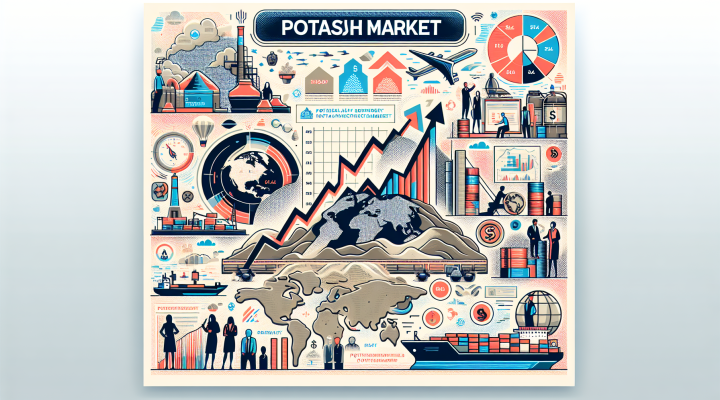
A powerful potash market signal is emerging from the agricultural commodity landscape, and seasoned investors are taking notice. Canada, home to the world’s largest potash reserves, sits at the epicenter of what could become the most significant resource investment theme of this decade. The confluence of geopolitical tensions, supply chain disruptions, and surging global food demand has created a perfect storm that’s reshaping the fertilizer industry.

The numbers tell a compelling story. Global potash consumption has reached record highs as farmers worldwide struggle to maintain crop yields amid climate challenges and growing populations. Brazil, India, and Southeast Asian markets are driving unprecedented demand, while traditional supply sources face mounting pressure. This fundamental shift represents more than a temporary market adjustment—it signals a structural transformation that positions Canadian potash producers for extraordinary growth.

What makes this potash market signal particularly intriguing is the supply-side dynamics at play. Eastern European production, which historically provided significant global supply, remains constrained by ongoing geopolitical tensions. Belarus and Russia, once major exporters, have seen their market access severely limited, creating a supply gap that Canadian producers are uniquely positioned to fill. Saskatchewan’s Potash Belt, containing over half of the world’s known reserves, has become the focal point for international buyers seeking reliable, long-term supply partnerships.

The investment implications extend far beyond traditional mining stocks. Canadian companies are experiencing a renaissance in capital allocation, with major producers announcing multi-billion-dollar expansion projects. These investments aren’t just about increasing production capacity—they’re about capturing market share in a fundamentally altered competitive landscape. The potash market signal suggests that companies positioning themselves now could dominate global supply chains for decades to come.

Technology integration is amplifying Canada’s competitive advantage. Modern extraction techniques and processing innovations are reducing production costs while improving efficiency. Smart investors recognize that this isn’t just a commodity play—it’s a technology-enabled resource opportunity. Canadian companies leveraging artificial intelligence, automated mining systems, and sustainable extraction methods are building moats that will be difficult for competitors to breach.

The agricultural megatrend driving this potash market signal shows no signs of slowing. Global population growth, rising protein consumption in developing markets, and the imperative to increase crop yields on existing farmland create sustained demand pressure. Unlike cyclical commodity booms driven by speculation, this demand surge reflects fundamental economic and demographic forces that will persist for generations.

Environmental considerations are adding another layer to the investment thesis. Potash enables more efficient fertilizer application, reducing overall environmental impact compared to alternative nutrients. As sustainable agriculture practices gain traction worldwide, potash demand benefits from both regulatory support and farmer adoption. Canadian producers, with their advanced environmental standards and clean production methods, are particularly well-positioned to serve ESG-conscious global buyers.

Currency dynamics further enhance the opportunity. The Canadian dollar’s relative stability provides a natural hedge for international investors, while domestic producers benefit from cost structures denominated in Canadian dollars but revenues largely earned in US dollars. This creates a favorable operational leverage that amplifies returns when commodity prices rise.

Transportation infrastructure gives Canada another decisive advantage. Established rail networks, port facilities, and logistics systems enable efficient product delivery to key markets. While competitors struggle with infrastructure limitations and transportation bottlenecks, Canadian producers can reliably serve global customers. This operational reliability commands premium pricing and strengthens long-term customer relationships.

The timing of this potash market signal coincides with a broader shift in investment capital toward tangible assets and essential commodities. As traditional growth sectors face headwinds and interest rate environments remain challenging, resource investments offer both inflation protection and exposure to fundamental demand drivers. Potash represents the intersection of multiple investment themes: agricultural security, resource scarcity, and Canadian economic opportunity.

Forward-thinking investors are recognizing that this potash market signal represents more than a commodity cycle—it’s a generational wealth-building opportunity rooted in Canada’s natural resource advantages. With global food security becoming increasingly critical and Canada’s potash reserves representing irreplaceable strategic assets, the investment case extends far beyond traditional cyclical considerations. The question isn’t whether to participate in this theme, but rather how quickly investors can position themselves to capitalize on what may prove to be Canada’s most significant resource opportunity in decades.

Smart Investors Track These Potash Market Signals as Technology Reshapes Global Supply Chains

The global fertilizer industry stands at a pivotal moment as sophisticated investors increasingly rely on emerging potash market signals to guide their technology and resource investment strategies. With agricultural demand continuing to surge worldwide and geopolitical tensions reshaping supply chains, understanding these market indicators has become essential for making informed investment decisions in this critical sector.

Traditional potash market signals have evolved dramatically as digital technologies transform how producers, distributors, and investors analyze supply and demand dynamics. Advanced analytics platforms now process vast amounts of data from agricultural markets, weather patterns, and crop yield predictions to generate more accurate forecasting models. These technological innovations are creating new investment opportunities in companies that can leverage data-driven insights to optimize production and distribution networks.

Recent developments in potash extraction and processing technologies represent another crucial potash market signal that astute investors are monitoring closely. Breakthrough innovations in solution mining techniques and selective dissolution processes are reducing production costs while minimizing environmental impact. Companies investing in these advanced extraction methods are positioning themselves to capture greater market share as regulatory pressure increases for more sustainable mining practices.

Resource allocation patterns across major potash-producing regions provide compelling insights into long-term market trends. Saskatchewan’s established operations continue to benefit from technological upgrades, while emerging producers in countries like Belarus and Russia are investing heavily in automation and digitalization. This geographic diversification of technology investment creates multiple opportunities for investors seeking exposure to different risk profiles and growth trajectories within the potash sector.

The integration of artificial intelligence and machine learning into potash operations represents a transformative potash market signal that forward-thinking investors cannot ignore. These technologies enable predictive maintenance of mining equipment, optimize chemical processing parameters, and enhance quality control measures throughout the production cycle. Companies successfully implementing AI-driven solutions are demonstrating improved operational efficiency and cost reduction, making them attractive investment targets.

Environmental, social, and governance considerations are increasingly influencing potash market signals as institutional investors prioritize sustainable investment strategies. The development of cleaner extraction technologies and carbon-neutral processing methods is attracting significant capital from ESG-focused funds. This trend is accelerating innovation in water recycling systems, energy-efficient processing equipment, and land rehabilitation technologies within the potash industry.

Global food security concerns continue to generate strong demand signals that support long-term investment in potash infrastructure and technology. Rising population levels, changing dietary preferences, and the need to increase crop yields on existing agricultural land are driving sustained demand for high-quality fertilizers. Investors are responding by funding research and development initiatives focused on slow-release potash formulations and precision agriculture applications.

Supply chain resilience has emerged as a critical potash market signal following recent global disruptions that highlighted vulnerabilities in traditional distribution networks. Investment in alternative transportation routes, strategic stockpiling facilities, and regional processing capabilities is reshaping the competitive landscape. Companies that successfully diversify their supply chains and reduce dependency on single transportation corridors are attracting premium valuations from risk-conscious investors.

The convergence of digital agriculture and precision fertilizer application presents compelling opportunities for technology-focused investors in the potash sector. Smart farming platforms that optimize fertilizer timing and application rates are creating new demand patterns that favor high-quality, customized potash products. This technological evolution is driving investment in specialized production facilities and advanced blending capabilities.

As the potash industry continues its technological transformation, investors who can accurately interpret these market signals will be best positioned to capitalize on emerging opportunities. The combination of sustainable production methods, advanced analytics, and precision agriculture applications is creating a new paradigm where technology and resource investment strategies must align with evolving market demands and environmental considerations.

Smart Investors Discover Untapped Wealth in Resource Royalty Streams

The global shift toward renewable energy and advanced mining technologies has created an unprecedented landscape for investors seeking stable, long-term returns through resource royalty investments. As traditional equity markets experience heightened volatility, sophisticated investors are increasingly turning their attention to royalty streams that provide consistent cash flows from natural resource extraction projects worldwide.

Understanding the fundamentals of royalty investing reveals why this asset class has gained significant traction among institutional and individual investors alike. Unlike direct ownership in mining or energy companies, royalty holders receive a percentage of revenue generated from resource extraction without bearing operational risks, capital expenditure burdens, or commodity price volatility exposure. This unique structure positions each resource royalty opportunity as a defensive investment that can weather economic downturns while providing steady income generation.

The technological revolution transforming resource extraction industries has fundamentally enhanced the attractiveness of royalty investments. Advanced drilling techniques, artificial intelligence-powered geological surveys, and automated mining equipment have dramatically improved extraction efficiency and reduced operational costs. These innovations translate directly into higher revenue streams for royalty holders, as improved productivity increases the total value of resources extracted from each project.

Modern portfolio diversification strategies increasingly incorporate royalty investments as a hedge against inflation and currency devaluation. Resource royalties typically maintain their value during inflationary periods, as commodity prices generally rise alongside broader economic price increases. This inflation protection characteristic makes royalty investments particularly attractive for long-term wealth preservation strategies and retirement portfolio construction.

The due diligence process for evaluating royalty investments requires careful analysis of multiple factors that determine long-term viability and return potential. Geological assessments, regulatory environments, operator track records, and reserve estimates all play crucial roles in determining the quality of any resource royalty opportunity. Investors must also consider jurisdiction stability, environmental regulations, and local community relations that could impact future extraction activities.

Geographic diversification within royalty portfolios provides additional risk mitigation benefits while maximizing exposure to global resource development trends. North American shale formations, Australian mineral deposits, and emerging market mining projects each offer distinct advantages and risk profiles. Strategic allocation across multiple jurisdictions and commodity types creates a balanced approach that captures various market cycles and regional economic developments.

The emergence of royalty-focused investment vehicles has democratized access to this traditionally institutional asset class. Public royalty companies, exchange-traded funds, and private placement opportunities now provide multiple avenues for investors to participate in resource royalty investments with varying risk tolerances and capital requirements. These investment vehicles often employ professional management teams with specialized expertise in resource evaluation and portfolio optimization.

Environmental, social, and governance considerations have become increasingly important factors in royalty investment evaluation. Modern resource extraction projects must meet stringent environmental standards and maintain positive community relationships to ensure long-term operational success. Investors focusing on ESG-compliant royalty opportunities often discover projects with superior long-term sustainability and reduced regulatory risks.

Market timing considerations for royalty investments differ significantly from traditional equity investments due to the long-term nature of resource extraction projects. While short-term commodity price fluctuations may impact immediate returns, the multi-decade lifespan of most resource projects provides natural smoothing of market volatility. This characteristic makes dollar-cost averaging particularly effective for building royalty investment positions over time.

As global energy transition accelerates and technology continues revolutionizing resource extraction, the investment landscape for royalties continues expanding with new opportunities emerging across traditional and alternative energy sectors. From lithium extraction supporting battery technology to rare earth mining enabling renewable energy infrastructure, each resource royalty opportunity represents a potential pathway to participate in long-term economic trends while generating consistent investment returns that can form the foundation of a well-diversified investment portfolio.