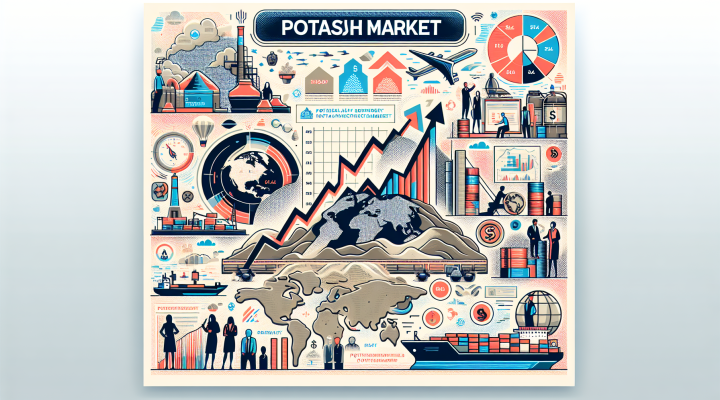
A powerful potash market signal is emerging from the agricultural commodity landscape, and seasoned investors are taking notice. Canada, home to the world’s largest potash reserves, sits at the epicenter of what could become the most significant resource investment theme of this decade. The confluence of geopolitical tensions, supply chain disruptions, and surging global food demand has created a perfect storm that’s reshaping the fertilizer industry.
The numbers tell a compelling story. Global potash consumption has reached record highs as farmers worldwide struggle to maintain crop yields amid climate challenges and growing populations. Brazil, India, and Southeast Asian markets are driving unprecedented demand, while traditional supply sources face mounting pressure. This fundamental shift represents more than a temporary market adjustment—it signals a structural transformation that positions Canadian potash producers for extraordinary growth.
What makes this potash market signal particularly intriguing is the supply-side dynamics at play. Eastern European production, which historically provided significant global supply, remains constrained by ongoing geopolitical tensions. Belarus and Russia, once major exporters, have seen their market access severely limited, creating a supply gap that Canadian producers are uniquely positioned to fill. Saskatchewan’s Potash Belt, containing over half of the world’s known reserves, has become the focal point for international buyers seeking reliable, long-term supply partnerships.
The investment implications extend far beyond traditional mining stocks. Canadian companies are experiencing a renaissance in capital allocation, with major producers announcing multi-billion-dollar expansion projects. These investments aren’t just about increasing production capacity—they’re about capturing market share in a fundamentally altered competitive landscape. The potash market signal suggests that companies positioning themselves now could dominate global supply chains for decades to come.
Technology integration is amplifying Canada’s competitive advantage. Modern extraction techniques and processing innovations are reducing production costs while improving efficiency. Smart investors recognize that this isn’t just a commodity play—it’s a technology-enabled resource opportunity. Canadian companies leveraging artificial intelligence, automated mining systems, and sustainable extraction methods are building moats that will be difficult for competitors to breach.
The agricultural megatrend driving this potash market signal shows no signs of slowing. Global population growth, rising protein consumption in developing markets, and the imperative to increase crop yields on existing farmland create sustained demand pressure. Unlike cyclical commodity booms driven by speculation, this demand surge reflects fundamental economic and demographic forces that will persist for generations.
Environmental considerations are adding another layer to the investment thesis. Potash enables more efficient fertilizer application, reducing overall environmental impact compared to alternative nutrients. As sustainable agriculture practices gain traction worldwide, potash demand benefits from both regulatory support and farmer adoption. Canadian producers, with their advanced environmental standards and clean production methods, are particularly well-positioned to serve ESG-conscious global buyers.
Currency dynamics further enhance the opportunity. The Canadian dollar’s relative stability provides a natural hedge for international investors, while domestic producers benefit from cost structures denominated in Canadian dollars but revenues largely earned in US dollars. This creates a favorable operational leverage that amplifies returns when commodity prices rise.
Transportation infrastructure gives Canada another decisive advantage. Established rail networks, port facilities, and logistics systems enable efficient product delivery to key markets. While competitors struggle with infrastructure limitations and transportation bottlenecks, Canadian producers can reliably serve global customers. This operational reliability commands premium pricing and strengthens long-term customer relationships.
The timing of this potash market signal coincides with a broader shift in investment capital toward tangible assets and essential commodities. As traditional growth sectors face headwinds and interest rate environments remain challenging, resource investments offer both inflation protection and exposure to fundamental demand drivers. Potash represents the intersection of multiple investment themes: agricultural security, resource scarcity, and Canadian economic opportunity.
Forward-thinking investors are recognizing that this potash market signal represents more than a commodity cycle—it’s a generational wealth-building opportunity rooted in Canada’s natural resource advantages. With global food security becoming increasingly critical and Canada’s potash reserves representing irreplaceable strategic assets, the investment case extends far beyond traditional cyclical considerations. The question isn’t whether to participate in this theme, but rather how quickly investors can position themselves to capitalize on what may prove to be Canada’s most significant resource opportunity in decades.