Archives for March 23, 2026

Why Canadian Dividend Aristocrats Are the Smart Money’s Secret Weapon for Building Wealth

While investors chase the latest market trends and speculative plays, a select group of seasoned wealth builders have quietly amassed fortunes through one of Canada’s best-kept investment secrets: dividend aristocrat stocks. These elite companies have demonstrated remarkable consistency by increasing their dividend payments for at least five consecutive years, creating a foundation of reliable income that compounds over time.

The Canadian dividend aristocrat landscape offers unique advantages that many investors overlook. Unlike their American counterparts, which require 25 years of consecutive dividend increases, Canadian dividend aristocrats need only five years of increases, allowing investors to tap into emerging dividend champions earlier in their growth cycles. This lower threshold creates opportunities to identify companies with strong fundamentals and growing cash flows before they become widely recognized by institutional investors.

The power of dividend compounding becomes apparent when examining long-term returns. Consider how reinvesting dividends from a Canadian dividend aristocrat transforms your investment trajectory. When you automatically reinvest dividend payments to purchase additional shares, you create a snowball effect where each dividend payment buys more shares, which in turn generate larger dividend payments. Historical data shows that dividend reinvestment typically accounts for 40-50% of total stock market returns over extended periods, making it a crucial component of wealth building.

Identifying the highest-quality Canadian dividend aristocrat candidates requires analyzing several key metrics beyond just dividend growth. Look for companies with payout ratios below 70%, indicating they retain sufficient earnings to fund future growth while maintaining dividend payments during economic downturns. Free cash flow coverage is equally important – the best dividend aristocrats generate free cash flow that exceeds their dividend obligations by at least 20%, providing a safety cushion during challenging periods.

Sector diversification among Canadian dividend aristocrats offers natural hedging against market volatility. The Canadian market provides excellent dividend aristocrat opportunities across essential sectors including utilities, telecommunications, banking, and consumer staples. Each sector responds differently to economic cycles, interest rate changes, and market conditions. By spreading investments across multiple sectors within your Canadian dividend aristocrat portfolio, you reduce concentration risk while maintaining steady income streams.

Timing your entry points can significantly impact long-term returns from Canadian dividend aristocrat investments. During market corrections or sector-specific selloffs, high-quality dividend aristocrats often trade at attractive valuations, presenting opportunities to lock in higher yields. Market volatility creates temporary pricing inefficiencies, allowing patient investors to accumulate shares of proven dividend growers at discounted prices. These entry points are particularly valuable because dividend aristocrats tend to recover more quickly than growth stocks during market rebounds.

Tax efficiency represents another crucial advantage of Canadian dividend aristocrat investing. The Canadian tax system provides preferential treatment for dividend income through the dividend tax credit, which can result in lower effective tax rates compared to interest income or employment income. This tax advantage amplifies the after-tax returns from dividend investing, particularly for investors in higher tax brackets. Understanding these tax implications helps maximize the true value of your dividend aristocrat strategy.

Building a successful Canadian dividend aristocrat portfolio requires patience and discipline, but the rewards extend far beyond simple income generation. These companies typically demonstrate superior management quality, competitive advantages, and financial stability that translate into more predictable share price appreciation over time. The combination of growing dividends and capital appreciation creates a powerful wealth-building engine that can outperform more volatile investment strategies while providing the peace of mind that comes from owning pieces of Canada’s most financially robust companies.


Why Resource Royalty Opportunities Are Becoming Canada’s Most Attractive Investment Frontier

Canada’s mining landscape is experiencing a fundamental shift that’s creating unprecedented opportunities for investors who understand where to look. While traditional equity investments in mining companies continue to face volatility and operational risks, a different investment structure is quietly gaining momentum among institutional and retail investors alike. The resource royalty opportunity emerging across Canada’s vast mineral-rich territories represents a compelling alternative that combines the upside potential of resource extraction with significantly reduced risk exposure.

The mechanics of resource royalty investments are elegantly simple yet powerful. Instead of owning shares in mining companies that must navigate complex operational challenges, environmental regulations, and capital-intensive development phases, royalty investors purchase the right to receive a percentage of revenue or production from specific mining projects. This structure provides investors with direct exposure to commodity price movements while insulating them from the day-to-day operational risks that can devastate traditional mining stock investments.

What makes the current resource royalty opportunity particularly attractive is Canada’s position as a global leader in critical mineral production. The country holds substantial reserves of lithium, cobalt, nickel, copper, and rare earth elements—materials that are essential for the global energy transition and technological advancement. As governments worldwide prioritize supply chain security for these strategic materials, Canadian mining projects are receiving unprecedented attention and investment capital.

Recent data from Natural Resources Canada indicates that mineral exploration expenditures have increased by 23% over the past two years, with particular strength in battery metals and precious metals sectors. This exploration boom is creating a pipeline of new projects that will require development capital, making royalty financing an increasingly attractive option for mining companies seeking to advance their projects without diluting equity ownership excessively.

The financial performance characteristics of royalty investments make them particularly appealing in the current economic environment. Unlike traditional mining investments, royalty holders typically receive steady cash flows once projects enter production, with payments that automatically adjust upward during periods of higher commodity prices. This creates a natural hedge against inflation while providing portfolio diversification benefits that many institutional investors are actively seeking.

Several major Canadian royalty companies have demonstrated the viability of this investment approach over the past decade. Franco-Nevada Corporation, often considered the gold standard in royalty investing, has delivered consistent dividend growth and total returns that have outpaced many traditional mining investments. This success has attracted attention from both individual investors and large institutional funds looking to gain resource exposure without the operational complexities of direct mining investments.

The regulatory environment in Canada further enhances the resource royalty opportunity by providing a stable, transparent framework for mineral rights and royalty agreements. Provincial governments across Canada have streamlined approval processes for mining projects while maintaining rigorous environmental standards, creating an environment where legitimate projects can advance predictably through development phases.

Emerging technologies are also creating new categories of royalty opportunities beyond traditional metals mining. Carbon capture and storage projects, renewable energy developments on mineral-rich lands, and advanced extraction technologies are all generating novel royalty structures that weren’t available to investors just a few years ago. These innovations are expanding the potential universe of investable opportunities within the royalty space.

The scalability of royalty investments makes them accessible to investors across different capital levels. While large institutional investors can participate in major project royalty financings worth hundreds of millions of dollars, retail investors can access similar exposure through publicly traded royalty companies or smaller-scale royalty purchases. This democratization of access is driving increased capital flows into the sector and creating additional liquidity for royalty holders.

Market timing factors are also aligning favorably for resource royalty opportunities. Many Canadian mining companies are advancing projects through feasibility studies and seeking development capital in an environment where traditional debt financing has become more expensive. This creates opportunities for royalty investors to negotiate favorable terms on high-quality projects that might have been financed through conventional means in previous market cycles.

For investors seeking to capitalize on Canada’s resource wealth while minimizing operational risks, the growing resource royalty opportunity represents a strategic approach to portfolio diversification. The combination of steady cash flows, inflation protection, commodity price upside participation, and reduced operational risk exposure creates an investment profile that’s particularly well-suited to current market conditions. As more investors recognize these advantages, the Canadian royalty sector appears positioned for sustained growth and innovation in the years ahead.

Why Canada’s Tech Revolution Could Reshape Global Copper Markets Forever

Canada stands at the epicenter of a technological transformation that could fundamentally alter global metal markets. As artificial intelligence data centers proliferate across the country and electric vehicle infrastructure expands at breakneck speed, the copper demand outlook has shifted dramatically, positioning Canada as both a major consumer and strategic supplier in an increasingly electrified world.

The numbers tell a compelling story. Canadian copper consumption has surged 34% over the past eighteen months, driven primarily by data center construction and renewable energy projects. Tech giants have announced $47 billion in Canadian data center investments, each facility requiring roughly 3,000 tons of copper for power distribution, cooling systems, and networking infrastructure. This represents a seismic shift from traditional industrial applications toward high-tech, high-value uses that show no signs of slowing.

What makes Canada’s situation particularly intriguing is the convergence of supply and demand dynamics within its borders. The country produces approximately 550,000 tons of copper annually from mines in British Columbia, Ontario, and Quebec, yet domestic consumption now approaches 400,000 tons—a dramatic increase from just 180,000 tons five years ago. This tightening supply-demand balance reflects broader global trends but with uniquely Canadian characteristics.

The electric vehicle revolution has created another powerful demand driver. Canada’s ambitious goal of having all new light-duty vehicle sales be zero-emission by 2035 has triggered massive infrastructure investments. Each EV charging station requires roughly 20 kilograms of copper, and the planned network of 84,000 fast-charging stations represents substantial metal demand. Meanwhile, the vehicles themselves contain four times more copper than traditional internal combustion engines, creating a multiplier effect as adoption accelerates.

Innovation Driving Unprecedented Growth

Canadian companies are pioneering technologies that could reshape the global copper demand outlook. Quantum computing research facilities in Waterloo and Vancouver require specialized copper components for their ultra-low temperature operations, while advanced battery manufacturing plants use copper in ways that maximize conductivity and minimize weight. These applications command premium prices and represent the kind of value-added demand that supports long-term market stability.

The renewable energy sector presents perhaps the most significant opportunity. Wind turbines require approximately 4.7 tons of copper each, and Canada’s offshore wind projects alone will install over 2,000 turbines in the next four years. Solar installations, while using less copper per unit, are expanding rapidly across Alberta and Saskatchewan, supported by new storage systems that are themselves copper-intensive. Grid modernization projects add another layer of demand, as utilities upgrade infrastructure to handle bidirectional power flows and integrate distributed energy resources.

Mining technology innovations are creating feedback loops that amplify copper demand. Canadian companies developing autonomous mining equipment, advanced ore processing systems, and digital mine management platforms all require sophisticated electronics and power systems. These technologies improve mining efficiency and safety while simultaneously consuming the very metals they help extract more effectively.

Supply chain considerations add complexity to the outlook. Canadian copper mines benefit from political stability and established infrastructure, making them attractive to manufacturers seeking reliable sources. However, permitting timelines for new projects remain lengthy, and environmental assessments have become more rigorous. The Galore Creek project in British Columbia, expected to produce 200,000 tons annually, illustrates both the potential and challenges—significant reserves coupled with complex development requirements.

Global Context and Market Positioning

Canada’s copper story unfolds against a backdrop of global supply constraints and geopolitical tensions. Traditional suppliers face infrastructure challenges, while new demand sources emerge faster than new production capacity. This dynamic positions Canadian resources strategically, particularly as nearshoring trends favor North American supply chains. The copper demand outlook suggests sustained premium pricing for politically stable sources, benefiting Canadian producers and potentially attracting additional investment capital.

The integration of artificial intelligence into industrial processes creates another demand vector. Canadian AI companies developing manufacturing optimization, predictive maintenance, and automated quality control systems require extensive sensor networks and edge computing infrastructure. These applications may seem small individually but aggregate into substantial copper consumption as deployment scales across industries.

Market analysts project Canadian copper demand could reach 650,000 tons annually within five years, driven by continued technology adoption and infrastructure development. This would transform Canada from a net copper exporter to a balanced market or even net importer, fundamentally altering trade flows and pricing dynamics. Such a shift would ripple through global markets, potentially tightening supply for other regions and supporting higher commodity prices.

The intersection of Canada’s technological innovation and resource endowment creates a unique position in global copper markets. As demand drivers intensify and supply constraints persist worldwide, Canada’s dual role as both a sophisticated consumer and reliable producer positions the country at the heart of the metal’s evolving market dynamics. This convergence suggests the copper demand outlook will remain robust, supported by fundamental technological shifts that show no signs of slowing.

Smart Canadians Are Using Tax-Sheltered Accounts to Profit from Agricultural Commodity Trends

Canadian investors are discovering a powerful strategy that combines the tax advantages of registered accounts with one of the most promising investment themes of the decade. By positioning agricultural commodity investments within Tax-Free Savings Accounts (TFSA) and Registered Retirement Savings Plans (RRSP), savvy investors are building wealth while addressing the growing global food security crisis.

The agricultural commodity outlook has never been more compelling. Global population growth, climate volatility, and evolving dietary preferences are creating unprecedented demand for food production. Meanwhile, arable land remains finite, and extreme weather events continue disrupting supply chains. This fundamental supply-demand imbalance positions agricultural commodities as a compelling long-term investment thesis—one that benefits significantly from tax-sheltered growth.

Agricultural commodity investments through Canadian registered accounts offer unique advantages that traditional taxable investing cannot match. Within a TFSA, all gains from commodity-focused exchange-traded funds, agricultural stocks, and related investments grow completely tax-free. This means when wheat prices surge due to drought conditions or fertilizer stocks rally amid supply constraints, investors keep every dollar of profit without sharing gains with the Canada Revenue Agency.

RRSP strategies for agricultural commodities work differently but equally powerfully. Contributions provide immediate tax deductions, allowing investors to deploy more capital into positions. Consider an investor in a 40% marginal tax bracket contributing $10,000 to agricultural commodity investments through their RRSP—they receive a $4,000 tax refund, effectively reducing their actual investment to $6,000 while maintaining full exposure to the agricultural commodity outlook.

Building Your Agricultural Portfolio Within Registered Accounts

The key to maximizing registered account benefits lies in strategic asset allocation. Agricultural commodity investments typically generate higher volatility and potentially substantial gains—exactly the type of growth that benefits most from tax sheltering. Smart investors prioritize these holdings in their TFSA and RRSP while keeping stable, dividend-paying investments in taxable accounts where dividend tax credits provide natural tax efficiency.

Exchange-traded funds focusing on agricultural commodities offer excellent diversification within registered accounts. Popular options include broad agriculture ETFs tracking futures contracts for wheat, corn, soybeans, and livestock, alongside funds focusing specifically on agricultural equipment manufacturers and fertilizer companies. These vehicles provide exposure to the entire agricultural value chain while maintaining liquidity and professional management.

Individual agricultural stocks present another compelling opportunity for registered account positioning. Companies involved in precision agriculture, agricultural biotechnology, and sustainable farming solutions are experiencing rapid growth as the industry modernizes. The agricultural commodity outlook suggests these technology-driven companies could deliver exceptional returns over the next decade, making them ideal candidates for tax-free growth within TFSAs or tax-deferred growth within RRSPs.

International diversification within registered accounts allows Canadian investors to access global agricultural markets efficiently. Many agricultural powerhouses trade on foreign exchanges, and holding these positions within registered accounts eliminates the complexity of foreign tax reporting while capturing growth from emerging markets agricultural expansion.

Timing and Risk Management Strategies

Agricultural commodity investing requires careful timing and risk management, particularly within registered accounts where contribution room is precious. Dollar-cost averaging into agricultural positions helps smooth volatility while building substantial positions over time. Many successful investors allocate a fixed monthly amount to agricultural commodity investments within their registered accounts, regardless of short-term price movements.

The cyclical nature of agricultural markets creates opportunities for tactical allocation adjustments. During periods of oversupply and low prices, increasing agricultural commodity allocation within registered accounts positions investors for the inevitable recovery. Conversely, during periods of extreme pricing, rebalancing into other sectors preserves gains while maintaining long-term agricultural exposure.

Seasonal patterns in agricultural markets provide additional strategic opportunities for registered account investors. Planting and harvest seasons create predictable price movements that experienced investors can leverage through tactical adjustments within their TFSAs and RRSPs.

The agricultural commodity outlook represents one of the most compelling long-term investment themes available to Canadian investors today. By strategically positioning these investments within TFSAs and RRSPs, investors can capture the full potential of agricultural market growth while minimizing tax drag. As global food demand continues rising and agricultural innovation accelerates, those who combine smart tax planning with agricultural commodity investing will likely harvest significant wealth in the years ahead. The question isn’t whether to invest in agricultural commodities—it’s whether you’re maximizing your returns through optimal registered account strategies.

Why Canada’s Copper Boom Could Transform North America’s Energy Independence

Canada stands at the precipice of an unprecedented economic transformation, driven by a global appetite for copper that shows no signs of slowing. As electric vehicles, renewable energy systems, and smart grid technologies reshape the world’s energy landscape, the copper demand outlook has never been more compelling—and no country is better positioned to capitalize on this shift than Canada.

The International Energy Agency’s latest projections paint a striking picture: global copper demand will surge by 70% by 2040, with clean energy technologies accounting for the lion’s share of this growth. A single electric vehicle requires four times more copper than a conventional car, while offshore wind farms demand up to five times more copper per megawatt than gas-fired power plants. This insatiable hunger for copper is reshaping investment priorities across North America, with Canadian mining operations becoming the crown jewels of institutional portfolios.

Canada’s geological advantages run deeper than mere mineral deposits. The country hosts some of the world’s most stable and accessible copper reserves, from British Columbia’s Highland Valley to Quebec’s emerging copper belt. Unlike many copper-rich nations plagued by political instability, Canada offers mining companies and investors the rare combination of abundant resources, robust infrastructure, and regulatory certainty. This stability premium has become increasingly valuable as supply chain disruptions continue to highlight the risks of over-dependence on politically volatile regions.

The ripple effects of the positive copper demand outlook extend far beyond mining operations themselves. Canadian provinces are witnessing unprecedented infrastructure investments as companies scramble to expand processing capabilities and transportation networks. British Columbia alone has approved over $8 billion in copper-related infrastructure projects, while Ontario’s Ring of Fire region is experiencing a mining renaissance that promises to reshape the province’s economic landscape. These investments are creating thousands of high-paying jobs and revitalizing communities that have struggled with economic transitions.

What makes Canada’s position particularly compelling is the convergence of domestic demand with export opportunities. As the country accelerates its own clean energy transition, Canadian copper producers enjoy the dual benefit of serving both hungry international markets and rapidly growing domestic consumption. The federal government’s commitment to net-zero emissions has triggered massive infrastructure spending on electric vehicle charging networks, smart grids, and renewable energy installations—all copper-intensive projects that create a natural hedge for Canadian producers against global market volatility.

Mining companies are responding to this copper demand outlook with aggressive expansion plans that would have seemed fantastical just a decade ago. Major players like Teck Resources and First Quantum Minerals are investing billions in new extraction technologies and mine expansions. These investments are particularly focused on sustainable mining practices, recognizing that environmental stewardship has become a competitive advantage in attracting both capital and talent. Advanced extraction techniques are allowing companies to profitably mine lower-grade deposits while minimizing environmental impact, effectively expanding Canada’s economically viable copper reserves.

The financing landscape reflects this optimism about copper’s future. Canadian mining companies are accessing capital at rates not seen since the commodities supercycle of the early 2000s, but with a crucial difference: today’s investors are betting on sustained demand rather than speculative bubbles. Green bonds and ESG-focused investment funds are pouring money into Canadian copper operations, viewing them as essential infrastructure for the global energy transition rather than traditional commodity plays.

Perhaps most significantly, the copper demand outlook is positioning Canada as a critical partner for the United States in achieving energy security. As both countries seek to reduce dependence on Chinese supply chains, Canadian copper has become a strategic asset for North American energy independence. This geopolitical dimension adds a layer of long-term stability to demand projections that extends well beyond market fundamentals, creating what many analysts view as a generational investment opportunity that will continue driving Canada’s economic growth for decades to come.

Why Canada’s Resource Boom Is Creating Unprecedented Economic Growth Opportunities

Canada stands at the epicenter of one of the most significant economic phenomena of the modern era. The ongoing commodity super cycle is reshaping the nation’s economic landscape, driving unprecedented growth in resource-dependent provinces and creating ripple effects across sectors from manufacturing to technology. As global demand for critical minerals, energy resources, and agricultural products reaches historic highs, Canada’s vast natural wealth positions it as a key beneficiary of this transformative period.

Critical Minerals Drive Canada’s Strategic Economic Position

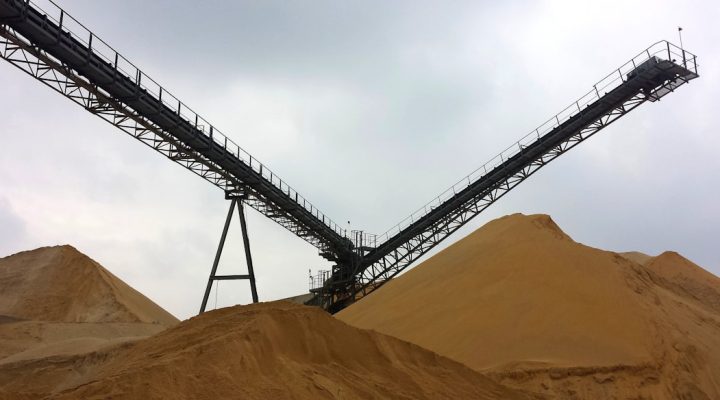
The current commodity super cycle has elevated Canada’s position as a global supplier of critical minerals essential for the green energy transition. Lithium, cobalt, nickel, and rare earth elements—all abundant in Canadian soil—are experiencing explosive demand growth as countries race to build electric vehicle infrastructure and renewable energy systems. Mining operations in provinces like Ontario, Quebec, and British Columbia are expanding rapidly, with new projects receiving billions in investment commitments. This mineral wealth surge is creating high-paying jobs in remote communities and generating substantial tax revenues for provincial governments. The federal government’s Critical Minerals Strategy has identified 31 minerals as strategic priorities, positioning Canada to capture an estimated $48 billion in annual export value by 2030.

Energy Sector Renaissance Fuels Economic Expansion

While the world transitions toward cleaner energy sources, the commodity super cycle has simultaneously strengthened demand for traditional Canadian energy exports. Natural gas exports to Europe and Asia have surged as countries seek energy security, while oil sands operations benefit from sustained global demand. Canadian energy companies are leveraging advanced extraction technologies to increase production efficiency while reducing environmental impact. The sector’s renaissance extends beyond fossil fuels—hydroelectric power exports to the United States have increased significantly, and Canada’s uranium mining industry is experiencing renewed interest as nuclear energy gains acceptance as a clean baseload power source. This energy boom is translating into substantial economic gains, with Alberta, Saskatchewan, and Newfoundland experiencing notable revenue increases.

Agricultural Commodities Strengthen Rural Economic Growth

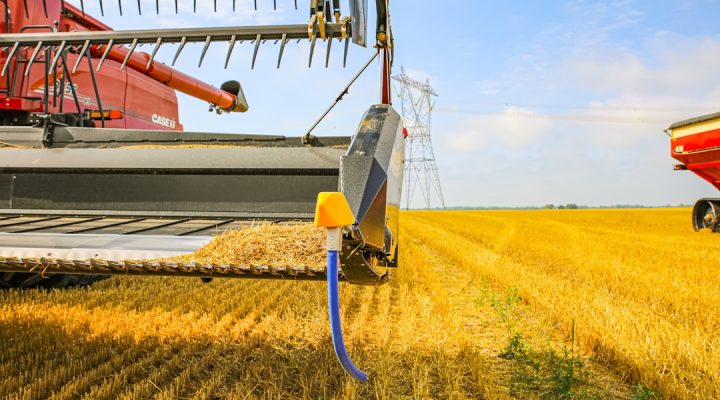
Canada’s agricultural sector is capitalizing on the commodity super cycle through record-high prices for wheat, canola, and other staple crops. Global food security concerns, driven by geopolitical tensions and climate challenges, have elevated demand for Canadian agricultural products. Prairie provinces are experiencing an agricultural renaissance, with farmers investing in advanced equipment and sustainable farming practices to maximize yields. The forestry sector is also benefiting from increased lumber demand, particularly from the United States housing market recovery. Agricultural technology companies across Canada are developing innovative solutions for precision farming, creating a secondary economic boom in rural innovation hubs. Export values for Canadian agricultural products have reached all-time highs, contributing significantly to the nation’s trade surplus.

Investment Capital and Infrastructure Development Accelerate

The commodity super cycle is attracting unprecedented levels of domestic and international investment into Canadian resource projects. Major mining companies are committing billions to new operations, while infrastructure development projects—including ports, railways, and processing facilities—are receiving substantial funding. The Toronto Stock Exchange has become a global hub for resource company listings, with mining and energy firms raising capital at record levels. Government infrastructure investments are complementing private sector development, with federal and provincial programs supporting transportation networks that connect resource extraction sites to global markets. This investment surge is creating employment opportunities across skill levels, from specialized engineering positions to construction and logistics jobs.

Canada’s strategic positioning during this commodity super cycle represents a generational opportunity for sustainable economic growth. The nation’s combination of abundant natural resources, stable political environment, and advanced extraction technologies creates a competitive advantage that extends far beyond current market cycles. As global economies continue their transition toward renewable energy and resource security becomes increasingly important, Canada’s role as a reliable supplier of critical commodities will likely strengthen its economic foundation for decades to come. The key to maximizing these benefits lies in balancing resource development with environmental stewardship and ensuring that prosperity reaches communities across the country.