Archives for November 10, 2018

Keystone XL stalls, again

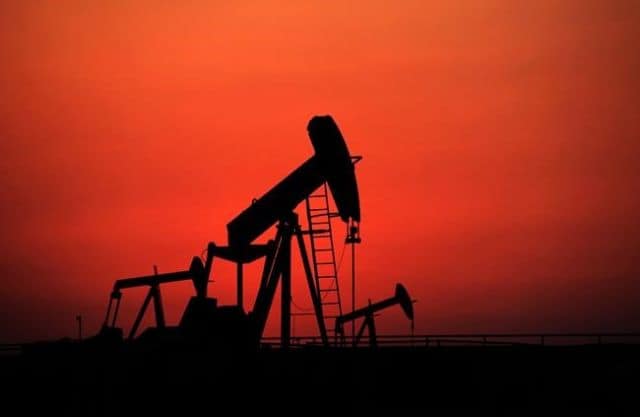
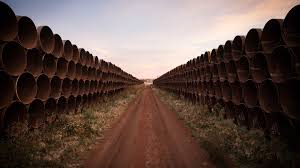
The Canadian proponent of the $10-billion Keystone XL crude pipeline says it remains committed to the project despite a Montana judge’s ruling that it must pass a further environmental review.

The company has received the judge’s ruling and is reviewing it, said TransCanada Corp. spokesman Terry Cunha in a brief email on Friday.

U.S. District Judge Brian Morris put the project on hold on Thursday, ruling that the potential impact had not been considered as required by federal law. Environmentalists and Native American groups had sued to stop it, citing property rights and potential oil spills.

The federal court order blocks a Trump administration permit for the construction of the pipeline. Morris was appointed by President Barack Obama.

TransCanada shares on the Toronto Stock Exchange fell by as much as 2.75 per cent in early trading on Friday.

“This is the world’s longest tug of war, with western Canadian oil prices as the rope,” said Zachary Rogers, a refining and oil markets research analyst at Wood Mackenzie.

“While definitely a major setback in terms of timing, this is unlikely to be the nail in the coffin for Keystone XL. Exact legal recourse options are unclear, but the most likely result is either an escalation through the courts or an additional State Department review and President Trump re-approving the line.”

A shortage of export pipeline space to carry away growing oil production in Alberta has been blamed for recent steep discounts in prices for Canadian oil as compared to New York-traded benchmark oil.

Analysts say as much as 110,000 barrels a day of crude oil is currently being left in the ground in Western Canada rather than being produced and sold at unprofitable prices.

Last January, TransCanada said it had secured shipping commitments totalling roughly 500,000 barrels a day on the line, including a deal with the Alberta government to ship 50,000 barrels a day of provincially owned crude.

Other Keystone XL shippers include major Calgary-based oilsands producers Canadian Natural Resources Ltd., Suncor Energy Inc. and Cenovus Energy Inc.

The 1,897-kilometre pipeline would carry as much as 830,000 barrels of crude per day from Hardisty, Alta., to Steel City, Neb., and on through a half dozen states to refineries on the Gulf Coast.

Becky Mitchell, chairwoman of the Northern Plains Resource Council, a plaintiff in the Montana legal action against Keystone XL, said her environmental organization is thrilled with the ruling.


Interfor shares down

Interfor Corp.’s share price was trading down more than 10 per cent Friday as the company missed earnings expectations amid volatile lumber prices.

“The dominating feature of the third quarter this year was the drop in lumber prices that began in late May and early June and continued unabated through the third quarter and into the fourth quarter,” said company chief executive Duncan Davies.

He said volatility this year has been unprecedented as logistical constraints and other factors rapidly drove western spruce composite prices up US$145 in the first five months of the year only to plunge US$280 since to a low of US$296 per thousand board feet.

“In our view, the current state of the lumber market makes little sense,” said Davies.

“The drop we’ve experienced in the last few months is more of an overreaction to an overreaction that occurred earlier this year.”

Prices appear to have bottomed though, said Davies, with some price gains recently.

Meanwhile, cost inflation in labour and materials has led Interfor to indefinitely shelve a new sawmill it was looking to build in the U.S. south, he said.

“Over the last number of months, it became, it’s become readily apparent to us that equipment lead times, contractor services, steel prices and a number of other cost factors were increasing to the point where we weren’t comfortable that we could generate the kind of returns that we felt were necessary.”

Davies said the price drop in the third quarter put pressure on earnings, though company profits of $28.1 million, or 40 cents per share were still up from earnings of $16.8 million or 24 cents per share for the same quarter last year.

Adjusted net earnings came in slightly higher at $28.24 million but still 40 cents per share, while analysts had expected earnings of $43.5 million or 44 cents per share according to Thomson Reuters Eikon.

The company’s share price was trading down $1.81 or 11.1 per cent at $14.48 in mid-afternoon trading on the Toronto Stock Exchange.

Interfor says it produced 14 million board feet less than the previous quarter after it instituted preventative downtime in the U.S. south ahead of hurricane Florence and production dropped in the U.S. northwest.

B.C. production rose by nine million board feet, but will see a planned 20-per-cent drop in production in the fourth quarter as the company cuts back due to declining lumber prices and higher log costs.

Oil drops for 10th day

Crude oil prices dipped to near a nine-month low as they fell for a tenth consecutive day, potentially having an impact on the Bank of Canada interest rate decision next month.

West Texas Intermediate dipped to a low of US$59.26 before closing off 83 cents or 1.4 per cent to US$59.84.

Since its peak last month, WTI is down about 22 per cent as it experienced a fifth consecutive weekly drop.

And the December crude contract was down 48 cents at US$60.19 per barrel to the lowest level since February.

A glut of oil production is the main cause of the declines in prices of WTI and Brent crude.

The United States has taken the crown as the world’s leading oil producer after output increased by two million barrels per day over the last year to reach 11.6 million bpd.

At the same time, OPEC is over-producing and sanctions have been watered down against Iran as the U.S. granted waivers on the sanctions to eight countries over concerns that a complete end of Iranian imports would cause economic disruptions.

“But sentiment has also driven down the prices with fears on global growth weakening and therefore slowing oil demand,” says Cavan Yie, a portfolio manager at Manulife Asset Management.

The situation is compounded in Canada where the price differential with the Western Canadian Select has widened considerably because of the lack of pipelines to carry crude out of Alberta. And a Montana judge’s ruling that the Keystone XL project needs further work is another black mark for Canadian energy investors, he said.

“It’s been a challenging year so far for the energy patch,” Yie said in an interview.

Low Canadian oil prices are having a negative impact on government tax revenues and the Alberta economy, which will likely impact the Bank of Canada’s rate hike decision next month, he said.

“I think for sure it should be incrementally negative for their stance on future interest rate hikes,” he said. “I think the probabilities are probably a little lower.”

Barring a major turnaround in the next four weeks, it will be hard for Governor Stephen Poloz and his team to ignore the impact of low oil prices as it makes a December rate decision, added CIBC chief economist Avery Shenfeld.

Canada’s heavy oil benchmark, Western Canadian Select, is less than $17 per barrel. The Bank of Canada’s monetary policy report assumed a price at about twice that level.

“WCS is closing in on the lows set in 2016, and is well below the level that prompted an outright rate cut by the Bank of Canada in 2015,” he wrote in a note.

“For now, however, what’s clear is that the oil sector — responsible for Canada’s largest export product as well as up to a third of business capital spending in good times — will be reverting to a drag on growth forecasts in upcoming quarters.”

Some of the decrease reverses a steep run-up in anticipation of sanctions against Iran, says BMO Financial Group chief economist Douglas Porter.

“The severe drop brings WTI prices back to where they ended 2017, which was actually the highest level of the year. So, current prices are still well above last year’s average of $51,” he wrote in a note.

Production to stay in Cda

The head of the B.C. company that scooped up Bombardier Inc.’s Q400 turboprop business has pledged to keep all manufacturing already in Canada within the country.

The Q400 series is a “natural fit” for Longview Aviation Capital, chief executive David Curtis said in an interview.

“We like to say, ‘It’s the same colour of paint.’ In other words, the same production processes.”

Bombardier announced on Thursday it is selling the Q400 program to a Longview subsidiary for about US$300 million, on top of the sale of its flight training business to CAE Inc. for about US$645 million.

The Montreal-based company manufactures roughly 28 to 30 Q400 aircraft annually at its Downsview property in Toronto, land that the company sold earlier this year to the Public Sector Pension Investment Board.

Bombardier has a lease on the property until 2021, with a two-year extension option.

“There’s no question, the writing’s on the wall — we’ve go to move,” Curtis said.

“We don’t know yet what we’re going to do, and until we get in there and talk with the folks about what’s the market opportunity, we don’t have any decisions.”

Any future production site will “absolutely not” leave Canadian soil, he said. “We wouldn’t outsource it.”

Longview, whose subsidiary Viking Air Ltd. makes turboprop aircraft such as the Twin Otter, intends to maintain supply chains for the Q400 series that currently stretch from China to Ireland to Mexico, he added.

The deal, which is slated to close in the second half of 2019, positions Longview to more than triple its annual revenue to $1 billion, Curtis said.

Union and opposition leaders in Quebec spoke out against Bombardier’s move Thursday to lay off 5,000 workers, including 500 in Ontario and 2,500 in Quebec, as part of a restructuring plan that cuts more than 12 per cent of its Canadian positions.

Mary Ellen McIlmoyle, president of a Unifor local that represents some of the 2,100 workers at Bombardier’s aerospace wing at Downsview, said her members feel “betrayed.”

“During bargaining in April, the company said they were keeping the Q400,” she said. “It was a huge shock when we found they turned around and sold it.”

Workers’ lack of certainty about the Downsview facility — which makes cockpits and wings, among other components — after 2021 is their “biggest concern,” she said.

“Our members are worried about it being moved to B.C.”