
Archives for November 10, 2018

To keep old growth out of new shirts, fashion turns to technology

Marks & Spencer are one of a number of brands to work with Canadian non-profit Canopy, building a website that uses satellite imagery and conservation research to identify the forests that scientists say need to be left alone.

No one dies for fashion in greater numbers than, it turns out, the trees. More than 150 million are cleared every year, shipped around the world, then pulped and processed into viscose — a.k.a. rayon, the cheap, silk-ish fabric most mass-market brands can’t survive without.

For the growing number of apparel companies promising a more ecologically sound manufacturing process, this presents a problem. The viscose industry relies on wood from around the world, including some areas that have been designated as ecologically sensitive.

But by the time the pulp becomes rayon (typically in China), it’s nearly impossible to know whether it originated in American tree farms or Indonesian old growth forests. Unless someone’s paying attention.

Nonprofit groups like WWF, Greenpeace and Rainforest Action Network have in-country expertise that have helped businesses align manufacturing practices with environmental commitments, but people are limited in the amount of ground they can cover and the number of hours in a day they can work.

So several brands, including Hennes & Mauritz AB, Kering SA and Marks & Spencer Group Plc, spent the last year helping the Canadian non-profit Canopy build a website that uses satellite imagery and conservation research to identify the forests that scientists say need to be left alone.

Called Forest Mapper, the images can resolve to 30 square-meters (320 square feet) in some areas. It shows 36 layers of data, 25 directly about forests, with others covering threatened species habitats and carbon locked away in trees and soil.

The maps are based on work done by World Resources Institute and its real-time deforestation tracker, Global Forest Watch, Forest Stewardship Council, International Union for Conservation of Nature and WWF.

The viscose supply chain had been largely opaque until the last few years, when companies started asking questions and Canopy began auditing pulp facilities and mills. On-the-ground research, complemented by the mapping tool, is just now giving consumer companies and NGOs enough information to either prune undesirable supplies from the business or challenge suppliers to reform their practices.

Almost 50 fashion, paper and publishing companies endorsed the tool as a way to improve their analysis of where supply chains wind through ecosystems that are rare, nearly destroyed by people or important for maintaining biodiversity.

Kimberly-Clark Corporation, for example, is planning to overlay its supply chain onto the Forest Mapper, according to Lisa Morden, vice president for safety and sustainability. “The data is very rich and has a lot of depth to it, so it gives us some more science-based approaches to how we think about our supply chain,” she said.

Canopy executive director Nicole Rycroft founded the organization to amplify the influence companies have over their suppliers. Funded by philanthropy and foundations, Canopy conducts supply-chain audits for companies to help them identify where they’re doing business in places they may not want to.

More than 160 companies have pledged to eliminate materials from endangered forests; about 750 company “partners” have worked with the group on purchasing practices in nearly two decades. Fashion companies helped pay for third-party expenses incurred during the mapping project for data expertise and app-development, about $70,000 (U.S.).


Artificial Intelligence, China And The U.S. How The U.S. Is Losing The Technology War

National technology investment strategies are hard to define let alone pass through complicated legislative bodies, like the US Congress, even when there’s a declared war that threatens a country’s financial and economic competitiveness. The war for global leadership in artificial intelligence and machine learning is well underway, and the US is poised to lose perhaps the most important technology war in its history.

Is the AI war well-understood? Not even close, at least not by the “leaders” who develop national strategies or by the citizens of the United States – who all need to spend some time on https://willrobotstakemyjob.com. While I searched and searched, I could not find a single political candidate in the recent US mid-term elections who discussed AI, the AI war, or how the US will likely lose the war unless a massive strategic pivot occurs immediately. Since they’re mostly unaware of the war, US leaders have no strategies to prevent an historic loss: imagine the implications of electing politicians who have no idea a deadly war is underway.

The Threat

So what’s going on?

AI/machine learning/deep learning (let’s call it all “AI”) are the new digital weapons – which, by the way, the US Department of Defense discovered decades ago. While we could certainly examine the importance of AI in global military and economic warfare, no one can argue that AI is unimportant. In fact, it’s at least a 9 or any imaginable 10-point scale. I give it an easy 10. So do lots of others who research technology trends and technology adoption, especially those who track indicators of national success.

The Chinese have a very public, very-deep, extremely well-funded commitment to AI. Air Force General VeraLinn Jamieson says it plainly: “We estimate the total spending on artificial intelligence systems in China in 2017 was $12 billion. We also estimate that it will grow to at least $70 billion by 2020.” According to the Obama White House Report in 2016, China publishes more journal articles on deep learning than the US and has increased its number of AI patents by 200%. China is determined to be the world leader in AI by 2030.

Bitcoin down 1%, heading toward lowest level of the week

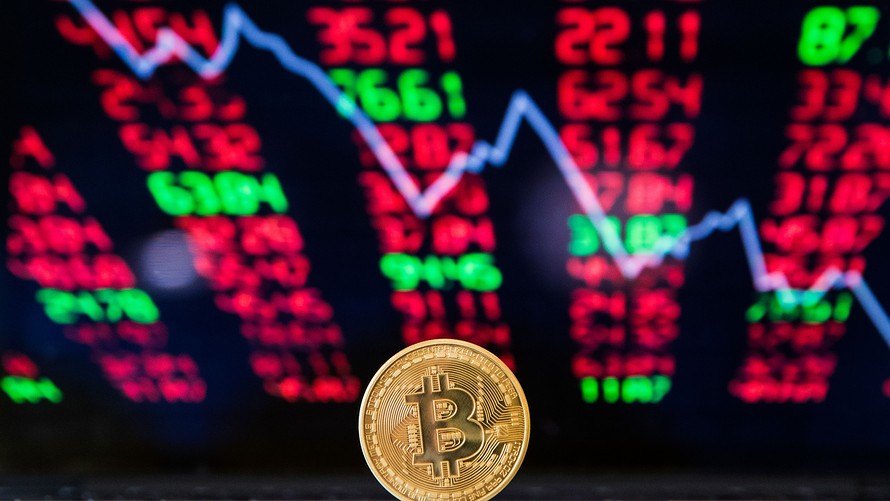
Bitcoin prices are trading lower Friday, on track for back-to-back losing sessions for the first time since late October.

The world’s largest digital currency is creeping toward its lowest level of the week trading at $6,357.02, down 1.3% since Thursday at 5 p.m. Eastern Time on the Kraken exchange. A move below $6,330 for bitcoin BTCUSD, +0.57% would mark a new weekly low.

For Charles Hayter, co-founder of CryptoCompare it’s business as usual for crypto participants. “The $6k mark remains fairly solid, volumes are on the lighter side but we are still seeing some positive steps, albeit slowly,” he said, citing Fidelity’s decision to open a cryptocurrency trading business for institutional investors.

Hayter added that after the hype cycle of 2017, the market is slowly working its way out of the 2018 negative cycle.

Ethereum upgrade set for January 2019

The long-awaited upgrade the second-most popular blockchain, ethereum, has been targeted for Jan. 16, 2019. The network’s upgrade, called Constantinople, hopes to improve performance and scalability, the ability to process a larger number of transactions in a shorter space of time.

When the upgrade takes place, network participants will be required to upgrade their software together with the whole system.

Altcoins and futures moving lower

Altcoins, the group of more than 2,000 smaller coins other than bitcoin, were trading lower on Friday. Ether, ETHUSD, +1.16% the second-largest altcoin was down 2.3% at $208.69, Bitcoin Cash BCHUSD, +2.12% was off 5.3% at $557.70, Litecoin LTCUSD, +1.35% had lost 3% at $51.37 and XRP, XRPUSD, +1.72% was down 0.5% at 50 cents.

Bitcoin futures ended lower Friday . The Cboe Global Markets November contract XBTX8, -1.52% closed down 1.6% at $6,315 and the CME Group November contract BTCX8, -1.40% finished the day down 1% at $6,335.

Which markets are closed on Veterans Day?

Not many — bond markets are closed, but all other markets are open for business

Veterans Day—intended to pay homage to U.S. military servicewomen and men—kicks off on Monday.

As a result, bond markets will be closed on the federal holiday.

Last year marked the first time the bond market didn’t observe the holiday—at least formally—in about a decade because it fell on a Saturday.

The Securities Industry and Financial Markets Association, known as Sifma, has traditionally recommended bond-market closures based on the New York Federal Reserve’s holiday schedule.

As for money transfers, private banks can choose to close, remain open or shorten their hours. The Federal Reserve Bank and all of its offices and branches are closed on all federal holidays, including Veterans Day.

However, trading on the Dow Jones Industrial Average DJIA, -0.77% S&P 500 index SPX, -0.92% and the Nasdaq Composite Index COMP, -1.65% will be open.

Veterans Day used to be celebrated by stock and bond markets alike, starting as far back as 1938 (some put the date to 1921). Back in 1938, Veterans Day was declared a legal holiday to be celebrated on Nov. 11, known as Armistice Day. The stock market used to observe Veterans Day with a brief two-minute shutdown from 1954 to 2006, but that ended in 2007.

Over the years, the date and name of the holiday has shifted.

The timing of Armistice Day fluctuated: a celebration of World War I veterans and a dedication “to the cause of world peace,” according to military.com’s website.

In 1954, the term “Armistice” was replaced with “Veterans” by the U.S. Congress, in recognition of veterans of World War II and the Korean War. Nov 11 was maintained as the designated day.

In 1968, under the so-called Uniforms Holiday Act, signed by President Lyndon B. Johnson, Veterans Day was moved to the last Monday of October. Another change shortly followed. In 1975, President Gerald Ford moved the holiday back to Nov. 11 starting in 1978, which stands today. That means the day on which the holiday is observed shifts, sometimes occurring outside of the regular workweek.

So, on Monday, while trading in the 10-year Treasury note TMUBMUSD10Y, +0.00% and the 30-year long bond TMUBMUSD30Y, +0.00% won’t occur, stocks, currencies and other markets, like those for gold GCZ8, -1.21% and crude-oil CLZ8, -1.32% will be actively traded.

FTSE 100 ends lower as resource stocks, banks retrace gains

U.K. stocks finished the week on a downbeat note, unable to shake off global equity weakness Friday as investors brushed off a solid GDP growth report for the nation and sold bank and resource stocks that had performed well Thursday.

How are markets performing?

The FTSE 100 index UKX, -0.49% closed 0.5% lower at 7,105.34, outweighing Thursday’s gain of 0.3%. For the week, the index gained a moderate 0.2%.

The British pound GBPUSD, -0.6661% was weaker on the day, sliding to $1.2979 from $1.3061 late Thursday in New York.

What’s moving markets?

Global equities took a hit from Thursday’s Federal Reserve outcome, which saw no change in key rates, but investors were rattled by a perceived hawkish tone by the central bank. That reaction also gave the U.S. dollar a boost, cutting into the British pound, though sterling weakness didn’t do anything to boost U.K. stocks.

On the data front, the U.K. trade balance and manufacturing data beat expectations, while third-quarter gross domestic product slid to 0.6% in the quarter from 0.7% previously, in line with forecasts. The data dump also showed that business investments retreated in the third quarter, which market participants attributed to the uncertainty around the U.K.’s planned exit from out of the European Union.

Fading Brexit-deal optimism weighed on sterling after a leaked letter that said Prime Minister Theresa May remains “wedded to the idea of a border down the Irish Sea,” according to Democratic Unionist Party leader Arlene Foster.

U.K. investors were also looking at a raft of Chinese data, including consumer price data that ticked higher, on the heels of buoyant trade numbers released on Thursday, although investors warned that the U.S.-China trade spat was distorting the latter, with investments coming ahead of increases in duties. In addition, regulatory officials in China said banks there must boost lending to the corporate sector, a red flag to some worried about a slowdown in the country.

What stocks are moving?

The mining sector was down, owing to its sensitivity to the Chinese economy, with BHP Billiton PLC BHP, -2.10% BLT, -3.53% ended the day 3.5% lower, while Rio Tinto PLC RIO, -2.94% RIO, -3.27% dropped to close 3.3% lower.

Energy stocks, heavily weighted in the index, fell alongside crude oil prices—U.S. crude fell into a bear market on Thursday. Royal Dutch Shell Group PLC RDS.A, +0.37% RDSA, -0.23% finished 0.2% lower, while BP PLC BP., -0.96% BP, -0.07% ended 1% down.

Banks also tumbled, with heavyweight HSBC PLC HSBA, -1.61% HSBC, -1.67% down 1.6% at the close, reversing Thursday’s gains, and Barclays PLC BARC, -1.17% BARC, -1.17% having fallen 1.2%.

Gold declines to settle with a 2% weekly loss as dollar extends post-Fed advance

Silver futures fall more than 4% for the week

Gold and silver prices dropped Friday, prompting the yellow metal to suffer a 2% weekly loss, nicked by a firmer dollar that has been bolstered by the Federal Reserve’s adherence to an interest rate-tightening cycle.

Sharp losses for stocks for the session, which are partly tracking the plunge into a bear market for oil, failed to limit gold’s downside even as a so-called risk-off sentiment contributed to a rise in bonds, pulling yields sharply lower.

For now, gold continues to decline, “weighed on by returning risk appetite earlier in the week and the dollar over the last 48 hours, with the Fed giving it an extra kick higher,” said Craig Erlam, senior market analyst at Oanda, in a daily update.

If the dollar failed to build on these gains, “which I suspect it might, [gold bulls] may feel emboldened going into year-end,” he said.

December gold GCZ8, -1.21% lost $16.50, or nearly 1.4%, to settle at $1,208.60 an ounce, ending down 2% for the week—at its lowest finish since Oct. 10, according to FactSet data. December silver SIZ8, -2.03% dropped 28.3 cents, or 2%, to $14.14 an ounce—falling more than 4% for the week.

Read: Billion-dollar monthly boost in exchange-traded fund gold holdings offer ray of hope for downbeat metal

Gold suffered a fourth loss in five sessions on Thursday, then struggled for direction in electronic trading with the U.S. dollar extending gains once the latest policy update from the Federal Reserve signaled a central bank still on a tightening course for later this year and early next.

“Solid Fed conviction to raise interest rates in December was plain in [Thursday’s] announcement. Higher real interest rates, based on the Fed comments, and a slightly stronger U.S. dollar maintained pressure on gold prices,” said Rob Haworth, senior investment strategist at U.S. Bank.

The ICE U.S. Dollar Index DXY, +0.28% a measure of the U.S. currency against six major rivals, was up 0.2% Friday. The gauge has climbed roughly 5.2% year to date, boosted by a tightening Fed. Higher interest rates can elevate the dollar and dull demand for dollar-denominated commodities, including metals.

“We maintain a cautious view on gold believing trends of higher interest rates, both real and nominal, and a stronger U.S. dollar, are meaningful headwinds into 2019,” Haworth added.

In other metals trade, January platinum PLF9, -1.69% fell 1.6% to $856 an ounce, while December palladium PAZ8, -1.49% lost 1.7% to $1,097.50 an ounce. December copper HGZ8, -2.10% declined by 1.9% to about $2.685 a pound. All three metals contracts saw losses for the week.

Among exchange-traded funds, SPDR Gold Shares GLD, -1.12% shed 1.3%, looking at a weekly loss of roughly 2%.