Archives for February 8, 2018

Google unlocks the Pixel 2’s HDR+ skills in third-party apps like Instagram

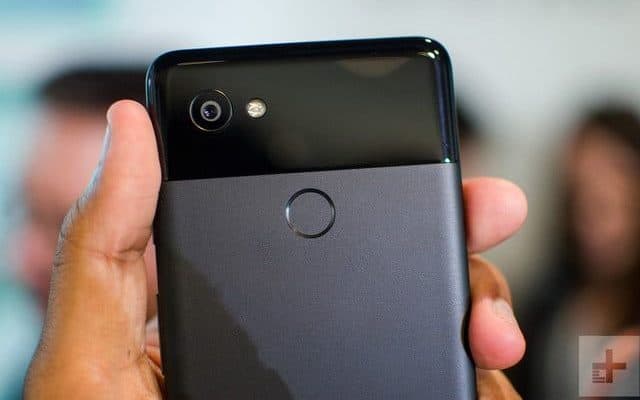
google pixel 2 hdr visual core v iphone 8 body

The Google Pixel 2 comes with a number of innovative camera features, but the full photo potential of the smartphone is only accessible from the native camera app — until now. Google is now activating the Pixel Visual Core on third-party apps as the February monthly update rolls out. The chip’s full activation means that apps like Instagram, Snapchat, and WhatsApp, for starters, will be able to use the Pixel 2’s more advanced photo processing.

In October, Google made HDR+ available to third-party photography app developers via a preview of Android Oreo 8.1. The operating system update launched to consumers in December, but despite suggesting the new software would activate the enhanced photo capabilities, Google still hadn’t full flipped the switch on the Pixel Visual Core for third-party apps. The February update means that non-native apps can utilize the enhanced image quality from the Google Pixel 2 HDR+ mode. While Instagram, Snapchat, and WhatsApp are the first to integrate the features, other apps will likely soon follow suit.

Google’s HDR+ mode has been part of Google Camera for a few years, but the Google Pixel 2 refines that program by expanding processing power. HDR is a photo technique that blends multiple images together to keep the detail in both the bright and dark areas of the image. Since HDR involves multiple images, faster hardware is necessary in order to keep HDR from slowing down the performance of the smartphone.

The enhanced HDR+ on the Pixel 2 is made possible by Pixel Visual Core, a new System on Chip (SoC) circuit. It’s the first custom-made SoC by Google for a consumer product — a processor designed specifically for handling imaging data. Google says that using the Pixel Visual Core, the smartphone can process HDR+ photos five-times faster but with only a tenth of the battery drain when compared to the application processor, which third-party apps currently use for imaging. That allows the camera to use HDR+ with no shutter lag, which means the photo is actually taken when the button is pressed and not milliseconds later, a big perk when photographing moving subjects.

To ease the burden on developers with the increased complexity of the software, Google is using already-developed domain-specific languages, Halide and TensorFlow.

Once the Pixel Visual Core is switched on with the software update, third-party apps will be able to have access to that extra processing power, which means the smartphone can automatically process those HDR+ photos without slowing the smartphone down — and without using the native camera app. The change will allow third-party photography apps to enhance their own HDR capabilities by accessing the faster Pixel Core rather than the application processor.

Third-party camera apps are popular for their extra features, often offering more controls including manual exposure controls and manual focusing. Once both the Pixel 2 software is updated and third-party developers update their own software, switching to the features inside of a third-party app will longer no mean losing the automatic HDR+ processing. Google shared several sample comparison images, with the images shot the Pixel Visual Core offering both brighter shadows like in a backlit selfie, and enhanced highlights, like a sky that’s a bit bluer.

In the fall, Google said that the expansion of the HDR+ mode is just the start — Pixel Visual Core is a programmable chip and the company is already working to prepare more applications to expand the Pixel 2’s capabilities.


Incredible new wearable medical devices can help millions of people and advance medical research

Imagine if the pedometer on your wrist did more than just count steps. Imagine it measured blood sugar, detected heart rate irregularities and logged that data in a digital health record.

For decades, health-care data like this was only recorded at the doctor’s office or in a controlled study. Wearable technology has changed that. Armed with a wealth of newly accessible data, patients can now, in many cases, manage chronic health conditions independently. Their doctors, meanwhile, can monitor them from miles away.

That’s a big deal, given that half of adults have at least one chronic disease.

Giving patients the data they need to manage these conditions on their own, outside costly clinical settings, could save the U.S. health-care system billions of dollars. And granting researchers access to that real-world data could allow for an entirely new – and much more efficient – way of measuring the effectiveness of treatments.

Consider diabetes, which afflicts almost 10 percent of the population. America spends more on the condition than any other disease – in excess of $100 billion annually.

The standard course of treatment requires patients to monitor their glucose levels and use a combination of diet, medication and insulin therapy to keep those levels in check.

But most patients don’t check their glucose effectively. It’s a pain. They may have to prick their fingers, collect some droplets of blood on a test strip, and then stick that strip in a meter for a reading.

It’s no wonder that most people with diabetes check their glucose levels once or twice a day — even though most clinicians recommend testing two to four times as often.

Fortunately, new wearables are making it easier for people to manage their glucose levels.

Patients in Europe, for instance, have been able to measure their glucose with a device developed by my company, Abbott, called the FreeStyle Libre system. Users can wirelessly scan a small, round sensor on the back of their upper arm to check their glucose, eliminating the need for routine finger sticks. A version of the system was recently approved by the U.S. Food and Drug Administration.

People who use this system are checking their glucose more often than if they had to prick their fingers. Two major clinical studies found that patients who used the device checked their glucose levels an average of 15 times a day.

Armed with this data, the patients were able to make more informed decisions about managing their diabetes. They cut the amount of time they spent with hypoglycemia, or low blood sugar, by 38 percent.

Those findings have been verified in the real world by people actually using the device.

Last year, researchers analyzed a data set consisting of 86 million hours of device usage and 64 million data points collected from more than 50,000 patients over just 18 months. They found that these patients were checking their glucose with a quick scan an average of 16 times per day. They reduced the amount of time they spent with hypoglycemia by as much as 49 percent.

This kind of real-world evidence could transform medical research.

Scientists generally rely on tightly controlled clinical trials to investigate the effectiveness of a specific treatment for a specific disease on a specific population. Those trials are expensive and typically cover a limited number of people.

Wearables, by contrast, can produce a ton of real-world data drawn from across a broad population in a matter of months – at little cost.

There’s also potential for wearables to help doctors better coordinate care. One in four Americans has at least two chronic diseases. It can be difficult to see how those diseases interact.

Take our two costliest chronic conditions, diabetes and heart disease. Those with the former are at greater risk of developing the latter. Data from technology like continuous glucose monitors, when evaluated over time with another technology, like a heart rate tracking device, could reveal how changes in glucose levels impact heart rate or other cardiovascular indicators. That information could lead to more individually tailored therapies.

The benefits of all this data don’t accrue solely to the patients generating it. Researchers could look at anonymized versions of blood-sugar readouts, heart-rate logs, and other data points logged by wearables to gain insight into how patients actually employ treatments or devices – and then use those insights to develop better ones.

More than 100 million Americans are battling chronic disease. They may soon be literally wearing their best hope for beating it – and revolutionizing medical research in the process.

Craft brewery boom’s been good for P.E.I. manufacturer

DME Brewing Solutions has sold its stainless steel tanks in 67 countries

In 1997, DME’s first brewing tank was only about seven barrels. Today, the company manufactures enormous 250-barrel stainless steel vessels that stand almost two storeys.

DME Brewing Solutions has come a long way since its humble beginnings 27 years ago, when it workers had to scrounge around just for basic tools.

Today, the Charlottetown company has established itself as the dominant player in the booming craft brewing industry. It ships to 67 countries around the world, has equipment set up in almost 800 breweries and has factories in China and India.

“It definitely has to give a proud feeling that we can ship stuff from this little Island, ship it all over the world,” said Brad Wooldridge, who started in fabrication and now runs the tool room.

But it wasn’t always like that, Woolridge recalled, especially in 1991.

Brad Wooldridge says DME has become ‘bigger and better than we ever, ever thought we would be.’

“The company just started and we had nothing and we were all looking for work,” he said. “Just whatever we could beg, borrow and steal from home — welding grinders, drills, whatever we had.”

Some P.E.I. craft brewers struggling to keep up with demand
Back then, the first brewing tanks DME built were small — only about seven barrels. The company now manufactures enormous 250-barrel stainless steel vessels that stand almost two storeys tall.

DME has grown in tandem with the massive expansion of the craft beer industry. And that’s been good for employees.

It now has 165 employees in Charlottetown, 150 in Abbotsford, B.C., and about 20 in South Carolina.

“When we first started, if you had five years of full-time employment, it would have been a big thing back then,” Wooldridge said. “Here we are 27 years later, bigger and better than we ever, ever thought we would be.”

Wooldridge credits the hardworking staff for the company’s success.

“Well the product’s good, great craftsmen here, they’re a great bunch of fellas, they do fine work,” he said. “And they’re very proud of their work.”

Aside from producing craft beer tanks, DME also makes equipment for BioTech, Industrial Food & Beverage, Water Treatment and Marine Applications.

This rolling machine turns a flat sheet of stainless steel into a round piece that will be welded together to make a tank.

And the company doesn’t show any signs of slowing down. It’s has expanded into the marijuana industry, making systems to extract cannabis oil.

Church offers free prom dresses to Island high schoolers

Cornerstone Baptist Church is offering over 200 dresses, along with purses, shoes and jewelry

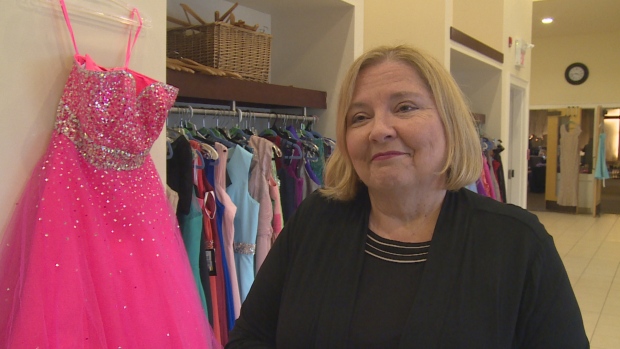
Gail Janes is the co-ordinator of an event offering free dresses to P.E.I. high schoolers.

A church in Cornwall, P.E.I., is helping high school graduates get all dolled up for prom.

The Cornerstone Baptist Church in Cornwall has collected more than 200 prom dresses, along with jewelry, purses and shoes that will be given away for free until Wednesday night.

The church has set up a little boutique where girls can choose and try on dresses.

Project co-ordinator Gail Janes said the idea originated with the church pastor, who heard of a similar event in New Brunswick.

“We’ve had a million weddings here at the church over the last few years and the dresses are sitting in girl’s closets so why not have an event where we can give girls that maybe need a bit of help a once-worn or brand new dress,” she said.

The dresses and other items available have come through donations or markdowns at stores.

“It started for me last year, I was at a prom here in Charlottetown and one of the girls there could have used a bit of help with her outfit,” said Janes. “It broke my heart and I thought, ‘Lord there’s got a be way to help a girl like that that needs some help.”

Jewelry is also available for free as part of the event.

The church has set up a little boutique space where girls can come in, choose a dress and try it on. Jones said they’ve asked girls to come by appointment and they’ve already helped some get closer to their dream prom.

“We’ve had a girl that has always wanted to go to prom and didn’t think she could afford it and so she’s over the moon excited,” Janes said. “To see her eyes bug out when she saw the dress that she was going to try on first, it made it all worthwhile. We’re so excited.”

Luxoft Named a Top 15 Sourcing Service Provider by ISG for 12th Consecutive Quarter

NEW YORK–(BUSINESS WIRE)–Luxoft Holding Inc (LXFT), a global IT service provider, announces it has been named a Top 15 Sourcing Standout by Information Services Group (ISG), a leading global technology research and advisory firm.

Luxoft was among the leading providers in the Breakthrough 15 category in each of the three major regions – Americas, EMEA and Asia Pacific – according to the 4Q 2017 Global ISG Index™.

Now in its 61st consecutive quarter, the ISG Index™ provides an independent quarterly review of the latest sourcing industry data and trends. Each quarter it names the top 15 commercial providers in the Big 15 (revenues of more than $10 billion), Building 15 (revenues between $1 billion and $10 billion) and Breakthrough 15 (revenues of less than $1 billion) categories in the Americas, EMEA and Asia Pacific regions. Each Top 15 category includes providers that compete in the traditional sourcing market, as well as those that compete in the as-a-service market, including IaaS and SaaS providers.

“We are pleased to have once again been recognized as part of The Breakthrough 15,” said Dmitry Loschinin, CEO and President at Luxoft. “Here at Luxoft, we have announced some exciting new partnerships and product developments in the last quarter – particularly in the auto sector. The innovative work being done by our developers and engineers across the globe is elevating our position in the IT services sector and allows us to continue to provide an industry leading proposition.”

Luxoft’s inclusion in the ISG Index™ is based on data the company submits to ISG each quarter.

“For more than 15 years, the ISG Index™ has been the authoritative source for marketplace intelligence related to outsourcing transaction structures and terms, industry adoption, geographic prevalence and service provider performance,” said Paul Reynolds, chief research officer of ISG. “Luxoft continues to establish itself as a leading and growing player in the global market for IT services, based on its volume of business in relation to other industry providers.”

About ISG

ISG (Information Services Group) (III) is a leading global technology research and advisory firm. A trusted business partner to more than 700 clients, including 75 of the top 100 enterprises in the world, ISG is committed to helping corporations, public sector organizations, and service and technology providers achieve operational excellence and faster growth. The firm specializes in digital transformation services, including automation, cloud and data analytics; sourcing advisory; managed governance and risk services; network carrier services; technology strategy and operations design; change management; market intelligence and technology research and analysis. Founded in 2006, and based in Stamford, Conn., ISG employs more than 1,300 professionals operating in more than 20 countries—a global team known for its innovative thinking, market influence, deep industry and technology expertise, and world-class research and analytical capabilities based on the industry’s most comprehensive marketplace data. For more information, visit www.isg-one.com.

About Luxoft

Luxoft (LXFT) is a global IT service provider of innovative technology solutions that delivers measurable business outcomes to multinational companies. Its offerings encompass strategic consulting, custom software development services, and digital solution engineering. Luxoft enables companies to compete by leveraging its multi-industry expertise in the financial services, automotive, communications, and healthcare & life sciences sectors. Its managed delivery model is underpinned by a highly-educated workforce, allowing the Company to continuously innovate upwards on the technology stack to meet evolving digital challenges.

Luxoft has more than 13,000 employees across 42 offices in 21 countries within five continents, with its operating headquarters office in Zug, Switzerland. For more information, please visit the website.

Forward-Looking Statements

This news release of Luxoft Holding, Inc (“Luxoft”) contains “forward-looking statements” within the meaning of the Private Securities Litigation Reform Act of 1995, Section 27A of the Securities Act of 1933, and Section 21E of the Securities Exchange Act of 1934. These forward-looking statements include information about possible or assumed future results of our business and financial condition, as well as the results of operations, liquidity, plans and objectives. In some cases, you can identify forward-looking statements by terminology such as “believe,” “may,” “estimate,” “continue,” “anticipate,” “intend,” “should,” “plan,” “expect,” “predict,” “potential,” or the negative of these terms or other similar expressions. These statements are subject to, without limitation, the risk factors discussed under the heading “Risk Factors” in Luxoft’s Annual Report on Form 20-F for the year ended March 31, 2017 and other documents filed with or furnished to the Securities and Exchange Commission by Luxoft. Except as required by law, Luxoft undertakes no obligation to publicly update any forward-looking statements for any reason after the date of this news release whether as a result of new information, future events or otherwise.

All trademarks are recognized and are the property of their respective companies.

Tencent’s New Sony Partnership Targets NetEase

A DJ plays a dance track.

Tencent (NASDAQOTH: TCEHY) recently partnered with Sony (NYSE: SNE) Music Entertainment to launch Liquid State, a new record label for electronic dance music (EDM) in Asia. The label plans to promote EDM across the region by signing talent across Asia and the world.

Tencent Music Entertainment (TME) CEO Cussion Pang told the South China Morning Post that Liquid State’s goal was “to create an unmatched culture exchange between the East and the West through the power of electronic dance music.” The songs will be streamed exclusively on TME’s streaming platforms.

Liquid State marks TME’s first move toward owning a music label, and its arrival spells trouble for NetEase’s (NASDAQ: NTES) Cloud Music — its biggest rival in China’s music streaming market.

TME rules the streaming market, but NetEase rules EDM

Tencent owns a 62% stake in TME, which was formed after it spun off its music unit and merged it with China Music Corporation in 2016. The merged company — which united China’s top streaming platforms QQ Music, Kugou, and Kuwo — controls about 76% of the country’s music streaming market with over 600 million monthly active users (MAUs), according to DCCI.

TME holds the streaming rights for songs from Sony Entertainment, Time Warner’s Warner Music, and Comcast’s Universal Music, along with additional rights from labels in mainland China, Hong Kong, Taiwan, and South Korea.

A woman listens to music on her smartphone.

TME is clearly the 800-pound gorilla in this space, but NetEase — which is better known as a PC and mobile games publisher — still controls about 16% of the streaming market with the NetEase Cloud Music platform. NetEase sub-licenses most of its content from TME, but it’s still locked in a legal battle with QQ Music over the exclusive rights to certain songs.

NetEase is an underdog compared to TME, but it’s still the market leader in EDM, which gained popularity across Asia over the past few years. Last September, research firm iiMedia named NetEase Cloud Music the top platform for EDM in China, placing it ahead of QQ Music, Kugou, and Kuwo — in that order.

NetEase notes that 40% of listeners surveyed between 2016 and 2017 listened to EDM, making it the second most popular genre after pop music. Looking ahead, NetEase expects the total number of EDM listeners in China to surge from 286 million in 2017 to 455 million in 2020. Unfortunately, TME and Sony’s Liquid State could lure away NetEase’s EDM listeners.

But NetEase won’t go down without a fight

Tencent crushed many smaller companies on its path to becoming China’s biggest social network provider and the world’s top video game company. But NetEase is one rival that refuses to die.

In addition to holding its ground in streaming music and dominating the EDM genre, NetEase is the only company that has consistently halted Tencent’s dominance of China’s mobile gaming market.

Tencent’s Honor of Kings is currently the highest grossing mobile game on iOS and Android in China, according to research firm Newzoo. However, NetEase’s Fantasy Westward Journey ranks second on iOS, while its other hit title Onmyoji ranks second on Android.

NetEase’s Onmyoji.

NetEase’s games currently hold four of the top ten spots in China’s iOS store, and two of the top ten spots on Android. Tencent’s games control five of the top ten spots on iOS, and three of the top ten spots on Android.

Therefore, NetEase is a persistent thorn in Tencent’s side, and analysts still expect its revenue to climb 39% this year on the strength of its PC games, mobile games, and side bets like its streaming music, e-commerce, and online service platforms.

However, NetEase’s earnings could dip 1% as it shifts from higher-margin PC games to lower-margin mobile games. Higher investments in underdog platforms like NetEase Cloud Music could also dent its margins.

The key takeaway

Tencent’s partnership with Sony is clearly a strategic move against NetEase, which remains a stubbornly resilient rival in the music streaming market. But the deal can also be considered part of a broader, escalating rivalry between the two companies across the music and mobile gaming markets.