
Archives for February 6, 2018

Toyota lifts profit forecast to record 2.4 trillion yen

Toyota lifts profit forecast to record 2.4 trillion yen

TOKYO — Toyota is seeing a nearly doubling of profit for the fiscal third quarter, and it lifted its annual profit projection through March to 2.4 trillion yen ($22 billion), a record high for the Japanese automaker.

Toyota Motor Corp. reported Tuesday an October-December profit of 941.8 billion yen ($8.6 billion), up from 486.5 billion yen the same period the previous year.

Quarterly sales rose 7.4 per cent to 7.6 trillion yen ($69.8 billion).

The company said it got a nearly 292 billion yen ($2.7 billion) boost from tax breaks under President Donald Trump’s administration for the nine months through December.

Toyota, which makes the Prius hybrid, Camry sedan and Lexus luxury models, said it expects to sell 10.3 million vehicles globally in this fiscal year, ending in March. That is about the same as what the automaker sold globally in the 2017 calendar year.

The fiscal year profit of 2.4 trillion yen, if achieved, will mark a 31 per cent jump from what it earned the previous fiscal year.

For the latest quarter, Toyota’s vehicle sales lagged on-year in North America. But they grew in Japan, Europe and other parts of the world, such as South America and Africa, compared to a year earlier.

Recently, Toyota picked as the site for its new U.S. plant Huntsville, Alabama — already a hub for the region’s aerospace industry.

The plant is set to produce 300,000 vehicles per year, a combination of the Toyota Corolla compact car and a new small crossover SUV from Mazda. Production is targeted to begin by 2021.

Many states had competed for the project by the Japanese auto giants.

For the calendar 2017 year, Toyota sold 10.386 million vehicles. That trails the Renault-Nissan-Mitsubishi alliance, which brings together a French company with two Japanese automakers, which recorded global vehicle sales of more than 10.6 million vehicles last year. Volkswagen sold 10.74 million vehicles last year worldwide, a record for the German automaker.


New unmanned ‘Sea Hunter’ ship could revolutionize US Navy operations

DARPA has successfully completed its Anti-Submarine Warfare (ASW) Continuous Trail Unmanned Vessel (ACTUV) program and has officially transferred the technology demonstration vessel, christened Sea Hunter, to the Office of Naval Research (ONR).

A revolutionary prototype vessel that could traverse thousands of miles of open sea without a single crew member on board has been handed over to U.S. Navy researchers.

The 132-foot demonstration ship, christened Sea Hunter, has been transferred from the Defense Advanced Research Projects Agency (DARPA) to the Office of Naval Research (ONR).

Sea Hunter, the first of a new class of unmanned vessel that could remain at sea for months at a time, is the result of DARPA’s Anti-Submarine Warfare (ASW) Continuous Trail Unmanned Vessel (ACTUV) program. Eventually, the new class of ship will be deployed by the U.S. Navy as the Medium Displacement Unmanned Surface Vessel (MDUSV).

“As ACTUV transfers from DARPA to ONR, ONR is looking forward to continuing and capitalizing on the science and technology work. In particular, we are already working on autonomous control, a challenging area that is key to maturing MDUSV and delivering it to the fleet,” explained Robert Brizzolara, ONR program officer for MDUSV, in a statement.

Sea Hunter’s has undergone a number of tests at sea.

DARPA and ONR began sea tests of the ship’s sensing and autonomy technologies in October 2016, Last year, Sea Hunter passed a series of technology integration tests, which relate to the International Regulations for Preventing Collisions at Sea (COLREGS).

“ACTUV represents a new vision of naval surface warfare that trades small numbers of very capable, high-value assets for large numbers of commoditized, simpler platforms that are more capable in the aggregate,” said Fred Kennedy, director of DARPA’s Tactical Technology Office (TTO). “The U.S. military has talked about the strategic importance of replacing ‘king’ and ‘queen’ pieces on the maritime chessboard with lots of ‘pawns,’ and ACTUV is a first step toward doing exactly that.”

A key part of the project is ensuring that Sea Hunter is capable of performing a host of different missions with a variety of payloads. In 2016, for example, the ship participated in an airborne lift test, towing a ‘sensor mast’ packed with communications equipment from a parachute connected to vessel.

Last year the ship underwent mine-countermeasure sea tests.

More tests will be performed to automate payload and sensor data processing, develop the ship’s autonomous behavior and coordinate with other unmanned vehicles. Depending on the result of the tests, MDUSV could be used in U.S. Navy operations this year, according to DARPA.

Intel’s ‘Vaunt’ smartglasses could be the iPhone of augmented reality

Google Glass gave AR smartglasses a bad name, but Intel aims to change all that with its recently unveiled Vaunt smartglasses. The most impressive thing about them? They don’t make you look like a Glasshole.

Google Glass was awful. It never quite took off — and for good reason. It was bulky, unintuitive, and it made you look like a Glasshole. It gave AR glasses a bad name, but Intel aims to change all that with its new Vaunt smartglasses.

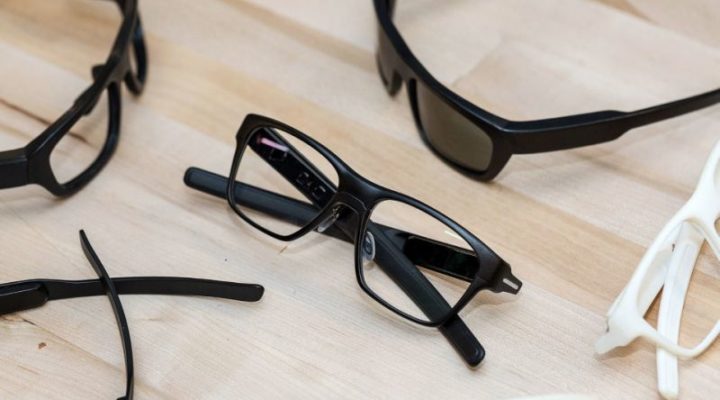
Dieter Bohn over at The Verge got an exclusive behind-the-scenes look at the next-generation smartglasses, and it’s hard not to get excited about their potential. These are, first and foremost, glasses. They’re just regular old prescription or non-prescription glasses you would wear during the day and charge at night. There’s not a computer attached to your head or some weird bulky attachment to your existing glasses.

Just look at these things. Without the serial numbers on them, you’d never notice someone wearing a pair and just walking down the street — or attending a meeting in the office.

The computing power comes from your smartphone, which the glasses connect to over bluetooth. The Vaunt glasses use some impressive technology to beam a few limited notifications into your field of view. They’re not designed to constantly ping you with Twitter updates or emails — the display is intended to offer context-sensitive information like directions, an incoming phone call, or even a restaurant’s Yelp rating.

Let’s take a step back for a second, these are pretty limited use-cases and that’s to be expected. Think about the first generation iPhone, what it was — and wasn’t — capable of right out of the box. There were only a handful of Apple-designed applications. In time though, it grew into the massive ecosystem we know today. As Intel’s Itai Vonshak points out, there was no Uber, Lyft, Instagram, or Snapchat when smartphones first hit it big. Those came later, and that’s what Intel is banking on here.

They intend to roll out the first set of real AR glasses for real people, and see what happens. That’s the thing the budding smartglasses market has been missing — an actual product. Not a concept, or expensive headpiece like the Magic Leap, but a pair of AR glasses with some basic functionality — something people would actually wear everyday. Put them out there, see what people end up doing with them, and most importantly, find out what people want to do with them.

Intel will be start up an “early access program” later this year.

New tech advocate aims to boost federal funding for B.C. projects

Alan Winter named B.C.’s first innovation commissioner, position created by NDP-Green confidence deal

Alan Winter has been named B.C.’s first innovation commissioner.

British Columbia has appointed its first innovation commissioner to advocate for the province’s technology sector in Ottawa, Washington state and abroad.

Alan Winter will take on the newly created role for one year, with an option to extend his job based on performance.

Premier John Horgan says Winter’s role would create opportunities for tech companies and shepherd innovation across all industries and regions in the province.

Winter’s appointment is part of the May 2017 confidence and supply agreement between the NDP and the Green party to support the technology sector.

Green party Leader Andrew Weaver says Winter’s position would help B.C. companies tap into existing federal programs.

Winter is formerly president of the non-profit organization Genome BC and says in a statement that his first priority will be championing Canada’s so-called digital technology supercluster, a B.C.-led industry consortium.

Interior Health urges teenagers to get meningitis immunization while vaccine is available

12 confirmed cases, 1 death, since health authority declared outbreak in December

Health officials are offering meningitis vaccinations in B.C.’s Okanagan region for students aged 15 to 19 after 12 people contracted meningococcal disease. If no more cases are reported, an end to the outbreak will be declared next week.

B.C. Interior Health is urging Okanagan teenagers to get immunized against meningococcal disease before the outbreak is officially declared over.

The health authority declared the outbreak in December following 12 confirmed cases and one death in the southern Interior. About half of the cases were in the Okanagan region.

Though there have been no new cases in 2018, Interior Health is advising all Okanagan residents aged 15 to 19 to get immunized while the vaccine is still available.

“We are extremely pleased with the response from the public to make immunization a priority, but are continuing to encourage those who have not yet been immunized to do so,” said Dr. Karin Goodison, Medical Health Officer.

“If you know someone in the Okanagan who is in this age group, please encourage them to get immunized while vaccine is available. Immunization is one of the best ways to protect yourself against this disease.”

Nearly 15,000 immunized so far

Meningitis is an infection around the lining of the brain and the spinal cord. It is contagious and usually spreads by close contact between individuals including coughing, sneezing, kissing or sharing cups and straws.

Interior Health says there has been a good response to the immunization campaign, but says more 18- and 19-year-olds should get vaccinated.

To date, Interior Health has administered 14,486 total immunizations in the Okanagan.

Once the outbreak is declared over, only students in Grades 9 and 10 will be eligible to receive the vaccine for free at health centres.

Interior Health expects to declare an end to the outbreak on February 13, assuming no additional cases of meningococcal disease are reported over the next seven days.

3 Stocks to Buy When the Market Crashes

Over the past year, the market has continued one of its most successful periods in history, with a bull run that’s almost a decade old showing little sign of coming to an end.

At least, that’s what investors had been thinking before a recent multi-day decline — including the biggest single-day nominal decline by the Dow Jones Industrial Average (DJINDICES: ^DJI) on Feb. 5 — stoked fears that the worst is yet to come. And eventually, those folks will be right, though it remains to be seen whether the immediate sell-off will continue in the coming days. After all, the market is unpredictable and often erratic in the short term.

So instead of trying to call the market top, smart investors simply make sure they’re ready to act on a market slump by knowing where they plan to invest. Three stocks that our investors particularly like for the next market crash are Google parent company Alphabet Inc (NASDAQ: GOOGL)(NASDAQ: GOOG), TJX Companies Inc (NYSE: TJX), and Mastercard Inc (NYSE: MA).

Think you’ll be ready to get greedy when the market turns fearful? Keep reading to learn what makes these three stocks perfect targets to load up on when the next crash happens.

A business that’s built for bargain-hunters (and perfect for recessions)
Adam Levine-Weinberg (TJX Companies): This off-price retail giant is a solid stock choice for investors who want to sleep well at night. The company has increased its comparable-store sales for more than 20 consecutive years. That period includes both the bursting of the dot-com bubble and the Great Recession.

This long streak of comp sales growth demonstrates the fundamental strength of TJX’s off-price business model. If economic growth accelerates, TJX should benefit from higher discretionary spending among its core middle-class customer base. If economic growth slows, the company is well-positioned to gain market share by buying high-quality merchandise at deep discounts and passing the savings along to bargain-hunting consumers.

Like many other retailers, TJX posted disappointing third-quarter sales results. However, U.S. retail sales rebounded in a big way during the holiday season. Given that TJX’s quarterly guidance is usually quite conservative, the company probably surpassed its forecast of 1%-2% comp sales growth last quarter.

Despite having two weaker quarters during its recently ended 2018 fiscal year (the first and third quarters), TJX expects adjusted earnings per share to rise 8% to $3.80-$3.82. Looking ahead to fiscal 2019, if TJX returns to a better sales trajectory, it could deliver double-digit organic EPS growth. The recent tax reform bill will boost after-tax profit by an additional 20% or so, driving EPS to $5 or more.

TJX’s management sees room to open more than 1,500 additional stores in the coming years — and that ignores the possibility of expanding to new markets or rolling out any of the company’s new concept stores more broadly. In light of these massive growth opportunities, TJX stock looks like a bargain at its current valuation. If the market crashes, it will be even more attractive.

Buy this dominant company whenever it’s on sale

Adam Levy (Alphabet): This company is at the forefront of two big trends: digital advertising and cloud computing.

Google is one of the prime beneficiaries of the fact that consumers — especially young consumers — are watching less TV. As marketers shift their ad budgets from TV to digital, Google still provides one of their best options. In fact, 48% of U.S. senior ad buyers say Google Search has the highest return on investment for their ad dollars, according to a recent survey from Cowen and Company. That’s probably why Google continues to gain share of the growing digital ad market.

In the cloud, Google benefits from its strengths in machine learning. Its AutoML platform makes it easy for any company to take advantage of neural networks to train their own AI. CFO Ruth Porat says Google Cloud is now producing over $1 billion per quarter, and it’s the fastest growing public cloud provider in the market.

Finally, there’s the “bet” part of Alphabet. Companies like Nest, Fiber, and Verily helped narrow the segment’s operating loss last year, but I’m most excited about Waymo, the autonomous car unit. Waymo began a rider program in Phoenix last year, and management plans to expand to more states this year. On top of that, Waymo has the potential to disrupt public transportation and ground delivery — a multibillion-dollar opportunity to say the least.

With so many trends working in Alphabet’s favor, a market crash could create an opportunity to buy at a wonderful price.

Let the short-term fears play to your long-term advantage

Jason Hall (Mastercard Inc): Over the past year, Mastercard shares have absolutely crushed it, up more than 55% in total returns. And over the long term, I think the company has a very good chance at continuing to outpace the market as a bigger share of global transactions move away from cash. With one of the biggest secure transaction networks in the world, a strong and trusted brand, and relationships with millions of merchants and financial institutions around the world, Mastercard is set for years of growth.

And while the business has delivered excellent results over the past year, the stock looks like it may have gotten a little ahead of itself, trading for 36 times last year’s earnings. That’s not so expensive that I think it’s a sell — to the contrary, this is a cornerstone “hold forever” investment in my own portfolio — but the high valuation could cause its price to fall even further than the rest of the market during a crash.

I don’t know when the next crash will happen, but I do know that Mastercard is at the top of my personal list of stocks to load up on when it does.