Archives for February 6, 2018

Huge Mayan city with pyramids found hidden under jungle

High-tech mapping suggests 10 million people may have lived within the Maya Lowlands

This digital 3D image provided by Guatemala’s Mayan Heritage and Nature Foundation, PACUNAM, shows a depiction of the Mayan archaeological site at Tikal in Guatemala created using LiDAR aerial mapping technology.

Researchers using a high-tech aerial mapping technique have found tens of thousands of previously undetected Mayan houses, buildings, defence works and pyramids in the dense jungle of Guatemala’s Peten region, suggesting that millions more people lived there than previously thought.

The discoveries, which included industrial-sized agricultural fields and irrigation canals, were announced Thursday by an alliance of U.S., European and Guatemalan archaeologists working with Guatemala’s Mayan Heritage and Nature Foundation.
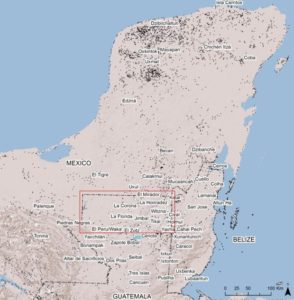
The region of interest of the PACUNAM Lidar Initiative includes de Maya Biosphere Reserve in northern Guatemala, believed to be the heart of the Maya world. In it are some of the largest unexplored areas in the Maya lowlands. The majority of archaeological sites have been reported in the north of the Yucatan Peninsula.

The study estimates that roughly 10 million people may have lived within the Maya Lowlands, meaning that kind of massive food production might have been needed.

“That is two to three times more (inhabitants) than people were saying there were,” said Marcello A. Canuto, a professor of Anthropology at Tulane University.

Researchers used a mapping technique called LiDAR, which stands for Light Detection And Ranging. It bounces pulsed laser light off the ground, revealing contours hidden by dense foliage.

Heavily farmed

The images revealed that the Mayans altered the landscape in a much broader way than previously thought; in some areas, 95 per cent of available land was cultivated.

Measurements using a technique called LiDAR can create separate layers of images, showing the the forest cover and the vegetation-free ground surface of the site of El Zotz

“Their agriculture is much more intensive and therefore sustainable than we thought, and they were cultivating every inch of the land,” said Francisco Estrada-Belli, a Research Assistant Professor at Tulane University, noting the ancient Mayas partly drained swampy areas that haven’t been considered worth farming since.

And the extensive defensive fences, ditch-and-rampart systems and irrigation canals suggest a highly organized workforce.

“There’s state involvement here, because we see large canals being dug that are re-directing natural water flows,” said Thomas Garrison, Assistant Professor of Anthropology at Ithaca College in New York.

The 2,100 square kilometres (810 square miles) of mapping done vastly expands the area that was intensively occupied by the Maya, whose culture flourished between roughly 1,000 BC and 900 AD. Their descendants still live in the region.

Plazas and pyramids

The mapping detected about 60,000 individual structures, including four major Mayan ceremonial centres with plazas and pyramids.

3D view of Tikal with view of earthworks.

Garrison said that this year he went to the field with the LiDAR data to look for one of the roads revealed. “I found it, but if I had not had the LiDAR and known that that’s what it was, I would have walked right over it, because of how dense the jungle is.”

Brown University archeologist Stephen Houston, who has been collaborating with Garrison on the project, told CBC’s Johanna Wagstaffe that he has spent years studying ancient Maya ruins, which typically means working in thick vegetation and relying on “a little sightline along a jungle trail that you cut out with a machete.”

When he saw the LiDAR images for the first time, he recalled, he was brought to tears by the landscape that was exposed across, within and between cities. He likened it to having the frost scraped off a window and finally being able to see through it.

“Many features were accessible or visible to us for the very first time that we had no inkling of before.”

Garrison noted that unlike some other ancient cultures, whose fields, roads and outbuildings have been destroyed by subsequent generations of farming, the jungle grew over abandoned Maya fields and structures, both hiding and preserving them.

“In this the jungle, which has hindered us in our discovery efforts for so long, has actually worked as this great preservative tool of the impact the culture had across the landscape,” noted Garrison, who worked on the project and specializes in the city of El Zotz, near Tikal.

LiDAR revealed a previously undetected structure between the two sites that Garrison says “can’t be called anything other than a Maya fortress.”

The fortified hilltop ceremonial centre at Holmul. Several moat-and-rampart structures ring the hill side.


“It’s this hill-top citadel that has these ditch and rampart systems … when I went there, one of these things is nine metres tall,” he noted.

In a way, the structures were hiding in plain sight.

“As soon as we saw this we all felt a little sheepish,” said Canuto said of the LiDAR images, “because these were things that we had been walking over all the time.”


This Explains Why Alkermes Plc Is Falling Today

Pills spilled on top of hundred dollar bills

What happened

Shares of Alkermes (NASDAQ: ALKS), a commercial-stage biopharmaceutical company focused on diseases of the central nervous system, fell 11% as of 3:56 p.m. EST on Monday. However, the company didn’t release any news that would help to explain it. Instead, it’s likely related to a similar decline in Nektar Therapeutics (NASDAQ: NKTR).

So what

News reports have been swirling over the last few days that Nektar Therapeutics is looking to sell itself. Nektar’s shares soared on Friday afternoon when the rumor first hit the wires. The jump in Nektar also caused Alkermes’ stock to spike.

What does Nektar’s potential sale have to do with Alkermes? Nektar’s lead compound is called NKTR-214, which is a potential treatment for a few different types of cancer. Alkermes also boasts a cancer drug in its pipeline that works based on the same mechanism of action as NKTR-214, so Wall Street bid up shares on Friday on the hope that Alkermes might be an acquisition target, too.

However, Nektar’s stock — along with the entire biotech industry — took a big hit in afternoon trading today. That weakness appears to have spilled over to Alkermes’ stock.

Now what

Short-term price movements aside, Alkermes’ shareholders look poised to have an exciting 2018. Wall Street currently projects that sales of Vivitrol and Aristada will drive double-digit revenue growth for the company. The jump is expected to allow Alkermes to turn a profit for the full year, which is a favorable turn of events.

What’s more, Alkermes just submitted a new antidepressant to the Food and Drug Administration for review in late January. A go/no-go decision should be in hand by the fall. Two other pipeline drugs — a possible schizophrenia drug called ALKS 3831 and a multiple sclerosis drug called ALKS 8700 — should have phase 3 readouts later this year as well.

All in all, the bull thesis for owning Alkermes’ stock continues to appear on track. Opportunistic investors might want to view today’s weakness as a nice chance to buy a strong biopharma company at a discount.

Here’s Why Wells Fargo Plunged Today

Man staring at stock price chart with hands on his head.

What happened

Wells Fargo (NYSE: WFC) was the recipient of an unprecedented and harsh penalty from the Federal Reserve in response to “widespread consumer abuses.” They include not only the bank’s infamous fake-accounts scandal, in which about 3.5 million accounts were fraudulently opened by thousands of employees, but also several other scandals that have been revealed over the past year or so.

In response to the penalties, Wells Fargo stock took a major hit, down about 10% for the day.

So what

The major part of the Fed’s penalty is a growth restriction on the bank. Wells Fargo will not be permitted to grow larger than its total assets at the end of 2017 until “sufficient improvements” are made.

At a minimum, this will last through most of 2018. The exact procedure for the restriction to be lifted is unclear at this point, and we also don’t know what will constitute sufficient improvements. Wells Fargo said the impact from the Fed’s action could cost it $400 million in profit this year, but the uncertain impact and length is likely what’s weighing on the stock most.

Now what

Wells Fargo is essentially losing its ability to grow just as we’re entering the best environment for banks to grow that we’ve seen in recent history. Tax reform will add billions to bank profits, rising interest rates will translate into higher margins, and wage growth will result in more demand for loans, credit cards, and deposit accounts. Removing the ability to grow puts Wells Fargo (and its stock) at a significant disadvantage to its peers, at least for most of 2018.

Disappearing deposits: What happens when banks lose your money

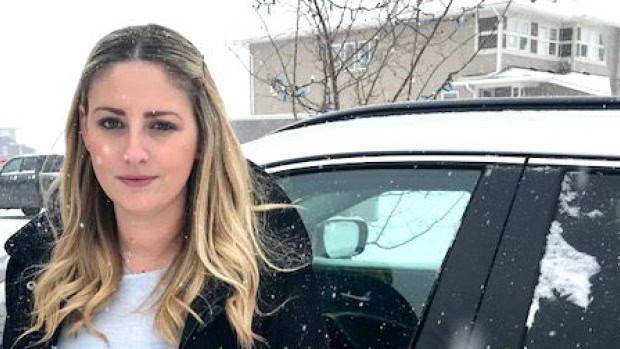
Ashley Robinson deposited $21,000 in certified cheques from the private sale of her car, then Scotiabank lost the cheques.

They thought there was no safer place to put their money — but when tens of thousands of dollars in deposits disappeared, customers of two big banks say they were left to fix the problem themselves.

TD Canada Trust lost $17,000 of Jesse Hardy’s money for almost a year. In June 2016, he deposited stock certificates at his local branch.

Jesse Hardy had an issue with TD Canada Trust that took him almost a year to resolve.

The branch was supposed to cash them through TD Waterhouse and deposit the money into Hardy’s account, but a few months later he discovered the money had gone missing.

“You’re trained your whole life that you put your money in the bank and it’s always going to be there for you. I never thought in a million years that I would have a problem,” Hardy said from his home in Courtice, Ont.

Hardy needed the money to help his mother out financially. He says had to “chase” the bank for months, calling every week to find out where his money was.

He became increasingly frustrated when no one called him back. “I aged 10 years in one,” he said.

“It’s not just the stress of dealing with the bank, but it’s also the stress of knowing that my mom needs this money and she’s counting on me to help her with her investment,” Hardy told Go Public.

“It was a huge strain on me and it was a huge strain in our relationship.”

Hardy says five months passed before the bank told him the stock certificates were missing. He says four months after that, he was told he’d have to get them reissued.

He signed all the paperwork to get that done, then had to undo it all when the bank found the certificates he originally deposited.

“To me it just seems like they did not care at all. You know, it was like, ‘We’re the bank. We hold all the cards here and you know you’re one out of a million customers, your problem is irrelevant to us,” Hardy says.

TD Canada Trust apologizes

“In this case, the process was not a reflection of what the experience should be and we apologize for the frustration and inconvenience caused,” TD Canada Trust spokesperson Geraldine Anderson wrote in an email to Go Public.

“Mistakes happen and if there is an oversight on our part, we are committed to making it right with our customer. In this case we regret the length of time it took, however, we can confirm we were able to resolve the issue.

“As soon as management became aware of this situation, we worked directly with the customer to rectify the issue. The stock certificates were cancelled and reissued, and we offered alternative interim solutions, at no cost to the customer.”

Bank lost her money, then wanted payment

Ashley Robinson had a similar experience with Scotiabank. It lost $21,000 worth of certified cheques she deposited to pay off a car loan.

Robinson sold her vehicle to a private buyer in October who paid her with two certified cheques.

She took them to her local Calgary branch, waiting the required five business days for the transaction to go through.

Go Public’s Rosa Marchitelli, left, and Ashley Robinson review the paperwork from Robinson’s deposit of $21,000 worth of certified cheques, which were lost by Scotiabank.

Two weeks later, the bank told her the money was missing. “My reaction was anger, like how could this happen? It’s $21,000. It was a lot of money to me,” Robinson said.

The bank told her there was nothing it could do until it found the cheques, and Robinson could either wait until that happened, or try to get the person who bought her car to issue another certified cheque.

Scotiabank also told Robinson she should keep making payments on the loan for a car she no longer owned until the problem was solved.

She did for a while, but after months passed and still no cheques, she stopped paying.

That’s when the bank’s loans department started calling her asking for the money. She says she worried what not paying would do to her credit rating.

Meanwhile, Robinson says she was able to convince the person who now legally owned her car to issue another certified cheque.

Scotiabank never found the ones it lost.

Robinson deposited the certified cheques at her local Scotiabank branch, then when the money didn’t show up in her account, bank staff told her the cheques were missing.

In a statement to CBC News, Scotiabank says: “We serve more than 10 million customers in Canada and do 400 million transactions every year. Based on this volume, the relatively small number of complaints reinforces that customers are by-and-large well served by our bank.

“While mistakes are rare, human errors can occur. We take each customer complaint seriously and we will always thoroughly investigate the issue and work with our customers to make things right.”

TD Canada Trust also says this kind of problem is rare but, when we asked, neither TD nor Scotiabank would provide numbers on how many such errors are made.

What bank customers agree to when they sign up

Go Public reviewed the terms of service for Canada’s five big banks to see what policies are in place when dealing with situations like the ones Hardy and Robinson faced.

Some financial institutions’ agreements, like Scotiabank’s, say they will take responsibility for issues where “the bank is solely responsible” for errors and problems.

Other terms of service agreements, like the one for TD Canada Trust, say the bank “will not be liable for any damages or errors” no matter the circumstances.

TD Canada Trust told Go Public it wouldn’t apply those terms “in situations where we had made a mistake,” adding it reviews customer agreements regularly to make sure the terms are applied in a “manner that is fair to the customer.”

Complaints process ‘rigged’

Advocacy group Democracy Watch co-founder Duff Conacher says the banks aren’t responsive in situations like the ones Hardy and Robinson dealt with because they don’t have to be.

He says agencies in charge of investigating complaints lack independence from the banks and there is no requirement for banks to respond to problems quickly or repay money that’s lost.

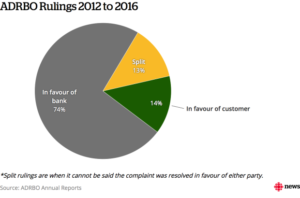
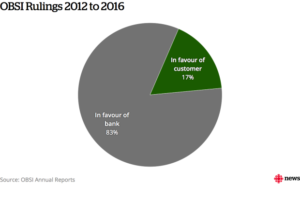
Rising rates of complaints suggest Canadians are increasingly unhappy with their banks, according to numbers reported by Canada’s two banking dispute resolution agencies.

The Ombudsman for Banking Services and Investments (OBSI) reports a 21 per cent increase and ADR Chambers Banking Ombuds Office (ADRBO) reports show a 27 per cent increase.

The most common complaints are poor customer service, dealing with credit card/debit card fraud and mortgage-related complaints.

Missing deposits ranks number eight.

Conacher believes the actual number of complaints is much higher, saying most complaints don’t make it to the ombudsman level because customers have to exhaust the bank’s complaint process first, then the bank’s internal ombudsman before they are allowed to take their complaint to OBSI or ADRBO.

“So you add it all up, the banks really control the process, they have all the money on their side, [they] delay and frustrate people, get them to walk away, and the ones who stick with it are dealing with a rigged process that’s in favour of the banks,” Conacher says.

ADRBO rulings 2012-2016

For the same year, 21 per cent of banking complaints to OBSI that were resolved resulted in financial compensation for a customer in 2016. The agency sided with banks 79 per cent of the time.

OBSI Rulings 2012-2016

Both Hardy and Robinson tried to deal with their problems directly with their banks. In Hardy’s case, TD Canada Trust offered him two gift cards to a restaurant for his troubles — one for him and the other for his mom.

When he turned that down, they offered him $750 in compensation with the stipulation that the offer was not an admission of fault and that Hardy would release the bank from further liability.

He turned the money down, saying he was looking for compassion, not cash. Hardy says even the letter of apology from the bank didn’t help.

“The final straw was when I got a letter from the vice-president of the bank, they didn’t even have the courtesy to spell my name correctly. It was just mind boggling,” he said.

Scotiabank gave Robinson $500 for her trouble. She accepted, but has since moved all her accounts to another bank.

From laundry rooms to living rooms: millennials find creative solutions to rental woes

High rents and low vacancy rates force some millennials into cramped, unusual living arrangements

A new play titled Above the Hospital chronicles the difficulties that millennials face while trying to survive in Vancouver.

When Todd Russell and his ex-girlfriend broke up three months ago, they thought that — like most couples in their situation — they’d go their separate ways.

But when they started looking around for rental options, they realized it just wasn’t feasible for one of them to move out.

“We thought, instead of one person quickly moving out into the first place that becomes available, we would take the time and find places suited to both of us,” said Russell, who is 31 and works as a welder.

The couple moved in together after dating for a few months — it was fast, said Russell, but by splitting the rent they could live in a nicer place, for less.

The pair lived together for three years before breaking up. They no longer sleep in the same room, but continue to share the rest of the space.

“I think we both just try to keep a level head and try to stick it out,” said Russell. “Renting in the city, it’s just a constant struggle — all you hear is too much, too high, for too little.”

Vancouver is home to some of the highest rents and lowest vacancy rates in the country — forcing millennials to come up with increasingly creative ways to overcome the expensive housing market.

But where does an unconventional situation become unlivable — and what are the long-term consequences of living in an inconvenient space?

Office space

Jordan Brett, 24, works in finance, and rents a room in a house in East Vancouver with four roommates.

The catch? His room isn’t technically a bedroom. It’s a seven-by-eight foot office that just fits his double bed, and a small cabinet.

“It’s not that bad, but you definitely couldn’t exercise in here or anything,” he said, explaining that he stores his clothes in a coat closet off the hallway.

Brett and his roommates split the $3,850 rent for the house, with each roommate paying a different amount based on the size of their room.

He said his office was a better option than many of the other living situations he saw advertised online, including dens or curtained-off sections of living rooms.

He said he has one friend who lives in a room that all his roommates have to walk through to get to the front door.

‘It’s kind of awkward’

Angela Mader, 37, is a student at BCIT. She pays $650 a month for rent and her meals are included.

The catch? She’s a home-stay student, renting a room in a family home and eating meals with them — an arrangement typically reserved for young international students.

“Sometimes I don’t tell people I’m a home-stay student at my age, because it’s kind of awkward,” she said, “but I’d never be able to find anything else this cheap.”

Mader said she, too, has heard of lots of unconventional living situations, including one friend who rents out a laundry room and has to constantly plan with her roommates to not be there when they need to do a load.

She said looking for a place to rent in the city is so stressful, she’s already dreading her next move.

“It’s like looking for a job, you have to be on the websites early, with all your references ready and be able to meet them right away.”

Compromise not always possible

Nathanael Lauster, an associate professor of sociology at the University of British Columbia, said that unconventional living arrangements are becoming increasingly common in cities where rents have skyrocketed, and incomes have not.

“For some people, obviously it’s a real problem if they really value their privacy. For other people it’s not really a big deal. And this is where it gets kind of tricky to sort out what is the minimum standard we should have for many living places,” he said.

But even though compromising comfort might be a solution for some, he said it might not be a viable option for young families and single parents.

“We’re really missing out on a great deal of need when we assume that everybody is a middle-class person fumbling their way through life and accepting indeterminacy in their early twenties,” he said.