
Archives for February 6, 2018

Why Bunge, Kirby, and China Southern Airlines Jumped Today

Worker watching grain drop into a milling facility.

Monday was another terrible day for the stock market, as the Dow surpassed its Friday slump by posting a decline of more than 1,100 points. Investors seem to have decided that this could be the long-awaited correction, and the S&P 500 has already fallen more than 5% from its highs, qualifying as a minor pullback at least. Just how far things will continue to fall remains to be seen, but bullish investors noted that the rise in 10-year Treasury yields late last week has reversed itself with modest declines today. A few stocks managed to post solid advances, and although “jump” might seem like a stretch for some of these gains, it was still the case that Bunge (NYSE: BG), Kirby (NYSE: KEX), and China Southern Airlines (NYSE: ZNH) were among the best performers on the day.

Bunge looks at a buyout

Shares of Bunge climbed almost 4% on speculation that the agricultural specialist might receive a takeover bid in the near future. Reports surfaced that Archer Daniels Midland (NYSE: ADM) might make an offer to purchase its smaller peer, with analysts pointing to the need for consolidation in an industry that features razor-thin margins. Bunge has seen a nice recovery for the stock after a couple of years of weakness in agriculture, and it’ll be interesting to see what kind of takeover premium ADM might have to offer in order to get Bunge shareholders on board with a buyout bid.

Kirby keeps on shipping

Kirby stock rose 3% after the operator of river barges and other marine transportation vessels agreed to purchase an industry peer. Kirby will pay $419 million in cash for Higman Marine, which has a fleet of 159 inland tank barges and 75 inland towboats. Higman concentrates largely on oil and natural gas, and its vessels can carry about 4.8 million barrels of petroleum products. Kirby believes the timing is ideal both in terms of the recovery in the shipping market and with oil prices on the rise, and investors agree that the company seems to be capitalizing on a timely opportunity.

China Southern flies higher

Finally, shares of China Southern Airlines finished up 5%. The airline, which carries more passengers than any of its peers in Asia, said that it believes that passenger yields will keep climbing in 2018. As the ranks of the consumer class in China and other countries in Southeast Asia grow, demand for travel is rising sharply, and China Southern is in a good place to deliver on providing capacity for passengers. With its finger on the pulse of one of the best growth markets in the industry, China Southern looks well-positioned to keep gaining altitude if there aren’t any macroeconomic or geopolitical shocks in the near future.


36-year-old retiree: Do 3 things before retiring early

This couple retired in their 30s to travel full time in an Airstream trailer

You have a dream to retire early , don’t you? A lot of us do, and it’s a wonderful dream to have. I also had a dream of quitting the rat race early and, by some great miracle, I was able to achieve that great dream at the age of 35: I quit work super young to lead a life of full-time travel with my wife.

From the day I officially resigned, I’ve learned a thing or two about exactly what it takes to retire early, and not just early, but super early, while others are still just getting started. Things that could help you set yourself up for early retirement and drastically improve the chances that you’ll never have to go back to work again.

Feeling secure and happy in your retirement soon can be distilled down into these three critical actions you can take now.

1. Set your savings to auto-pilot

Throughout my life, I’ve found that the less I mess with my savings, the better they tend to do. It’s an amazing thing! Once I cranked the dial over to auto-pilot and let my saving do its thing, my life got much simpler.

Financial automation is a huge component of quitting the rat race early. That means setting yourself up during your accumulation phase of life to, well, accumulate automatically! Fully-funding your 401(k) at work, or your IRA (Individual Retirement Account), through auto deductions from your paychecks, make a huge difference in your ability to save.

When saving is automated, you’ll never have to think about it. It just happens.

I set up automation at my very first job, straight out of college. I couldn’t trust myself to consciously save. As a result, I signed up for our company-sponsored 401(k) and authorized regular contributions into that account with each and every paycheck. Once everything was set up, it all just happened.

If your finances aren’t automated yet, talk to the HR department at your job about your options. Most companies offer a 401(k) plan. But if yours doesn’t, investment accounts can still be set up through investment institutions like Vanguard and Fidelity. Often, your bank or investment company can help you configure automatic contributions straight from your paycheck. And most banks allow auto transfers right from the banking website.

2. Retire TO, don’t retire FROM

You cannot, and I repeat, CANNOT, retire early if you don’t have a plan for what to do with your time. You’ll wind up bored and frustrated, without purpose and unfulfilled. Don’t make this mistake.

Most of us have hobbies. And those hobbies can have a huge impact.

For you, it might be traveling the country or the world. You may enjoy building houses and plan to volunteer at Habitat for Humanity. Maybe it’s wood-working that’s got your attention. Or designing that computer game.

In my case, my creative pursuits keep me actively engaged each and every day even though I no longer maintain a full-time job. I also consult on projects that I find interesting to keep me busy. I pick and choose what I do with care. But I always have something to do. Something I enjoy.

Remember that once we’ve quit our full-time job, the entire day becomes available to us. The hours that were previously taken by meetings, emails and chatting with co-workers now become ours to fill. All ours.

Don’t get me wrong — the freedom to choose how to spend your time is incredible. But without something productive to do with your time every day, you will never feel fulfilled.

3. Design a back up plan

What happens if everything fails?

Pardon me for asking this uncomfortable question, but having at least some vision of what you’ll do if everything fails is a very good idea. And the earlier you retire, the more important that vision becomes.

Will you just go back to work? Keep in mind that, depending on your career field, it may not be possible to regain your same job, or even a similar one. Once the years pass by, your experience level slowly drops. Companies in your field may have no interest in a candidate who hasn’t engaged in professional activities in five years. Or 10. Besides, you might not want to do that job again anyway.

What if you can’t get your job back?

Options at your disposal might include seasonal work when local retailers need help. You could try ramping up (or starting!) a side hustle to bring in some extra money. Also, moving to a lower cost-of-living region of your country in an effort to reduce expenses may work.

Whatever your fallback plan is, have one ready! None of us expect to fail at early retirement. Heck, my wife and I don’t expect failure. But we still have a fallback plan if everything begins to go downhill.

Our plan includes reducing our expenses by moving internationally and devoting more time to our side hustles to bring in a little extra income every month. As a last resort, we might consider working somewhere in our community for more consistent and stable income — but if it comes to working a job again, then we know that things got very, very bad!

And that’s it! The freedom to choose what we do with our time each and every day is a great thing and a wonderful feeling. If you do these three things before quitting your job, your chances increase of living out an amazing early retirement, stress-free and happy.

Fairfax Financial to buy some Carillion Canada contracts, take over 4,500 jobs

Deal will see more than 4,500 Carillion Canada employees move to Fairfax

Fairfax Financial has agreed to take over some assets and liabilites from insolvent infrastructure firm Carillion.

Fairfax Financial has agreed to buy certain assets and assume certain liabilities related to Carillion Canada, the infrastructure services company which recently sought creditor protection.

Under the deal, Toronto-based Fairfax will take over contracts to provide facilities management at airports, commercial and retail properties, defence facilities, some healthcare facilities and for a number of oil, gas and mining clients — a move that will make sure those services continue to be performed.

Financial terms of the deal were not disclosed, but the deal will see more than 4,500 Carillion Canada employees move to Fairfax.

“We are delighted that more than 4,500 members of our team will be joining the Fairfax family,” Carillion Canada CEO Simon Buttery said. “This transaction will provide certainty and stability for the clients we work for and the customers we serve, and a strong platform for the continued growth of the business.”

Carillion Canada sought protection under the Companies’ Creditors Arrangement Act after its parent company, British construction giant and state contractor Carillion PLC, entered liquidation after becoming unable to service its debt load.

Here’s everything you need to know about the SpaceX Falcon Heavy rocket

It’s time for Elon Musk and his launch company, SpaceX, to shake up the world of off-planet travel once again. After a year of successful launches and recoveries of the Falcon 9 rocket’s first stages, Musk has his sights set on heavier payloads, more launches, and bigger missions — all of which will theoretically be possible with the introduction of SpaceX’s newest rocket: the Falcon Heavy.

Here’s everything you need to know about what’s soon to be the world’s biggest, baddest rocket.

What’s the big deal?

Big is exactly the deal. When the Falcon Heavy makes its debut, it will become the world’s largest operational rocket — dwarfed only by the Saturn V rocket, which was last flown in 1973. Weighing in at 54 metric tons (119,000 pounds), the Falcon Heavy also boasts an operational payload of more than two times its closest competitor, the Delta IV Heavy, yet can be produced for just a third of the cost.

The Falcon Heavy’s multiple stages being assembled.

This is made possible by drawing heavily upon the proven success of the Falcon 9 rocket system, as the first stage of the Falcon Heavy is composed of three Falcon 9 engine cores. The combined 27 Merlin engines generate more than five million pounds of thrust at liftoff, equal to the power of 18 747 aircraft. (While we wait for the liftoff, here are seven more amazing facts about the Falcon Heavy.)

Why the wait?

First mentioned by Musk in 2005, and originally scheduled to become operational just a few years later, the Falcon Heavy has been in production for quite some time.

In 2011, plans were set in motion to increase manufacturing capabilities to meet expected demands of both the Falcon 9 and Falcon 9 Heavy. Then in 2015, with the introduction of the Falcon 9 V1.1 upgrades, tandem production of the Falcon Heavy was announced. This eventually culminated in a photo released in December 2016 of the Falcon Heavy interstage at the company headquarters in Hawthorne, California.

Since then, a number of different things (additional testing, the CRS-7 launch failure, and extensive launch pad renovations) have contributed to years of delays. But now, with its maiden voyage set for February 2018, business is piling up for SpaceX.

Who cares?

Since its announcement, the Falcon Heavy has drawn a lot of attention. Despite the fact that the rocket hasn’t completed a successful mission yet, there are already plenty of big businesses lining up to get their payloads on board — including military contractors, telecommunications firms, and scientific organizations.

Currently, the Falcon Heavy’s launch itinerary includes contracts from organizations like Arabsat and the United States Air Force. There is also a much-anticipated trip around the moon on the books, as well as a mission that seeks to blast Musk’s cherry red Tesla into orbit.

Elon Musk

Now that the craft has been assembled, run through preliminary tests, set vertical, and stuffed with its first payload (Musk’s aforementioned red Tesla), the Heavy’s first launch is rapidly approaching. It first passed its static fire test on January 24 and is now slated for its full launch on Tuesday, February 6. You can tune in to see all the action by checking out the live webcast.

Snapchat redesign adds colorful text, while all users can mute specific chats

Snapchat’s Stories format, as well as several other features like augmented reality masks, have been widely imitated. But this time Snapchat could be the one doing the imitating. Snapchat recently confirmed that, for users already using the big redesign in the U.K., Australia, and Canada, new type designs are beginning to roll out. The update comes on the heels of Instagram’s Type Mode that allows users to add text photo-free to Stories.

When typing on a Snap, the update allows users to choose from the classic option, big text or a glow or rainbow effect, bringing more options into the way the text looks over that image. The update expands options inside the existing type tool.

Unlike Instagram’s version, there doesn’t appear to be a way to type without a photo. Instagram’s Type Mode only launched last week — though tests of the feature leaked prior to that — so Snap Inc. and Instagram could have been working on similar features simultaneously with only a few days between the launches.

Snapchat confirmed to TechCrunch that the new type options are rolling out, but only to users that already have access to the big redesign. Announced in 2017, the design overhaul attempts to make the app easier to understand for newbies as Snapchat tries to expand its user base. The update’s global rollout has been delayed, however, with the changes only available in Australia, Canada, and the U.K.

Another recent update is accessible to users that haven’t seen Snapchat’s new look yet — a Do Not Disturb mode for temporarily muting conversations. The feature rolled out a few weeks ago, but without any formal announcement and only gesture controls to access the tool, the feature has gone largely unnoticed. Users need to tap and hold on a friend or a group and tap settings to turn the mode on.

Snapchat says that the person on the other end of the Do Not Disturb won’t receive a notification that they have been silenced. Users can still go in and participate in the conversation, see Snaps and send them — they just won’t receive a notification for every new message.

New Toronto research hub to focus on developmental disabilities and mental illness

Statistics suggest mental illness more prevalent among those with neurodevelopmental disabilities

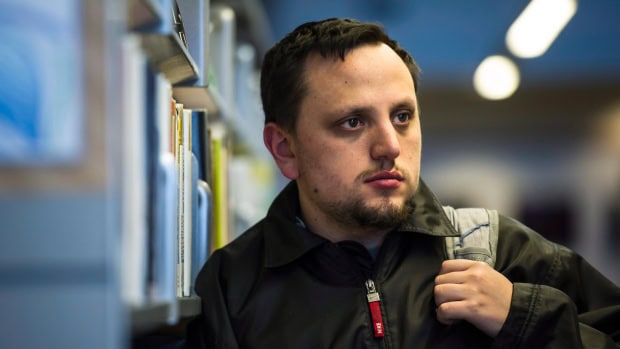
Daniel Share-Strom is seen in Bradford West Gwillimbury, Ont., on Saturday, February 3, 2018. He has Asperger syndrome and has struggled with mental health issues.

One of Canada’s most high-profile mental health treatment centres says it’s opening a new research hub that will focus on the needs of people with both developmental disabilities and psychiatric conditions.

The Centre for Addiction and Mental Health says the new hub is the first in Canada to tackle the needs of a population that has long been ignored.

Statistics suggest that incidents of mental illness are considerably higher among those with autism, Down syndrome or other neurodevelopmental disabilities than among the general population.

The problem exists at all ages, but is worse for adults, as the few resources available while children are in school all but disappear once they age out of the system.

CAMH’s new Azrieli Centre for Adult Neurodevelopmental Disabilities and Mental Health will focus on research and education that experts hope will improve the way the medical community responds to this group’s unique needs.

People with disabilities and medical experts agree it’s common to see doctors conflate disability and mental illness, often dismissing the symptoms of one disorder by attributing them to the other.

Research lacking

Research on the topic is minimal, reflecting what many see as the level of care afforded to people who are both disabled and mentally ill. But the advocates and experts said the data that does exist illustrates the scope of the problem.

A 2012 study from CAMH and the Institute for Clinical Evaluative Sciences found that 45 per cent of adults in Ontario with a developmental disability also had a psychiatric disorder, roughly twice the rate of the general population.

In 2010, a study from the Canadian Journal of Psychiatry found almost half of hospital admissions for people with such disabilities were for psychiatric reasons.

For Daniel Share-Strom, who has Asperger syndrome and struggled with mental health issues throughout his life, the overlap is easy to explain.

“From birth, whether it’s from jerks or people who genuinely have good intentions, you’re told every single day how weird you are and how wrong you are,” Share-Strom said in a telephone interview. “People are trying to correct your basic instincts. On top of that, there’s all these sensory challenge. People are naturally going to lose their confidence and naturally going to start feeling anxious about the world around them or depressed when thinking about their perceived failures.”

Dr. Yona Lunsky, head of the new centre, said there are other causes behind the complex interplay between disability and mental health.

She sited ongoing stigma, social isolation, chronic unemployment and poverty as factors that loom large in the reality of many disabled people and can take a severe toll on mental health.

What’s less understood, she said, is the way to best identify the needs of a person contending with both a developmental disability and psychiatric disorder at the same time.

She said health-care providers will frequently overlook or dismiss a sign of a mental illness, such as anxiety or depression, by treating it as a symptom of autism. Conversely, she said people who don’t act according to social norms may have their behaviour chalked up to mental illness when it is in fact just a way their disability manifests itself.

This, she said, can lead to people receiving inappropriate treatment, such as antipsychotic medication that will not address their needs.

“One group sees only one side, the other sees only the other,” Lunsky said of most health-care providers. “We need to have an understanding of both.”

‘I don’t feel safe’

Medical sociologist Alex Haagaard said that misunderstanding can result in patients avoiding treatment altogether for fear of how they will be served by a system that can’t grasp their needs.

Haagaard, who uses the gender-neutral pronouns they/them, said doctors have routinely misunderstood the interplay between the autism and chronic depression that are part of everyday life.

The result has been some harrowing personal experiences.

“When I’m having a depressive episode, I don’t feel safe bringing it to my doctors because I worry about the extent to which it will derail my attempt to seek diagnoses for my physical issues,” Haagaard said. “It’s definitely a significant problem.”

Lunsky said the new centre, funded by a $10.4 million donation from the Azrieli Foundation, will not be a standalone facility where patients can go to seek direct treatment.

Instead, it will focus on hiring researchers and clinicians to support CAMH’s existing services, develop new treatment protocols for the issue and share that knowledge throughout the medical community.

Haagaard said educating health-care workers is crucial, but they hope the patients the centre aims to help will play an active, ongoing role in its work.

Haagaard said scientists with lived experience of both disability and mental illness have unique perspectives that can help inform research and ensure that solutions actually address the needs of the population.