
Archives for January 24, 2018

Why an Eastern Ontario Township is Turning to Volunteers to Build Infrastructure

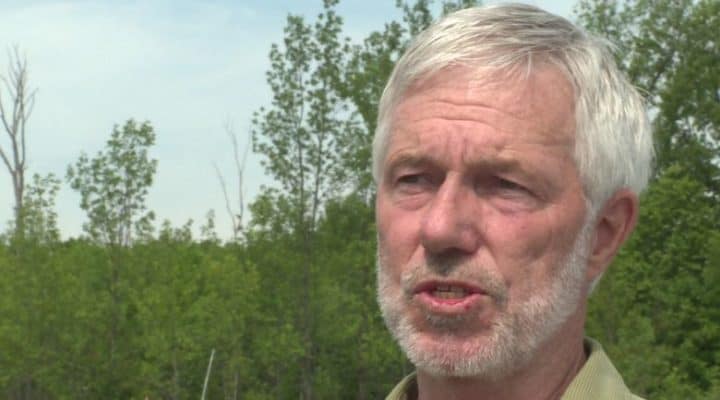
The township of North Frontenac is turning to a volunteering concept known as “contributionism” to help build community projects and improve the local economy.

Contributionism was coined by South African author Michael Tellinger in his book Ubuntu Contributionism: A World Free of Money.

As the title suggests, rather than being paid for work on community projects, volunteers would instead receive goods and services.

According to Mayor Ron Higgins, the small township north of Kingston, Ont. — fewer than 2,000 people live there — will be the first municipality in the world to attempt such a system.

“The concept is very simple, and it appears it would work very well to help our municipality,” Higgins told CBC Radio’s All in a Day.

Beekeeping project first up

North Frontenac’s plan is to start small, only investing about $10,000 per project to begin.

The township’s first initiative will be to build an apiary for beekeeping in the spring, said Higgins, who presented the idea to Frontenac county council last week.

They plan to have residents volunteer three hours a week, building and inspecting hives — and getting free honey in return.

Higgins said the hope is that, in addition to supplying their volunteers with honey, they’ll also produce enough to sell it outside the township.

That revenue would pay off the initial investment, he said, while also going into a “sustainability fund” to fund further projects.

‘Control our own destiny’

Smaller townships compete for limited infrastructure funding from higher levels of government, which is partly why North Frontenac started exploring contributionism, Higgins said.

“This is a way that we can sort of control our own destiny,” he said.

Once the apiary turns a profit, Higgins hopes the township will be able to channel those funds into larger, more ambitious undertakings — for instance, a local health and wellness centre, or a plastic recycling plant.

“In two or three years time, once this is all done, we will go into the bigger $20-million projects,” he said.

Larger projects would involve a measure of paid employment, he added.

Higgins acknowledged that his own township’s council was skeptical of the plans — as he was, initially. But by starting small, Higgins said he hopes the township will spot and fix any “wrinkles” in the process.

“It’s not a short-term [idea], by any means. But within 10 years, we should be a self-sustainable community,” the mayor said.

Tweet

Raising Minimum Wage in Recent Years Achieved Little, Economist Says

A higher minimum wage may have positive and negative consequences, but an activist with the Common Front for Social Justice says it’s a real problem when people working for minimum wage can’t make ends meet.

Jean-Claude Basque, the provincial co-ordinator of the group, said some people working part time and full time for $11 an hour, the minimum wage in New Brunswick, have to turn to food banks to survive.

“We can’t all the time expect citizens to subsidize employers and that’s what we’re doing right now,” Basque said. “A lot of minimum wage workers don’t have a pension plan, so what happens to those workers when they retire?

“They have to go on the [government] pension plan, the income supplement.”

But economist and author Richard Saillant said New Brunswickers have to draw a distinction between the economy we wish we had and the one we do have.

“It’s a reality that we have fish plants that don’t pay as much as some people would like,” he said. “It’s a reality that we have nursing homes that unfortunately don’t pay as much as we’d like.

“The issue there is how do we move up the value chain down the road, so we have high productive employment?”

Saillant said the way the minimum wage was raised in the past was to meet inflation, and the approach doesn’t work.

In New Brunswick, the minimum wage was raised 13 times between 2008 and 2015.

“It hasn’t changed anything,” Saillant said. “The big debate to me is how far higher than the inflation rate should we go and that’s a different question than what we’ve had in the past in New Brunswick.”

Basque said he would like to see the minimum wage increased gradually to $15 over the next four years.

But Lilia Fraser, co-owner of the Pump House, a Moncton restaurant, said people have been complaining about how low minimum wage is for many years and even when it increases, nothing changes, people still complain it is too low.

Fraser said that when the minimum wage is increased, businesses like hers have to be able to sustain themselves while keeping prices reasonable.

“The highest cost in business is the labour costs, so to cover the costs basically in the end you have to increase the cost of what goes on the plate.”

Saillant said good data is needed to properly debate how effective raising the minimum wage is for all involved, including those who pay it, those who earn it and those trying to get into the workforce at that wage.

“I would hope that each government in Canada that is setting the minimum wage do have access to empirical studies and also the right data and the right framework to do that analysis.”

S&P 500 Futures Briefly Weaken Amid Tsunami Warning; These 5 Techs Rally Overnight

Futures for the S&P 500 index turned lower Tuesday morning while Nasdaq 100 futures stayed positive.

Tsunami warnings or watches were announced for much of the Pacific Rim, including the West Coast of the U.S., following a 7.9-magnitude earthquake off the coast of Alaska. The first waves were expectec to hit Washington state just before 8 a.m. ET and Hawaii around 9:20 a.m. ET.

Stock futures retreated in a matter of minutes following the tsunami warnings, but it was more of a ripple than a wave, with the averages already bouncing back. S&P 500 futures erased a slim gain, fell 0.2% vs. fair value but were back to just below break-even. Dow futures, briefly lower, rallied 0.1% amid a slew of Tuesday morning earnings reports from blue chip members. Nasdaq 100 futures advanced 0.2%, thought that’s off pre-tsunami levels.

Nasdaq 100 futures remained positive thanks to the likes of Netflix (NFLX), Amazon.com (AMZN), Adobe Systems (ADBE), First Solar (FSLR) and Roku (ROKU).

Netflix reported blowout subscriber growth in its Q4 earnings report late Monday, while Amazon.com and Roku appeared to move in sympathy. Adobe Systems spelled out how the recently passed Trump tax cuts would boost earnings, while First Solar rallied as President Trump slapped tariffs on Chinese solar products.

Netflix

Netflix earnings and sales growth was essentially in line with Wall Street forecasts. But the internet streaming giant reported a gain of 8.3 million new subscribers, far above analyst estimates and company forecasts. Netflix also guided higher for first-quarter earnings, revenue and subscribers.

Netflix shares shot up 9.4% to 249.01 in premarket trading after rising 3.2% at 227.58 in Monday’s stock market trading.

Amazon, Roku

Amazon got a modest overnight lift of 0.6%, as the e-commerce and cloud-computing services giant competes with Netflix via Amazon Prime Video. But with Amazon boasting a market cap north of $600 billion, the stock has a notable weighting in the Nasdaq 100. Amazon already rallied 2.5% during the regular session to 1,327.31, as the tech titan opened its cashierless Amazon Go store to the general public

Roku, which makes streaming TV set-top boxes but sees streaming services and advertising as its growth area, popped 3.2% to 45 in early trade. That suggests Roku could retake its fast-rising 50-day moving average. Roku jumped 8.45% to 43.62 during Monday’s session.

Adobe Systems

The digital publishing software maker said its tax rates will fall “substantially” under the recently passed tax-cut legislation. Adobe raised its current-quarter adjusted earnings forecast to $1.43 a share from $1.27. Analysts were expecting $1.26 at Zacks Investment Research. For fiscal 2018, Adobe upped its EPS target by 70 cents, to $6.20. Analysts expected $5.50.

Adobe shares rose 2.6% to 203 in premaket trading. The stock rose 1.1% to 197.84 Monday.

First Solar

First Solar rallied 3.7% to 71.50 after Trump imposed a 30% tariff on imported solar panel technology late Monday, though that was off overnight highs. The tariff isbad news for Chinese solar panel makers, including some listed in the U.S. It also likely means higher prices for solar power customers. But the protectionist move is good news for U.S. solar panel makers like First Solar.

First Solar shares closed down 1.5% at 66.95 on Monday.

Paulatuk, N.W.T., athletes train by flashlight on path to Arctic Winter Games

Paulatuk, N.W.T., athletes train by flashlight on path to Arctic Winter Games

A blizzard that hit Paulatuk, N.W.T., last week knocked out power and blew roofs off houses, but it wasn’t strong enough to keep the community’s young badminton players from training for the Arctic Winter Games trials — even if they had to do it by flashlight.

Jennifer Giffin is a teacher in Paulatuk and the community’s badminton coach. She will also be Team NWT’s girls badminton coach at the Arctic Winter Games next month.

The team found refuge in the school’s darkened gym during the storm, she said. While they were hunkered down, they took some time to hone their badminton skills.

“We trained for a little bit in the dark in the gym,” said Giffin.

“The language teacher called and said, ‘I think we better bunk in the gym so the kids can train just in case we get stuck home.'”

After the storm cleared, it was time to go to the airport.

“Oh it was amazing,” said Giffin, describing an emotional scene where parents tearfully sent their children off to last week’s Arctic Winter Games trials in Yellowknife — some of them leaving the community of 265 people for the first time ever.

“We had a picture with the parents and it was dark — we have 24-hour darkness,” she added. “And to see the small plane — the very small plane — come in, in the darkness, and know that we were gonna get on that, it was great.”

Making the cut

The hard work paid off. Brothers Junji and Casey Tai both made the cut, with 17-year-old Casey making the junior boys team and Junji, 14, heading to the juvenile boys team.

The team was announced Sunday.

Casey has been playing for seven years and this will be his second Arctic Winter Games.

“Travelling to a different place and playing badminton with new people,” he said, describing what he likes about the opportunity to play the sport in competitions.

Last week was the second time he’s tried out for the Arctic Winter Games. He didn’t make the team the first time.

Junji said he has a killer drop shot, which is where the shuttle is hit downwards from the rear of the court so it lands in the opponent’s forecourt area.

Nine sport trials

The Arctic Winter Games hosted trials for nine sports across the territory this weekend. Yellowknife hosted trials for badminton, wrestling and speed skating, Inuvik hosted trials for snowshoeing and arctic sports and Fort Smith hosted trials for dog mushing, snow boarding, table tennis and Dene games.

Watching experienced players take on newcomers at this level of competition is thrilling, said Peter Daniels, an organizer and official for the Dene games.

“It’s always exciting to see the newcomers coming in because you never know what they’re going to bring,” he said.

The Arctic Winter Games runs from March 18 to 24 in Fort Smith and Hay River, N.W. T.

CRISPR Gene Editing May Have Just Become a Whole Lot More Accurate

mcgill crispr 90 percent breakthrough wr 6 8 17

CRISPR gene editing is an enormously exciting area for molecular biologists, opening up new opportunities when it comes to editing DNA to fight back against a wide range of medical conditions. Heck, it’s so versatile that it can even be used to encode a GIF into the DNA of a virus, demonstrating how it is possible to capture complex information in living bacteria.

If CRISPR (clustered regularly interspaced short palindronic repeats) wasn’t already exciting enough, however, it could be about to become even more of a highly prized tool in the hands of researchers. At McGill University in Montreal, researchers in Uri David Akavia’s team have demonstrated CRISPR’s best success rate yet: managing to repair mutations in 90 percent of target cells.

That is particularly significant because, while CRISPR is very good at disabling certain genes (in one recent experiment it was able to disable the defective gene that triggers ALS in mice), it is much harder to use CRISPR to fix genes. This approach, which usually works in under 10 percent of target cells, involves replacing a faulty DNA with another working sequence. Until now, the highest success rate was 60 percent, meaning that the McGill University team has performed significantly better.

In order to increase the efficiency of the CRISPR technique, Akavia’s team physically linked the replacement DNA with the CRISPR protein which finds and removes the faulty sequence, as well as using a polymer called polyethyleneimine to directly target the nucleus of the cells — thereby reducing waste.

Going forward, the technique could conceivably be used for treating or eliminating entirely all inherited diseases. This is something previous CRISPR work has sought to do but could be revolutionized by this more successful approach. However, before too many champagne corks are popped, the team will need to demonstrate efficacy on a wide range of cells to show that their approach is versatile and repeatable under different conditions. We’ll keep our fingers firmly crossed!

“Our approach offers a cost-effective, simple and broadly applicable editing method, thereby expanding the CRISPR/Cas9 genome editing toolbox,” the researchers note in a paper describing the work. The research paper is available to read on biological sciences online repository, bioRxiv.

Self-made millionaire: How to become more valuable at your job

Self-made millionaire Grant Cardone

Value, really, is just a fancy way of saying something creates worth. If something matters, it has worth and becomes important to people.

How can you become more important to people that you work with? Here are three steps to take:

Understand your real value

Having worth is not limited to a specific job title. You have to think bigger than the description on your business card. There’s always someone next in line with similar or even better skills.

It’s going to be difficult for you to advance in life and increase your income if you don’t start to think this way. Creating value at your existing job is about distinguishing yourself from your job title. To be clear, I’m not suggesting you give up your current responsibilities. Far from it.

If you had to label me, what would you say? Sales trainer, mentor, real estate investor, money fanatic? You could probably come up with a hundred ways to describe me but you can’t put me in a box with one word or title.

I’m worth something to a wide range of people in a variety of fields. The descriptions keep coming because my focus is on creating value, not on a particular role.

Instead of thinking of yourself as your job — programmer, graphic designer, lawyer, real estate agent, sale professional — think of yourself as a business that creates beneficial exchanges between groups of people.

Operate as a business

Understand that you don’t start a business. You are a business.

How does that happen? You just have to choose it. All a business is is an entity that makes a living by engaging in commerce.

You don’t need to file an LLC. You’re already a money-making, idea-generating, creation machine. Become a unique proposition with the goal of exchanging something of worth.

Even my daughter thinks of herself as a business. She understands that she can build and bring value because she is a unique proposition. You can do the same at your company.

Branch out

I’ve always said that the holy grail to wealth is creating multiple flows of income. That’s true for you personally and for your company. Now you get what creating value is and you’re looking for ways to create it as a business within your company. It comes down to creating multiple flows of value.

When you shift your mindset, you’ll start to look for opportunities where you can exchange value. These will fall outside of your current job that might even create a new role for you.

Take Robert, my video guy, for example. He came to me and said, “Hey, what else can I do here?” I said, “Let’s sell some other products here. Let’s sell some video production. Let’s produce video for people. Let’s produce video that’s so sick that other companies want to call us. Why don’t we produce some advertising, some commercials?”

This was a perfect scenario because it piggybacked off of Robert’s existing skills. Now he has three streams of income instead of just one and he’s more than doubled his earnings from the previous year. He not only created more value for my company but also for himself.

Operate yourself like a business. Brainstorm what you can do at your job to earn more money. The goal is to become something bigger than a specific job title. Whatever it is you do, get a second value flow and watch the income and your worth to the company grow.