Archives for January 24, 2018

High Prices Won’t Deter Biotech Deals

Expect more expensive biotech acquisitions after two high-priced deals announced Monday

Sanofi said it would acquire hemophilia specialist Bioverativ for more than $11.5 billion, or $105 a share.

The pharmaceuticals industry has entered another deal frenzy. Eye-popping price tags reflect financial pressure favoring consolidation rather than a bout of madness.

Celgene CELG 0.25% announced it plans to acquire cancer specialist Juno Therapeutics JUNO 26.82% for $9 billion, at a roughly 90% premium to Juno’s stock price before The Wall Street Journal reported a deal was close last week. Not to be outdone, Sanofi SNY -3.14% said Monday it would acquire hemophilia specialist Bioverativ for more than $11.5 billion, or $105 a share. Bioverativ, which spun off from Biogen just last January, traded at $47.50 a share after the spin and closed last week at $64.11.

Those big price tags were a reason Sanofi shares traded lower and Celgene barely budged on Monday. Sanofi is paying more than eight times this year’s projected revenue for Bioverativ, according to FactSet. Celgene said the acquisition of Juno doesn’t change the company’s closely watched sales and profit guidance for 2020. Increasing competition in both cancer and hemophilia, coupled with those high price tags, means there is a real risk that both acquisitions will fail to generate good returns.

But the nature of the drug business means these risks are necessary ones for buyers to take. It isn’t uncommon for large biotech and pharma companies to derive the majority of their sales and profits from one drug. Industry realities, like expiring intellectual property and the fast pace of scientific innovation, mean that companies regularly have large revenue holes to fill. Meanwhile, very few experimental drugs under development have true commercial potential, which creates scarcity. The financial firepower is there as big pharma balance sheets are strong enough to support regular deals at high prices.

These dynamics create opportunities and risks for investors. Acquisitions of clinical-stage assets perceived to have scarcity value are bound to continue, which should support biotech valuations across the sector. Large drug companies may struggle to justify past deals on their financial merits, but it won’t slow future acquisitions.

An index of small and midsize biotech stocks rocketed more than 5% Monday.

It is still a seller’s market.

In this luxury enclave, success is a dirt-jump track for former pro biker

“I guess it’s called landscaping in Victoria,” homeowner says

Hugo Donais, who was a professional mountain biker before becoming a financial advisor, said riding his bike every day is what he loves to do.

On a large, leafy lot in the exclusive Uplands neighbourhood of Oak Bay, B.C., Hugo Donais is realizing a childhood dream.

The financial advisor and former pro mountain biker bought the property with plans to build a new house.

But first he is building a professional-grade dirt-jump park.

“It was a beautiful spot in the Uplands and lots of space to build some jumps, so why not?” Donais told On the Island’s Khalil Akhtar on a rainy-day tour of the muddy work in progress.

He laughed at the question of whether it was a permitted use in this exclusive neighbourhood.

“Yeah I guess it’s called landscaping in Victoria,” he said. “It’s a different kind of landscaping but yeah, you’re allowed to do whatever you want with your backyard as long as you don’t disturb neighbours and you keep the peace.”

Even so, Donais received visits from Oak Bay municipality staff regarding the project, including a building inspector, an engineer and a tree-protection expert.

He also fielded complaints that the jumps gave resident deer easier access to the neighbours’ yards, where they were eating the greenery.

While it’s difficult to envision now, Donais said that come summer, the jumps, made from clay, will harden into smooth steep jumps perfectly spaced in a looping track big enough for several riders at a time.
It’s not the first track he’s built, but he said it’s hard to find a spot where years of work won’t be bulldozed for development.

“At least this one, I control the environment and it’s not going to go anywhere,” he said.

Donais remembers fondly watching VHS tapes of California dirt bikers with jump tracks in their backyards.

“This was a dream, to have the means to do it,” he said. “I could buy another car, another house, or I could just do what I love to do which is riding my bike every day.”

Alexa, you’re great. But please stay away from my PC

The proliferation of Alexa in every device imaginable has been an important trend over the last couple of years. You can talk to it, make Amazon orders, ask it to play music, and even play games. So why not have it on your laptop or desktop PC?

The first reason is because although you may not use it much, your PC already has a built-in virtual assistant called Cortana. This is Microsoft’s own virtual assistant, which already replicates a lot of the same functionality on your PC, meaning you’ll always have two virtual assistants vying for your attention.

It’s not a dissimilar situation to what happened with Samsung’s 2017 smartphone, the Galaxy S8. Leading up to its release, Samsung made a big deal about Bixby, its new proprietary voice assistant. Bixby was lacking in features and delayed at launch. Worse, S8 owners had immediate access to two voice assistants. A long press of the home button would call up Google Assistant, while the dedicated button on the side would bring up Bixby. It was a total mess.

Bringing Alexa to Windows 10 PCs will result in a similarly confusing experience. Cortana is baked into the Windows 10 experience, with integration across the board, while it doesn’t look as if Alexa will be optimized for the PC in any significant way. Chances are, it’s probably going to be better at selling you things on Amazon than increasing your PC productivity.

Want to use a voice assistant to ask what the weather outside is like, or who won the game last night? Now you’ll have two options built into your PC. Faced with so many ways of accomplishing that task via voice, you’ll probably end up just Googling it, or using your phone.

Besides, using a voice assistant on a PC doesn’t make lot of sense to begin with. It can be convenient to use Alexa to order food, make phone calls, or turn on music when you’re cooking or cleaning the house. When your hands are in position on input devices like keyboards and mice, though, using voice control is the slowest way to get anything done.

As I write this, I am surrounded by a cornucopia of virtual assistants. Cortana on my PC, Google Assistant on my phone, Alexa on a smart speaker nearby in the office, and Siri on my MacBook Pro — all of them anxiously listening and waiting to be helpful. They all have specific use cases when they’re helpful, but Alexa on a PC is just not one of them.

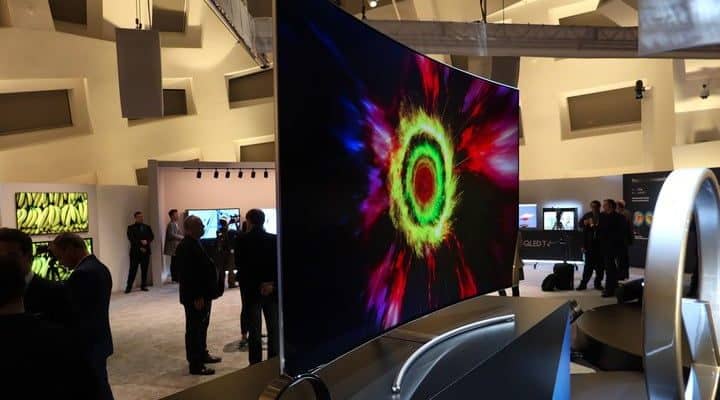
QLED vs. OLED TV: Similar Names, Totally Different Technologies

There’s a new kind of TV in town, and it’s called QLED. Samsung coined and trademarked the term, announcing the first QLED TVs at CES 2017, but it isn’t keeping that acronym entirely for itself. Sources at Samsung tell Digital Trends they would like to see other companies adopt the QLED moniker for their quantum LED TVs, too. To prove it, the South Korean electronics giant forged a partnership with Chinese manufacturers Hisense and TCL, announcing a QLED Alliance in late April 2017, and as we witnessed at CES 2018, TCL now has a QLED line of TVs.

As you may have surmised, an alliance infers an enemy, and in this case, that would be OLED. Sounds like it’s time for a QLED vs. OLED TV battle!

OLED TVs have received high praise from tech journalists and reviewers across the board, including Digital Trends; LG’s C7 OLED won our praise as best TV in 2017, for example. But until 2017 LG was the only name in the OLED game, and premium price tags put them out of reach of most consumers, so the threat was low. Now that Sony is bringing competition to the market with its own OLED TV, (with yet another on the way) and LG’s OLED lineup has expanded to include more affordable models, the heat is on QLED technology. However, Samsung seems poised to meet the challenge, updating the technology in subsequent QLED lines to try and close the gap.

For those reasons – and, let’s face it, because the word QLED sounds and looks a lot like OLED – it’s important to compare the merits of these dueling display technologies in a QLED vs. OLED comparison. As always, Digital Trends is here to lay it all out for you. First, we’ll discuss what QLED is — and isn’t — and then we’ll pit the two technologies against each other in a point-by-point battle for supremacy.

Spoiler alert: It’s a very tight race, and it will get even tighter in 2018, when Samsung is expected to announce its new and improved QLED line in March.

What is QLED?

QLED TVs are just LED TVs that use quantum dots to enhance performance in key picture quality areas. Samsung, for instance, claims its QLED TVs offer brightness levels that meet and exceed any competing TV technology, offer better black levels than other LED TVs, and can reproduce more colors than LED TVs without quantum dots.

How? Quantum dots act almost like a filter that produces purer light than LEDs alone can provide. It’s complicated, so we explain all the science behind QLED in a different article.

Quantum dots emit brilliant color in a narrow wavelength when exposed to the right light, making them ideal for TVs. (Credit: Samsung)

To meet the Ultra HD Alliance’s standards for an Ultra HD Premium TV, most LED TVs must use quantum dots in some fashion. Since quantum dots are now deployed so widely across premium TVs, Samsung thinks it would reduce confusion if every manufacturer just started calling them QLED TVs. The goal is to differentiate them from mere LED TVs, and push back against OLED, as Samsung has no plans to produce an OLED TV at this time. However, the company does have its own answer to OLED in the form of microLED. This is a separate technology from its QLED TVs, so it won’t factor in here, but based on what we saw at CES 2018, microLED has the potential to bring some serious competition to OLED, especially with regards to brightness and black levels.

What QLED is not

QLED is not an emissive display technology, like plasma, OLED, MicroLED, or even your old cathode ray tube (CRT) TV in the basement. Quantum dots don’t directly emit the colors you see; they’re spread on a piece of film that acts almost as a filter within an LED TV panel. LED backlights beam through this film, the light is refined to an ideal color temperature, and from there, brightness and color are significantly enhanced.

But TV enthusiasts have been hoping for a different kind of QLED TV, one in which individual quantum dots can be turned on and off with electricity like an OLED — no need for a backlight system, and no LCD panel involved. If the quantum dots were producing the light, then we could call QLED an emissive display technology – at present, however, it is not.

What is OLED?

OLED stands for organic light-emitting diode. Very simply put, OLEDs are made with organic compounds that light up when fed electricity – hence the term emissive display. A single OLED is the size of one pixel, so it takes millions of them lighting up and shutting off independently to fill your TV screen. Because of this flexibility, when an OLED TV’s pixels are shut off, they are completely off, and appear completely black. While QLED TVs can be made very thin, OLED TVs can be made even thinner, and even flexible.

QLED vs. OLED

Now we’ll pit the two technologies against each other on a point-by-point basis and see how they stack up in terms of contrast, viewing angle, brightness, and other performance considerations.

Black level

A display’s ability to produce deep, dark blacks is arguably the most important factor in achieving excellent picture quality. Deeper blacks allow for higher contrast and richer colors (among other things) and, thus, a more realistic and dazzling image. When it comes to black levels, OLED reigns as the undisputed champion.

QLED TVs improve on LED display black level performance, but they still rely on backlights shining behind an LCD panel. Even with advanced dimming technology, which selectively dims LEDs that don’t need to be on at full blast, QLED TVs still suffer from an effect called “light bleed,” the backlight spills through on what is supposed to be a black section of the screen. This effect is noticeable in scenes with bright stars on a night sky, or in the letterbox bars at the top and bottom of a movie. The result is a slight haze or halo around bright objects which blurs lines that should be sharp. Even on the most advanced QLED models, these have been inevitable issues, though it becomes less and less of one over time. If you’re shopping the latest QLED models from Samsung, chances are this won’t be too much of an issue, albeit still noticeable in comparison. The QLEDs of 2018, though? Just you wait — big improvements are on the way.

OLED TVs suffer from none of these problems. If an OLED pixel isn’t getting electricity, it doesn’t produce any light and is, therefore, totally black. Sounds like an obvious choice to us.

Winner: OLED

Brightness

When it comes to capable brightness, QLED TVs have a considerable advantage. LED TVs were already good at getting extremely bright, but the addition of quantum dots allows them to get even brighter. Because of this, QLED TVs claim superior “color volume,” meaning they are able to make all colors in the available spectrum brighter without losing saturation. QLED TV makers also claim they are better for HDR content because spectral highlights in images – the glint of light reflecting off a lake or a shiny car, for instance – are more powerful and more easily visible.

When it comes to that HDR argument, though, much can be said for the total contrast afforded by an OLED TV’s perfect black levels. When you start from perfect black, perceived contrast requires less intense brightness in those highlighted areas for HDR programming, and the end result for the viewer is similar to that of a much brighter QLED TV – at least in a dark room, anyway. In rooms with a lot of ambient light, a QLED’s brightness advantage can be very helpful at delivering that big visual punch HDR content should deliver.

Winner: QLED

Color space

OLED used to rule this category, but quantum dots, by improving the purity of the backlight, have allowed QLED TVs to surge forward in color accuracy, color brightness, and color volume, putting them in a dead heat with OLED TVs. Again, QLED makers claim better saturated colors at extreme brightness levels to be an advantage, but we have yet to witness this technical claim resulting in a real advantage in normal viewing situations.

Winner: Draw

Response time

Response time refers to the time it takes for each individual diode to change from “on” to “off.” With faster response time comes less motion blur and fewer artifacts (source material notwithstanding).

OLED, with its smaller diodes working as single pixels, simply blows QLED out of the water in terms of response time. In contrast, the diodes in QLED TVs are not only slower, but sit behind the LCD panel and illuminate clusters of pixels, not individual ones. This causes an overall slower change between “on” and “off” states. In fact, OLED currently offers the fastest response time of any TV technology in use today, making it a clear winner in this regard.

Winner: OLED

Input lag:

As for input lag, LG has considerably improved its OLED TVs in this area, making them a real option for gamers who play fast-paced first-person shooter games, but we’ve not been able to test competing OLED TVs from other manufacturers yet. We do know that OLEDs aren’t an inherently bad choice for gamers, but which models will have the least input lag remains to be seen. It’s also hard to rank OLED against its QLED competition because the input lag on QLED TVs varies so greatly from model to model. Suffice it to say that OLED is certainly an option for gamers, and we’re interested to see how they perform in 2017.

Winner: Draw

Viewing angles

OLED, again, is the winner here. With QLED screens, the best viewing angle is dead center, and the picture quality diminishes in both color and contrast the further you move side to side, or up and down. While the severity differs between models, it’s always noticeable. LG produces a type of LCD panel known as IPS which has slightly better off-angle performance than VA-type LCD panels, but it’s still no competition for OLED technology. Similarly, Samsung’s highest-end QLED TVs feature updated panel design and different anti-reflective coating, which make off-angle viewing much less of an issue. While OLED still beats these models out in the end, the gap is closing quickly. In fact, we expect to see significantly better viewing angles from Samsung’s 2018 QLED TV lineup.

OLED screens can be viewed with no luminance degradation at drastic viewing angles — up to 84 degrees. Some QLED TVs have improved in terms of viewing angle, but OLED maintains a considerable advantage.

Winner: OLED

Size

OLEDs have come a long way in this category. When the tech was still nascent, OLED screens maxed out at 55 inches. Today, an 88-inch OLED is available. With that said, there are fewer limitations on LCD display sizes, with QLED growing as large as 100 inches and beyond. For most folks, this isn’t a significant advantage, but technically speaking, QLED has the edge here.

Winner: QLED

Lifespan

LG says you’d have to watch its OLED TVs five hours per day for 54 years before they fell to 50 percent brightness. Whether that’s true remains to be seen, as OLED TVs have only been out in the wild since 2013. For that reason — and that reason only — we’ll award this category to QLED. It pays to have a proven track record.

Winner (for now): QLED

Screen burn-in

We include this section begrudgingly, both because burn-in is a misnomer (that’s just an aggravation) and, for most folks, the effect will not be an issue.

The effect we’ve come to know as burn-in stems from the days of the boxy CRT TV, when prolonged display of a static image would cause that image to appear to “burn” into the screen. What was actually taking place then was the phosphors that coated the back of the TV screen would glow for extended periods of time without any rest, causing the phosphors to wear out and create the appearance of a burned-in image. We think this should be called “burn out.” But … whatever.

The same issue is at play with OLED TVs because the compounds that light up do degrade over time. If you burn a pixel long and hard enough, you will cause it to dim prematurely and ahead of the rest of the pixels, creating a dark impression. However, in reality, this is not very likely to cause a problem for anyone — you’d have to abuse the TV intentionally in order to achieve this result. Even the “bug” (logo graphic) that certain channels use disappears often enough or is made clear so as to avoid causing burn-in issues. You’d have to watch ESPN all day every day (for many days) at the brightest possible setting to cause a problem, and even then it still isn’t very likely.

That said, the potential is there, and it should be noted. Since QLED TVs aren’t susceptible to burn-in, they win this fight by technicality.

Winner: QLED

Power consumption

OLED panels are extremely thin and require no backlight. As such, OLED TV’s tend to be lighter in weight than QLED TVs and thinner. They also require less power, making them more efficient.

Winner: OLED

Price

Once upon a time, this category would be handily won by QLED TVs, but OLED TVs have come down in price, and since we’re talking all-premium here, comparable QLED TVs cost about the same. The price category simply isn’t a consideration in this particular fight.

Winner: Draw

Overall

We have a winner!

When pitting QLED vs. OLED in terms of picture quality, OLED comes out on top, even though the latter technology represents a significant advancement over the LED TVs of old. OLED is lighter, thinner, uses less energy, offers the best viewing angle by far, and, though still a little more expensive, has come down in price considerably.

QLED has its own distinct set of advantages with brightness capability, and with recent tweaks, black levels have also improved. For many, a QLED TV will make more sense since a QLED viewed during the day will offer a punchier picture. But when the lights go down, OLED is a more attractive choice.

Winner: OLED