
Archives for January 18, 2018

The Most Affordable Beach Towns in 2018

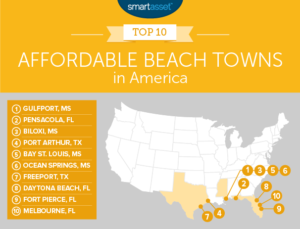
As winter drags on you may catch yourself wondering if summer is ever coming back. But it doesn’t have to be that way. There are plenty of towns across America where it’s possible to spend a few weeks or, if you’re retired, a few months soaking in some warm weather. But, as that year-round warm weather is in demand, affording a home in one of the places can be difficult. With this in mind we decided to find the best beach towns which won’t break your account. Below we rank the most affordable beach towns for 2018.

In order to rank the most affordable beach towns we looked at data on 221 cities. We compared them across four affordability metrics. We looked at median home value, median housing cost, median number of rooms per house and median property taxes paid. Check out our data and methodology below to see where we got our data and how we put it together.

Key Findings

No dramatic changes – What was affordable last year remains affordable this year, for the most part. Only one city, Freeport, lost its place in our top 10, dropping to 17th. There is also only one newcomer to the top 10. Melbourne, which was 11th last year, took 10th this year and Fort Walton Beach, which was seventh last year, dropped to 11th this year.

More affordable – A few cities in our top 10 are more affordable this year than they were last year. Gulfport, Mississippi; Port Arthur, Texas and Ocean Springs, Mississippi all have lower median home values than last year.

This is SmartAsset’s third annual study of the most affordable beach towns in America. Check out the 2017 version here.
1. Gulfport, Mississippi

For the third consecutive year Gulfport is the most affordable beach town in America. If you are thinking about buying a house here, you will need to afford a home worth $116,200. That’s not bad when you consider having access to great weather year-round!

If you are thinking about retiring, Gulfport could be a good place to settle. Mississippi ranks as one of the best states for an early retirement.

2. Pensacola, Florida

Pensacola continues to fall just short. For the third year in a row, the city in Florida takes the second spot. The median home here is worth $145,700 and costs $850 per month. For each of those metrics Pensacola ranks in the top 20.

If you want a little more space for your beach home Pensacola might be a better place than Gulfport. Pensacola homes have an average of 6.4 rooms per home, slightly more than Gulfport homes’ 6.1 rooms.

3. Biloxi, Mississippi

There is no change amongst our top 3. For another year, Biloxi is the third-most affordable beach town in our data set. The median housing cost in Biloxi is actually lower than the two cities above it. The median home in Biloxi costs about $785 per month.

However, getting your hands on a home here is slightly more difficult than it is in some other cities. The median home here is worth $149,100, the third-highest in the top 10.

4. Port Arthur, Texas

If you’re looking for an affordable beach home, it’s hard to beat our fourth-ranked city, Port Arthur, Texas. The median home is worth $64,300, meaning a mortgage here should be affordable.

Long term however, Port Arthur comes with costs you will need to be aware of. Specifically the property taxes here are high. The median homeowner here pays around $1,000 per year in property taxes.

5. Bay St. Louis, Mississippi

Bay St. Louis is the first city in the top 10 to move up or down. The city moved up from ninth last year to fifth this year. The housing costs in Bay St. Louis are a standout metric. The average homeowner pays $729 per month, or $8,749 per year. To afford that and not be considered housing cost-burdened you would need to make $29,160 per year.

If you are in the market for a big home, you may need to spend a little extra time house hunting in this city. The median home has less than six rooms, a relatively poor score in this study.

6. Ocean Springs, Mississippi

Homes in Ocean Springs are pretty affordable. The median home is valued at $151,500, according to Census Bureau data and median monthly housing costs are $920.

Property taxes, while low nationally, are relatively high for this top 10. The average homeowner pays almost $1,300 per year in property taxes, the highest mark in our top 10.

7. Freeport, Texas

For people looking for a bargain, it’s tough to beat Freeport. The median home can be had for only $71,000. The average homeowner in the area spends $565 per month on their home. Those are the sort of numbers that make shivering New Yorkers weep!

Homes here to tend to run on the small side, however, which hurts the city’s overall score. The median Freeport home has 5.6 rooms, 163rd-most in our study.

8. Daytona Beach, Florida

Daytona Beach is probably better known as a place to hang out during spring break or as a place to catch a NASCAR race. But this is also a great city for thrifty home hunters on the prowl for a place to spend their winter months. The average home is worth about $117,000, a top 10 rate but $5,000 more than last year.

Low home value typically means your most important housing costs, your mortgage, will be low. Daytona Beach has a median housing cost of $757, fourth-lowest in the top 10. It may be possible to get that number even lower if you have great credit and have access to the lowest mortgage rates.

9. Fort Pierce, Florida

Fort Pierce, Florida missed on the eighth spot by only 0.4 points on our index. This could make it tough choice, between buying a beach home in Fort Pierce or buying a beach home in Daytona Beach. The two cities do have some important differences.

The median home in Fort Pierce is worth a bit less than the median home in Daytona Beach but the homes are also smaller. The average Fort Pierce home is worth $89,000, which ranks third but only 5.4 rooms (it ranks 184th for that metric).

10. Melbourne, Florida

Our study ends in Melbourne, Florida a newcomer to this top 10. Homes in this city do well in all of our affordability metrics. Home value in particular stands out. You probably won’t make a killing investing in homes around Melbourne, Florida but you will certainly have a place to hang out in the winter. The median home here is worth $125,400. That’s $9,000 more than last year. The typical homeowner in the area spends about $850 per month on their house.

Data and Methodology

In order to find the most affordable beach towns in the country, SmartAsset looked at data for 229 beach towns. Specifically we looked at the following four factors:

  • Home value. This is the median home value in each city. Data comes from the Census Bureau’s 2016 5-Year American Community Survey.
  • Number of rooms. This is the average number of rooms per house. Data comes from the Census Bureau’s 2016 5-Year American Community Survey.
  • Property taxes. This is the median property taxes paid. Data comes from the Census Bureau’s 2016 5-Year American Community Survey.
  • Monthly housing costs. This is the median monthly housing costs. Data comes from the Census Bureau’s 2016 5-Year American Community Survey.

We ranked each city in each metric. Then we found each city’s average ranking, giving the number of rooms a half weighting and all other factors a full weighting. Using this average ranking, we created our final score. The city with the best average ranking received a 100. The city with the worst average ranking received a 0.

Tips for Buying a Home

The most important thing to consider when moving from renting to buying is knowing how much home you can afford. This usually means keeping the total cost of your home below 30% of your net income. And that doesn’t just mean your monthly mortgage payments. That 30% includes property taxes and any other upkeep you need to make on your home. By keeping your housing costs to around a third of your income you can afford to save for retirement and still have some fun.

When going to buy your home make sure your credit score is as high as it can be. A high credit score means you will have access to lower mortgage rates and your mortgage rate is what determines your monthly mortgage payment. Lowering your mortgage rate by just a few tenths of a percent can mean thousands of dollars saved over the life of the mortgage. It is tough to dramatically improve your credit score in a short period of time but there are a few things you can do. For example, paying off delinquent accounts can boost your credit score a few points and asking your credit card company to raise your credit limit, which will lower your utilization rate, are two short-term options.

Nick Wallace completed the data analysis for this study.

5 Stocks to Capitalize on the Records Being Set by the Dow Jones Transportation Index

A robust economy is good for transport stocks

The American economy and the stock market have evolved a great deal since the days of Charles Dow. And in a digital and globally connected business environment, it’s easy to pooh-pooh once-important transportation stocks as relics of the past instead of a bellwether industry.

But regardless of how you feel about their relevancy, transports lately have been delivering nice profits to investors.

While the broader S&P 500 SPX, +0.94% is up 13% since Aug. 1, the Dow Jones Transportation Index DJT, +0.28% has surged 24% in the same period — and on Friday closed at its ninth consecutive record.

There are good reasons for that run. Many investors believe that a robust American economy this year will naturally generate increased volume for the sector as goods and services move around at a higher pace. And after all the focus on growth names like FAANG stocks, it’s natural for the fast money to look for the next trade instead of getting complacent after a big 2017.

Growthy tech stocks tend to make the biggest headlines these days, but investors may want to pay closer attention to some old-school transportation stocks in the year ahead.

CSX

Railroad giant CSX Corp. CSX, -0.76% was in the news a lot last year, and not all of the headlines were pleasant.

Yes, the company started the year with a bang after Hunter Harrison took the helm as CEO and made a big cost-cutting push, as he successfully had done for other railroads. His death at the end of 2017, however, added uncertainty to the stock. Shares rolled back almost 10% in mid-December on the news.

The silver lining is that though the unexpected loss of Harrison was indeed a blow, the blueprint for a more efficient CSX was already crafted. Shares have recovered their December losses and have set a new 52-week high as the company approaches the release of fourth-quarter earnings on Tuesday.

Investors are right to be optimistic, after big beats in the first and second quarters last year, and earnings per share that met the mark in the third quarter despite higher expectations.

The new efficiency at CSX are well-timed, as the U.S. railroad industry is seeing increased volume; with combined carloads and intermodal traffic up 4% in December and also up about 4% on the full year, according to the Association of American Railroads.

Wall Street used to closely watch the link between rail traffic and broader economic growth for a reason. If we really are seeing business activity pick up thanks to tax cuts and other growth-oriented initiatives, the uptrend for railroads last year should continue in 2018 — as should the rally in CSX stock.

FedEx

Another important link in the supply chain is FedEx FDX, +0.71% The shipping giant is coming off a great 2017, with gains of about 34% that handily outperform the broader stock market. And with shares continually hitting new highs, the stock shows no sign of slowing down.

That’s because FedEx just logged another record holiday shipping season, but unlike in years past it managed the volume without any major headaches. That bodes quite well for the company in 2018 — not because late package delivery hurts its brand, but because it hurts the bottom line.

When FedEx was overwhelmed in past years, it increasingly relied on third-party transportation that squeezed margins. That wasn’t a problem this time around, when FDX reported an impressive 11% jump in profits in December.

Looking forward, those improvements in its logistics network will continue to pay off — and even better, management stated the success of previous investments won’t necessarily have to be repeated as it approaches a “transition point” where it can “dial back” on spending to broaden its network. That means there may be relief on the capex front at the same time.

If we see increased package volume thanks to a booming economy and an ever-more-digital retail industry, you can be sure FedEx now has the tools to make the most of that environment.

The company is next expected to report earnings on March 20.

Alaska Air

Unlike the other names in the transportation space, Alaska Air Group ALK, -0.65% hasn’t had a lot of success lately. Shares are down by double digits in the last year, and about 25% off their 52-week high of about $100.

However, this cooling off came after a strong multiyear run for the stock. Even after its recent slump, shares are up 230% in the last five years vs. just 90% or so for the S&P 500.

Now that Alaska Air has taken a breather, it’s worth considering buying once more. After all, the same forces lifting other airlines — higher ticket prices and increased travel appetite — will also lift this stock. With a brand that is consistently ranked among the top of the industry, winning No. 1 in customer satisfaction 10 years running from JD Power, why wouldn’t it participate?

Well, part of investors’ negativity was because Alaska Air got caught in a bidding war for Virgin America, and Wall Street thought it bit off more than it could chew. Adding insult to injury, Alaska Air’s debt was quickly downgraded to junk status after the deal closed. Then integration woes proved exactly what investors had feared, and shares took a beating.

But after sitting out a rally among its peers and with broader air travel trends still looking favorable, the time may be right to get back into this stock. The carrier is committed to route expansion and has been a good value in the long term, especially when you consider it has tripled its dividend since 2013. Now that the stock is back trading around 11 times forward earnings, it’s worth a look.

On Friday, Alaska Air reported a 6% increase in revenue per passenger for December and a 5% increase for the full year 2017. It is expected to report earnings on Jan. 25.

C.H. Robinson

It’s hard to imagine a big rig trucking company as having a wide moat. After all, in the age of the self-employed Uber army and the inevitable advent of self-driving vehicles, there seem plenty of threats on the horizon.

However, C.H. Robinson Worldwide CHRW, +0.01% is insulated from the competition by its sheer scale and resulting competitive advantages. Since the 1990s, it has been gobbling up other logistics company to establish a worldwide network that is in a league of its own.

Case in point: Its digital Navisphere platform that provides tools for its customers and any third-party partners to manage and monitor their supply chain. Once a company begins to rely on the smartphone apps and end-to-end tracking capabilities, they don’t quit — and that means C.H. Robinson has a customer for life.

That’s why the logistics giant is expecting 11% revenue growth in its 2017 fiscal year when it reports earnings on Jan. 31.

Beyond operations and fundamentals, it’s also important to note that C.H. Robinson has a long commitment to returning capital to shareholders. The company regularly spends about 90% of profits on dividends and buybacks, and the dividend has doubled in the last 10 years.

Shares have been on a tear lately, jumping about 30% in the last three months, and investors should see that momentum as a good sign.

Textainer

Last but not least is an aggressive marine shipping play via Textainer Group TGH, +1.25% The stock is up an amazing 150% in the last year, and looks like it’s only getting started after a great run lately has sent it to the highest levels in 2 1/2 years.

The fall from levels seen a few years ago was because of big-picture factors, including slowing global trade growth crimping demand and an overabundance of vessels to supply shipping needs. Textainer suffered some rough losses, but returned at last to profitability in the third quarter. The company expects a repeat performance when it is expected to report earnings on Feb. 13, with analysts forecasting a swing from a loss of 99 cents a share in the previous period to 33 cents in fourth-quarter profit.

The stock’s momentum and fundamental improvement are great, but what really piques my interest is the unique nature of Textainer in the marine shipping sector. Unlike some other logistics players, it actually doesn’t own or operate ships. Instead, it just owns shipping containers — primarily the “intermodal” containers that get taken ashore and put onto trucks so they can reach their end destination.

This niche should allow Textainer to see immediate benefits from the uptrends in shipping and transportation that are lifting the other names on this list, without the headache of big capital spend.

There’s surely a risk of volatility in marine shipping, but lately the big moves seem to be to the upside — and this stock should build on its already impressive run in the months ahead.

Car Designers Push New Tech to Target Young Drivers

Experts at the North American International Auto Show tell CBC how they lure younger buyers

CBC’s teen auto show correspondent Kegun Morkin interviews Cristina Aquino, Ford EcoSport brand manager, about how a vehicle’s design appeals to young buyers.

Hey Alexa, start my car.

Turning on a vehicle from your bedroom by simply using your voice or telling your car to adjust your home’s temperature as you’re driving from work are just some of the latest tech trends automakers are using as they attempt to target younger demographics.

Car designers are pulling out all the stops at this year’s North American International Auto Show, and CBC Windsor teen correspondent Kegun Morkin was there to find out more.

The 15-year-old spoke with a number of major automakers to find out how a car’s design, both inside and out, appeals to people like him.

Alexa in your car

Toyota is planning to be the first automaker to integrate Amazon’s Alexa-controlled Echo smart system that can connect to both a vehicle and your home.

Toyota Division group vice president and general manager Jack Hollis, tells Morkin the secret to speaking to a younger audience.

‘Every crease has a purpose’

Other automakers focus heavily on the physical design — or “sex appeal” — of a vehicle when thinking of younger buyers.

Emile Korkor, brand manager for Acura Canada, explains to Morkin that delicate balance needed in a good design.

Connected cars

Ford is focusing heavily on attracting those who may have passengers watching TV, or have a laptop and a cell phone and tablet within reach.

Ford EcoSport brand manager Cristina Aquino explains to Morkin how you can stay connected through your car.

Upgraded features become standard

The quest to attract young car buyers is becoming so competitive, some auto companies are making certain design features standard that you may pay extra for in other brands.

3 Great Reasons to Sell Barnes & Noble, Inc. Stock

Books on a shelf in a bookstore

Barnes & Noble’s (NYSE: BKS) shares are already down about 20% in 2018, after the brick-and-mortar bookseller reported weak holiday sales. Total sales for the nine-week period ending Dec. 30 fell 6.4% to $953 million, driven by a 6.4% plunge in comparable store sales.

Even though Barnes & Noble’s stock has shed more than half its value over the past year, more painful losses may lie ahead. Here’s why.

Limitless paper in a paperless world
Barnes & Noble’s mammoth stores sell a massive array of physical books. That’s a problem in a world that’s becoming more digital everyday.

And it’s not just its reliance on paper books that are troublesome; Barnes & Noble sells a lot of other products that are fading in relevance. In fact, half of its same-store sales decline during the holiday period was due to falling sales of gifts, music, and DVDs.

This comes even as Barnes & Noble has had a bit of a reprieve in regard to printed book sales, which have rebounded somewhat in recent years, though they’re still down more than 10% from a decade ago. But printed book sales are likely to remain under pressure over the long term, as more people become accustomed to reading on electronic devices, such as tablets and mobile phones. And even if printed book sales do exceed expectations, fewer people are going to physical bookstores to buy them. Instead, they’re buying books online — an area in which Barnes & Noble has struggled.

Losing the e-commerce war
The staggering rise of e-commerce has disrupted a huge swath of the traditional retail industry. But while other retailers have recently found success by focusing more on their online operations, Barnes & Noble saw its e-commerce sales fall 4.5% in the crucial holiday season.

Barnes & Noble is besieged by an onslaught of competition, most notably from the juggernaut that is Amazon.com (NASDAQ: AMZN). People are joining Amazon’s Prime membership program at record rates. In fact, more than four million people started Prime free trials or paid memberships in just one week alone during the holiday season.

Prime’s benefits include free shipping, convenient one-click ordering, and easy returns. Prime members, therefore, have little reason to shop for books at Barnes & Noble, especially since Amazon’s prices and selection are often superior to that of its primarily brick-and-mortar rival. That’s bad news for Barnes & Noble, particularly as Prime’s membership figures continue to skyrocket.

Little hope of a rebound
After years of declining sales and dwindling profits, Barnes & Noble is in a precarious competitive and financial situation.

The Company said in a press release that it “remains focused on executing its strategic turnaround plan,” which includes an “aggressive expense management program.” But cost cuts can only go so far, and they’re not going to help in regards to revenue generation.

In the end, Barnes & Noble’s shareholders’ best hope may be a buyout by a private equity firm. At its current price of $5.35, Barnes & Noble sports an enterprise value of about $615 million. That’s only 4.4 times the $140 million in EBITDA the company expects to generate in fiscal 2018. That might be an attractive price to a private equity buyer that believes it can stabilize Barnes & Noble’s operations.

However, it’s dangerous for individual investors to speculate on the potential acquisition of a struggling business with deteriorating fundamentals. If a deal doesn’t materialize, shareholders could suffer gruesome losses even from today’s low prices. Thus, investors may be best served by selling their shares in Barnes & Noble.

Sudbury Giving the Green Light to Photo Radar Plans, Improved Pedestrian Crossings

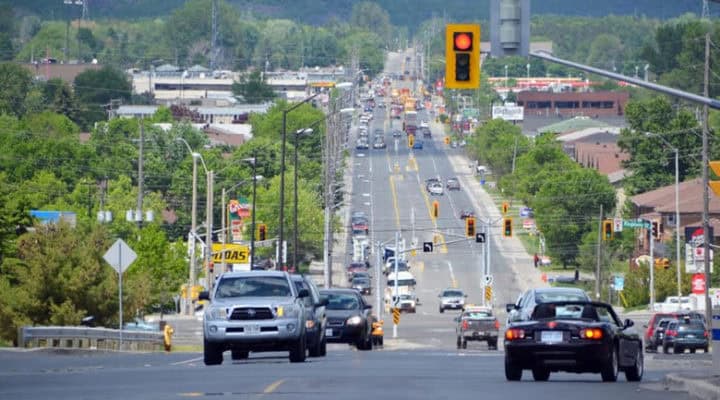
Sudbury is taking a few measure to keep streets safer, including the consideration of photo radar at busy intersections.

City staff in Sudbury is recommending the installation of automated speed enforcement (ASE) devices across the city, but isn’t yet ready to give details on what kind of device will be used to catch speeding drivers, or their possible location.

So far, city council is supporting the idea, which could lead to photo radar cameras installed on busy thoroughfares.

Joe Rocca, Sudbury’s traffic and asset manager, told CBC News that photo radar isn’t a done deal, but once the details of the program start rolling out, he hopes the city is on board.

“We’re trying to get to those people who just can’t seem to slow down on our area roads,” Rocca said. “We’re trying to improve safety overall for everyone. This isn’t just about vehicles. This is for pedestrians, this is about cyclists, anyone who could be on the roadway. By lowering overall speeds, we are going to make roadways safer.”

Photo radar cameras, also known as traffic enforcement cameras, are used for identifying and ticketing speeding drivers without the need for actual police enforcement on the roads.

Your ticket’s in the mail

The way it would work, Rocca said, is that speeders caught by the radar cameras would receive a ticket in the mail. The ticket would specify which vehicle was caught going over the posted speed limit, and on what day.

The owner of the vehicle would then have the option of paying the fine, or appealing it. That’s similar to the choices faced by speeders caught by police.

The province gave municipalities more flexibility in controlling the speeds on their streets with the passing of Bill 65, the Safe School Zones Act, last May.

It’s not clear yet how much revenue might be generated by the photo radar tickets, or how much of that money goes back to the city.

Leading Pedestrian Intervals, or LPIs

The city is also installing Leading Pedestrian Intervals (LPI) at some busy intersections.

The LPI gives pedestrians a five-second head start at intersections before waiting cars see a green light. It will be especially useful in areas where left-turning cars encroach onto crossing pedestrians, city staff said.

LPIs are already in use on Notre Dame Avenue, and have been a success, said Councillor Joscelyne Landry-Altmann.

“The reaction I have received from residents has been positive,” Landry-Altmann said. “People going to church, going to Food Basics, there’s a lot of pedestrian traffic.”

These changes are in addition to city crosswalks, which staff says have also been a success.

Staff said the LPIs won’t have any effect on the city’s bottom line, as improvements to intersections are included in this year’s budget.

Sleep Apnea Treatment Uses ‘Snake-Like’ Surgical Robot

Anthony Rinando, who was diagnosed with obstructive sleep apnea in his teenage years, had to wait almost two decades to get a good night’s sleep.

“I tried everything. Snoring strips, sleeping with a tennis ball behind your back… I tried using different pillows,” Rinando, a 31-year-old New Yorker, told Fox News.

Sleep apnea is not just a snorer’s disorder, but a serious and sometimes fatal condition. It’s estimated that 22 million Americans suffer from sleep apnea, a disorder that causes your breathing to stop or get very shallow while you sleep.

It occurs when the muscles in the back of the throat relax and the airway narrows or closes as one breathes in.

“This may lower the level of oxygen in your blood,” Mayo Clinic explains in its website. “Your brain senses this inability to breathe and briefly rouses you from sleep so that you can reopen your airway. This awakening is usually so brief that you don’t remember it.”

Studies show having sleep apnea for four or five years can raise a person’s risk of death by 30 percent.

“I would sleep and I would almost choke for air,” Rinando said.

Like many Americans, Rinando knew he had to do something and didn’t feel comfortable wearing a continuous positive airway pressure (CPAP) mask, a common treatment that uses a hose and mask or nosepiece to deliver steady air pressure while you sleep.

Rinando’s next plan of action was to go in for nasal surgery to remove his tonsils, but the operation was unsuccessful.

“The doctor told me, ‘I couldn’t remove your tonsils because they were just too large. If I was going to remove them, there was a chance that you could bleed out and I couldn’t get to it’,” he said.

After his failed surgery, Rinando was referred to Dr. Yosef Krespi, a surgeon at Lenox Hill Hospital in New York who performs surgery using a Flex Robotic System to treat cases of sleep apnea.

The robot is designed to navigate the body’s natural twists and turns so tissue can be removed or repaired safely and efficiently. High definition cameras on the robotic equipment can give surgeons a look into the throat with high definition cameras and magnification.

“The robotic equipment can go in multiple directions and is much more effective than the surgeon’s hand,” Krespi told Fox News. “The robot itself is no bigger than my thumb and that gets into the oral cavity in an appropriate position and it’s flexible, similar to a snake.”

Flex robotic surgery is covered by most insurances and is also FDA-cleared for head and neck and colorectal cases.

Krespi said the procedure does carry minor bleeding and anesthesia risks, but believes the surgery is minimally invasive under robot guidance.

“There is less blood loss, smaller incisions or no incisions, and so the recovery is much easier. The need for pain medication post-operatively is less,” he explained.

According to Krespi, most patients can also be sent home the same day of the operation.

Rinando said his recovery was painful for a few weeks but that now he can sleep peacefully.

“I can breathe much better. I didn’t know that I was supposed to be able to breathe like I am now,” Rinando said. “I don’t snore. I don’t wake up. Months down the road now, I feel like [I’m] a totally different person.”