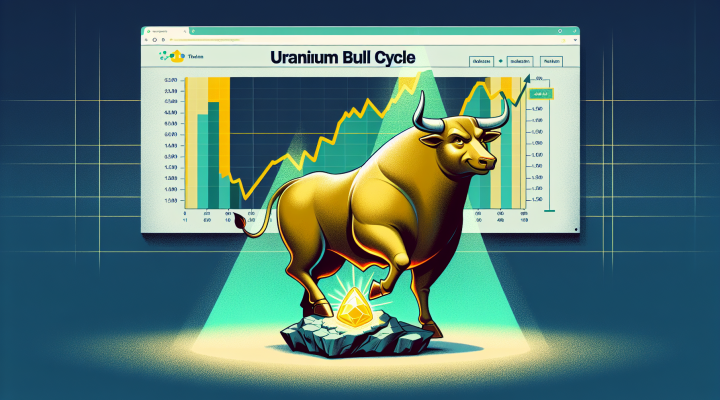
The nuclear energy sector is experiencing a dramatic transformation that’s creating unprecedented opportunities for savvy investors. As global energy policies shift toward carbon-neutral solutions, the uranium bull cycle has emerged as one of the most compelling investment themes of the decade, driven by supply-demand fundamentals that haven’t been this favorable in over fifteen years.
Market dynamics are aligning perfectly to support sustained uranium price appreciation. Global uranium production continues to lag behind reactor demand, with many mines shuttered during the previous bear market still offline. Kazakhstan, which produces approximately 40% of the world’s uranium, has faced operational challenges that have constrained output, while secondary supplies from decommissioned warheads have largely been exhausted. These supply constraints are occurring precisely when demand is accelerating across multiple regions.
The investment landscape within this uranium bull cycle presents compelling opportunities across the entire nuclear fuel value chain. Established uranium producers with operating mines are experiencing margin expansion as spot prices climb above $80 per pound, well above the break-even costs for most operations. Companies like Cameco Corporation and Kazatomprom are benefiting from long-term contracts signed at higher prices, providing revenue visibility that supports dividend growth and capital returns.
Beyond traditional miners, uranium exploration companies are attracting significant investor attention as the discovery of new deposits becomes increasingly valuable. Advanced-stage development projects with proven resources are commanding premium valuations, particularly those located in mining-friendly jurisdictions like Canada, Australia, and parts of Africa. The economics of previously marginal deposits have improved dramatically as uranium prices have doubled from their 2020 lows.
Technical analysis of uranium stocks reveals strong momentum patterns that typically characterize the early stages of commodity bull cycles. Many uranium equities have broken through key resistance levels after years of consolidation, with trading volumes increasing substantially as institutional investors add exposure to the sector. The Sprott Physical Uranium Trust has played a catalytic role by removing material from the spot market, creating additional upward pressure on prices that benefits all uranium-exposed investments.
Several macroeconomic factors are converging to support the longevity of this uranium bull cycle. Government commitments to net-zero carbon emissions have rehabilitated nuclear power’s reputation, with countries like Japan restarting reactors and the European Union classifying nuclear energy as a sustainable investment. China’s aggressive nuclear build-out continues ahead of schedule, while the United States has announced plans to triple nuclear capacity by 2050. These policy shifts represent structural demand growth rather than cyclical fluctuations.
Risk management remains crucial when investing in uranium-related securities, despite the compelling fundamental backdrop. Commodity cycles can be volatile, and uranium stocks tend to amplify price movements in the underlying metal. Geopolitical developments, particularly regarding Russian uranium supplies, could create short-term price volatility even within a broader bull market. Additionally, regulatory changes affecting nuclear power development could impact long-term demand projections.
The current uranium bull cycle appears to have substantial room to run based on historical price levels and current supply-demand imbalances. Uranium prices reached over $130 per pound during the previous bull market, suggesting significant upside potential from current levels. More importantly, the fundamental drivers supporting this cycle appear more durable than previous price spikes, which were often driven by financial speculation rather than genuine supply shortages and demand growth. Investors positioning themselves in quality uranium investments today may be capturing the early stages of a multi-year bull market that could deliver exceptional returns while supporting the global transition to clean energy.