Editor

Mercedes-Benz stole BMW’s crown in US luxury-car sales for 2 consecutive years — now BMW is planning a comeback

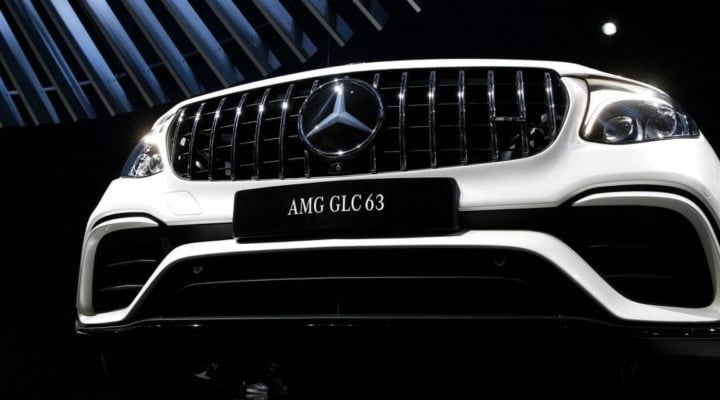
Mercedes GLC

Mercedes-Benz held on to the No. 1 spot as the best-selling luxury automaker in the US, according to 2017 auto sales data released this week.

The brand beat out BMW, which came in second, with Lexus taking third place.

Mercedes-Benz’s success is due in part to its focus on the SUV market. American buyers have largely shunned traditional four-door sedans in favor of crossovers and SUVs in recent years. Sales of light-duty trucks — which include small, midsize, large, and luxury SUVs — accounted for nearly 10.9 million of the 17.2 million vehicles sold in the US last year.

The current Mercedes-Benz lineup features seven different SUVs, ranging from the entry level GLA to the top-level G-Wagon. The G-Wagon, by the way, has been around since the 1970s. And more than 40 years on, it remains one of Mercedes-Benz’s best-selling trucks despite presenting itself as basically the same big, boxy four-wheeler for more than 40 years — save for some incremental refinements along the way.
BMW X2 large

Reviving BMW’s SUV stable

As for BMW, the brand’s SUV ranks are equally robust in terms choice, but it is aging.

BMW buyers largely opted for the X4 and X5 models over the others in 2017. Sales of the smaller X1 were also up in December, according to BMW. But the automaker is looking to revive its SUV offerings in the near-term. It will introduce the brand-new X2 at the Detroit auto show this month. A full-size X7 is expected later.

Adding more SUV choices can only be good news in a US auto market teeming with eager buyers. And BMW and Mercedes-Benz are by no means the only ones in the game. Audi is seeing success with its newly redesigned Q5 crossover and the Jaguar F-Pace, which hit the road in 2015, has earned solid gains.

Not to be outdone, Lexus and its underdog rival Infiniti also added to their SUV offerings recently. Lexus introduced larger versions of its popular RX line at the Los Angeles auto show in November. And Infiniti took the wraps off of its QX50, which features a breakthrough new engine.
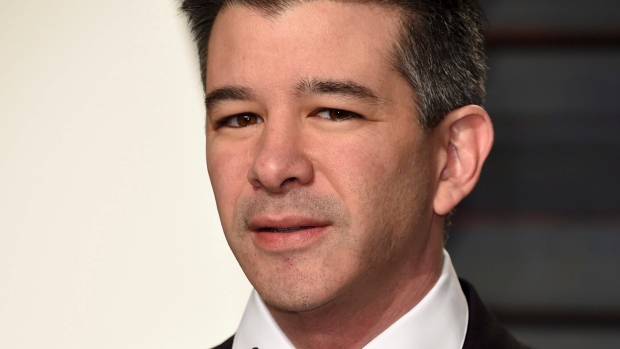
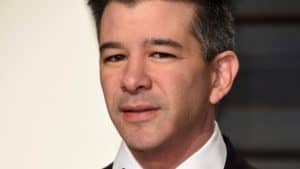
Former Uber CEO Travis Kalanick Selling Part of Stake

Kalanick, who owns 10 per cent of Uber, resigned as CEO last year

Former Uber CEO Travis Kalanick is said to be selling some of his holdings in the company, with the deal being part a transaction with investors including Softbank Group Corp. that would bring Kalanick about $1.4 billion US, Bloomberg reported.

Uber co-founder and former CEO Travis Kalanick will sell 29 per cent of his stake in the ride-hailing service, a person briefed on the deal says.

The sale is part of a transaction with investors that includes Softbank Group Corp. and would bring Kalanick about $1.4 billion US, according to the person, who asked not to be identified because the sale terms are private. Kalanick had not previously sold Uber shares but decided to do so now to diversify his holdings, the person said.

Uber didn’t respond to an email seeking comment.

In the SoftBank deal, due to close this month, the Japanese technology conglomerate will pump about $9 billion US into Uber, including $1.25 billion US in new shares. SoftBank is acquiring about 15 per cent of Uber, while other investors in its group get around three per cent.

Kalanick, who previously owned about one-third of Uber, resigned as CEO last year following revelations of sexual harassment in the company and technological trickery designed to hinder regulators. Since he resigned, the company has acknowledged the cover-up of a hacking attack that stole personal information of 57 million passengers and 600,000 drivers.

The person said Kalanick loses his super-voting shares along with other early stakeholders in governance changes that came with the SoftBank deal. The changes diminish Kalanick’s role in running the company from his days as CEO. He still controls three seats on the expanded 17-member board, although any new nominees would have to be approved by a board majority.

Uber was valued around $68.5 billion US during a 2016 capital investment, but that dropped to somewhere above $48 billion US in the SoftBank deal announced last week.

Despite that, early investors stand to make significant gains.

Turkish Foreign Minister Seeks ‘New Beginning’ With Germany

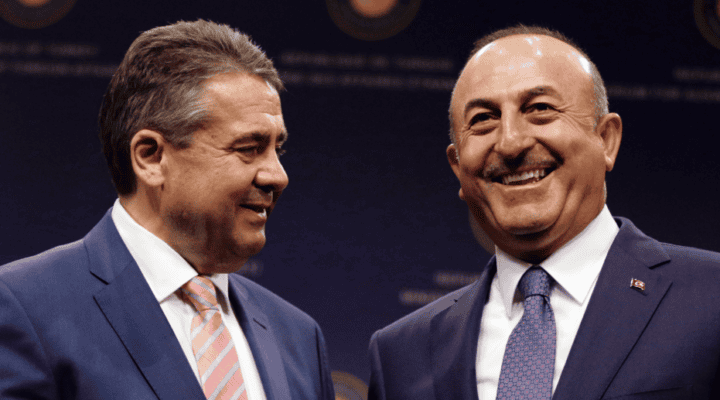
BERLIN – Turkey’s foreign minister says it’s time for a “new beginning” in relations with Germany as he prepares to meet his German counterpart following over a year of spiraling tensions between the NATO allies.

Germany’s Sigmar Gabriel plans to host Turkey’s Mevlut Cavusoglu Saturday in his home town, Goslar. Among other issues, a major irritant in relations has been Turkey’s jailing of several German or German-Turkish nationals, including a prominent journalist, on terror-related charges.

Cavusoglu wrote in an article for Germany’s Funke newspaper group Friday that “both sides have an interest in a new beginning” but that’s only possible “if we break the current crisis spiral in our relationship.”

He hinted at willingness for faster legal proceedings but also urged an end to the “standstill” in Turkey’s European Union accession negotiations.

A Perfect Day in Brazil’s Aquatic Eden

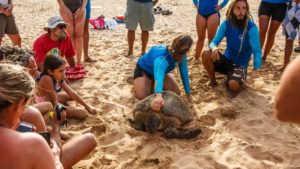
Unfortunately, miracles are hard to come by in this thing we call life, but if the opening of a sea turtle nest doesn’t make you a believer, precious little ever will.

Projeto Tamar, the Brazilian organization dedicated to the plight of the native sea turtle, usually tries to keep the opening of nests on the archipelago of Fernando de Noronha a private affair.

Luckily, I’m privy to insider information on this perfect piece of protected paradise in the Atlantic that’s 326 miles off the northeast coast of Brazil.

My wife has worked with ecotourism in Brazil’s best-kept secret for nearly two decades. She often gets a heads-up when nest openings — a little something I like to call tropical Christmas — are about to go down at this destination.
Green sea turtle nests line the golden sands on Praia do Leão and the island’s inner sea beaches between December and June. Anticipation builds as Tamar’s biologists slowly dig their hands into the sun-toasted sands (turtle nests sit about 1.5 feet deep) as if they’re opening a fragile present wrapped in delicate paper.

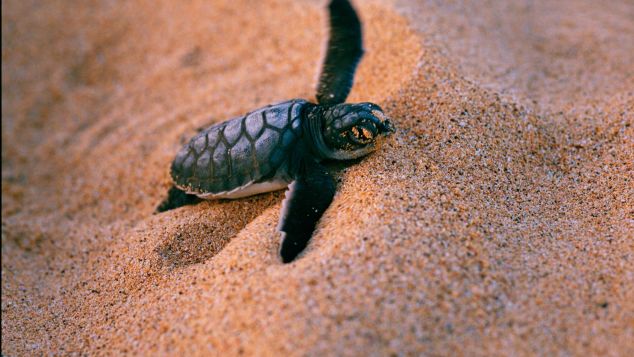
Having survived an incubation that includes eluding lizards, who view the eggs as a fine snack, and other natural enemies, babies the size of poker chips begin to emerge. And the miracle commences!

One by one, these reptilian soldiers battle wind and waves (not to mention seabird assaults from above!) as they instinctively make a break for the ocean some 150 feet off. The wind batters them around like house trailers in a hurricane while the waves shove them off course and back to the start like inconsequential nuisances.
Win or lose, this parade of will — how do they know how to do it? — is one of the coolest things on this Earth I’ve witnessed, even if only one or two out of 1,000 make it once they hit the water.

Aquatic Eden

A green turtle hatchling struggles from its nest in the sand in Fernando de Noronha.

If you aren’t lucky enough to take in the turtle nest spectacle, don’t fret. Waking up in Brazil’s aquatic Eden, a postcard-perfect marriage of sea and sand that is uncrowded and undeniably gorgeous is a privilege in and of itself.
Noronha is expensive, time-consuming to reach and highly restricted. Tourism is limited to just an average of 700 visitors a day.

Having visited the island more than a dozen times over the years, my favorite place to rise and shine is eco-sensitive Ecopousada Teju-Açu (Estrada da Alamoa, Boldró; doubles from $715).

There’s no sea view, a rarity in Noronha because of highly restrictive building codes. But the inn’s understated bungalows — wrapped in rich, sustainable hardwoods surrounding an intimate pool area flanked by green, jungly vegetation — leave little doubt you’ve reached tropical utopia.
Visitors to Noronha usually take in the island’s two must-do excursions in their first few days:
— An all-day island tour by buggy to get their bearings and to be introduced to many of the 16 flawless beaches.
— A half-day boat tour in search of spinner dolphins (Noronha and Oahu, Hawaii, are the only two places in the world where spinner dolphins linger).

If you’re like me, once you know your way around, you’ll opt to head straight back to one of the world’s most idyllic beaches, the incomparable Praia do Sancho.
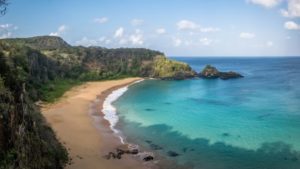
This stop-your-heart, crescent-shaped beach backed by cliff-cradled Atlantic rainforest is reachable no other way than a claustrophobic ladder dropping 230 feet through volcanic rock. That tells you all you need to know about the harrowing journey!

Whiling away a morning here basking in the sand, cooling off in the jade bay and trekking to a hidden waterfall (of course there is a hidden waterfall, but only in rainy season) is the stuff of pure bliss.
For lunch, I love the elevated position of open-air Mergulhão (Praia do Porto; main courses $26-56) overlooking the harbor on the other side of the island (Noronha’s main road is just 4.3 miles in length).
The Mediterranean-Brazilian menu is one of Noronha’s most innovative and the crunchy fish stuffed with shrimp, hearts of palm and coalho cheese is the perfect accompaniment to the view. And the cloth-filtered coffee with doce de leite? Another miracle.

Pristine Paradise

Atlantic rainforest borders the spectacular Praia do Sancho.

Fernando de Noronha was used as a penal colony in the 18th century. When it was decommissioned as a former Brazilian military base in 1988, Brazil’s environmental protection agency and UNESCO pounced on it in an all-out effort to preserve one of the last pristine islands on Earth.

About 75% of the island is designated a national park. Entering its boundaries — nearly impossible not to do when you’re here — runs $62 for foreigners for a 10-day pass. A daily preservation tax starts at about $22 a person a day and rises after 14 days to discourage longer stays. So paradise doesn’t come cheap.

As I hop from beach to beautiful beach throughout the afternoon — Baía dos Porcos and Praia do Leão top the list after Praia do Sancho — the lack of crowds is astounding.

Where is everyone? They are sipping caipirinhas while watching one of Brazil’s most glorious sunsets from the makeshift lookout at Boldró Fort, that’s where.

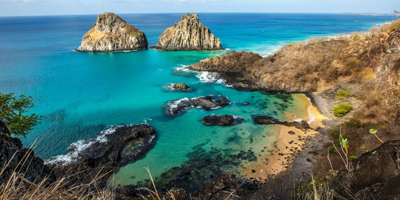
Here the view over Noronha’s iconic Dois Irmãos (Two Brothers) — twin volcanic formations that pop out of the sea like angelic sentinels in front of Baía dos Porcos — is one of the island’s most dazzling spectacles.

Nocturnal diversion is the one side of Noronha that leaves something to be desired. There are a few bars and outdoor spaces for a drink, but this is no nightlife destination.

Instead, I like to focus on feasting. Fishing restrictions mean much of the seafood comes from the mainland, but that’s no consolation prize.

At Cacimba Bistro (Vila dos Remédios; main courses $21-33) in the island’s main village, chef Auricelio Romão produces Noronha’s finest culinary moment: shrimp with okra and wild saffron with jackfruit rice. His fish and shrimp moqueca, a traditional seafood stew, is also a knockout.

With Brazil spending the better part of the past few years mired in recession and political turmoil, Noronha just keeps doing what it does: Churning out one day in paradise after another.

Brazilians equate the island with heaven itself. It’s the one thing all 207 million of them can agree on these days.

Apple’s App Store Sales Hit a Record $300 Million on New Year’s Day

Consumers spent 25 percent more on New Year’s 2018 than a year earlier.

Apple set a new record for App Store sales on New Year’s Day, thanks to a 25 percent increase from the same day a year earlier.

Consumers spent $300 million on apps on Jan. 1, the most for a single day since the App Store launched in 2008. It marked the end to a booming gift-giving season, with $890 million spent on apps between Christmas and New Year’s Day, Apple said on Thursday.

Those numbers are sure to excite investors who are betting that Apple will expand its software business as it becomes harder to squeeze growth out of a saturated smartphone market.

Apple redesigned the App Store over the past year and has made other changes, including adding search advertising, improving developer tools and introducing new ways for third-party apps to make money.

It appears to be working. In 2017, iOS developers earned $26.5 billion, a 30 percent increase over the prior year, Apple said. For smaller developers, these efforts could provide more incentives to build products, especially on emerging platforms like ARKit and the Apple Watch.

Ex-Google, Tesla Driverless Czars Partner With VW, Hyundai

Three self-driving vehicle pioneers are taking their former big-name employers head-on with a pair of alliances that could shake up the car industry.

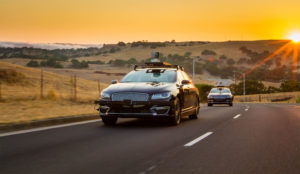
Early Aurora test vehicles

Aurora — a startup formed by one-time executives from autonomous car projects at Google, Tesla, and Uber — will develop self-driving electric vehicles with Volkswagen AG and Hyundai Motor Co., the two automakers said in separate statements. The car companies, latecomers to the technology upending the sector, are exploring using the self-driving systems for taxi services, robotic deliveries, and even in-car advertising.

“This is a partnership of the century,” Johann Jungwirth, Volkswagen’s chief digital officer, said in a phone interview. “I have full trust in the Aurora team.”

The initiatives pit Hyundai and Volkswagen against other major automakers, Tesla Inc., Alphabet Inc.’s Waymo and ride-hailing firms, adding to a complex web of deals as manufacturers, suppliers and tech giants scramble to develop and take driverless vehicles to market. The partnerships also vault Aurora to the upper echelons of a slew of self-driving startups that have appeared in recent years.

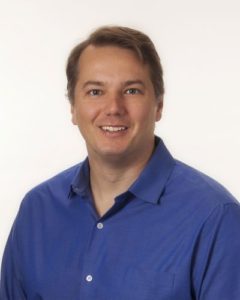
Chris Urmson

Aurora has stood out to engineering specialists, investors and potential partners largely because of the cachet of its three founders: Chris Urmson, the longtime director of Google’s car project, now called Waymo; Sterling Anderson, the former head of Tesla’s Autopilot program; and Drew Bagnell, an associate professor at Carnegie Mellon’s Robotics Institute and a founding member of Uber Technologies Inc.’s Advanced Technologies Center.

Tesla sued Anderson, now Aurora’s chief product officer, in January 2017 for breach of contract by joining Aurora, and subsequently dropped the lawsuit in April.

Pittsburgh, home to Carnegie Mellon University, has long been the epicenter of robotics research and Aurora has a sizeable office there. Bagnell is Aurora’s chief technical officer.

Aurora now employs well over 70 people across two offices and Urmson said the company is hiring aggressively. One of the company’s stated values is “No jerks.” “We debate and solve hard technical problems. We don’t waste time battling over personalities and egos and we have no tolerance for time-wasters and nonsense,” says the Aurora website.

For the partnerships with Hyundai and Volkswagen, Aurora will work with them to outfit traditional vehicles with self-driving software and systems.

The companies have grander plans, too: a test project in pilot smart cities with Hyundai, and driverless shuttles and delivery vans with Volkswagen. They didn’t share financial terms of the initiatives.

At Volkswagen, the Aurora deal marks a shift from a go-it-alone approach. The parent company, which owns high-end brands like Audi and Porsche, recently committed more than 34 billion euros over five years to develop electric and autonomous vehicle technology. Like other German auto companies, Volkswagen has largely opted to work on research internally rather than partnering with or acquiring tech companies, tactics other car giants have pursued.

Volkswagen and Aurora will develop cars for Moia, the German automaker’s electric ride-hailing network, and the startup has been testing its self-driving systems with the Audi Q7 model, Jungwirth said. He also said Volkswagen may work with other companies on self-driving features in the future.

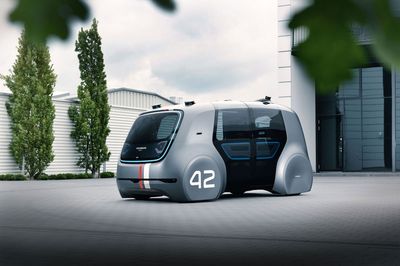
Volkswagen Sedric

Jungwirth declined to name additional Volkswagen group vehicles that could be involved, but said the cars may be used for delivery or become a “huge advertising platform.”

For Hyundai, Aurora will co-develop a self-driving electric car that runs on fuel cells, Woongjun Jang, director of Hyundai’s Advanced Driver Assistance System Development Group, said in a phone interview.

Jang said the South Korean company plans to build and sell an autonomous vehicle powered by fuel cells. More details about the vehicle, an SUV, will be unveiled at the Consumer Electronics Show in Las Vegas next week and Hyundai hopes to deploy it in 2021 as part of a fleet service, Jang said.

As a late arrival to autonomous programs, Hyundai is speeding up the hunt for startups and information and communication technology companies. Hyundai plans to work with several other companies beyond Aurora, Jang said.

John Krafcik, the CEO of Waymo who replaced Urmson, was formerly head of Hyundai’s U.S. sales operation.