Archives for November 4, 2018

Buffett’s Firm Quadruples 3Q Profit on Investment Gains

FILE- In this May 7, 2018, file photo, Berkshire Hathaway Chairman and CEO Warren Buffett smiles during an interview in Omaha, Neb., with Liz Claman on Fox Business Network’s “Countdown to the Closing Bell.” Berkshire Hathaway Inc. reports earnings Saturday, Nov. 3.

Warren Buffett’s company more than quadrupled its third-quarter profits because of a huge paper gain in the value of its investments, although its insurance and railroad businesses also improved.

OMAHA, Neb. — Warren Buffett’s company more than quadrupled its third-quarter profits because of a huge paper gain in the value of its investments, although its insurance and railroad businesses also improved.

Notably, Buffett’s company bought back nearly $1 billion in stock during the quarter — the first time that’s happened in years — a possible sign that the world’s most famous investor has been unable to find attractive investments to purchase.

Berkshire Hathaway Inc. said Saturday that it earned $18.54 billion, or $7.52 per Class B share. That’s up from last year’s $2.47 billion, or $1.65 per B share, when insurance losses from several hurricanes hurt results.

Buffett has long said Berkshire’s operating earnings offer a better view of quarterly performance because they exclude investments and derivatives, which can vary widely.

By that measure, Berkshire reported operating earnings of $6.88 billion, or about $2.79 per Class B share. That’s up from $3.44 billion, or about $1.40 per B share.

The Omaha-based company’s revenue grew to $63.45 billion in the quarter, which was up from $59.5 billion last year. Berkshire Hathaway officials do not typically comment on the company’s quarterly earnings.

“Overall, it’s a very strong report,” said Andy Kilpatrick, a retired stockbroker and author who wrote “Of Permanent Value: The Story of Warren Buffett.”

Berkshire’s insurance unit, which includes Geico and several large reinsurance firms, reported a $441 million underwriting profit in the quarter. That’s much better than last year’s $1.4 billion underwriting loss when hurricanes Harvey, Irma and Maria caused devastation and Mexico endured earthquakes.

Burlington Northern Santa Fe railroad added $1.4 billion to Berkshire’s quarterly profits, up from $1 billion a year ago. BNSF has hauled 5 percent more freight in the first nine months of the year, signaling that the economy remains strong.

The biggest swing in Berkshire’s quarterly profit came from an $11.5 billion gain in the value of its investments. A year ago, Berkshire reported only a $423 million investment gain. New accounting rules that took effect this year forced Berkshire to change the way it records the value of its investments.

During the quarter, Berkshire repurchased some of its own stock for the first time in several years after loosening its restrictions on the practice. Buffett spent $928 million to repurchase 225 Class A shares and 4.1 million Class B shares during the quarter.

Edward Jones analyst Jim Shanahan said investors will appreciate that Buffett followed through on the new buyback program and purchased shares.

“This will send a strong signal in equity markets,” Shanahan said.

But the fact that Berkshire is buying its own stock while holding more than $100 billion in cash and short-term investments is a reminder that Buffett hasn’t been able to find other large acquisitions and investments at attractive prices recently.

Berkshire Hathaway Inc. owns more than 90 companies, including the railroad and clothing, furniture and jewelry businesses. Its insurance and utility businesses typically account for more than half of the company’s net income. The company also has major investments in such companies as Apple, American Express, Coca-Cola and Wells Fargo & Co.

Fortis profit up

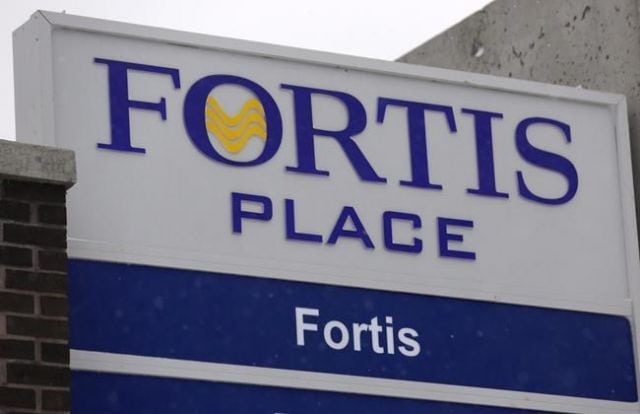
Fortis Place in downtown St. John’s, N.L., is seen on Tuesday, Feb. 9, 2016. Fortis Inc. reported its profit edged down compared with a year ago when it received a one-time boost as its revenue improved by seven per cent.

Fortis Inc. reported its profit edged down compared with a year ago, when it received a one-time boost as its revenue improved by seven per cent.

The electric and gas utility says its profit attributable to common shareholders amounted to $276 million or 65 cents per diluted share for the quarter ended Sept. 30.

The result was down from $278 million or 66 cents per share a year ago when the company received a $24-million break fee related to the termination of its Waneta Dam acquisition.

Revenue totalled $2.04 billion, up from $1.90 billion a year ago.

On an adjusted basis, Fortis says it earned 65 cents per share, up from 61 cents per share a year.

Analysts on average had expected a profit of 63 cents per share and revenue of $2.135 billion, according to Thomson Reuters Eikon.

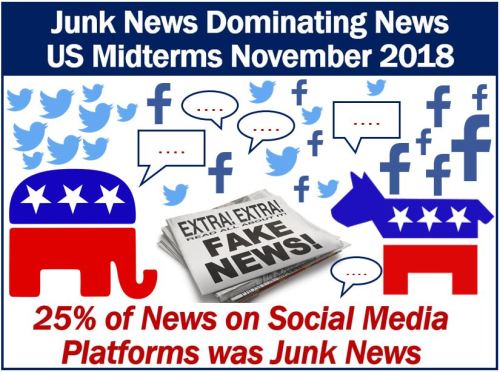
Junk news dominates US midterms coverage on social media, study

Junk news is dominating coverage of US midterms on social media, a new study has found. One-quarter (25%) of news content people shared around US midterms has been junk. In spite of efforts by social media platforms to address the problem, junk news still dominates.

Social media today is a platform for news consumption in America, especially during election campaigns, say Oxford University researchers.

A significant percentage of US adults get their news from social media platforms. Given their importance as a news channel, promoters of junk have targeted social media platforms to spread misinformation.

The problem of junk news on Facebook and Twitter has increased in the lead-up to the US midterm elections. This is what researchers at Oxford University’s Oxford Internet Institute have found. The US electorate votes on November 6th, 2018.

Junk news as a proportion of all news

Professor Phil Howard said:

“The proportion of junk news in circulation has grown by 5 percentage points since the 2016 presidential elections. We’re a little surprised by this finding.”

“Facebook and Twitter have put some effort into trying to improve the quality of political news and information shared on the platforms, but it is not clear that their efforts are working.”

Phil Howard, a Professor of Internet Studies, is the Director of the Oxford Internet Institute. He is also lead researcher on Oxford’s Computational Propaganda project.

Shared content related to midterm elections consists of 25% junk news and 19% from professional news outlets. Less than five percent of shared content comes from experts, government agencies, or candidates.

Junk has for the first time overtaken mainstream professional news content, according to recent studies of junk news. These studies have looked at elections worldwide.

Problem is spreading

Social media companies say they have taken measures to address the problem on their platforms. In spite of their initiatives, junk news is spreading to new communities, the researchers found.

Nahema Marchal said:

“In 2016, junk news was concentrated among President Trump’s support base and the far-right. Today, junk news content is also being shared by more mainstream conservatives, reaching wider audiences than ever before.”

“The type of rhetoric and content that used to be characteristic of a niche media ecosystem serving primarily hard-right audiences has trickled down to the mainstream.”

Marchal is a doctoral (DPhil) student at the Oxford Internet Institute.

Who is to blame?

Domestic alternative outlets, rather than external actors, are dominating the political debate on social media in the US.

Lisa-Maria Neudert said:

“What we are seeing is home-grown conspiracy theories and falsehoods. The problem now reaches far beyond foreign influence campaigns and extremist fringe voices. Junk news has been domesticated, and social media users have an appetite.”

Neudert is a part-time doctoral (DPhil) student at the Oxford Internet Institute.

The Computational Propaganda Project has created the Junk News Aggregator for discerning voters. Specifically, voters who want to examine the junk news problem in real time.

Mimie Liotsiou said:

“This is a novel tool for studying junk news on Facebook as it happens.”

Liotsiou is a researcher on the Computational Propaganda project at the Oxford Internet Institute. She created the Junk News Aggregator.

Junk news content and quantity

The Aggregator, which the researchers describe as ‘user-friendly,’ makes visible the content and quantity of junk news. It also allows us to determine levels of engagement.

Users can search keywords, such as candidates’ names or where they live to reveal what people are sharing. The Aggregator provides real-time data as well as historical data that is up to one month old.

Liotsiou said:

“We want to shed light on the problem of junk news and help improve the public’s media literacy. We hope to make this issue more transparent to voters, policy-makers, and tech companies.”

The researchers gathered and examined data from 2.5 million tweets and almost 7,000 Facebook pages. Their 30-day study ended on 31st October 2018.

According to a University of Oxford press release:

“Junk news was classified as sources publishing deliberately misleading, deceptive or incorrect information, typically in an ideologically extreme, hyper-partisan or conspiratorial fashion, and meeting a variety of criteria related to professionalism, style, credibility, bias, and counterfeiting.”

Trump emoluments case ruling opens way to financial records

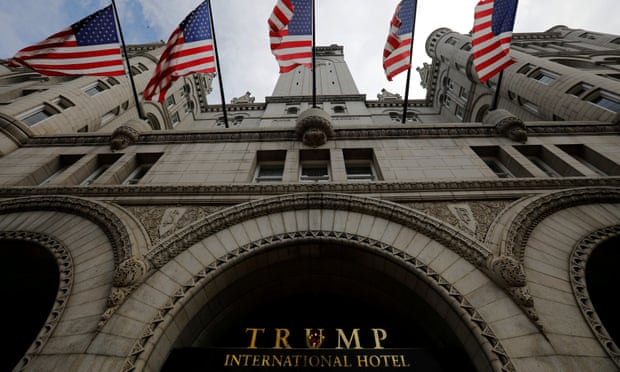
US flags fly over the Trump International Hotel in Washington.
  • Tax returns could be unearthed in Washington hotel suit
  • DC attorney general salutes ‘major win in historic case’

A federal judge has denied the justice department’s efforts to halt legal proceedings in a case in which Donald Trump is accused of violating the US constitution, opening the door for the president’s critics to gain access to financial records related to his Washington DC hotel.

Such records could include income tax returns which Trump has refused to release to public scrutiny.

Trump has been fighting multiple lawsuits that argue foreign representatives spending money at the Trump International Hotel is a violation of the constitution’s emoluments clause, which bans federal officials from accepting benefits from foreign or state governments without congressional approval.

In an attempt to stop the case moving on to legal discovery – which could unearth financial records such as tax returns – justice department lawyers asked Maryland-based US district judge Peter Messitte to put the case on hold while they appeal his decision to a higher court in Richmond, Virginia. They failed.

“This is another major win for us in this historic case,” said District of Columbia attorney general Karl Racine in a statement on Friday. “Our next step is to proceed with discovery. We will soon provide the court a new schedule to begin the process of getting information about how President Trump is profiting from the presidency.”

The plaintiffs, Maryland and the District of Columbia, have said they plan to move forward quickly with discovery, seeking information and financial records primarily from third parties rather than the government.

A clue as to what they may request can be found in preservation subpoenas filed more than a year ago with 23 Trump-related entities, including the Donald J Trump Revocable Trust, the Trump Organization, the Mar-a-Lago Club and entities related to his DC hotel.

A schedule of legal discovery is due in 20 days and it could begin quickly thereafter, depending on what is agreed by all parties.

Though the case has been narrowed to focus on Trump’s Washington hotel, “that hotel is a nexus for a far-flung web of foreign and domestic emoluments,” said Norman Eisen, former Obama administration ethics czar and now chair of Citizens for Responsibility and Ethics in Washington, which is co-counsel with the two jurisdictions.

In a sometimes blistering 31-page opinion released on Friday, Messitte wrote: “It is clear that the president, unhappy with the court’s reasoning and conclusion, merely reargues that his interpretation of the emoluments clauses should apply instead of the one the court gave. The court sees no point in stating again why it concluded as it did.”

DoJ spokeswoman Kelly Laco said the department “disagrees with and is disappointed” by Messitte’s ruling. She added: “This case, which should have been dismissed, presents important questions that warrant immediate appellate review.”

Justice lawyers objected to any discovery on a sitting president in his official capacity, in order to avoid a “constitutional confrontation” between two branches of government. They argued that the “public interest is decidedly in favor of a stay because any discovery would necessarily be a distraction to the president’s performance of his constitutional duties”.

The president could seek to have the appeal heard by a higher court, an “extraordinary remedy”, according to the justice department’s website, that “should only be used in exceptional circumstances of peculiar emergency or public importance”.

The emoluments clause has never been fully tested. Two other lawsuits accusing the president of violating it are being heard in federal courts. Neither has reached the discovery stage.

Plaintiffs argue that Trump – who has declined to divest from his assets as president – is capitalizing on the presidency and causing harm to businesses trying to compete with his Washington hotel, which is just steps from the White House.

The justice department has said earnings from business activities, including hotel room stays, do not qualify as emoluments. Its attorneys have argued that under Maryland and DC’s interpretation, no federal official would even be able to own stock from a foreign company that provides profits or collects royalties.

Messitte pushed back in his opinion against any delaying tactics by the president and his lawyers.

“There is genuine concern on the part of plaintiffs,” he wrote, “indeed the court shares it, that if the president is permitted to appeal the court’s decisions in piecemeal fashion, ultimate resolution of the case could be delayed significantly, perhaps for years” – especially because it’s likely the president would appeal any negative decisions up to the supreme court.

“That, as a matter of justice, cannot be countenanced.”