
Archives for March 4, 2018

VW’s Seat unveils the first fully electric touring-class race car

You’ve seen electric Formula cars, Le Mans racers and even a Pikes Peak machine, but there’s still room for more firsts in EV racing. VW’s Seat brand has unveiled the Cupra e-Racer, which it says is the first completely electric touring-class race car. It’s built on the existing Cupra Leon TCR design and promises the kind of performance you’d expect in this category: it can muster 402HP of continuous power, and 670HP at peak.

There’s no question that Seat is treating this as a halo car, particularly for its newly formed Cupra sports badge. However, it’s not just for show: it’s helping to start a new “E TCR” (no prizes for what the “E” refers to) category. It may soon be a question of which racing classes haven’t been electrified, even though it’ll likely take a long while before the EVs dominate.


Learn Python and you could put yourself on track to make a six-figure salary

Heads up: All products featured here are selected by Mashable’s commerce team and meet our rigorous standards for awesomeness. If you buy something, Mashable may earn an affiliate commission.

If you’re interested in giving up Netflix binge watching in order to pick up a new, perhaps more beneficial hobby then let us make a suggestion. Learning to code with Python should be at the top of your list.

This popular language is on the rise due to its simple syntax, power, and flexibility. In other words, it’s easy (or as easy as coding languages come). Python can be used to build everything from web apps to e-commerce platforms – and can even catapult your career into that elusive six-figure club if you’re lucky. Plus, there are tons of convenient ways to learn Python online on the cheap, including this bundle of classes.

It’s time to start growing winter weather vegetables, says master gardener

Give peas a chance

Master gardener Brian Minter says a wide variety of vegetables can by grown in the winter if properly cared for. (Hans Splinter/Flickr)

As we inch closer to planting season, master gardener Brian Minter says there are already many vegetables to start growing for those with itchy green thumbs.

“Once these vegetables are properly acclimatized and hardened to stand outside conditions, they’re really resilient, they really are tough,” said Minter.

Minter said while much of B.C. isn’t yet enjoying warm weather, many garden variety vegetables can begin to thrive in snowy conditions if they are properly cared for.

Varieties of peas, lettuce, spinach, Swiss chard, potatoes and types of brasiccas all do well in winter when fastidiously maintained, said Minter.

Early planting tips

He said it’s important to plant early varieties of the vegetables, because not only are they bred to endure cold and wet weather, they are meant to thrive in such conditions.

The rule of thumb, said Minter, is to get planting once your soil temperature is around 10 C. For early variety potatoes, 12 C is the right time to plant.

“That is sort of the starting gun in terms of getting ready to go,” said Minter.

Minter said one way to keep your plants warm, and ward off any would-be pests, is to fashion yourself an English garden cloche — a sort of miniature greenhouse.

When building your cloche, Minter said to purchase rebar and paint it green to match your garden. Then cut the rebar to length, and cover it with poultry wire.

“If you create this little cage, plants grow and it’s as old as the hills,” said Minter.

He said the cloche protects the plants, and it also can be covered with polyethylene during the day to heat up the cloche’s internal temperature. If it gets really chilly, he said cover your cloche with a warming blanket, especially at night.

Tignish Health Centre receives funding through to 2022

$45k operating grant conditional on receiving a budget and operational documents from the centre

The Tignish Health Centre is receiving government funding until at least 2022, the province has announced. (CBC)

The provincial government is continuing its funding of the Tignish Health Centre through to 2022.

The government said it would provide an operating grant of $45,000 to the centre. The province has provided funding to the centre since 2012.

The Tignish Health Centre is open five days per week and offers a number of services, including family medicine, women’s wellness, diabetes education and physiotherapy.

“We recognize the importance of ensuring Islanders have access to health care services close to home,” Health and Wellness Minister Robert Mitchell said in a statement.

The province said the annual grant will be provided when a budget and an operational plan are delivered that show how the money will be used to improve access to community health services for residents of West Prince.

“We are so pleased to have continued, stable funding over the coming years,” said Wendy Arsenault, manager of the centre. “The guaranteed funding will not only allow us to keep the centre going on a day-to-day basis, it will benefit the patients and staff by allowing for updates to the building itself and equipment that support the many services we provide.”

How a camera lost and a camera found underwater forged a connection

There is a strong convention among divers about discovered gear: what you find, you try to return

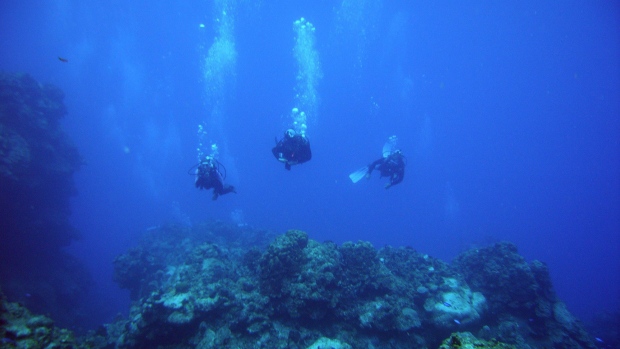
Biologists examine a coral reef off the coast near Cozumel, Mexico in this file photo. (Ken Goddard/U.S. Fish and Wildlife Service/AP)

This is a story about how, sometimes, everything just works out the way it’s supposed to — thanks to the world of social media and maybe just two degrees of separation. And it begins with a watery grave.

The island of Cozumel off Mexico’s Mayan Riviera is a magnet for scuba divers. Its reefs and wildlife attract divers from around the world.

In February, I joined the underwater hordes in the crowded ocean for a diving vacation. But things started badly.

On my second dive, I climbed back onto the boat to discover that my old but much-loved GoPro camera was no longer attached to my gear. It had been knocked off as I climbed out of the ocean.

Unfortunately, the diving around Cozumel is mostly what is called “drift diving,” where you are pulled along by strong currents. So by the time I noticed the camera was gone, the boat had already drifted several hundred metres.

I was saddened, but after many years of sterling service around the world I was also happy that it had been buried at sea. It seemed appropriate and, anyway, I had a larger, newer camera with me to record all the turtles, rays, sharks and moray eels on the Cozumel reefs.

Spotting an upgrade

The next day, I was back in the water on a different part of the reef. I was exploring a coral outcrop when I found what looked like a brand new GoPro — sleeker, faster and a lot more expensive than the one I had just lost.

It seemed like the universe was giving back, after so cruelly taking from me.

But there is a strong convention among divers about discovered gear: what you find, you try to return. Particularly something as expensive and personal as an underwater camera.

So once we were out of the water, I started asking around. I knew the camera had not been underwater for long, so I spread the word around among all the divers I could find.

Perhaps surprisingly — because on a busy day there can be 40 or more boats around a site and 500 divers underwater — I found the owner.

“The only thing better than finding a camera,” I told him, “is being able to return it.”

Strangely, finding someone else’s camera lessened the pain of losing my own.

2 degrees of separation

A week later, back home in Halifax, I get a message from a Facebook friend.

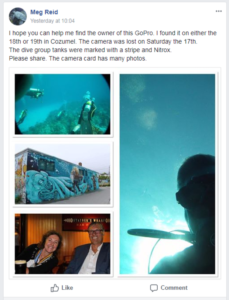
“Someone found your GoPro,” he said, attaching a screengrab of a posting on a Facebook forum for divers.

I messaged the finder. Meg Reid, it turned out, lives in a small town near Austin, Texas.

What was she doing diving in Cozumel? She had a story to tell. Reid and her husband retired to live on a small pecan orchard in Rockdale to escape the expense of living in Austin.

Then Meg found that she had breast cancer.

After chemo, a radical double-mastectomy and radiation, she decided to embrace new challenges, including diving. Her husband wasn’t interested, so Meg joined up with a group called the Diving Divas — all women over 40.

The trip to Cozumel was her second adventure with the Divas and that is where she spotted my camera nestled in the sand by a coral head. So of course, she had to try and find out who owned it. It only took a couple of days.

And, of course, I had to find a way to say thank you; I offered to send her a CBC T-shirt.

“How sweet!” she said. “The joy of returning your camera is thanks enough.”

But she confessed: “You had me at T-shirt.”

So if you happen to visit the town of Rockdale — population 5,851 — look for a small pecan orchard and a lovely woman wearing a CBC T-shirt.

Be sure to say hi to Meg for me.

Children with autism now eligible for MedicAlert emergency bracelets

A new program allows police to access the personal information of children with autism during an emergency

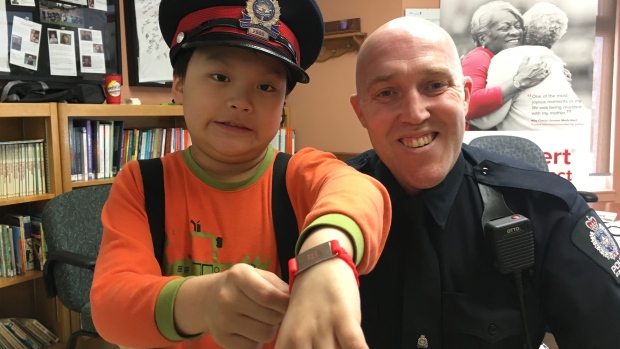
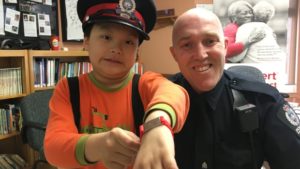
Edward Sun, 10, is one of the children in Edmonton who will receive a MedicAlert bracelet to help keep him safe in an emergency. (CBC)

Edward Sun, 10, tried on a MedicAlert bracelet for the first time Saturday.

“Do you have any other colours of these?” he asked, pointing to the ID bracelet used by police and first responders to identify people in an emergency.

Edward looked at photos of the ID bracelets before settling on a bright red one.

He and more than 125 other children with autism will now have a free MedicAlert bracelet to identify them in an emergency situation, thanks to a new program called Connect Protect.

Edmonton police will be able to use the bracelets to access a child’s address, emergency contact and medical information in an emergency situation.

“With that bracelet and that ID number on the back of the bracelet, it’s a valuable resource for us which helps us get that information we’re looking for and getting that person home safe,” Const. Bruce McGregor said.

A safety net for kids who wander

Amie Packer knows all too well what it’s like to have a child wander away from home.

Her two sons, Eli, 6, and Ari, 4, both have autism. They have escaped from home several times by crawling underneath their fence or running out the back door.

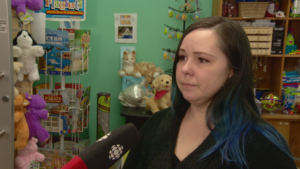
Amie Packer has two sons who have autism. She says her sons will benefit from the new Connect Protect program with MedicAlert bracelets. (CBC)

“No matter how many locks we put on our doors or how much supervision we have, they are finding ways to escape,” Packer said.

She said Ari once ran away and ended up several blocks away from home.

“It was the scariest moment of my life,” she said.

If a stranger tries to help Packer’s children, her sons might not be able to verbalize how to get home or what they need in an emergency, she said. But she said she’s confident the MedicAlert bracelets will help change that.

“This way I know that in the short-term if someone finds them, there’s that little bit of a safety net,” Packer said.

There are more than 18,000 families in the Edmonton area affected by autism, according to Autism Edmonton.

MedicAlert bracelets have also been used by seniors with Alzheimer’s, dementia or brain injuries in cities across Canada.