
Archives for March 4, 2018

Under Armour’s COO Is Transforming the Company: What Investors Need to Know

Under Armour athletes wearing United States of America Olympic Under Armour gear with the phrase We Will across the image.

Under Armour (NYSE: UAA)(NYSE: UA) surprised investors with better-than-expected revenue in its 2017 fourth quarter earnings report. While this was a welcome change after a difficult year, the performance-apparel company is only halfway through its two-year turnaround effort. Industry veteran and COO Patrik Frisk is leading the charge to overhaul how the company brings its products to market, with the goal of returning the company to profitable growth. Read on for the details of the plan, which touches just about every part of Under Armour’s business.

Put customers first

The first part of Frisk’s plan is to put customers “at the center of what we do.” While it seems like a no-brainer, Frisk called out the company as being “inconsistent” with its brand promise in the Q3 2017 earnings call and added, “That inconsistency stops now.”

To better understand its customers, the company recently completed a global segmentation study targeting 20,000 people. The survey covered the customer experience, Under Armour’s products, and why people shop for Under Armour. The quantitative and qualitative data are being used to better understand its existing market, find opportunities to serve new markets, and inform its strategic planning. The result will be a strategic plan that will prioritize the company’s product and positioning decisions, and help drive the second initiative: simplification.

Simplify

When Frisk joined the company last year, one of his first impressions was that Under Armour had “in many ways, willed itself to get where we are today,” and that the company had a number of inefficiencies across its business. What he calls a simplification effort is more about having a game plan, clarifying the positions on the field, and having a playbook that works.

“As we work through this transformation, we’re focused on keeping structure, process, and go-to-market continuously aligned to ensure repeatable outcomes,” Frisk said.

The first part of this effort is cutting space and services that are no longer needed through the announced $110 million to $130 million restructuring plan. Second is to align the product pipeline with the customer segmentation study. Third is to reduce the number of stock keeping units (SKUs) the company produces by 30% to 40% and move to a quarterly go-to-market calendar from a semiannual one.

Frisk explained that these changes are about “doing more with less” — having a narrower focus on fewer, more customer-centric products on a shorter release cycle will allow the company to innovate faster, which should result in sustainable growth.

Sustain profitable growth

With simplification efforts driving greater “operational agility”, the company can focus on the biggest opportunities. Frisk indicated that men’s training, men’s running, and women’s training are product categories that will get increased focus because of their large market opportunities and consistent growth. These products will be managed with more “accountability and financial discipline” in its product category management structure.

Frisk’s emphasis on accountability is not surprising. Right before the company announced disappointing results in the women’s category in the third quarter last year, there were two senior executive departures announced: the head of the women’s category and the chief marketing officer. Both positions were part of Frisk’s organization.

Frisk also wants to continue to invest in international business, especially China. It is part of the Asia Pacific region, which grew an amazing 61% year over year. China is also “becoming very profitable” said CFO Dave Bergman.

CEO Kevin Plank expressed his excitement about the region, indicating that the China team has opened hundreds of new brick-and-mortar stores in 2017, and “we’ll repeat that again this year.”

E-commerce is becoming more important for the company by giving it more control over the entire customer experience. This is especially important at a time when Plank admits “the [customer’s] expectation, the shopping experience, is incredibly competitive and something that we’ve got to be great at.” Frisk indicated the direct-to-consumer channel (including e-commerce) provides “an amazing experience for consumers to engage Under Armour and for us to tell our brand story.” This channel grew 11%, up to a record 42% of overall revenue, in the most recent quarter.

There are a lot of moving parts to Frisk’s plan. Changing the fundamental processes that design, market, and deliver products to customers is not easy, especially in a company that has grown tremendously despite internal inefficiencies. Simplifying the breadth of products is a great way to put more focus on the best opportunities, but it’s also risky.

Bottom line: I like this plan, but I don’t expect things to go perfectly. There will likely be bumps in the road as this plan is executed, but I think Frisk’s no-nonsense approach is just what the company needs right now.


3 Dividend Stocks to Fund Your Nest Egg

A hand placing coins on stacks of increasing height.

Watching one of your stocks go up in value is nice. Receiving an ever-growing dividend payment every quarter, just for owning the thing, is even better. If you’re trying to grow your nest egg, dividend stocks can provide the fuel.

We asked three of our Foolish investors to each discuss a dividend stock perfectly suited to grow your nest egg. Here’s why American Tower (NYSE: AMT), Cisco Systems (NASDAQ: CSCO), and MGM Growth Properties (NYSE: MGP) are great fits.

Data use is here to stay, and so is the infrastructure to deliver it

Tyler Crowe (American Tower): Somewhere along the way, data usage became as much of a necessity in our everyday lives as other basic needs — so much so that we may need to add a new level to Maslow’s hierarchy of needs. It’s almost unreal to think of the monumental change smartphones have had over the past 15 years. Today, according to the Organisation for Economic Co-operation and Development, customers in the U.S. use about 2.7 gigabytes of data a month on their mobile devices, and that may just be the beginning. With faster internet speeds and more connected devices, total data is expected to grow fivefold by 2021 in just about every global market.

Handling all that traffic on wireless networks takes an incredible amount of infrastructure, which of course needs to be installed somewhere. That’s where American Tower comes in, and that’s why its assets are probably going to be so valuable in the coming years.

American Tower is a real estate investment trust that owns towers and other real estate assets from which telecommunication companies can rent space for their network equipment. For telecommunications companies, it means they don’t need to deploy as much capital to increase coverage or network speed. American Tower, meanwhile, can lease out space to multiple carriers at the same location. This has been an incredibly lucrative business, as the company grew revenue and available funds from operations by 16% annually over the past decade.

Replicating that kind of growth will be hard, but the company has its sights set on international markets where the use of phones is high, but broadband penetration is still lagging behind. Markets like this — India, Nigeria, and Mexico, to name a few — have incredible growth ahead of them that management expects will deliver better than double-digit growth for the next decade. If you are looking for a stock that will deliver long-term dividend growth to fuel your nest egg, American Tower is a great place to start.

Capital return on steroids

Tim Green (Cisco Systems): Cisco, a provider of enterprise networking hardware like switches and routers, only began paying a dividend in 2011. But that dividend has grown rapidly since then, and today Cisco is a solid dividend stock worthy of your portfolio.

Cisco boosted its quarterly dividend by 14% in February, when it announced its fiscal second-quarter results. The new $0.33-per-share dividend is good for a yield of about 3%. On top of the dividend, Cisco plans to plow cash into buying back its own shares. The company increased its buyback authorization by $25 billion, the result of the U.S tax bill. Cisco is returning a tremendous amount of cash to shareholders.

This comes at a time when Cisco’s performance is starting to turn around. After two years of slumping revenue, in part resulting from a shift toward subscriptions and recurring revenue, Cisco reported growth in the second quarter. Recurring revenue reached one-third of total revenue, and that number should continue to rise.

Cisco will be showering its shareholders with cash over the next couple of years. Make sure you’re one of them.

Betting on gaming’s growth

Rich Duprey (MGM Growth Properties): MGM Growth Properties is the real estate investment trust that owns the casinos of MGM Resorts (NYSE: MGM). Investors typically like REITs like MGM because of their unique tax advantages that require the entities to distribute at least 90% of their income to their shareholders. MGM Growth Properties is slightly different from other REITs because it is what’s known as a triple net lease.

A triple net lease is an arrangement in which properties are sold to the REIT, but the tenants — in this case, the casino operators — are responsible for paying all real estate taxes, building insurance, and maintenance costs on the properties.

Although gaming REITs are becoming more commonplace, MGM is trying something few others in the industry have done, and that’s to acquire the casinos of Caesars Entertainment (NASDAQ: CZR), an ailing casino operator that is trying instead to spin off VICI Properties, the REIT that currently owns them. MGM Growth has offered to pay $19.50 per share but has so far been rebuffed. If the two REITs merged, it would create one of the largest triple net lease REITs, covering 32 casinos and four racetracks.

As noted, it’s rare in the industry to own a competitor’s real estate, but not unheard of, as Gaming & Leisure Properties owns the casinos of both Penn National Gaming and Pinnacle Entertainment.

Casino gaming continues to be a growth market, particularly for world-class operators like MGM Resorts. With the REIT paying a dividend that currently yields 6.5%, it represents a lucrative bet that gambling will continue to pay off.

These 2 Tech Stocks Have Strong Dividend Growth Potential

“Dividends” written on a blackboard along with doodles drawn with a chalk.

The technology sector isn’t the ideal place for income investing because companies in this sector often carry very low yields. Tech companies usually reinvest earnings into their businesses to stay ahead of the curve, so the sector’s average yield is just 1.26%.

The low payout of tech stocks will discourage income investors, especially considering the volatile nature of the sector. But there are a few hidden gems that could become lucrative dividend plays in the long run, including chipmakers NVIDIA (NASDAQ: NVDA) and Skyworks Solutions (NASDAQ: SWKS).

Here’s why income investors should take a closer look at these two tech stocks:

NVIDIA

Graphics specialist NVIDIA is known for attacking fast-growing markets such as self-driving cars, data centers, artificial intelligence (AI), and video gaming. These have helped the chipmaker record blistering growth of late, but when it comes to paying a dividend, NVIDIA has been miserly.

The stock’s dividend yield is currently just 0.25%, way below the tech sector’s average. NVIDIA rivals Intel (NASDAQ: INTC) and Qualcomm carry more respectable yields of 2.6% and 3.5%, respectively. You could argue that NVIDIA is trying to play conservative because it is targeting highly competitive markets where rivals are always trying to step up their game, therefore they need capital available to invest in research and development to stay ahead of the curve.

But a closer look at the company’s balance sheet and recent financial performance indicates that it can easily raise its dividend to more-respectable levels. NVIDIA currently holds $7.1 billion in cash, enough to cover its total debt of $2 billion. This strong balance sheet is complemented by NVIDIA’s robust free-cash-flow profile.

In fiscal 2018, the company generated $2.9 billion in free cash flow and paid out just $341 million in dividends. This was almost double the free cash flow generated by the company in fiscal 2017. But it paid out only 11.7% of its free cash flow in the form of dividends. NVIDIA’s dividend payout accounted for just 11% of its annual net income in fiscal 2018.

By comparison, rival Intel generated $10.3 billion in free cash flow last year and paid out almost half of it ($5.1 billion) as dividends. Not surprisingly, Intel has a stronger dividend payout ratio than NVIDIA, paying out around 54% of its free cash flow. This means that NVIDIA could easily quadruple its dividend if it scales up its payout to Intel’s levels.

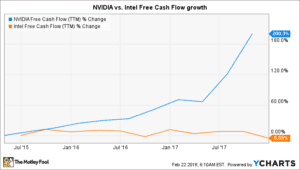
During fiscal 2018, NVIDIA’s revenue shot up 41% year over year, and net income increased 83% on a GAAP basis. Such rampant growth has boosted the graphics specialist’s free cash flow by a big margin, while rival Intel struggles on this front because of a sluggish PC market.

NVDA Free Cash Flow (TTM) data by YCharts.

The company seems to be doing the right thing by saving money to reinvest in its business and thus counter any potential disruption in its rapid growth from emerging threats. Still, when NVIDIA feels that it has established its domination in emerging tech trends such as AI, it could decide to return more capital to shareholders and raise its dividend substantially.

Skyworks Solutions

Skyworks Solutions isn’t as tight-fisted as NVIDIA with its dividend, but it definitely has the potential to increase the payout like its industry peer. Skyworks currently sports a dividend yield of 1.21%, which is in line with the tech sector’s average. But the chipmaker paid out just 21% of its earnings in the form of dividends last fiscal year.

Meanwhile, its payout as a percentage of free cash flow generated last fiscal year stood at just over 18%. Skyworks’ balance sheet and recent growth clearly indicate that the company is in a great position to boost its dividend. It is debt free and is sitting on almost $1.7 billion in cash. Additionally, it delivered impressive financial growth last quarter.

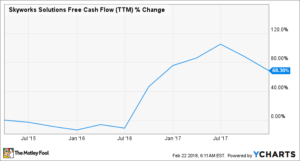
Skyworks’ revenue increased 15% year over year in the recently reported first quarter, boosting its non-GAAP net income by 23%. Looking ahead, Skyworks can sustain this impressive momentum thanks to catalysts such as the Internet of Things (IoT) and smartphones. These factors could help Skyworks increase its earnings at a compound annual growth rate of 15%, according to Yahoo! Finance. A stronger earnings performance should also enhance Skyworks’ free cash flow generation, which has been rising at an impressive pace.

SWKS Free Cash Flow (TTM) data by YCharts.

However, just like NVIDIA, Skyworks is probably holding back because of the rampant competition for IoT and smartphone chips. Rivals such as Qorvo and Broadcom have been consistently trying to corner more of the end-market opportunity through their product development moves.

This is why Skyworks needs to bring its A-game in these fast-growing markets. For instance, the IoT chip market is expected to clock an annual growth of 16% for the next five years, and Skyworks will definitely not want to miss out.

But Skyworks’ pristine balance sheet, improving cash flow profile, and strong financial growth should ensure that its dividend keeps growing. In fact, the company declared a 14% increase in its dividend in July last year, doubling NVIDIA’s 7% hike in November 2017. If Skyworks keeps increasing its dividend at this impressive pace, it could turn out to be an attractive bet for income investors in the long run.

So, investors looking for dividend plays in the tech sector should definitely follow NVIDIA and Skyworks Solutions even though they have been conservative with payouts. Both generate strong free cash flow and are reporting impressive revenue and earnings growth — ideal conditions for dividend growth.

Ambarella Drives a Quarterly Beat, Teases Computer Vision Progress

View of a vehicle camera with categorized square boxes around other vehicles, people, and objects

Ambarella Inc. (NASDAQ: AMBA) announced fiscal fourth-quarter 2018 results on Thursday after the market closed, highlighting its continued efforts to diversify away from GoPro, as well as continued progress in the computer-vision chip market.

Let’s take a deeper look at what Ambarella accomplished over the past few months, as well as what investors can expect from the company as it kicks off the new fiscal year.

What happened with Ambarella this quarter?

  • Revenue arrived slightly above the midpoint of Ambarella’s most recent guidance, which called for sales of between $68 million and $72 million.
  • Revenue declines were driven primarily by a 56% drop in sales to GoPro (NASDAQ: GPRO) (to $13.3 million), as well as a substantial decline in drone revenues, as expected. These declines were only partially offset by “solid” year-over-year growth in both the intellectual-property security and automotive original equipment manufacturer (OEM) markets.
  • On an adjusted (non-GAAP) basis, net income $15.8 million, or $0.45 per share — down from $0.92 per share in last year’s fourth quarter, but well above expectations for $0.37 per share.
  • Adjusted gross margin was 64.7%, above guidance for between 62% and 63.5%.
  • Ambarella repurchased 66,747 shares for $3.3 million during the quarter. Before the end of the quarter, it repurchased another 142,344 shares for $6.8 million, leaving $24.9 million remaining under its original $50 million repurchase authorization announced last June.
  • At this year’s Consumer Electronics Show (CES), Ambarella demonstrated its Embedded Vehicle Autonomy (EVA) car, which features multiple cameras based on its CV1 computer-vision chip, allowing for object detection and classification, terrain modeling, and traffic light and lane detection. Ambarella also demonstrated a fully autonomous drone based on its CV1 SuperDrone platform, which enables path planning, obstacle avoidance, multi-point navigation, and GPS localization.

What management had to say

Ambarella CEO Fermi Wang said:

At the CES show this year, we continued our history of successfully demonstrating leading edge technology with a focus on a wide range of computer vision applications. We look forward to delivering a deeper insight into our CV capabilities, particularly in the automotive market, at our upcoming Analyst Day on March 28. With the success of our initial development efforts and response from customers, especially in security and automotive, we intend to continue to accelerate the development and deployment of CV solutions in all our key markets.

During the subsequent conference call, Wang added that Ambarella had over 40 automotive OEMs and Tier 1 companies meet with them at CES, where they received an “enthusiastic response” to the EVA car demonstrations, in particular.

Looking forward

For the first quarter of fiscal 2019, Ambarella expects revenue of between $54.5 million and $57.5 million, or a year-over-year decline of between 15% and 10.3%, including less than a 2% negative impact from new revenue recognition rules and potential memory shortages. This range also assumes GoPro revenue will fall around 12%, while higher IP security and automotive OEM revenue will continue to offset lower drone chip sales. Trending toward the bottom line, adjusted gross margin for the quarter should arrive at between 60% and 62%.

All told, this was as strong a quarter as investors could have asked, especially as Ambarella laps difficult comparables that were propped up by GoPro’s formerly outsize influence on its business. What’s more, it’s encouraging to see Ambarella’s continued advancements in computer vision technology coming to life, and I know I won’t be the only one watching closely to see what more it reveals during its Analyst Day later this month.

Advertisers pull out of InfoWars’ YouTube channels

Brands are once again beating a hasty retreat after learning that they were running ads on objectionable YouTube channels. Several big brands (including Acer, Alibaba, Fox, Nike and Paramount) have suspended ads from InfoWars’ channels after CNN demonstrated that their commercials were streaming on the conspiracy-peddling network’s videos. The companies said they were not only unaware of the placement, but in numerous cases had set up exclusion filters to avoid displaying ads against content like this. Some also said they explicitly blacklisted InfoWars channels, but didn’t realize how many channels the company actually had.

The exposé even caught the non-profit USA for UNHCR inadvertently running ads on InfoWars, and it’s going one step further by pulling all ads from YouTube. It and other organizations are asking if they can recoup the advertising money they spent on InfoWars’ channels.

We’ve asked Google if it can comment on the findings. In a statement to CNN, a YouTube spokesperson declined to address how InfoWars slipped through the cracks of the sensitive subject filter and instead portrayed itself as striking a balance. It vows to “uphold free expression” even when it disagrees with ideas, but added that it doesn’t allow ads on videos covering “sensitive and tragic events.” InfoWars frequently promotes widely discredited conspiracies around such events, including the Parkland and Sandy Hook mass shootings.

The discovery and subsequent response highlight the ongoing challenges YouTube and some other ad-dependent services face. It’s impractical for them to require manual approval for ads, but that automation also leads to offensive material slipping through the cracks — not to mention debates over what “offensive” really means. YouTube’s recently instituted policy on objectionable content helps, but it’s clear the system still has some inconsistencies.

New Windows Insider preview build causes issues with Mixed Reality

Eager to test out Windows preview build 17112? Well, be warned it comes with a few serious bugs and isn’t optimized for use with Windows Mixed Reality.

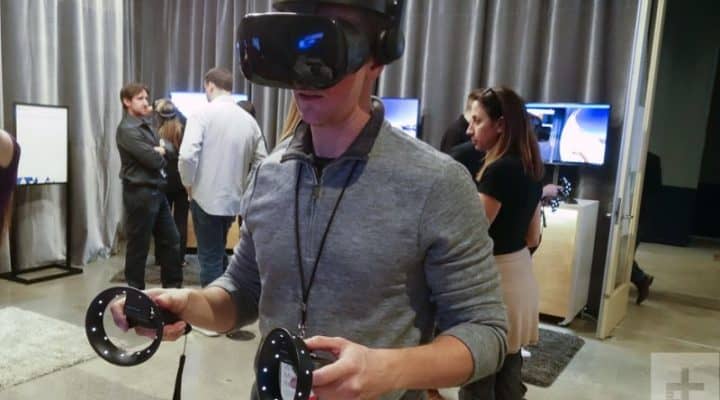
Microsoft recently released Windows 10 Insider Preview Build 17112 to members of the company’s Insider Fast ring program, but it warned Mixed Reality users to avoid this one. Tom’s Hardware reported that Microsoft warned that its latest preview build contains bugs that can cause the mixed reality programs to crash or suffer from low frame rates, which could make some users uncomfortable.

Microsoft said that its Mixed Reality programs would run at at around 8-10 frames-per-second if they ran at all, and would sometimes completely crash. Of course, bugs such as these are to be expected when taking part in the Fast ring of Microsoft’s Insider Program. Members of these programs are basically beta testing for Microsoft, but while members of the Slow ring only receive access to builds that are nearly ready to go public, Fast ring members receive access to much earlier versions. This allows them to not only get a sneak peak at the latest Windows features, but also the latest bugs.

Speaking of bugs, build 17112 doesn’t only cause problems for Windows Mixed Reality users. It also contains some pretty severe issues for the standard desktop experience, such as making the Microsoft Store application vanish. Microsoft has a potential fix posted on its website, along with a warning regarding the fact that build 17112 could affect the Microsoft Store.

Worse than the loss of Microsoft’s shop, however, is the potential loss of your operating system. Microsoft said that it has received reports that build 17112 can cause a “small number of devices” to fail to load the OS upon launch, forcing users into a boot loop sequence. This could require users to use a bootable ISO or USB to repair their operating system. One option available to affected users would be to disable fast boot, which could resolve the boot loop sequence. Otherwise, those who encounter this issue will need to repair their OS.

Overall, build 17112 contains some major issues that may make users think twice before using it. Aside from the aforementioned issues, it contains a few bug fixes, but nothing major. It’s also lacking any new features that Fast ring members wouldn’t already have access to.