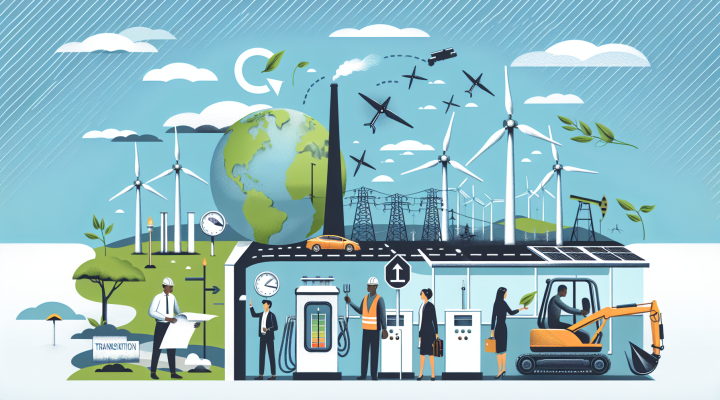
The global energy landscape is experiencing its most dramatic transformation in over a century, creating unprecedented opportunities for investors who understand the clean energy transition play. With renewable energy costs plummeting by 85% over the past decade and storage technology advancing at breakneck speed, the economic fundamentals have shifted decisively in favor of clean energy investments.
Investment flows tell the story most clearly. Global clean energy investment reached $2.8 trillion last year, representing a 17% increase from the previous year and marking the fifth consecutive year of record-breaking funding. This massive capital deployment reflects not just environmental consciousness, but hard economic reality. Solar photovoltaic installations now generate electricity at costs below $0.05 per kilowatt-hour in optimal locations, making them the cheapest source of power in human history.
The clean energy transition play extends far beyond traditional renewable generation, encompassing a complex ecosystem of enabling technologies and critical resources. Battery storage capacity has expanded exponentially, with lithium-ion battery costs falling 89% since 2010. Grid-scale storage projects are now economically viable without subsidies in most developed markets, solving the intermittency challenge that once limited renewable deployment. Advanced power electronics, smart grid infrastructure, and artificial intelligence-driven energy management systems are creating new investment categories that didn’t exist a decade ago.
Critical mineral resources represent perhaps the most compelling aspect of the current clean energy transition play. Lithium demand has increased 300% since 2020, while copper requirements for renewable installations are driving unprecedented exploration activity. Rare earth elements, essential for permanent magnet generators in wind turbines, have become geopolitically strategic assets. Mining companies with exposure to these materials have seen their valuations triple, yet many analysts believe current prices still undervalue long-term demand projections.
Technology innovation continues accelerating across multiple fronts. Perovskite solar cells promise to push photovoltaic efficiency beyond 30% while reducing manufacturing costs. Solid-state battery technology could revolutionize energy storage with 2-3 times higher energy density than current lithium-ion systems. Green hydrogen production through electrolysis is approaching cost competitiveness with fossil fuel-derived hydrogen, opening massive markets in steel production, shipping, and long-duration energy storage.
Government policy frameworks are providing unprecedented support and regulatory certainty. The United States’ Infrastructure Investment Act allocated $370 billion specifically for clean energy initiatives, while the European Union’s Green Deal represents a €1 trillion investment commitment over the next decade. China continues expanding its manufacturing dominance in solar panels, wind turbines, and batteries, creating both opportunities and competitive challenges for Western investors.
Corporate procurement is driving demand independent of government mandates. Over 400 major corporations have committed to 100% renewable electricity consumption, representing more than 500 terawatt-hours of annual demand. These long-term purchase agreements provide revenue stability that makes clean energy projects highly attractive to institutional investors seeking predictable returns.
Supply chain considerations are reshaping investment strategies within the clean energy transition play. Recent geopolitical tensions have highlighted vulnerabilities in concentrated manufacturing, particularly for solar panels and battery components. This is creating opportunities for diversified production capabilities and domestic manufacturing initiatives in key markets. Companies that can establish resilient, geographically distributed supply chains are commanding premium valuations.
The financial sector itself is being transformed by clean energy investment flows. Green bonds outstanding now exceed $500 billion globally, while Environmental, Social, and Governance (ESG) investment funds manage over $35 trillion in assets. This massive capital pool is actively seeking clean energy transition play opportunities, creating favorable financing conditions for qualified projects and companies.
Looking ahead, the convergence of falling technology costs, supportive policies, corporate demand, and abundant capital suggests the clean energy transition play represents one of the most significant investment themes of this decade. Investors who position themselves strategically across the technology stack, from raw materials through manufacturing to deployment and operation, stand to benefit from what may be the largest economic transformation since the industrial revolution. The question is no longer whether the clean energy transition will occur, but how quickly, and which investors will capture the most value from this historic shift.