ESG investing

Smart Investors Are Positioning for Canada’s Clean Energy Transition Play Opportunity

Canada stands at the precipice of an unprecedented investment transformation, where the convergence of abundant natural resources, progressive government policies, and global capital flows is creating what many consider the most compelling clean energy transition play in North America. This emerging investment landscape represents far more than a fleeting market trend—it signals a fundamental shift in how institutional and retail investors alike are repositioning their portfolios for the next decade of growth.

The foundation of Canada’s clean energy transition play rests on several interconnected pillars that distinguish it from other international opportunities. The country possesses vast hydroelectric capacity, substantial wind and solar potential across diverse geographical regions, and perhaps most importantly, some of the world’s largest reserves of critical minerals essential for battery production and renewable energy infrastructure. This natural resource advantage, combined with a stable political environment and mature financial markets, creates an investment ecosystem that institutional funds find increasingly irresistible.

Federal investment incentives have accelerated the momentum behind this clean energy transition play significantly. Recent legislation provides substantial tax credits for renewable energy projects, carbon capture technologies, and clean manufacturing facilities. These policy frameworks have already attracted billions in committed capital from major pension funds and sovereign wealth funds, with many citing Canada’s regulatory clarity and long-term policy consistency as key factors in their allocation decisions. The ripple effects extend beyond direct renewable energy investments, encompassing everything from grid modernization projects to electric vehicle manufacturing facilities.

The scale of opportunity becomes evident when examining the capital requirements for Canada’s energy transformation goals. Independent analysis suggests that achieving net-zero emissions targets will require hundreds of billions in infrastructure investment over the coming decades. This massive capital need creates multiple investment vectors, from large-scale utility projects to innovative technology startups developing breakthrough solutions in energy storage, grid management, and carbon utilization. Private equity firms and venture capital funds are establishing dedicated Canada-focused clean energy practices to capture these emerging opportunities.

What makes Canada’s clean energy transition play particularly attractive is its integration with global supply chain considerations. As companies worldwide seek to diversify their supply sources and reduce dependency on geopolitically sensitive regions, Canada’s stable mining sector and processing capabilities for lithium, nickel, and rare earth elements become increasingly valuable. This positions Canadian companies not just as domestic energy providers, but as critical suppliers to the global clean energy ecosystem, expanding their addressable markets significantly.

Market dynamics are already reflecting this growing investor interest. Clean energy stocks listed on Canadian exchanges have outperformed broader market indices, while initial public offerings in the renewable energy sector are commanding premium valuations. More tellingly, institutional ownership in Canadian clean energy companies has increased substantially, indicating sophisticated money managers view this as a sustainable investment thesis rather than speculative positioning.

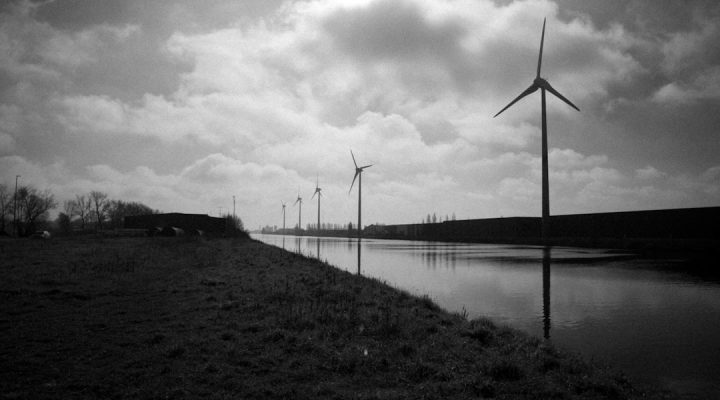
The clean energy transition play in Canada also benefits from strong provincial participation, with different regions specializing in distinct advantages. Atlantic provinces leverage offshore wind potential, while Western provinces focus on solar developments and energy storage solutions. This geographic diversification reduces concentration risk while maximizing the country’s natural advantages across multiple clean energy technologies.

As global capital increasingly flows toward sustainable investments and environmental, social, and governance criteria become standard in institutional mandates, Canada’s clean energy transition play represents a convergence of policy support, natural advantages, and market demand that creates compelling long-term value propositions. For investors seeking exposure to the fundamental restructuring of North America’s energy landscape, the opportunity emerging north of the border offers both scale and sophistication that few other markets can match.

Smart Investors Are Betting Big on Canada’s Clean Energy Revolution

A quiet revolution is reshaping Canada’s investment landscape, and the smartest money on Bay Street is already positioning for what could become the decade’s most lucrative opportunity. The clean energy transition play isn’t just an environmental imperative—it’s emerging as Canada’s most compelling investment thesis, backed by unprecedented government support, abundant natural resources, and a perfect storm of market conditions.

Canada’s unique positioning in the global energy transformation becomes clear when you examine the numbers. The country possesses 20% of the world’s fresh water, critical for hydrogen production, alongside vast lithium, nickel, and rare earth mineral deposits essential for battery technology. This natural resource advantage, combined with federal commitments exceeding $120 billion in clean energy investments through various programs, creates an investment environment unlike anywhere else in the world.

The clean energy transition play in Canada extends far beyond traditional renewable power generation. Leading institutional investors are targeting everything from critical mineral extraction companies to advanced battery manufacturing facilities being built in Ontario and Quebec. The recently announced electric vehicle battery plants from major automakers represent just the tip of the iceberg, with supply chain opportunities multiplying across mining, processing, and manufacturing sectors.

What makes this investment theme particularly attractive is the convergence of multiple growth catalysts happening simultaneously. Provincial governments are offering substantial tax incentives and streamlined permitting processes for clean energy projects. Meanwhile, corporate demand for clean electricity continues to surge as major companies commit to net-zero targets, creating long-term contracted revenue streams for renewable energy developers.

Portfolio managers who have studied this clean energy transition play closely point to Canada’s political stability and regulatory predictability as key differentiators. Unlike emerging markets where policy shifts can devastate investments overnight, Canada offers a mature legal framework and bipartisan political support for clean energy development. This stability becomes increasingly valuable as global supply chains seek to reduce geopolitical risk through “friend-shoring” critical mineral supply chains.

The investment opportunities span multiple sectors and risk profiles. Conservative investors can target established utilities expanding their renewable portfolios or infrastructure funds building transmission networks. Growth-oriented investors might consider clean technology companies developing breakthrough innovations in energy storage, carbon capture, or hydrogen production. Even venture capital is flowing into Canadian cleantech startups at record levels, with several already achieving unicorn valuations.

Market timing appears favorable as well. Many clean energy stocks trade at attractive valuations despite strong fundamentals, as broader market volatility has created temporary disconnects between price and intrinsic value. Early-stage companies with proven technologies are accessing capital at reasonable terms, while established players are generating increasing cash flows from operational projects.

The multiplier effect of this clean energy transition play extends throughout the Canadian economy. Engineering firms are hiring aggressively to support project development. Construction companies are booked solid building solar farms and wind installations. Even traditional oil and gas service companies are pivoting their expertise toward geothermal and hydrogen projects, creating investment opportunities in unexpected places.

International capital is taking notice as well. European pension funds and sovereign wealth funds are allocating billions to Canadian clean energy infrastructure, viewing it as a stable, long-term investment with both financial returns and ESG benefits. This foreign investment is accelerating project timelines and creating additional opportunities for domestic investors to participate through joint ventures and partnerships.

Canada’s clean energy transition play represents more than just another investment trend—it’s the foundation of the country’s next economic transformation. With natural resource advantages, political stability, massive government support, and growing private capital flows all aligning, investors who position themselves thoughtfully in this space today may look back on this period as a generational wealth-building opportunity that redefined both portfolios and the nation’s energy future.

Inside Canada’s Surge as the World’s Most Strategic Clean Energy Transition Play

While investors have long focused on traditional renewable energy markets, a new narrative is emerging that positions Canada as perhaps the world’s most compelling clean energy transition play. The convergence of abundant natural resources, cutting-edge technology innovation, and strategic government partnerships has created a perfect storm of opportunity that extends far beyond conventional solar and wind investments.

Canada’s unique positioning stems from its remarkable combination of critical mineral reserves and technological expertise. The country controls significant deposits of lithium, cobalt, nickel, and rare earth elements—the building blocks of every battery, electric vehicle, and renewable energy storage system. But what sets this clean energy transition play apart is how Canadian companies are vertically integrating these resources with breakthrough processing technologies and sustainable extraction methods.

Recent developments in Canadian mining technology showcase this integration beautifully. Companies like First Quantum Minerals have pioneered low-carbon copper extraction processes that reduce emissions by up to 40% compared to traditional methods. Meanwhile, lithium producers in Alberta are developing direct extraction technologies that can pull battery-grade lithium from oil and gas brine waste—essentially turning yesterday’s environmental liability into tomorrow’s clean energy solution.

The innovation extends well beyond mining. Canadian tech firms are developing next-generation grid management systems that optimize renewable energy distribution across vast geographical distances. Hydro-Québec’s recent breakthrough in long-duration energy storage has attracted partnerships with major U.S. utilities, while Alberta’s hydrogen production facilities are scaling up to meet growing international demand.

Technology Partnerships Accelerating Market Position

What makes Canada such a strategic clean energy transition play is the speed at which international partnerships are forming. European automakers, desperate to secure battery supply chains outside of China, have committed over $15 billion in joint ventures with Canadian mineral processors. These partnerships aren’t just about raw materials—they’re creating integrated supply chains that span from mine to manufacturing.

The federal government’s Critical Minerals Strategy has provided additional momentum, offering tax incentives and research funding that attract global clean tech companies to establish North American headquarters in Canadian cities. This policy framework has transformed regions like Saskatchewan and Ontario into emerging clean energy hubs, where mining expertise meets advanced manufacturing capabilities.

Canadian companies are also leveraging artificial intelligence and machine learning to optimize clean energy operations. Startups in Vancouver and Toronto are developing predictive algorithms that can forecast renewable energy output with unprecedented accuracy, while mining companies use AI to reduce waste and environmental impact during critical mineral extraction.

Investment Flows and Market Dynamics

The financial markets have begun recognizing Canada’s potential as a clean energy transition play, with foreign direct investment in Canadian clean tech reaching record levels. Pension funds and sovereign wealth funds are particularly active, viewing Canadian clean energy assets as long-term inflation hedges with strong ESG credentials.

This investment surge is creating a multiplier effect across the economy. As international capital flows into Canadian clean energy projects, domestic suppliers and service providers are expanding rapidly. Engineering firms that once focused solely on oil and gas projects are now designing renewable energy infrastructure, while financial services companies are developing specialized clean energy investment products.

The competitive advantage extends to Canada’s skilled workforce and research institutions. Universities like the University of Waterloo and McGill are producing graduates with expertise in both traditional resource extraction and clean technology innovation. This human capital advantage ensures that Canada can maintain its technological edge as the clean energy transition accelerates globally.

Perhaps most importantly, Canada offers political stability and regulatory predictability that international investors increasingly value. While other jurisdictions face policy uncertainty around clean energy incentives, Canada has demonstrated bipartisan commitment to its clean energy transition play through consistent federal and provincial support across multiple election cycles.

As global decarbonization efforts intensify and supply chain security becomes paramount, Canada’s combination of critical resources, technological innovation, and stable governance positions it as an indispensable partner in the worldwide clean energy transition. For investors seeking exposure to this transformative shift, the Canadian market offers a rare combination of strategic necessity and compelling growth potential that may prove difficult to replicate elsewhere.

Why Smart Investors Are Positioning for Canada’s Clean Energy Transition Boom

While global markets continue to search for the next transformative investment theme, a compelling opportunity is emerging north of the border. Canada’s clean energy transition play represents more than just another green investment trend—it’s positioning itself as the foundation for decades of sustainable economic growth. With the country’s unique combination of vast natural resources, ambitious policy frameworks, and strategic positioning in the global supply chain, investors are recognizing Canada as a critical player in the worldwide shift toward renewable energy.

The numbers tell a compelling story. Canada’s clean energy sector has attracted over CAD $15 billion in new investments since 2024, with projections suggesting this figure could triple by 2030. This surge isn’t driven by speculation alone—it’s backed by concrete policy commitments, technological breakthroughs, and an increasingly urgent global demand for clean energy solutions.

Government Policy Creates Unprecedented Investment Framework

Canada’s federal and provincial governments have established one of the world’s most comprehensive clean energy investment frameworks. The recently expanded Investment Tax Credits for Clean Technology now cover up to 30% of eligible project costs, making Canada highly competitive with similar incentives in the United States and European Union. Provincial governments have added their own layers of support, with Alberta alone committing CAD $7 billion toward renewable energy infrastructure development.

The regulatory environment has evolved to match these financial incentives. Streamlined permitting processes for renewable projects have reduced approval timelines by an average of 18 months, while new grid modernization initiatives ensure that clean energy projects can efficiently connect to existing infrastructure. This policy alignment creates a stable, predictable environment that institutional investors increasingly view as essential for long-term clean energy transition play opportunities.

Natural Resource Abundance Fuels Renewable Energy Growth

Canada’s geographical advantages in the clean energy transition play are impossible to ignore. The country possesses some of the world’s highest-quality wind resources, particularly across the Prairie provinces and Atlantic coast, where capacity factors regularly exceed 45%. Solar potential in southern regions rivals that of many sunnier climates, thanks to longer summer daylight hours and improving cold-weather solar technology efficiency.

Beyond renewable energy generation, Canada holds critical mineral reserves essential for clean energy infrastructure. The country ranks among the top three global producers of lithium, cobalt, and rare earth elements—materials fundamental to battery technology and electric vehicle manufacturing. This vertical integration opportunity allows Canadian companies to capture value across the entire clean energy supply chain, from raw material extraction through finished energy storage systems.

Critical Minerals Position Canada as Global Clean Energy Hub

The strategic importance of Canada’s critical minerals sector cannot be overstated in the current geopolitical environment. As nations seek to diversify their clean energy supply chains away from single-source dependencies, Canada offers a stable, democratic alternative for essential materials. The federal Critical Minerals Strategy has identified 31 minerals as strategically important, with focused development programs for each.

Mining companies are responding with unprecedented investment commitments. New lithium extraction projects in Quebec and Ontario are expected to contribute over 20% of North American production capacity by 2028, while rare earth processing facilities are being established to serve both domestic and international markets. This mineral wealth positions Canada’s clean energy transition play as a cornerstone of global renewable energy infrastructure development.

Technology Innovation Drives Competitive Advantage

Canadian cleantech innovation is accelerating beyond traditional renewable energy generation. Advanced battery recycling technologies developed in Ontario are attracting international licensing agreements, while carbon capture and storage projects in Alberta demonstrate commercial viability at unprecedented scales. These technological advances create intellectual property assets that generate revenue streams independent of commodity price fluctuations.

The integration of artificial intelligence with grid management systems represents another frontier where Canadian companies are establishing global leadership. Smart grid technologies developed in partnership between Canadian utilities and technology firms are being exported to markets across North America and Europe, creating recurring revenue opportunities that extend well beyond initial infrastructure investments.

Canada’s clean energy transition play represents a rare convergence of favorable policy conditions, abundant natural resources, and technological innovation that positions the country at the center of the global energy transformation. With government commitments providing stability, natural advantages offering competitive positioning, and innovation creating differentiated value propositions, Canadian clean energy investments are attracting attention from institutional investors worldwide. For those seeking exposure to the energy transition megatrend, Canada offers a compelling combination of growth potential and reduced regulatory risk that few other markets can match.