Staff Editor

Thailand to Take on Singapore With $5.7 Billion Airport Overhaul

  • Junta wants to create second Asian aircraft maintenance hub
  • Thailand investment board says FDI recovering from 2014 fall

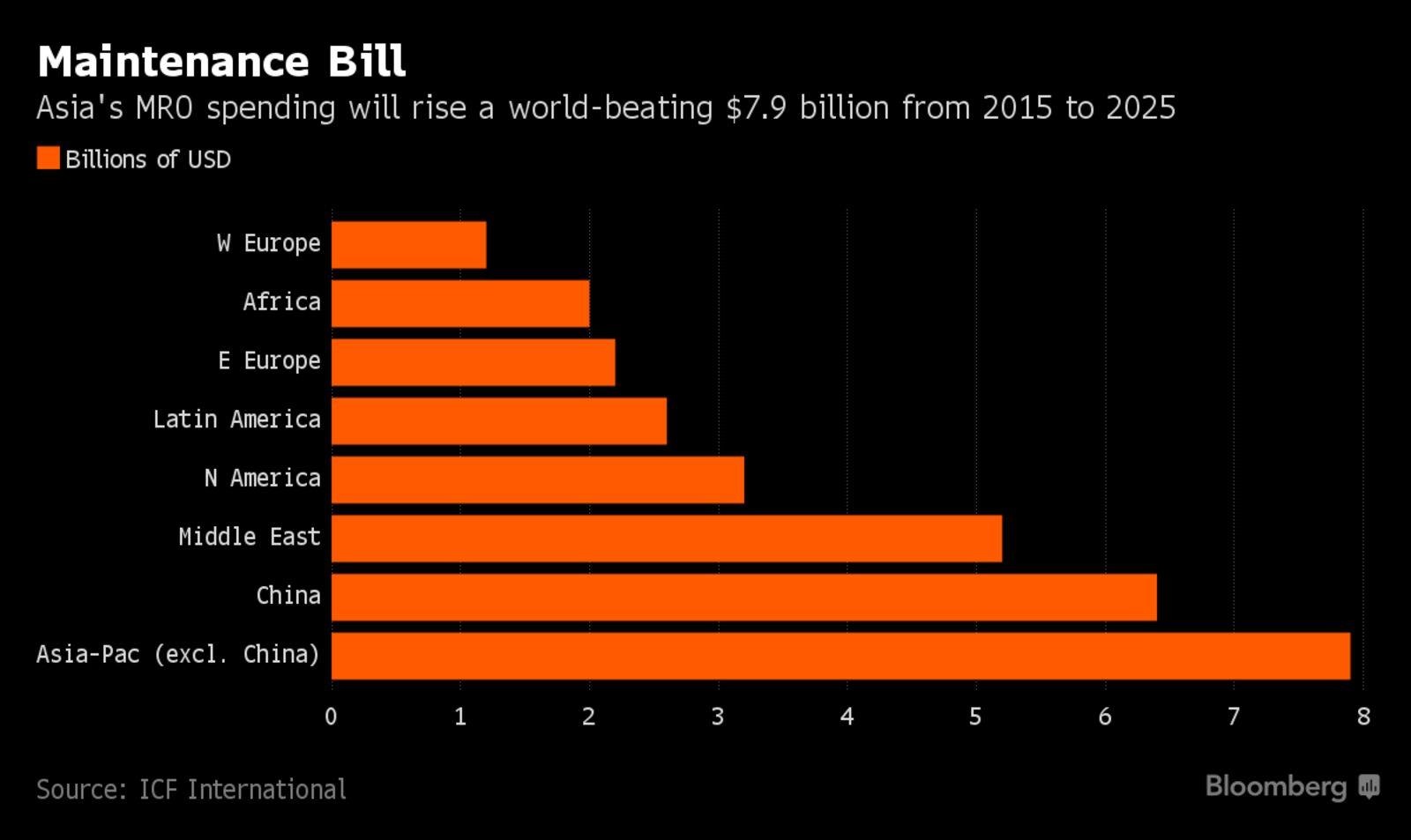
Thailand is seeking to take on Singapore’s dominance in aircraft maintenance, repair and overhaul with a $5.7 billion upgrade of a Vietnam War-era airport.

Lockheed Martin Corp.’s Sikorsky Aircraft is the latest company to study a possible increase in MRO spend in Thailand in the wake of the planned revamp of U-Tapao International Airport, said Ajarin Pattanapanchai, deputy secretary general of the nation’s Board of Investment. In March, Airbus SE signed an agreement with Thai Airways International Pcl to evaluate the development of MRO facilities at the civil-military airport near Bangkok.

Top News: Bullfrog Gold Raises $816,000 Of Equity To Advance Its Nevada Gold Project

“Singapore is quite tight right now,” Ajarin said in an interview at Bloomberg’s Toronto office on May 25, during a visit to Canada to woo investment. “To catch up with the demand of airlines in the region — especially new demand from Myanmar, Vietnam, Cambodia — and given that we have existing strengths with automotives and engineering, Thailand will be the second choice to be the MRO hub.”
The airport project is part of junta leader Prime Minister Prayuth Chan-Ocha’s goal of boosting the economy, whose expansion has lagged behind neighbors since the military seized power three years ago. It’s also a key component of a plan to invest 1.5 trillion baht ($44 billion) between 2017-2021 to develop the country’s eastern seaboard.

Don’t Miss: Is This Tiny Gold Mining Company The Next Big Thing?

Apart from the airport in the Eastern Economic Corridor, the plan calls for $4.5 billion investment in high-speed rail, $11.5 billion for new cities and $14 billion for industry. The government will control and maintain the airport and a port. Other projects will be public-private-partnerships or privately held.

“I am confident we can make it,” Ajarin said, referring to raising the funds. The government has already allocated its budget for 2017, she said, declining to provide a figure for the administration’s outlay on the corridor or an estimate of the MRO business Thailand is targeting.

Foreign-direct investment has revived after sliding following the coup, especially in digital and high-technology sectors, Ajarin said.

She gave as an example Toronto-based Canadian Solar Inc., which applied for a license in 2015 and opened its Thai factory two years later. Among electric vehicles, a “big player — but not Tesla — is waiting to come in,” Ajarin said.

Also see: Is this the end to banking as we know it?

FDI increased to $8.6 billion in 2016 from $2.7 billion in 2015, according to data provided by the Board of Investment.

While the board offers incentives to foreign companies such as tax sops, it remains unclear how quickly the Thai government can implement its ambitious vision for the eastern seaboard given the scale of the project.

Challenges include a shortage of skilled workers, as well as concern that Thailand is prone to harmful episodes of political volatility.

Ajarin acknowledged that the risk of political turmoil is a worry for new investors, but argued that companies have weathered past such bouts.
Reliance Communications Battered Again as Debt Troubles Mount

  • Fitch Ratings, Lucror flag potential liquidity crunch
  • Size of company debt has become unmanageable: K M Visaria

Brutal competition and 457 billion rupees ($7 billion) of borrowings have finally caught up with billionaire Anil Ambani’s Reliance Communications Ltd.

The Indian wireless operator rattled investors with its first full-year net loss amid signs it’s struggling to repay debt. Its $300 million junk-rated note due in 2020 declined 5.5 cents on the dollar to 66 cents as of 12:23 p.m. in Hong Kong and the stock sank 4.4 percent to extend Monday’s 20 percent slump. Fitch Ratings and Lucror Analytics highlighted a potential liquidity crunch and people familiar with the matter said the company sought more time to repay some loans.

Top News: Bullfrog Gold Raises $816,000 Of Equity To Advance Its Nevada Gold Project

The company was in talks with its lenders to seek their approval for the sale of its tower business and an equal merger of its wireless business with rival Aircel Ltd., that would allow it to pare debt by 250 billion rupees, Gurdeep Singh, co-chief executive officer of Reliance Communications said on an investor call Monday. The company plans to refinance its debt in the interim period until Sept. 30 to facilitate the closing of the transactions, Singh said.

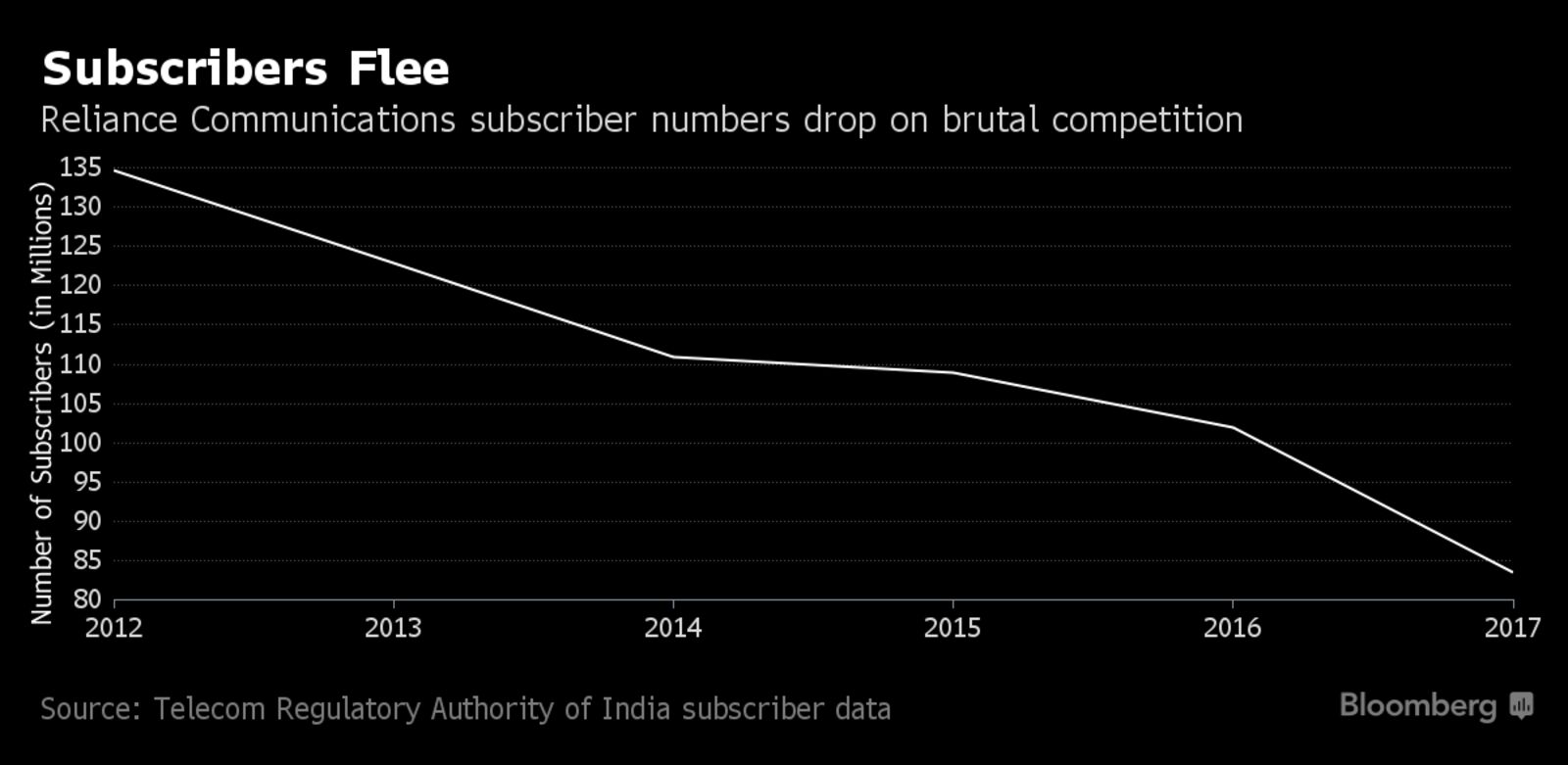
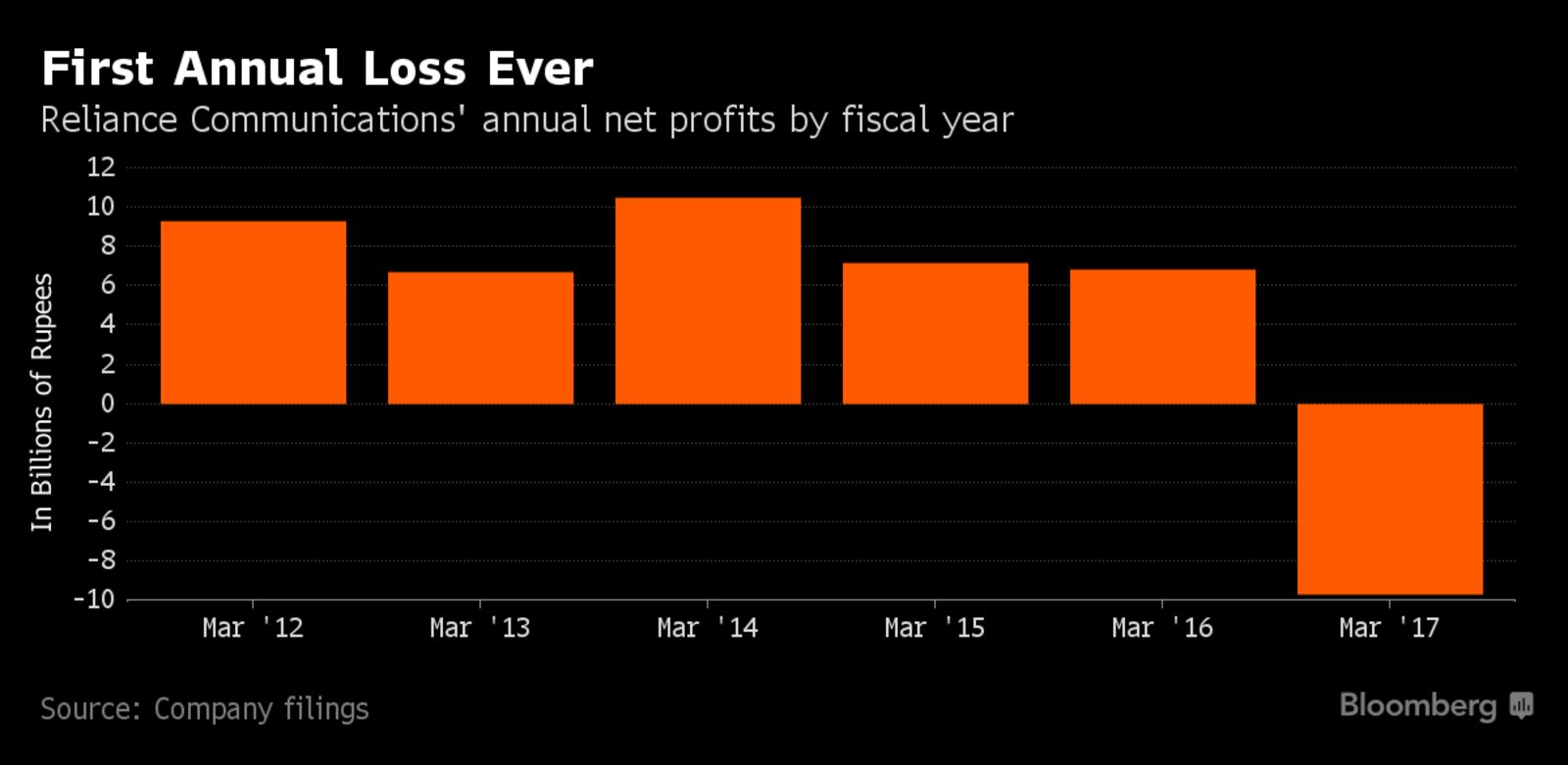
Here are four charts that show Reliance Communications’ financial challenges.

Reliance Communications had a full-year loss of 14 billion rupees. Subscribers have dwindled in the past five years as larger rivals such as Bharti Airtel Ltd. and Vodafone Plc slashed call rates and offered higher speed data. To repay debt, the company is selling its towers to Canadian asset manager Brookfield Infrastructure Group as well as merging the wireless business with Aircel Ltd.

Don’t Miss: Is This Tiny Gold Mining Company The Next Big Thing?

“The size of the RCOM debt has become unmanageable and both Brookfield and Aircel deals are getting delayed for a long time now,” Giriraj Daga, an investment manager at K M Visaria Family Trust in Mumbai. “Investors fear that a delay in loan repayments may lead to scrapping of the deals” and this may lead to financial stress at the company because it doesn’t have adequate refinancing resources, he said.

The carrier is likely to continue losing subscribers, Deepti Chaturvedi and Akshat Agarwal, analysts at CLSA Asia-Pacific Markets, said in a note Monday. CLSA estimates that only 66 million users are active, which is 20 percent lower than the company’s reported subscribers.

Reliance Communications’ cash generation and unrestricted cash of around $200 million would be insufficient to pay its short-term debt of around $600-$650 million, said Nitin Soni, director, Asia-Pacific corporate ratings at Fitch Ratings. However, liquidity would still be dependent on its ability to refinance maturing debt, Soni said.

Also see: Is this the end to banking as we know it?

The company also plans to sell its real estate assets in Delhi and Navi Mumbai, Singh said on the investor call. The company is getting the properties valued, he said.

The junk-rated company had 13.2 billion rupees of cash and cash equivalents as of March 31, less than a quarter of its short-term borrowings of 95 billion rupees, it said in its earnings report on May 27.

Reliance Communications has defaulted on loan servicing obligations and Indian banks have put the company’s loans into “special mention accounts,” which means interest payments are overdue, the Economic Times reported Monday, citing an unidentified bank official.

“Bank support would be the key thing investors are watching right now,” said Pavitra Sudhindran, credit analyst at Nomura Holdings Inc. “While we continue to view negatively the ongoing deterioration in operations, our base case is for banks to remain supportive but note that there could be potential headline risk, as we saw this morning.”

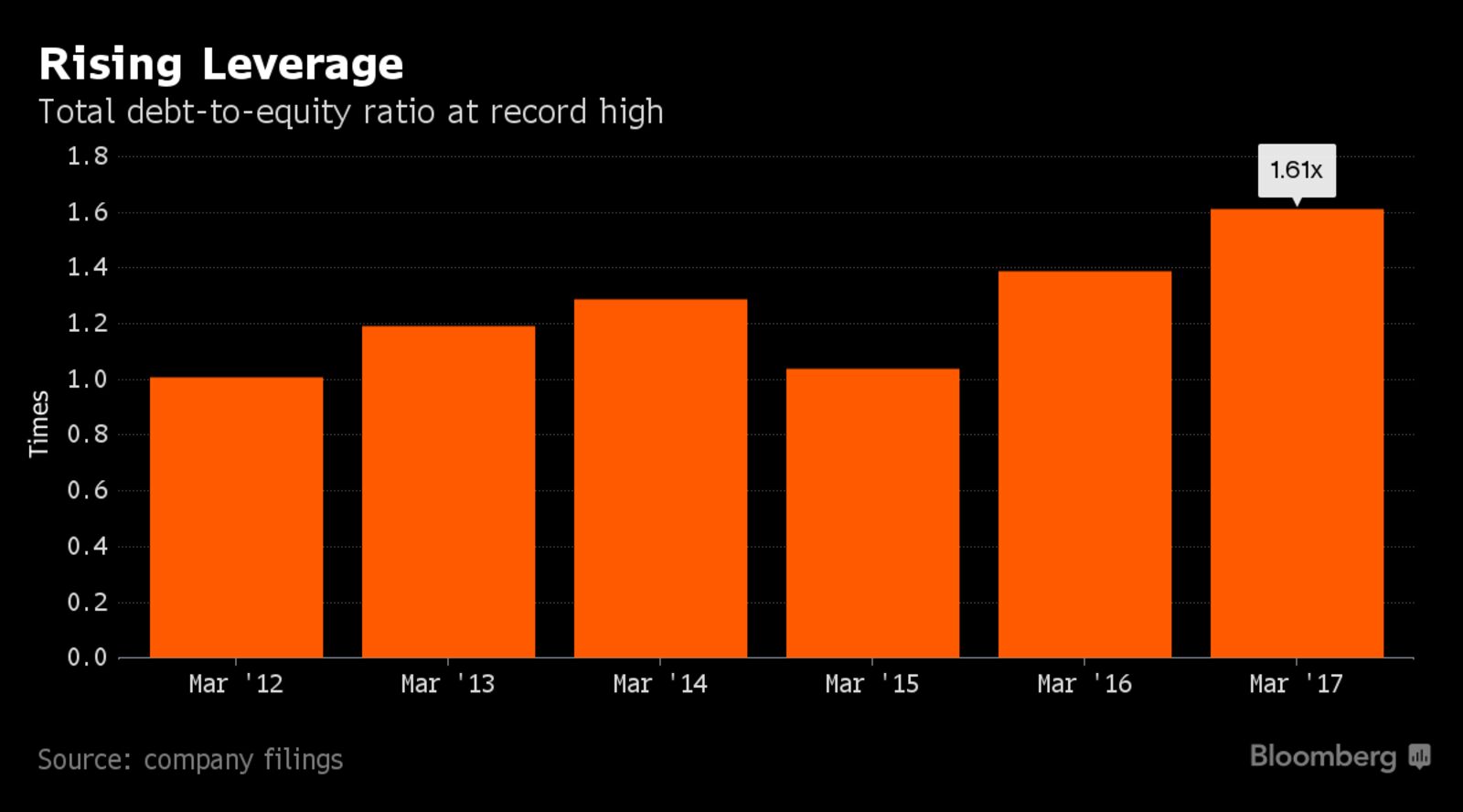
Reliance Communications’ shares are down 42 percent this year. In a sign of stress, the company’s leverage, measured by total debt to equity, rose to a record high of 1.6 times, up from one time in 2012, according to company filings.

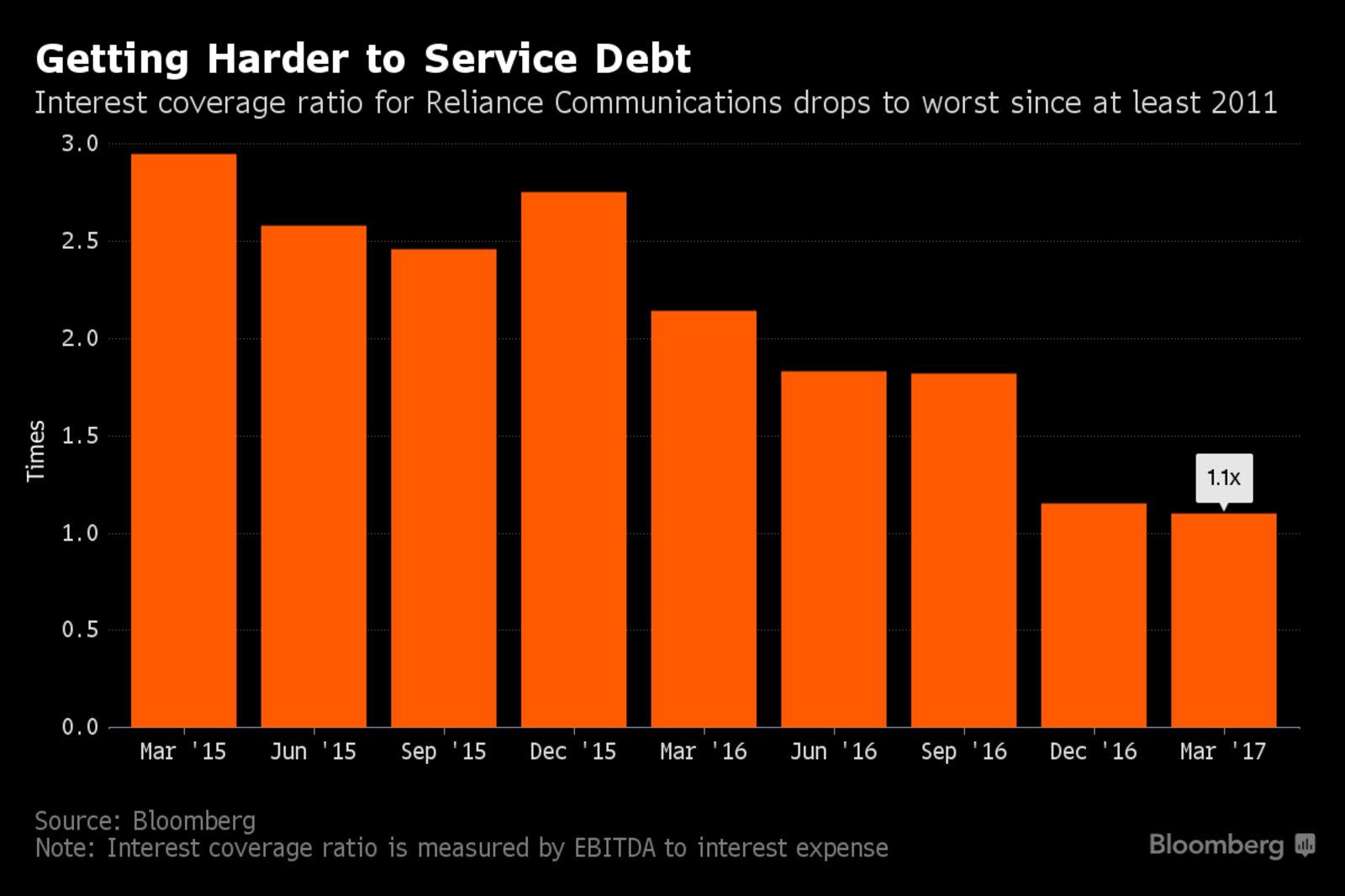
Pinched by a 24 percent rise in financing costs in the latest quarter to March 31, the company’s ability to service its debt has fallen to the weakest since at least 2011. The company generated just enough cash to cover interest expenses, down from three times in March 2015.

The reason Comcast is bucking the cord-cutting trend

Comcast has grown market share each quarter since the X1 platform reached 30% penetration in 2015

Getty Images

The first quarter of 2017 proved not to be a good one for media companies faced with the impact of cord cutting. But Comcast Corp. CMCSA,  is one company that may be well positioned to embrace the blow.

During the first quarter, subscriptions in the industry declined, according to Jefferies analysts led by Mike McCormack, and with new online live TV streaming platforms from Google’s GOOGL,  YouTube and Hulu — jointly owned by Comcast, 21st Century Fox Inc. FOXA, Walt Disney Co. DIS, and Time Warner Inc. TWX,  — the second quarter is likely to further investor concerns.

Top News: Bullfrog Gold Raises $816,000 Of Equity To Advance Its Nevada Gold Project

“While the first quarter is traditionally a strong quarter for video, first quarter 2017 was anything but,” McCormack wrote in a note to clients. “Nevertheless, Comcast has proven remarkably resilient, and was the only major provider to add subscribers in the first quarter.” Comcast added 42,000 video subscribers in the first quarter.

The reason Comcast has been able to buck the trend is its X1 set-top box and platform.

X1 is Comcast’s “next-generation” cable set-top box that connects to the internet and has a more intuitive user interface.

Jefferies analysts estimate video churn — people cutting their subscriptions — has dropped more than 20 basis points in the last two years, with every 5% of incremental X1 penetration reducing churn by two to three basis points.

See also: Is This Tiny Gold Company The Next Big Thing

Getty Images

Comcast’s X1 platform brings TV and the internet together for a unique entertainment and communications experience.

“Comcast’s versatile platform has driven higher engagement and a better user experience, while the integration of Netflix and YouTube should only further help churn,” McCormack wrote. “In our view, the higher retention separates Comcast from the rest of the video pack.

Read: Is this the end to banking as we know it?

“Notably, since X1 reached 30% penetration in the third quarter of 2015, the company has grown market share each quarter, cumulatively adding nearly 300,000 subscribers vs. an industry loss of about 425,000.”

Comcast shares have gained nearly 18% in the year to date and more than 30% over the last 12 months, while the S&P 500 index SPX, is up 8% in the year and more than 15% in the prior 12-month period.

Best Buy is capitalizing on troubles at Sears and HHGregg in one particular category

Best Buy shares soar after better-than-expected first-quarter earnings

best buy

Best Buy is seeing growth in appliances, and will bring more in-home services to customers this year

Best Buy Co Inc. attributed its better-than-expected quarter to mobile, gaming and improved overall sales trends.

Neil Saunders, managing director of GlobalData Retail, thinks it has more to do with the continuing troubles at Sears Holdings Corp. SHLD, While personal computing and mobile phones are “laggards in terms of growth,” appliances is an area where Best Buy BBY, is offsetting that softness.

Don’t miss: Cannabis is saving lives and changing the medical world – This company is a sure bet

“The travails of Sears, which continues to lose sales at a rapid pace, is beneficial here; a difficulty we believe Best Buy can capitalize on thanks to its wide assortment and visibility in the market,” Saunders wrote in a Thursday note.

Best Buy reported first-quarter sales of $8.53 billion, up from $8.44 billion last year and ahead of the $8.28 billion FactSet consensus. Enterprise same-store sales rose 1.6%.

Best Buy shares closed Thursday up 21.5%.

On the Thursday morning earnings call, Best Buy Chief Executive Hubert Joly said appliances is one of the areas that the company is pursuing for growth. HHGregg Inc. HGGGQ, store closures are providing “some lift” in appliances and home theater. “And we’ll get a share of that, it’s about 200 stores, so about 20% overlap with our stores,” said Joly, according to a FactSet transcript.

Read: Is this the end to banking as we know it?

Also: Bullfrog Gold Raises $816,000 Of Equity To Advance Its Nevada Gold Project

These two areas, along with a few other categories that Best Buy doesn’t participate in, are worth about $2 billion, he said.

Sears reported $4.3 billion in first-quarter sales on Thursday, down from $5.4 billion last year, though it beat the FactSet consensus of $4.1 billion. The FactSet consensus was based on just two estimates.

The struggling retailer said a domestic same-store sales decline of 12.4% was driven by a decrease in appliances, among other categories.

Sears shares are up nearly 26% in Thursday trading, though they’re down 25% for the past year.

See also: Is This Tiny Gold Company The Next Big Thing

“For the balance of the year, we expect Best Buy to continue to perform at a high level across multiple categories, with appliances likely to be one of the bright spots given market dynamics,” said Charlie O’Shea, Moody’s lead retail analyst, in a Thursday comment.

“Potential performance pressure points were evident during the quarter, including delays in income tax refunds and HHGregg’s bankruptcy and still-ongoing liquidation; however, Best Buy successfully avoided the trap of chasing low quality/margin sales,” O’Shea said.

Best Buy was one of the first retailers to call the delayed IRS tax refunds a benefit, with others like Foot Locker Inc. FL, blaming the year’s “slow start” to the hold up.

“There is little doubt that the delayed arrival of tax refunds provided buoyancy to the electricals market later into this quarter,” said GlobalData’s Saunders. “However, from our customer survey data, it is evident that fewer people than last year purchased physical products with their refunds, and fewer of those opted to buy electricals. As such, we believe that the impact was helpful but somewhat limited.”

Best Buy’s Joly said that the domestic same-stores sales increase of 1.4% was, in part, driven by connected home, and the company plans to test and offer new products and services related to smart home products and their installation. Among them, Best Buy is rolling out an In-Home Advisory service nationwide this year.

“If the need of the customer is complex, if you are redoing your home theater, if your network needs to be improved, having these conversations in the home unlocks all sorts of discussions with customers,” Joly said. Best Buy has had Geek Squad agents and members of its Magnolia Design Centers team going to customers’ homes for years to help with computing and home theater issues, company executives said.

“[T]here is no revenue associated with an in-home adviser visit specifically,” said Joly. “Remember this is a free visit from an in-home adviser who’s going to come and help you… in your home. The revenue comes from what you would choose to purchase as a result of that visit, be it hardware or services.”

Earlier this month, Best Buy announced the new Best Buy Smart Home powered by private smart home services provider Vivint, which will start rolling out this summer. Customers at one of 400 stores will be able to consult with an expert on smart home products, and receive professional installation and monitoring.

GlobalData’s Saunders highlights the link Best Buy is making between good customer service and sales of these newer technologies.

“From our data, we see that there is an appetite among consumers to know more about this sort of technology and we believe Best Buy is in an ideal position to inform and engage,” he wrote.

Best Buy shares are up 91% for the last 12 months while the S&P 500 index SPX,   has gained 15.5% for the period.

Uber Quietly Drops Otto Truck Unit Name Following Trademark Spat

Otto

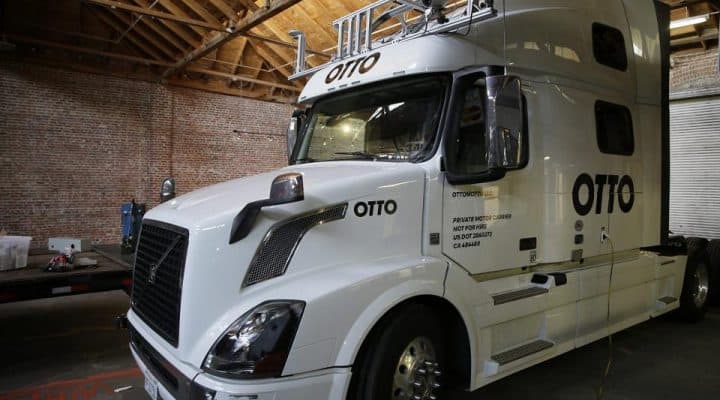
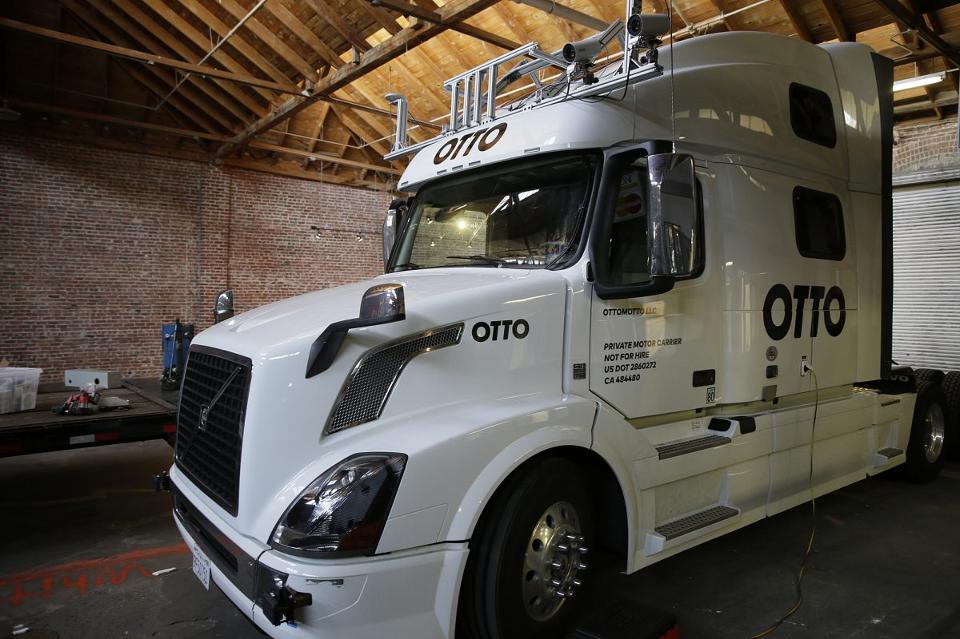
An Otto driverless truck at the Uber unit’s garage in San Francisco.

By Alan Ohnsman and Matt Drange

As Uber fights claims that it stole self-driving vehicle trade secrets from Alphabet Inc.’s Waymo, the rideshare giant quietly dropped the name for its driverless truck unit, “Otto.” The change was made last month in the wake of a trademark infringement dispute with a similarly named Canadian company that markets its own robotic vehicle technology.

Uber consolidated Otto’s activities under its Advanced Technologies Group, or Uber ATG, in April and “retired the Otto name,” it said without elaborating. The change came shortly after the dismissal of a trademark infringement suit brought by Kitchener, Ontario-based Otto Motors, a unit of Clearpath Robotics that makes autonomous vehicles for warehouses and industrial facilities.

 Don’t miss: Cannabis is saving lives and changing the medical world – This company is a sure bet

The suit was dismissed without prejudice in February. Spokespeople for both Clearpath and Uber confirmed the dispute over the Otto name had been resolved. Neither confirmed details of any potential settlement. Since last month, the ot.to website has redirected visitors to the Uber ATG homepage.

“We are continuing to operate under the OTTO brand, whereas Uber has recently announced on its website that it is retiring the OTTO name,” Otto Motors spokeswoman Meghan Hennessey said in a written statement to Forbes.

Uber paid $680 million for the tiny startup Ottomotto LLC, or Otto, in August 2016 which at the time had 90 employees and little more than a plan to develop and sell hardware and software kits to convert semi-trucks to drive themselves. Its co-founder Anthony Levandowski is the former Google engineer at the center of Waymo’s lawsuit against Uber and Otto that’s inching toward a trial later this year in a U.S. District Court in San Francisco.

Also read: Bullfrog Gold Raises $816,000 Of Equity To Advance Its Nevada Gold Project

Uber recently informed officials at the California Department of Motor Vehicles of its decision. “Otto called us a few weeks ago and said they were changing their name,” DMV spokeswoman Jessica Gonzalez said, adding that the company did not inform officials of the trademark infringement dispute that preceded the change.

The DMV is reviewing whether Otto broke state law by operating automated trucks without permission. Otto contends that trucks tested in California with advanced safety technology are not operated without human control.

The name change was also news to David Kidd, a research scientist with the Insurance Institute for Highway Safety, an industry group that’s helping to shape nascent testing guidelines for self-driving vehicles in California and elsewhere. Kidd recently met with the Otto team, but said he was unaware of the unit’s new name until he was contacted by Forbes.

Prior to being purchased by Uber, Otto made a splash in May 2016 with video footage of a driverless Volvo semi rolling through Nevada. Otto drew even more attention in Oct. 2016 when it completed its first paid delivery, a shipment of Budweiser beer hauled through Colorado.

Waymo, created in December 2016 to commercialize Google’s self-driving vehicle system, sued Uber and Otto in late February, claiming Levandowski accessed an internal Google database and downloaded 14,000 technical documents. That occurred about six weeks before Levandowski resigned from Google, and then quickly created Otto.

Also see: Is this the end to banking as we know it?

Although the federal judge in that case has ordered Uber and Levandowski to return the stolen materials to Waymo, that hasn’t happened. Uber says it doesn’t have the documents and Levandowski refuses to comply with the order, citing his Fifth Amendment right against self incrimination. On Thursday, the judge overseeing the case took Levandowski to task for submitting essentially useless information related to the documents at issue. While neither Uber nor Waymo dispute that Levandowski took technical documents from Google, Uber said it hasn’t used this information in its own autonomous technology R&D efforts and doesn’t possess the data.

Separate from self-driving truck operations, Uber stepped into the commercial-hauling business this month the creation of Uber Freight, a platform to connect independent truck operators with trucking companies to arrange shipments in much the same way its rideshare platform connects drivers and passengers.

Though the Otto name was formally dropped in April, Uber told Forbes it retained “Ottomotto LLC” for its carrier operations. The change was visible on the side of a pair of semis parked on Thursday at the Uber ATG San Francisco lot, formerly Otto’s headquarters.

An Uber ATG truck, parked outside the unit's garage in San Francisco on May 25, 2017.

Matt Drange/Forbes An Uber ATG truck, parked outside the unit’s garage in San Francisco on May 25, 2017.

Android Circuit: New Pixel 2 Details Leak, Galaxy S8 Killer Uncovered, Microsoft’s Android Ambitions

Taking a look back at seven days of news and headlines across the world of Android, this week’s Android Circuit includes hacking the Galaxy S8 Iris scanner, details on the new Google Pixel 2, leaked images of the Nokia 9, rumors of the Galaxy S8 Active, how OnePlus is catching up to Samsung, a review of the BlackBerry KeyOne, and Microsoft continuing to build its Android base.

Android Circuit is here to remind you of a few of the many things that have happened around Android in the last week (and you can find the weekly Apple news digest here).

Don’t miss: Cannabis is saving lives and changing the medical world – This company is a sure bet

How To Beat The S8 Iris Scanner

Samsung has put a lot of stock in the security that comes with the Galaxy S8 handsets, with the iris scanner being a focus of the marketing. That makes the three-step process to defeat the scanner – an infra-red camera, a printer, and a contact lens – somewhat embarrassing. Ian Morris reports on the issue, including Samsung’s response:

“We are aware of the issue, but we would like to assure our customers that the iris scanning technology in the Galaxy S8 has been developed through rigorous testing to provide a high level of accuracy and prevent attempts to compromise its security, such as images of a person’s iris. If there is a potential vulnerability or the advent of a new method that challenges our efforts to ensure security at any time, we will respond as quickly as possible to resolve the issue.”

Google’s Pixel Will Change The World

Google’s hardware teams are set to release a number of projects this year that will alter the Android landscape, including an updated Google Home device, a virtual reality headset, and of course new Pixel handsets and tablets. Rob Price looks at the upcoming releases, including what could be the killer smartphone of 2017:

Google has confirmed it will be launching a second-generation Pixel (and the Pixel XL, its larger-screened sibling) in 2017. Major slated changes include an almost edge-to-edge screen (like the one found in the Samsung Galaxy S8 and rumoured to be a feature of the forthcoming iPhone 8), waterproofing, and boosted internal specs.

It’s also rumoured to ditch the headphone jack, like the iPhone 7 did in 2016 — a move that may prove controversial.

Also read: Bullfrog Gold Raises $816,000 Of Equity To Advance Its Nevada Gold Project

HMD's Nokia 6 (photo: Ewan Spence)

Ewan Spence HMD’s Nokia 6 (photo: Ewan Spence)

Tiny Hints Of The Finnish Flagship

It might be stuck inside a blue box, it might not be parading the presumed curves that echo the Nokia N9 from many generations and it leaves many questions unanswered, but this week’s leak of HMD Global’s Nokia 9 handset is a tantalising look at a potential flagship. I’ve taken a closer look at the leak here:

There’s no clear image of the entire phone as it is safely enclosed in arguably the world’s ugliest blue case…

What we can see are the details around the camera – notably the dual-lens system, the LED flash, and 4K recording. The Nokia brand name is associated with powerful and accurate imaging hardware and software. How the Nokia 9 will compare to the likes of the Galaxy S8 and the iPhone 7 (or the soon to arrive Galaxy Note 8 phablet and Apple’s 2017 editions of the iPhone) remains to be seen and no doubt will be one of the key areas that reviewers will focus on.

Also see: Is this the end to banking as we know it?