Staff Editor

What the UK election result means for Brexit

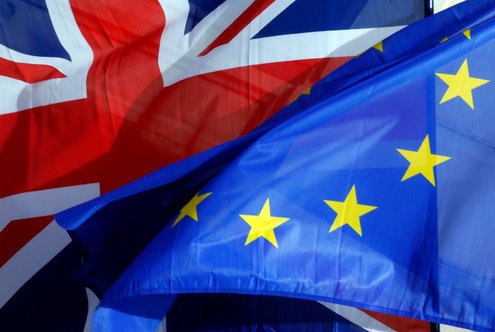
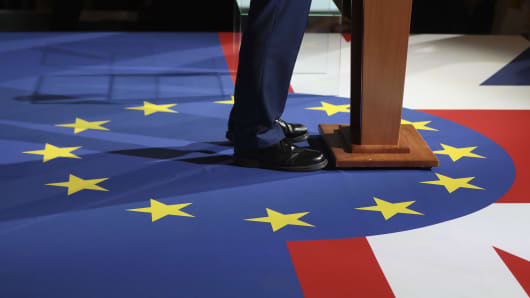
The European Union flag is displayed on stage during the launch of the Liberal Democrats' manifesto in London, U.K., on Wednesday, May 17, 2017.

Simon Dawson | Bloomberg | Getty Images
The European Union flag is displayed on stage during the launch of the Liberal Democrats’ manifesto in London, U.K., on Wednesday, May 17, 2017.

With the result of the U.K. General Election showing a hung parliament, analysts are contemplating what it means for Brexit negotiations, with Prime Minister Theresa May losing her parliamentary majority.

The Conservative leader called a snap election to strengthen her parliamentary majority and have more power and freedom to negotiate Britain’s exit from the European Union.

However, the results could make talks with Brussels “more complicated,” according to Guntram Wolff, director of the Brussels-based Bruegel think tank.

“It may be impossible to compromise due to domestic political pressures in the U.K.,” he told CNBC. “So a no-deal scenario may become more likely.”

Karel Lannoo, the chief executive officer of the Centre for European Policy Studies think tank, agreed. “A small majority will not help. This means a lot of infighting will go in the Tories (Conservatives) and this will not be helpful for the EU either, as no clear position will emerge.”

A senior EU official told CNBC at the end of May, when polls were projecting a stronger presence in parliament for the Conservatives, that “the election will certainly help (Brexit talks).”

“We need a strong leader,” the official said on the condition of anonymity due to the sensitivity of Brexit talks, adding that nonetheless the divorce process will have to happen in the step-to-step approach that the EU wants.

Meanwhile, John Hardy, head of forex strategy at Saxo Bank, told CNBC via email that the outcome of the British vote will have a little impact on Brexit, given that the European Union will not change its stance on the negotiations.

“I think the EU’s stance will be little affected by the outcome of the election unless there is a sense that Brexit can somehow be re-engineered into an eventual Bremain referendum,” he said.

By 7:30 a.m. London time, Prime Minister Theresa May’s ruling Conservative party had won 314 seats while the opposition Labour Party, led by Jeremy Corbyn, had 261 seats. Meanwhile, the Scottish National Party (SNP) had won 35 seats, the Liberal Democrats were at 12 and the Democratic Unionist Party had secured 10. Voter turnout was at 68.7 percent, according to the BBC.


Comey ‘stunned’ by Trump’s request to drop Flynn investigation, Senate committee hears

Former FBI director gives damaging testimony about dealings with U.S. president

Former FBI director James Comey accused the Trump administration Thursday of spreading “lies, plain and simple” about him and the FBI in the aftermath of his abrupt firing in dramatic testimony that threatened to undermine Donald Trump’s presidency.

As he opened his much-anticipated first public telling of his relationship with Trump, Comey disputed the Trump administration’s justification for his firing last month, declaring that the administration defamed him and more importantly the FBI by claiming the bureau was in disorder under his leadership.

“Those were lies, plain and simple,” Comey told the Senate intelligence committee. “And I am so sorry that the FBI workforce had to hear them and I’m so sorry that the American people were told them.”

In testimony that exposed deep distrust between the president and the veteran lawman, Comey described intense discomfort about their one-on-one conversations, saying he decided he immediately needed to document the discussions in memos.

“I was honestly concerned that he might lie about the nature of our meeting, so I thought it really important to document,” Comey said. “I knew there might come a day when I might need a record of what happened not only to defend myself but to protect the FBI.”

Comey made his comments as the packed hearing got underway, bringing Washington and parts of the country to a halt as all eyes were glued on televisions showing the hearing. He immediately dove into the heart of the fraught political controversy around his firing and whether Trump interfered in the bureau’s Russia investigation, as he elaborated on written testimony delivered Wednesday.

In that testimony he had already disclosed that Trump demanded his “loyalty” and directly pushed him to “lift the cloud” of investigation by declaring publicly the president was not the target of the FBI probe into his campaign’s ties to Russia.

​Comey also said in his written testimony that Trump, in a strange private encounter near the grandfather clock in the Oval Office, pushed him to end his investigation into former national security adviser Michael Flynn.

The Senate intelligence committee chairman, Republican Richard Burr of North Carolina, asked Comey the key question about that encounter: “Do you sense that the president was trying to obstruct justice or just seek a way for Mike Flynn to save face, given he had already been fired?”

“I don’t think it’s for me to say whether the conversation I had with the president was an effort to obstruct,” Comey replied. “I took it as a very disturbing thing, very concerning. But that’s a conclusion I’m sure the special counsel will work towards to try and understand what the intention was there and whether that’s an offence.”

Later, in a startling disclosure, Comey revealed that after his firing he had tried to spur the appointment of a special counsel by giving one of his memos about Trump to a friend of his to leak to the press.

“My judgment was I needed to get that out into the public square, ” Comey said.

An Unusually Packed Thursday Will Test Markets

Call it the Teflon market.

The world’s on edge over everything from rising tension in the Middle East to an uncertain U.K. election to the turmoil surrounding the Trump administration.

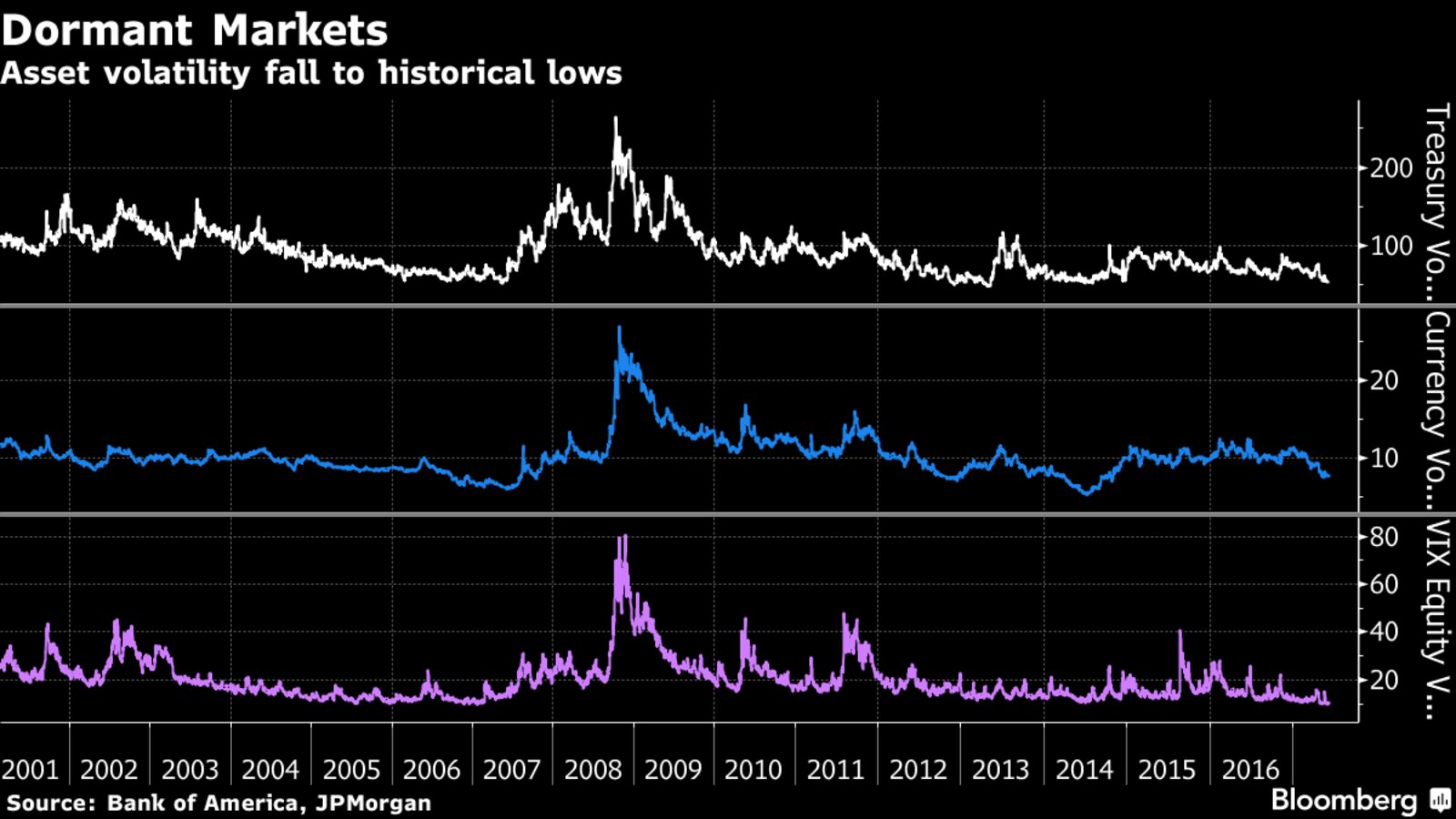
Yet financial markets chug along as if nothing’s amiss — global stocks are churning just 0.4 percent below all-time highs, while volatility in equities, bonds and currencies remains dormant and money continues to pour into riskier developing nations.

It’s a pattern that’s held for the better part of the year, with the odd bout of angst thrown in. Investors have discounted geopolitical risks as idiosyncratic and focused instead on a global economy that’s powering higher amid persistently low inflation. With central banks assuring they’ll remove years of stimulus only gradually, risk tolerance remains robust.

“While you may get little spikes in risk aversion at times, markets are looking through them, as long as the underlying fundamentals remain supportive,” said Peter Kinsella, a senior currency and rates strategist at Commonwealth Bank of Australia from London.

Then there’s Thursday.

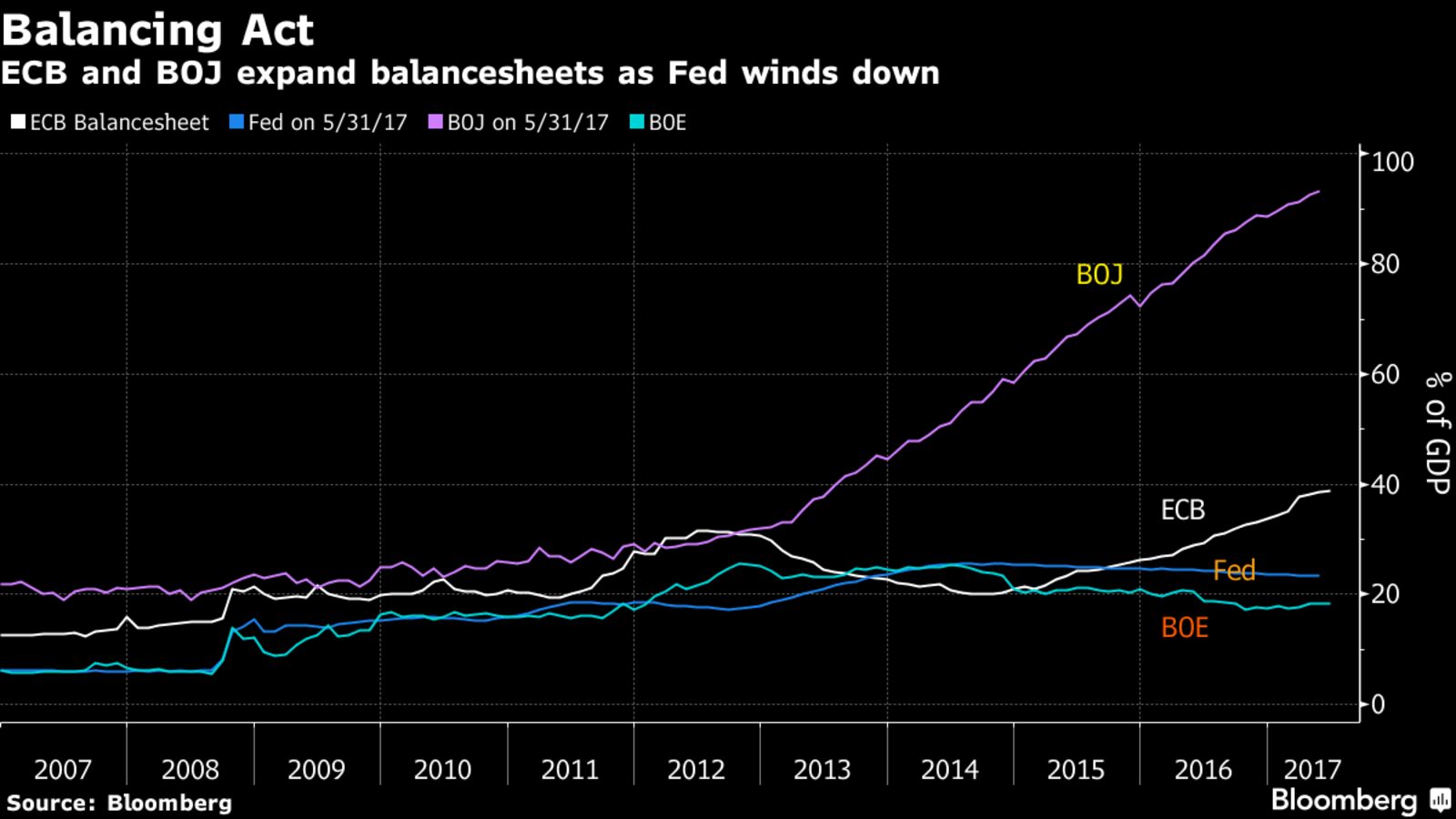
The European Central Bank’s rate decision will unveil officials’ views on inflation and how long they’ll leave the monetary spigot flowing. Former FBI Director James Comey testifies to a Senate committee on his interactions with President Donald Trump. And the day ends with the outcome of a U.K. election that polls show tightening into the vote.

“Investors are mindful of the event risks, but the liquidity trade is by far the most important and most dominant factor,” said Mark Nash, head of global bonds at Old Mutual Global Investors in London. “It makes the market very forgiving.”

Look no further than the economy for a reason why. The Organization for Economic Cooperation and Development on Wednesday raised its forecast for global growth this year to 3.5 percent from 3.3 percent as of March. Historically, it’s generally taken prolonged economic contraction to end a bull market, and JPMorgan Chase & Co. notes that no rally has peaked longer than a year before a recession has started.

“We have this kind of Goldilocks world continuing where no one sees any dramatic threats to growth on the horizon,” said Rupert Harrison, chief macro strategist at BlackRock in London on Bloomberg Television. “This is still a very unloved rally in terms of the equity markets. We still think it has some further to go.”

The ECB is least likely to disrupt the calm Thursday, with the central bank preparing to cut its inflation outlook at the policy meeting, boosting the prospect stimulus will remain in place longer, Bloomberg reported. In the U.S., investors have long anticipated the Federal Reserve will tighten at its meeting next week — though the pace from there remains glacial, according to the Fed fund futures.

While the latest diplomatic spat among Qatar and its Arab neighbors exacerbated geopolitical concerns, market risks from such events have been fleeting in recent years, including Russia’s annexation of Crimea and the U.K.’s vote to exit the European Union.

Jens Nystedt, a senior portfolio manager at Morgan Stanley Investment Management, examined major political events since World War II and found that any initial selloff only proved to be buying opportunities.

Comey’s testimony could see the market add to rising speculation the Trump administration won’t be able to push through tax and regulatory overhauls aimed at boosting growth — though the so-called Trump trade expired weeks ago. Goldman Sachs Group Inc.’s gauges of high-tax stocks, for instance, have been underperforming low-tax companies, suggesting little expectations for reform in that area.

The market cares about politics that have an impact on the economy. That’s not likely on Thursday, said CBA’s Kinsella.

“Investors can see that political risks rarely result in market negative outcomes over the longer term,” he said.

To be sure, the market itself has flashed signs of caution, especially when it comes to U.S. equity valuations. The Shiller Cyclical Adjusted P/E ratio reached the most expensive level since the dot-com bubble, while the credit market has shown hints of stress as household borrowings surged to a record $12.7 trillion.

Billionaire investor Bill Gross warned Wednesday that U.S. markets are at their highest risk levels since before the 2008 financial crisis because of the lofty valuation.

“Instead of buying low and selling high, you’re buying high and crossing your fingers,” Gross, manager of the $2 billion Janus Henderson Global Unconstrained Bond Fund, said at the Bloomberg Invest New York summit.

Millennials are saving for financial freedom — not retirement

Millennials often get a bad rap when it comes to financial responsibility. But it turns out those stereotypes may be off base. Millennials are saving more money than any other generation, according to a new study by Bank of America and Merrill Edge. But it’s what they’re saving for that really sets them apart from older generations.

Saving for financial freedom is the No. 1 priority for millennials — 63% of millennials said they’re saving a set amount of money to enjoy their desired lifestyle. This is a stark contrast to older generations: the majority of the Gen X and baby boomer generations prioritize their savings specifically to leave the workforce and retire.

This shift speaks to the bigger differences in the ways millennials and older generations view money, and what they prioritize in their lives. While it may not sound surprising that younger workers aren’t thinking about nest eggs as much as older generations, what’s a little different here is that they’re not thinking about retirement as a phase of life, let alone working to afford it.  Millennials listed personal milestones as their top priorities: getting their dream job and traveling the world trumped more traditional goals like getting married and having children.

“Young adults tell us they are willing to do whatever it takes to achieve freedom and flexibility, even if it means working for the rest of their lives,” said Aron Levine, head of Merrill Edge.

But while millennials may be eschewing more traditional financial goals, they’re still focusing on building their savings. This age group, which includes people 18 to 34, is saving more money than any other generation; on average, millennials save 19% of their annual paychecks, compared with 14% for baby boomers and Gen Xers. More than a third (36%) of millennials say they save more than 20% of their paychecks each year.

So where does that money go to if it’s not being funneled into retirement accounts? According to the Merrill report, 81% of millennials spend their money on traveling. Eating out and exercising are the two other activities millennials listed before they’d save for retirement. These spending habits point to a shift in the way millennials use their money for personal fulfillment, compared to older generations.

Alibaba’s Stock Has Surged 42% This Year, Making One Big Event This Week Must Watch

Alibaba (BABA)  is following up its 60% year-over-year jump in revenue to $5.2 billion for the latest quarter with a two-day investor meeting June 8 and June 9 at its headquarters in Hangzhou, China.

Speakers at the event will include executive chairman Jack Ma, executive vice chairman Joe Tsai, CEO Daniel Zhang and CFO Maggie Wu. Alibaba will have a live webcast of the event beginning at 2:15 a.m. ET on Thursday and at 3:45 a.m. ET on Friday. The company will also update the webcast link with a replay of the webcast and a summary of the day’s presentations.

Alibaba’s stock has been on a run recently, closing up about 43% year-to-date to $125.64 on Tuesday.

The company reported lower-than-expected earnings for the 2016 fourth quarter in May at 63 cents, vs. 66 cents consensus estimate. The company attributed the miss to higher-than-expected taxes and the revenue beat helped ease the pain of the earnings miss.

Tigress Financial Partners CIO Ivan Feinseth said he expects the guidance issued at the event to be positive and, most likely, simply a reiteration of past guidance numbers. While the stock will probably not react to the expected in-line guidance, companies sometimes use the platform of their investor day to announce a new product or tool, which could send the stock up, he noted. “But they’re probably not going to release a negative bombshell like negative guidance at their own investor day,” Feinseth said.

Alibaba Head of External Affairs Brion Tingler said the executives’ speeches will be focusing on technology updates, such as improving algorithms, as a way to drive commerce. The company’s access to big data provides a moat for the business, or a competitive advantage against its peers, he said.

The company will most likely be talking about incorporating artificial intelligence, or machine learning, into its systems, Feinseth. If the company can analyze data to find patterns, then it has a better chance of figuring out what the “next big thing” is or to understand how it should be stocking its website.

Support For Donald Trump’s Impeachment Is Now Higher Than His Approval Rating

Support For Donald Trump's Impeachment Is Now Higher Than His Approval Rating
Support For Donald Trump’s Impeachment Is Now Higher Than His Approval Rating

Virtually every single poll tracking President Donald Trump’s approval rating showed the figure plummeting Monday morning, well below the margin of error compared to the rising level of support for impeachment. The results follow Trump’s controversial decision to withdraw the United States from the Paris climate accord; the ongoing investigation into his campaign’s possible ties to the Kremlin is also a factor.

The president’s approval rating dipped from nearly 42 percent to just 36 percent over the weekend, according to a Gallup daily tracking poll published Monday. Trump’s declining popularity is inching closer toward his all-time low of 35 percent as president in March, when Gallup had the president’s approval at just 35 percent. What’s more, nearly 43 percent of American voters support the idea of beginning the official impeachment process for Trump, according to a Politico/Morning Consult poll published Wednesday.

Trending: Bullfrog Gold Corp Raises $816,000 Of Equity To Advance Its Nevada Project

There are slight discrepancies between several leading polls as to where the president’s approval officially stands, though each tracking poll published Monday and over the weekend seemed to show a decline in popularity following Trump’s decision on the Paris Agreement. Even right-leaning poll sites like Rasmussen Reports are indicating dips in support for the president’s job performance, reporting that as of Monday, 54 percent of the nation disapproves of Trump’s tenure as commander in chief.

Whereas Trump enjoyed record-high popularity near the end of his first trip abroad since assuming the Oval Office (nearing 42 percent or above in several polls and indexes), now he is once again in the historic territory of being one of the least popular new presidents in modern American history. The public’s increasing support for the exhaustive political process of removing the president from office comes at a time when Democratic lawmakers are taking to the airwaves and the floors of Congress to call for Trump’s impeachment.

Texas Rep. Al Green brought an official call to Congress to impeach the president May 17 and said he was writing drafts of impeachment articles. Firebrand California Rep. Maxine Waters was back on TV Sunday afternoon, demanding that her colleagues take Trump’s impeachment—and the allegations against him concerning his business interests and ties to Russia—seriously.

“We’re also going to continue to talk about how this president and his allies, I believe and others believe, colluded with the Russians to undermine our democracy,” Waters told Joy Reid on MSNBC on Sunday. “And we’re not going to stop talking about it, because this is extremely important to the future of this country.”