Archives for April 15, 2026

Smart Investors Navigate Currency Volatility with Strategic TFSA and RRSP Canadian Dollar Positioning

The Canadian dollar faces a complex landscape of economic pressures that savvy investors must navigate when making strategic decisions about their Tax-Free Savings Accounts (TFSA) and Registered Retirement Savings Plans (RRSP). With global commodity prices shifting, monetary policy divergence between major central banks, and evolving trade relationships, understanding the Canadian dollar outlook has become crucial for optimizing tax-sheltered investment strategies.

Currency fluctuations create both opportunities and risks for Canadian investors holding foreign assets within their registered accounts. When the loonie weakens against major currencies like the US dollar, foreign investments become more expensive to purchase but existing holdings appreciate in Canadian dollar terms. Conversely, a strengthening Canadian dollar makes foreign investments cheaper to acquire while reducing the value of existing international positions when converted back to Canadian dollars.

The current Canadian dollar outlook reflects several competing forces. Canada’s resource-heavy economy remains sensitive to global commodity demand, particularly oil and precious metals. Recent energy market dynamics have created volatility in the loonie’s performance, while the Bank of Canada’s monetary policy stance continues to influence relative currency strength. Simultaneously, the US Federal Reserve’s policy decisions create ripple effects across North American currency markets, directly impacting CAD-USD exchange rates that many Canadian investors monitor closely.

TFSA strategies require particular attention to currency considerations because contribution room is precious and limited. When the Canadian dollar outlook suggests potential weakness, investors might consider timing their purchases of US or international equity ETFs to maximize their foreign exposure. However, attempting to time currency movements perfectly proves challenging even for professional traders. A more sustainable approach involves dollar-cost averaging into diversified international holdings, allowing currency fluctuations to smooth out over time while maintaining consistent exposure to global markets.

RRSP planning presents different currency dynamics due to larger contribution limits and longer investment horizons. The tax-deferred nature of RRSP accounts makes them ideal vehicles for holding foreign dividend-paying stocks or international bond funds, where currency gains can compound without immediate tax consequences. When the Canadian dollar outlook appears favorable, investors might accelerate their RRSP contributions to lock in advantageous exchange rates on foreign investments.

Geographic diversification within registered accounts helps mitigate currency concentration risk while capitalizing on global growth opportunities. Canadian investors who hold only domestic assets in their TFSA and RRSP accounts expose themselves to both Canadian economic cycles and currency fluctuations simultaneously. By incorporating US equities, European markets, and emerging market exposure, investors can reduce their dependence on Canadian dollar performance while accessing broader investment opportunities.

Currency hedging presents another strategic consideration for registered account holders. Currency-hedged ETFs eliminate foreign exchange risk but also remove the potential benefits of favorable currency movements. Unhedged foreign investments provide full currency exposure, creating additional volatility but also opportunities for enhanced returns when the Canadian dollar weakens. Many experienced investors split their international allocation between hedged and unhedged positions, allowing them to benefit from currency movements while maintaining some stability.

The timing of RRSP contributions can be optimized based on currency considerations and the prevailing Canadian dollar outlook. Making contributions when the loonie is strong allows investors to purchase more foreign assets with their Canadian dollars. Conversely, contributing during periods of Canadian dollar weakness might favor domestic investments or currency-hedged international options. However, these tactical decisions should complement rather than override fundamental investment principles like consistent saving and diversification.

Professional investment managers often recommend maintaining a neutral approach to currency exposure rather than making dramatic tactical shifts based on short-term outlook predictions. The Canadian dollar’s relationship with commodity prices, interest rate differentials, and global risk sentiment creates complex dynamics that even seasoned analysts struggle to predict consistently. Instead of attempting to time currency movements perfectly, successful long-term investors focus on building diversified portfolios that can perform well across various currency scenarios.

Understanding the Canadian dollar outlook and its implications for TFSA and RRSP strategies empowers investors to make informed decisions about their registered account allocations. While currency movements add complexity to investment planning, they also create opportunities for those who maintain disciplined approaches to international diversification. By balancing domestic and foreign exposure, considering hedging strategies, and maintaining consistent contribution schedules, Canadian investors can build robust registered account portfolios that thrive regardless of currency fluctuations while maximizing the tax advantages these valuable savings vehicles provide.
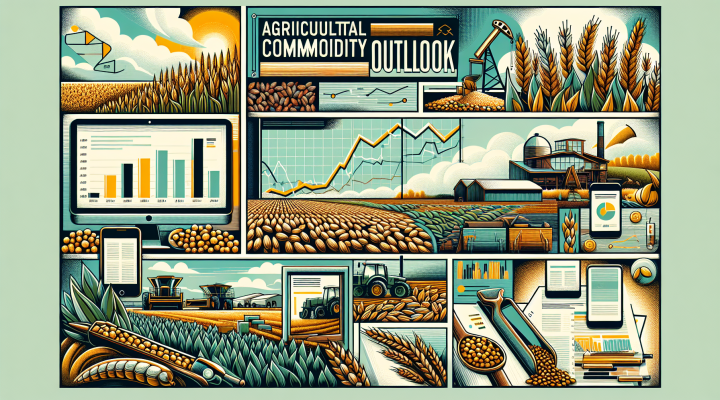
Smart Investors Track Agricultural Commodity Outlook to Maximize Canadian Portfolio Returns

Canadian investors seeking diversification and inflation protection increasingly turn their attention to agricultural commodities, yet many overlook the critical importance of understanding market forecasts. The agricultural commodity outlook serves as a compass for navigating volatile markets, helping investors capitalize on opportunities while managing risks inherent in this essential sector.

Agricultural commodities represent one of the most fundamental asset classes, with demand driven by population growth, changing dietary preferences, and climate-related supply disruptions. For Canadian portfolios, these investments offer unique advantages including natural inflation hedging, low correlation with traditional equity markets, and exposure to global food security trends.

Understanding Market Drivers Behind Agricultural Commodity Forecasts

The agricultural commodity outlook depends on multiple interconnected factors that savvy investors must monitor closely. Weather patterns remain the primary catalyst, with droughts, floods, and extreme temperatures directly impacting crop yields across major producing regions. Canadian investors benefit from tracking global weather data, as domestic agricultural exports—particularly canola, wheat, and barley—respond to both local and international growing conditions.

Currency fluctuations add another layer of complexity to commodity forecasting. A strengthening Canadian dollar can reduce the competitiveness of domestic agricultural exports, while a weaker loonie enhances profitability for Canadian producers. Geopolitical tensions, trade agreements, and export restrictions further influence commodity prices, making comprehensive market analysis essential for portfolio success.

Commodity Price Cycles and Portfolio Timing Strategies

Agricultural markets follow distinct cyclical patterns that informed investors can leverage for optimal portfolio positioning. The agricultural commodity outlook typically reflects seasonal planting and harvesting cycles, with prices often reaching peaks during planting season when supply concerns dominate market sentiment.

Successful Canadian investors recognize that agricultural commodities often outperform during inflationary periods when traditional assets struggle. Historical data shows that commodity exposure helps preserve purchasing power during economic uncertainty, making timing based on macroeconomic indicators crucial for portfolio optimization. Smart investors also consider inventory levels, with lower global stockpiles typically supporting higher prices and improved investment returns.

Direct and Indirect Agricultural Investment Approaches

Canadian investors can gain agricultural commodity exposure through various investment vehicles, each offering distinct risk-return profiles. Exchange-traded funds (ETFs) tracking agricultural indices provide diversified exposure without the complexity of futures trading, while individual commodity futures allow targeted positions in specific crops.

Agricultural stocks represent an indirect approach, with Canadian companies like Nutrien and Potash Corporation offering exposure to fertilizer demand trends. The agricultural commodity outlook directly influences these companies’ profitability, as higher crop prices typically drive increased fertilizer usage. Real Estate Investment Trusts (REITs) focused on farmland provide another avenue for agricultural exposure, combining commodity price appreciation with rental income streams.

Risk Management and Diversification Benefits

While agricultural commodities offer compelling diversification benefits, investors must carefully manage inherent risks through proper position sizing and risk controls. Commodity markets exhibit high volatility, with prices capable of significant swings based on weather events, policy changes, or demand shifts in major consuming countries.

The agricultural commodity outlook helps investors anticipate potential downturns and adjust portfolio allocations accordingly. Diversification across multiple commodities—grains, livestock, soft commodities—reduces concentration risk while maintaining exposure to the sector’s growth potential. Canadian investors should also consider the impact of currency hedging, particularly when investing in commodity funds denominated in foreign currencies.

Agricultural commodity outlook analysis provides Canadian investors with essential insights for building resilient, diversified portfolios capable of weathering economic uncertainty while capitalizing on global food demand trends. By understanding market drivers, timing strategies, and risk management principles, investors can harness the power of agricultural commodities to enhance long-term portfolio performance while contributing to food security investments that align with sustainable development goals.

Smart Canadians Master These Seven RRSP Optimization Strategies That Transform Retirement Savings

The average Canadian leaves thousands of dollars on the table each year by failing to properly optimize their Registered Retirement Savings Plan. While most investors understand the basic tax advantages of RRSPs, the difference between mediocre and exceptional long-term wealth building lies in sophisticated RRSP optimization strategies that go far beyond simple annual contributions.

Understanding contribution room mechanics forms the foundation of effective RRSP optimization. Your contribution room accumulates at 18% of your previous year’s earned income, up to the annual maximum, plus any unused room from prior years. This rollover feature creates powerful strategic opportunities that many Canadians overlook. Rather than viewing unused contribution room as a missed opportunity, savvy investors recognize it as flexibility for future optimization when their tax situation changes or when investment opportunities present themselves.

Tax bracket timing represents one of the most impactful elements of RRSP optimization. Contributing during high-income years and withdrawing during lower-income retirement years maximizes the tax arbitrage benefit. However, sophisticated investors take this further by analyzing their expected income trajectory over multiple years. If you anticipate a promotion, bonus, or other income spike, preserving contribution room for those high-tax years can generate substantially more after-tax wealth than making consistent annual contributions.

Asset location strategy within your RRSP can dramatically impact long-term returns. Since RRSP growth is tax-sheltered, it becomes the ideal vehicle for investments generating regular income, such as bonds, REITs, or dividend-paying stocks that would otherwise face immediate taxation. Meanwhile, growth-oriented investments with minimal distributions often perform better in taxable accounts where capital gains receive preferential treatment. This thoughtful approach to RRSP optimization can add percentage points to your annual returns without increasing risk.

Spousal RRSP contributions unlock additional optimization opportunities for couples with income disparities. The higher-earning spouse can contribute to the lower-earning spouse’s spousal RRSP, claiming the tax deduction immediately while building retirement income that will be taxed at the lower earner’s rate. This strategy becomes particularly powerful when combined with income splitting opportunities in retirement, potentially saving thousands annually in taxes during your retirement years.

The often-overlooked Lifelong Learning Plan and Home Buyers’ Plan provide strategic withdrawal opportunities that complement comprehensive RRSP optimization. These programs allow temporary access to RRSP funds without immediate tax consequences, provided repayment schedules are followed. Smart investors use these programs not just for their intended purposes, but as part of broader tax planning strategies that might involve temporary RRSP withdrawals during low-income years followed by re-contributions when tax rates increase.

Foreign withholding tax considerations add another layer to sophisticated RRSP optimization. Canadian tax treaties with many countries eliminate or reduce withholding taxes on foreign investments held within RRSPs, making them ideal vehicles for international diversification. U.S. stocks, in particular, benefit from treaty provisions that eliminate the typical 15% withholding tax when held in RRSPs, effectively boosting your returns compared to holding these same investments in taxable accounts.

Converting RRSPs to RRIFs requires careful timing and ongoing optimization even in retirement. The mandatory conversion at age 71 triggers required minimum withdrawals, but strategic planning in the years leading up to conversion can position you for optimal tax efficiency. Some retirees benefit from voluntary RRSP withdrawals in their early retirement years when their tax bracket is lower, while others maximize the tax-deferred growth by delaying conversions and withdrawals as long as possible.

Mastering RRSP optimization requires viewing your retirement savings as part of an integrated financial strategy rather than an isolated account. The most successful Canadian investors coordinate their RRSP decisions with their TFSA contributions, non-registered investments, and overall tax planning to create synergies that multiply their wealth-building effectiveness. By implementing these advanced strategies consistently over time, you transform your RRSP from a simple retirement account into a sophisticated wealth optimization tool that can add hundreds of thousands of dollars to your retirement nest egg.

Record Oil Sands Output Triggers Major Investment Opportunities Across Energy Sector

Energy investors are witnessing a dramatic shift in market dynamics as the latest oil sands production update reveals unprecedented output levels across North American operations. This surge in production capacity has created ripple effects throughout energy markets, generating compelling investment opportunities that savvy investors cannot afford to ignore.

The recent oil sands production update indicates that major operators have achieved production milestones that many analysts previously considered unattainable. Canadian oil sands facilities are now operating at near-maximum capacity, with several projects exceeding their original design specifications. This enhanced production efficiency stems from technological advances in extraction methods, improved steam-assisted gravity drainage systems, and optimized mining operations that have reduced both costs and environmental impact.

Market analysts are particularly bullish on companies that have demonstrated consistent production growth while maintaining strong operational margins. The oil sands production update data shows that leading operators have successfully navigated recent market volatility by implementing strategic cost reduction initiatives and investing in next-generation extraction technologies. These improvements have resulted in break-even costs dropping significantly, making oil sands operations profitable even during periods of moderate crude pricing.

Investment patterns reveal that institutional investors are repositioning their portfolios to capitalize on this production momentum. The latest oil sands production update has prompted several major investment firms to upgrade their ratings on key energy stocks, citing improved cash flow projections and enhanced dividend sustainability. Companies with integrated operations spanning extraction, refining, and transportation are receiving particular attention from fund managers seeking exposure to the entire value chain.

Technical analysis of oil sands stocks reveals multiple buy signals emerging across the sector. Chart patterns show strong support levels being established, while momentum indicators suggest sustained upward pressure on valuations. The oil sands production update has provided fundamental backing for these technical signals, creating a rare alignment of quantitative and qualitative factors that experienced traders recognize as high-probability investment scenarios.

Environmental considerations continue to shape investment decisions, but the latest oil sands production update demonstrates significant progress in reducing the carbon intensity of operations. Companies investing in carbon capture technologies, renewable energy integration, and enhanced recovery methods are commanding premium valuations as ESG-focused investors recognize their long-term viability. This trend is particularly pronounced among European and institutional investors who prioritize sustainability metrics alongside financial performance.

The geopolitical landscape further enhances the investment thesis for oil sands operations. North American energy independence remains a strategic priority, and the robust oil sands production update reinforces the sector’s role in reducing reliance on volatile international markets. This political tailwind provides additional support for long-term investment strategies focused on domestic energy infrastructure and production capacity.

Supply chain optimization has emerged as another critical factor driving improved performance metrics highlighted in the oil sands production update. Companies have successfully reduced transportation bottlenecks through pipeline capacity expansions and rail transport agreements, ensuring that increased production can reach key refining markets efficiently. These logistical improvements translate directly into enhanced profit margins and more predictable revenue streams.

Forward-looking investors are also monitoring emerging technologies that could further revolutionize oil sands operations. Advanced artificial intelligence systems, autonomous mining equipment, and innovative processing techniques promise additional efficiency gains that could extend the sector’s competitive advantages. The current oil sands production update represents just the beginning of what many experts believe will be a sustained period of operational excellence and financial outperformance.

Risk management considerations remain paramount for investors evaluating oil sands opportunities. While production metrics continue strengthening, commodity price volatility and regulatory changes require careful portfolio construction and position sizing. Successful investors are implementing diversified approaches that capture upside potential while maintaining downside protection through strategic hedging and sector allocation strategies.

The convergence of record production levels, improved operational efficiency, and favorable market conditions creates an compelling investment landscape for energy sector participants. As the latest oil sands production update demonstrates, companies that have invested in technological advancement and operational excellence are now reaping substantial rewards, positioning themselves as leaders in North America’s evolving energy infrastructure and offering investors significant opportunities for portfolio growth.

Record Market Volatility Surrounds This Week’s Critical Bank of Canada Rate Decision

Canadian financial markets are experiencing unprecedented volatility as investors position themselves ahead of what many analysts consider the most consequential Bank of Canada rate decision in recent memory. With inflation pressures mounting and economic indicators sending mixed signals, the central bank’s upcoming announcement has captured the attention of institutional investors, pension funds, and retail traders across the nation.

The anticipation surrounding this Bank of Canada rate decision reflects deeper concerns about the country’s economic trajectory. Recent employment data showing unexpected strength has complicated the central bank’s decision-making process, while persistent inflationary pressures in housing and energy sectors continue to challenge policymakers. Market participants are parsing every piece of economic data for clues about Governor Tiff Macklem’s likely course of action.

Bond markets have already begun pricing in various scenarios, with the yield curve exhibiting unusual patterns that suggest investors remain divided on the outcome. The Canadian dollar has strengthened against major trading partners’ currencies in recent sessions, reflecting growing confidence in the economy’s underlying fundamentals despite ongoing global uncertainties. This currency strength adds another layer of complexity to the Bank of Canada rate decision, as it impacts export competitiveness and inflation dynamics.

Corporate earnings reports released this week have painted a mixed picture of economic conditions, with financial institutions reporting robust lending activity while manufacturing companies cite margin pressures from elevated input costs. These divergent trends underscore the challenging environment facing central bank officials as they weigh the potential impacts of their policy choices on different sectors of the economy.

Investment strategists at major Canadian banks have issued conflicting predictions about the Bank of Canada rate decision, with some forecasting a continuation of the current stance while others anticipate a more aggressive approach to combat inflation. This disagreement among professional forecasters has contributed to increased market volatility, as trading algorithms respond to shifting probability assessments throughout each trading session.

The real estate sector, which has shown remarkable resilience despite previous policy tightening, remains a key focus for policymakers. Recent housing market data indicates that while transaction volumes have moderated, prices continue to climb in major metropolitan areas. This persistent strength in property values influences the Bank of Canada rate decision calculus, as housing costs represent a significant component of household expenses and inflation measurements.

International factors also weigh heavily on the central bank’s deliberations. Recent policy decisions by the Federal Reserve and European Central Bank have created a complex global monetary environment that Canadian officials must navigate carefully. The interconnected nature of modern financial markets means that the Bank of Canada rate decision will reverberate beyond national borders, affecting everything from commodity prices to cross-border investment flows.

Energy sector dynamics add another dimension to the policy equation. Canada’s position as a major energy exporter means that fluctuations in oil and natural gas prices directly impact economic growth prospects and inflation trends. Recent stabilization in energy markets has provided some relief for consumers, but geopolitical tensions continue to create uncertainty about future price trajectories.

As the announcement approaches, trading volumes in interest rate derivatives have surged to levels not seen since the pandemic-era policy responses. This heightened activity reflects the significant capital allocation decisions that institutional investors must make based on the Bank of Canada rate decision outcome. Portfolio managers are adjusting duration risk and sector allocations in anticipation of potential market movements following the announcement.

The central bank’s communication strategy following the rate decision will be scrutinized as closely as the policy choice itself. Market participants are particularly interested in any guidance about future policy direction, as this forward-looking information often proves more valuable for investment decisions than the immediate rate change. The Bank of Canada rate decision represents not just a monetary policy adjustment, but a critical signal about how policymakers view the balance between supporting economic growth and maintaining price stability in an increasingly complex global environment.

Smart Investors Track Canadian Dollar Movements to Protect Portfolio Returns

Currency movements can silently erode or amplify your investment returns, making the Canadian dollar outlook one of the most underestimated factors in portfolio management. While many investors focus exclusively on stock picks and sector allocation, they often overlook how currency fluctuations can dramatically impact their overall financial performance, particularly when holding a mix of domestic and international assets.

The Canadian dollar’s performance against major currencies directly affects the purchasing power of your investments and the real value of your portfolio. When the loonie strengthens against the U.S. dollar, your American holdings become less valuable when converted back to Canadian dollars, potentially offsetting gains made in the underlying securities. Conversely, a weakening Canadian dollar can boost returns from foreign investments, even if those assets perform modestly in their local currency.

Understanding the Canadian dollar outlook becomes particularly crucial given Canada’s resource-driven economy. The loonie traditionally moves in correlation with commodity prices, especially oil, gold, and agricultural products. When global demand for these resources increases, the Canadian dollar typically strengthens, affecting how your portfolio performs across different asset classes. This relationship means that Canadian investors face unique currency dynamics that don’t apply to portfolios in other developed markets.

For investors holding Canadian equities, currency movements create a double-edged scenario. Many TSX-listed companies generate significant revenue from international operations, meaning they benefit when the Canadian dollar weakens against their operating currencies. Resource companies, in particular, often see their stock prices rise when the loonie falls, as their commodity revenues translate into more Canadian dollars. This natural hedge can work in your favor, but it also means your domestic holdings aren’t immune to currency volatility.

The impact becomes more pronounced with international diversification. Canadian investors who hold U.S. stocks, European bonds, or emerging market funds through their portfolios experience direct currency translation effects. A portfolio with 40% international exposure could see returns swing by several percentage points annually based solely on currency movements, independent of the underlying asset performance. This currency risk can either enhance or diminish your investment thesis, making the Canadian dollar outlook a critical component of risk management.

Interest rate differentials between Canada and other major economies significantly influence currency trajectories. When the Bank of Canada’s monetary policy diverges from the Federal Reserve or European Central Bank, it creates opportunities and risks for portfolio positioning. Higher Canadian rates typically attract foreign capital and strengthen the dollar, while rate cuts can trigger capital outflows and currency weakness. These policy shifts affect not just currency values but also the relative attractiveness of Canadian bonds, real estate investment trusts, and dividend-paying stocks.

Inflation dynamics also play a crucial role in shaping the Canadian dollar outlook and its portfolio implications. When Canadian inflation runs significantly higher or lower than trading partners, it affects the currency’s real exchange rate and competitiveness. This relationship influences sectors differently – exporters may benefit from currency weakness that makes their products more competitive globally, while importers and consumer-focused companies might struggle with higher input costs.

Geopolitical factors and global risk sentiment further complicate currency forecasting but remain essential for portfolio planning. The Canadian dollar often behaves as a risk-sensitive currency, weakening during global uncertainty as investors flee to safe havens like the U.S. dollar. Understanding these patterns helps investors anticipate how their portfolios might perform during market stress, when currency movements can amplify volatility in unexpected ways.

Professional portfolio managers increasingly incorporate currency views into their asset allocation decisions, recognizing that ignoring exchange rate trends can undermine even the best investment strategies. Some choose to hedge currency exposure in international holdings, while others deliberately position for anticipated currency movements. The key lies in understanding how currency changes interact with your specific mix of assets and investment timeline.

The Canadian dollar outlook deserves a prominent place in your investment decision-making process, not as an afterthought but as a fundamental driver of portfolio performance. Whether you’re rebalancing between domestic and international assets, evaluating sector weightings, or planning long-term wealth accumulation, currency considerations can significantly impact your success. By staying informed about factors influencing the loonie’s trajectory and understanding how these movements translate into portfolio effects, you position yourself to make more informed investment decisions and potentially capitalize on currency-driven opportunities that less-aware investors might miss entirely.