Archives for July 21, 2019

Weekly Market Review – July 20, 2019

Stock Markets

Corporate earnings announcements took the spotlight last week as U.S. stocks finished slightly lower overall. Bank earnings were early reporters of second-quarter earnings season with mixed results. Low credit losses coupled with solid loan growth reinforce a healthy consumer outlook – a good sign for the economy. Energy stocks were off, dragged down by oil prices, which declined for five straight days, eventually settling 7% lower based on concerns about slowing global demand. The coming week will offer a heads up on the manufacturing trends as major industrial companies add their earnings to Q2 reports.

U.S. Economy

The U.S. economy has been supported by expectations of Fed rate cuts and continual solid economic and corporate earnings data. Similar strong rallies have pushed stocks to new highs in previous expansions. The Dow market performance in the year following illustrates how stocks don’t normally move higher in a straight-line pattern. This also supports the notion that the future path for the market is largely determined by the fundamental conditions that underlie it. In other words, it’s not just some arbitrary index level acting as the driving force. The Dow peaked in late-1961 at 735. This was underlain by a bull market ending amid a mild economic recession. The Dow peaked at 11,723 during the 1990s bull market which ended in 2000 with the popping of the tech bubble and economic slowdown that followed. Analysts are doubtful that the Dow will reach 37,000 before the next bear-market pullback, but they seem to widely agree that the current bull market is not exhausted yet. In the second half of 2019, the U.S economy will likely experience more volatility and lower returns than the first half of the year. Investors will look for continued positive GDP growth, modestly rising corporate earnings, and a Fed policy designed to extend the expansion.

Metals and Mining

It seems uncertain as to whether The Federal Reserve will cut interest rates by 50 or 25 basis points in its upcoming moves. According to certain analysts, gold will come out as one of the big winners as chaos leads market sentiment. Gold ended the week trading just off a fresh 6-year high, following Federal Reserve president John Williams’ statement that central bankers need to act quickly and lower interest rates at the first sign of economic distress.

Market expectations for a 50-basis point cut rose sharply to a 60% chance, according to the CME FedWatch Tool. The Fed then walked back William’s comments and since the “clarification”, market expectations have moved back in line to more like a 36.9% chance of a 50 bps move.

August gold futures last traded at $1,4257 an ounce, up 1% from last week.

Silver started making more moves in the markets this week, with gains similar to July 2016 when the metal gained nearly 7 percent. As gold interest continues to rise, logically silver is getting more investor attention. As of 9:22 a.m. EDT on Friday, silver remained above the US$16 per ounce level and was trading at US$16.41. As for the other precious metals, platinum was up over 1 percent for the week, and, as of 9:24 a.m. EDT on Friday, the metal was trading at US$856 per ounce — close to US$40 more than last week. Palladium, which has been marching to its own drum, made gains of almost 1 percent on Friday, trading at US$1,513 per ounce as of 9:28 a.m. EDT.

Energy and Oil

Oil prices came off this week based on rising fears of weakening global demand and a renewed supply surplus. The IEA lowered its 2019 demand growth forecast to 1.1 mb/d. The agency’s executive director also indicated they may cut it again if the global economy continues to slow. This is part of a series of downward revisions. The IEA pitched 2019 demand growth at 1.5 mb/d; and in its July Oil Market Report, the IEA held its 1.2 mb/d estimate. A growing number of analysts are questioning the IEA’s demand forecasts.

In a side note, Iran has offered a deal with the U.S. that would include permanent enhanced nuclear inspections in return for the U.S. lifting sanctions. The country’s foreign minister Javad Zarif said it was “a substantial move.” Interestingly, the offer came immediately after the U.S. downed an Iranian drone in the Persian Gulf Thursday. Oil prices fell on the news.

Natural gas prices were quiet despite a major heatwave gripping parts of the U.S. The eastern seaboard is hitting record temperatures with little relief in sight. Still, natural gas prices have barely moved. It appears that ongoing production increases have prevented any kind of tightening in the market. Gas futures slated for August delivery dropped under $2.30 per MMBtu at week’s end.

World Markets

Stock markets in Europe gave way to U.S.-China trade tensions as talks between the two countries stopped. U.S. President Donald Trump sounded the horn with potential tariffs on a further $325 billion worth of Chinese imports. Negotiations retracted over Chinese telecom company Huawei Technologies. The pan-European STOXX Europe 600 Index and the UK’s FTSE 100 Index both made small gains, while the German DAX index dropped about 0.5%, and Italy’s FTSE MIB Index lost nearly 2.4%.

China stocks took a loss, likely as the U.S. trade policy’s impact on China’s economy were absorbed. The benchmark Shanghai Composite Index fell 2.67%, and the large-cap CSI 300 Index, gave up 2.16%. According to reports, China’s export growth slowed 1.3% in June from a year ago. China’s imports fell a bigger-than-expected 7.3% from the reported prior-year period.

The Week Ahead

Earnings season is well underway with about 30% of the S&P 500 companies reporting second-quarter results. Economic data to watch for in the week includes global PMI indicators on, existing home sales, durable goods orders and Q2 housing vacancies, and on Friday, the all-important second-quarter U.S. GDP numbers.

Key Topics to Watch

–           S&P companies reporting

–           PMI Indicators

–           Existing home sales

–           Durable goods orders

–           Q2 housing vacancy numbers

–           U.S. GDP numbers released Friday

Markets Index Wrap Up

Want to Retire a Millionaire? Follow These 4 Steps

Millionaire status was once reserved only for the rich and famous, but these days, you might need to have at least a million dollars in the bank to retire comfortably.

Retirement is more expensive than ever, and the average American age 65 and up spends around $46,000 per year, according to the Bureau of Labor Statistics. If you spend that much every year for 25 years, you’ll spend a total of around $1.15 million — and that’s not even considering the effects of inflation.

Fortunately, it’s not as challenging as you may think to retire a millionaire, even if you’re earning an average salary. Just follow these four steps.

1. Calculate how much you’ll need to save each month

If $1 million is your ultimate retirement goal, figure out how much you should be saving every month to reach that goal by retirement age.

Two factors that affect this are your current age and your desired retirement age. The fewer years you have to save, the more you’ll need to save each month. While you can’t change your current age, you might choose to delay retirement by a few years to make it a little easier to reach your saving goal.

For example, say you’re 35 years old with nothing saved for retirement, and you want to retire with $1 million by age 65. Using a compound interest calculator, we find you’ll need to save around $900 per month to have $1 million saved by age 65, assuming you’re earning a 7% annual rate of return on your investments. However, if you were to delay retirement until age 70, you’d only need to save around $650 per month to reach that $1 million goal.

2. Be prepared to make some serious sacrifices

Retiring with $1 million isn’t easy, but it’s more challenging if you’re closing in on retirement age or have little to nothing saved already. You might even need to save thousands of dollars per month if you’re only a decade or two away from retirement with next to nothing in your retirement fund.

That’s simply not achievable for some people, but if you’re willing to make sacrifices, it could put your goal within reach. If money is tight and you’ve determined that you’ll need to start saving several hundred dollars per month, begin by taking an honest look at your budget and making some cuts.

Depending on how serious you are about retiring a millionaire, you might need to eliminate all but the most crucial monthly expenses. Start by cutting truly unnecessary expenses including any subscriptions or memberships you rarely use. Next, trim down the nice-to-have costs, like dining out, cable, going to the movies, and shopping for things you don’t need.

Finally, if you’re still struggling to come up with enough cash, take a look at your biggest expenses and see if there are ways those can be reduced. For instance, are you willing to sell your car? What about downsizing your home to save money on your mortgage? These are major lifestyle changes, but they can help you save hundreds more per month.

3. Invest in the stock market

It’s one thing to come up with the money you need to save each month to reach your goal. But if you’re not investing it in the right places, you’ll probably come up short.

Some people may think it’s smarter to invest their savings in “safe” investments, like a money market fund, a CD, or even a savings account. These types of investment options carry less risk, sure. But they also have much lower potential rates of return, so your money won’t go very far. If you invest $900 per month in an account earning a 3% annual rate of return, for instance, you’ll only have around $513,000 saved after 30 years — nowhere near your $1 million goal.

The stock market may seem scary, but it’s the most effective way to earn high enough returns to save a significant amount of cash by retirement age. The key is to make smart investment choices to protect your money.

Index funds and mutual funds allow you to spread your money over dozens or even hundreds of different stocks, limiting your risk in the event that one or two companies within the fund take a nosedive. While the stock market will always experience ups and downs, over time, you can expect to see an upward trend in your earnings.

4. Check in on your savings regularly and make adjustments

With any goal, it’s important to check in on your progress regularly and see where you stand. If you’re behind where you thought you’d be, you might need to make some adjustments to get back on track.

It’s tough to tell whether you’re on track for retirement simply by looking at your total savings. Because of compound interest, it may not seem as if you’re making much progress within the first few years, but your savings will grow exponentially after a few decades. If you’re making smart investment choices and meeting your monthly saving goals, don’t fret if your investments haven’t grown as much as you think they should — it takes time to see dramatic results.

The things to think about as you’re giving your savings a checkup include factors like whether you’ve been saving as much as you should each month and if your long-term goals are the same as when you began saving. If you’ve skipped saving for a few months or saved less than you should, you might need to start saving more each month to make up for it. Or if you have reason to believe you might not be able to work as long as you’d initially planned, you may have to boost your savings now in case you’re forced into retirement earlier than you expected.

Retiring a millionaire isn’t easy, but it is achievable if you’re willing to work for it. The sooner you get started saving, the easier it will be.

You May Need More Retirement Income if This Scenario Applies to You

If you’ve been proactively planning for retirement, you’re no doubt aware that your golden years aren’t going to fund themselves. Rather, you’ll need a healthy amount of savings to cover the bills later in life, even if you’re expecting a pretty sizable series of payments from Social Security.

Now you’ll see different estimates out there as to how much money it takes to retire comfortably, and the truth is that those numbers are somewhat irrelevant for one big reason: They’re not personalized. The amount of income you’ll need to fund your golden years will depend on a number of factors, including where you live and what sort of lifestyle you plan to uphold. But before you get too set on your personal retirement savings goal, there’s one factor that should prompt you to strive for an even higher number: your health.

How many years of retirement income will you need?

You might assume that if your health is poor, you’ll need additional savings to pay for your healthcare expenses during retirement. The truth is that saving extra for that purpose isn’t a bad idea. But, actually, you may wind up needing even more income if your health is great.

The reason? The better your health going into retirement, the longer you’re likely to live. And the more years you live, the more money you’ll need to pay your expenses.

The Social Security Administration estimates that the average 65-year-old man today will live until age 84, while the average 65-year-old woman will live until 86 1/2. But roughly one in three 65-year-olds today will live beyond the age of 90, while roughly one in seven will live past 95. If your plan is to retire at age 65, and you sock away enough money to tide yourself over until age 85, your nest egg may not suffice if you wind up alive and kicking well into your 90s. Therefore, if your health remains strong during your 40s and 50s, it should prompt you to ramp up your savings rate even more in order to pad your nest egg.

Now, let’s assume you’re 55 years old and have $400,000 in retirement savings so far. If your plan is to contribute $500 a month to your retirement plan between now and age 65, then you’d increase your savings balance to $870,000 if you were to invest your money at an average annual 7% return (which is a bit below the stock market’s average). But if you were to increase those monthly contributions to $1,000, you’d end up with about $953,000, assuming that same starting balance and 7% return. And that could make a world of a difference if you end up living longer than expected.

Another option to consider if your health holds steady as you age? Extending your career and working longer. In doing so, you’ll not only have the opportunity to keep padding your nest egg but also grow your Social Security benefits. For each year you delay taking benefits past your full retirement age, you’ll boost those payments by 8%, up until age 70. If you continue to hold down a job so you’re able to hold off on filing for Social Security, you might grow your benefits substantially, thereby putting slightly less pressure on yourself to ramp up on the savings front.

Entering retirement in good health is a positive thing in theory, but it could make for a trickier financial situation. If your health is excellent as your golden years near, take steps to increase your retirement income, whether by padding your savings, growing your Social Security benefits, or both. That way, you’ll be in a position to celebrate your great health rather than worry about the monetary repercussions of living longer.

Sanders unveils plan to guarantee the ‘right to a secure retirement’

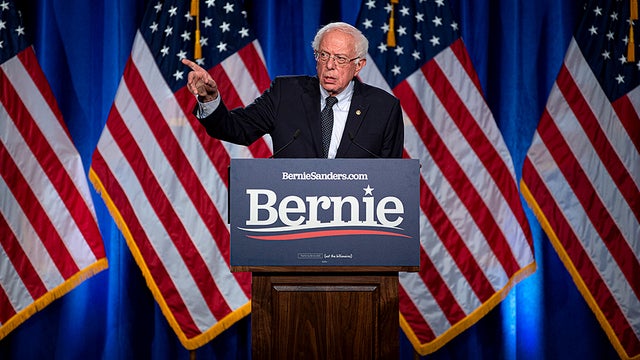
White House hopeful Sen. Bernie Sanders (I-Vt.) on Friday unveiled a plan to guarantee the “right to a secure retirement” as he seeks to burnish his progressive bona fides amid stiffening competition in the Democratic primary.

The plan, announced ahead of a discussion at campaign seniors issues roundtable and the AARP Presidential Forum in Iowa this weekend, builds off of several of Sanders’s existing proposals, including “Medicare for All,” slashing drug prices and expanding social security.

“Yes, we can live in a country where every senior lives in dignity and security, and does not have to choose between paying for basic necessities like medicine, food, or housing. We will do this by guaranteeing every American the right to a secure retirement, the opportunity to age in place in the community, and by expanding and improving Medicare to include dental, hearing and vision care,” Sanders wrote.

Beyond implementing Medicare for All and expanding it to include dental, hearing and vision coverage, Sanders’s health care plan will offer seniors supports and services at home “without waitlists, asset and income restrictions, and other barriers.”

Sanders said he would bolster collective bargaining rights of home care workers and enact a “domestic workers bill of rights” to ensure safe working conditions, hoping to attract 7.8 million home health and personal care aides by 2026.

Sanders goes on to promise an expansion of the 1965 Older Americans Act that would seek to create a new office within the Administration for Community Living to study social isolation among seniors and its impact and provide grants to states and municipalities to address the issue.

The plan would also expand the Low Income Home Energy Assistance Program to guarantee heating and cooling assistance, bolster the Commodity Supplemental Food Program to combat hunger among seniors and cap credit card interest rates at 15 percent and curtail the practices of loan sharks to protect seniors from “scams and predatory financial practices and instruments.”

Senior voters will play a crucial role in the 2020 presidential race. Voters aged 65 years and older went for President Trump over Hillary Clinton by 52-45 percentage points, according to exit polls, and hold outsized sway in the crucial swing state of Florida.

The plan’s introduction comes as Sanders faces an increasingly competitive challenge from Sen. Elizabeth Warren (D-Mass.) for the presidential primary’s progressive mantle. Warren has unveiled a slate of plans intended to reduce racial and economic inequities and has co-sponsored legislation to secure Americans’ retirement accounts.

A poll released Friday shows Sanders and Warren tied for second place in the primary behind former Vice President Joe Biden.

The best way to save for retirement may include this underused plan

Most people understand the virtues of a 401(k) when it comes to saving for retirement. Still, few know that there’s another employer-sponsored plan that could work just as well, if not better.

Like a traditional 401(k), a Roth 401(k) lets you contribute up to $19,000 a year through automatic payroll deductions and may come with the big bonus of an employer match if your company offers it.

One of the key differences is that contributions to a Roth 401(k) are taxed upfront so withdrawals in retirement are tax-free (as long as you’re age 59½ or older and you’ve held that account for at least five years).

For workers who are going to be in a higher, or the same, tax bracket down the road — such as millennials, in particular — that’s a big advantage over a traditional 401(k), where there are no taxes on contributions until money is withdrawn. At that point, money taken out in retirement is taxed at your ordinary income rate.

In this way, Roth 401(k) plans are similar to better-known Roth IRAs, except there’s no income limit on who can participate in a Roth 401(k) — and the maximum annual contribution for workers under age 50 is more than three times higher.

In addition to the $19,000 a year you can save in a Roth 401(k), there’s also a catch-up contribution of $6,000 if you are over age 50. With a Roth IRA, you can contribute $6,000, with an additional $1,000 if you’re 50 or older.

On the flip side, the IRS requires you to start taking withdrawals out of your Roth 401(k) at age 70½. A Roth IRA does not have this requirement.

Currently, only about 11% of employees contribute to a Roth 401(k), up just 3% in the past five years, even though roughly 7 out of 10 companies now offer a Roth option, according to Fidelity Investments, the largest provider of 401(k) plans.

“Making sure you’re contributing to employer-sponsored plans is important, whether Roth or not,” said Meghan Murphy, a vice president at Fidelity. (Financial advisors typically recommend contributing at least enough to snag the full employer match.)

Of course, it doesn’t have to be one or the other. Many advisors recommend taking advantage of both types of retirement savings plans, if possible.

That way, you can put together a tax-efficient strategy for your golden years: i.e., tap the accounts that allow tax-free withdrawals first — such as Roth accounts and brokerage accounts, which are only taxable when you sell appreciated assets to distribute cash.

“It is helpful to have several different buckets to pull from,” said Kristen Moosmiller, a certified financial planner at NorthAvenue Financial Advocates in Columbus, Ohio.

”With a Roth, you’re not only building up an after-tax bucket, you’re building up tax-free growth over time, ” she added.

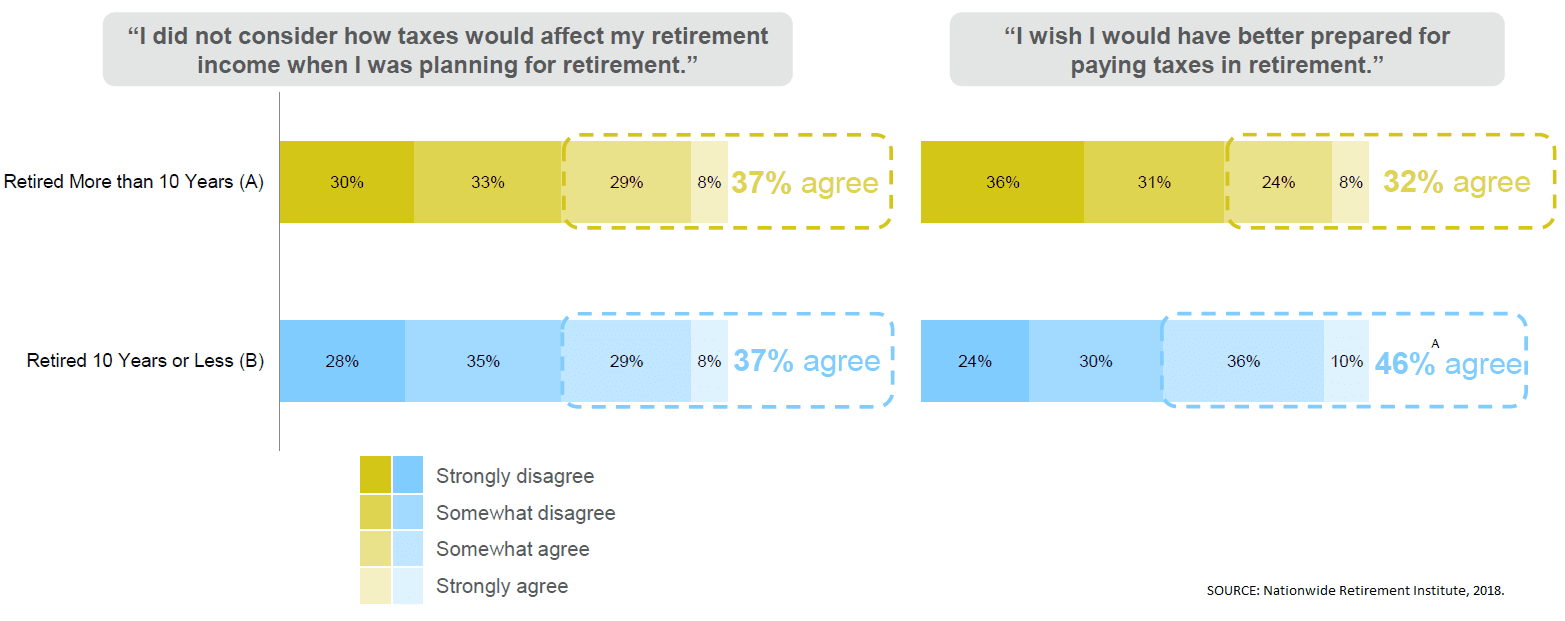
Without such a strategy, the tax bill can be a rude surprise in retirement. Almost half of recent retirees wish they had planned better for handling taxes in retirement, according to a survey from the Nationwide Retirement Institute. One in 4 report having paid thousands of dollars more in taxes in retirement than they had expected.

To lessen the blow, work with an advisor to determine the best way to grow your nest egg and then how much to draw from which sources when the time comes to retire, maximizing income and minimizing your tax bill.

Nationwide retirement taxes

‘Fortnite’ winds down season nine with a giant-sized battle

The Final Showdown was one of the game’s more dramatic events.

Epic is still finding ways to mark Fortnite’s season transitions in grand style. The studio just finished a “Final Showdown” event for the end of season nine that interrupted the battle royale with a brawl between a giant monster and an equally massive robot defending humanity. It’s not a spoiler to say the robot won (there wouldn’t be much of a game otherwise). As usual, though, the victory left the map irrevocably changed — you can view the aftermath in the clips below.

The tenth season isn’t expected to start until August 1st, but this could give you an idea of what to expect in a couple of weeks.

Epic doesn’t have much choice but to up the ante, to some extent. Its world changes have become enough of a mainstay that rivals like Apex Legends have followed a similar strategy. If map changes were ho-hum, gamers might be tempted to shift their attention to other games. And as dominant as Fortnite has become, it’s not guaranteed to remain on top forever.