Archives for July 21, 2019

Stocks to Watch:TransMedics Group (NASDAQ:TMDX) Shares Up 6.9%

TransMedics Group Inc (NASDAQ:TMDX)’s stock price shot up 6.9% during mid-day trading on Thursday . The stock traded as high as $25.04 and last traded at $24.85, 176,149 shares changed hands during trading. A decline of 25% from the average session volume of 235,718 shares. The stock had previously closed at $23.25.

Several brokerages recently issued reports on TMDX. Cowen began coverage on Plantronics in a report on Tuesday, May 28th. They set an “outperform” rating and a $67.00 price objective for the company. JPMorgan Chase & Co. began coverage on TransMedics Group in a report on Tuesday, May 28th. They set an “overweight” rating and a $34.00 price objective for the company. Morgan Stanley cut their price objective on Foot Locker from $44.00 to $40.00 and set an “underweight” rating for the company in a report on Tuesday, May 28th. Finally, Canaccord Genuity assumed coverage on TransMedics Group in a report on Tuesday, May 28th. They set a “buy” rating and a $37.00 price objective for the company.

The stock’s fifty day moving average price is $26.68.

TransMedics Group (NASDAQ:TMDX) last posted its earnings results on Wednesday, June 12th. The company reported ($4.86) earnings per share for the quarter, missing the Thomson Reuters’ consensus estimate of ($0.81) by ($4.05). The business had revenue of $4.68 million during the quarter, compared to the consensus estimate of $4.43 million. On average, equities analysts forecast that TransMedics Group Inc will post -1.78 earnings per share for the current fiscal year.

In related news, Director Edwin M. Kania, Jr. bought 33,333 shares of the business’s stock in a transaction on Monday, May 6th. The shares were bought at an average cost of $16.00 per share, for a total transaction of $533,328.00. The acquisition was disclosed in a document filed with the Securities & Exchange Commission, which is available through this link.

TransMedics Group Company Profile (NASDAQ:TMDX)

TransMedics, Inc, a commercial-stage medical technology company, engages in transforming organ transplant therapy for end-stage organ failure patients across multiple disease states. The company offers Organ Care System (OCS), an integrated, compact, portable preservation technology that addresses unmet need for organs for transplantation.
British Airways suspends flights to Cairo for a week to assess security

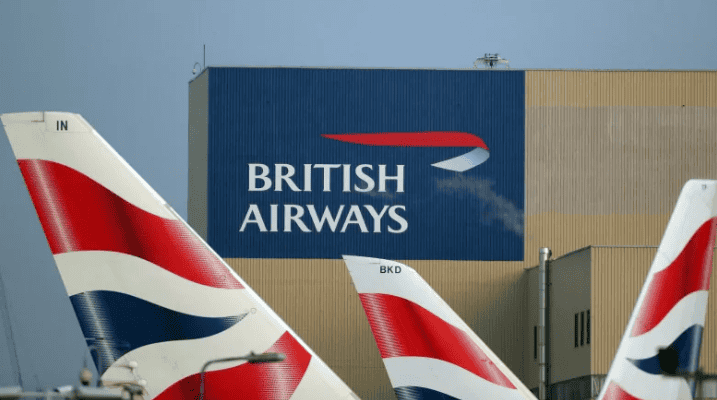
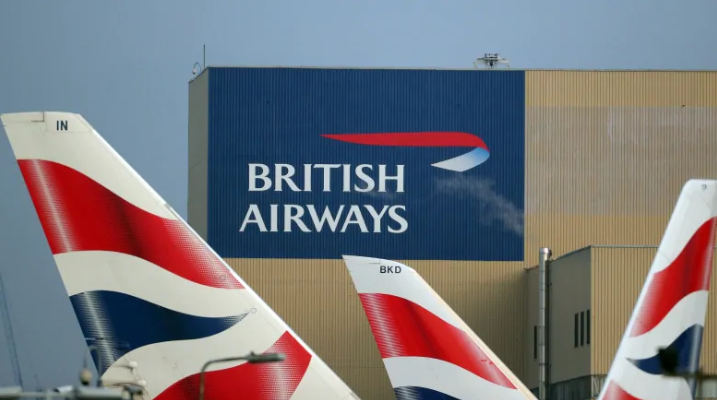
British Airways planes are seen at Heathrow Airport in London in February 2018. The airline has suspended all flights to Cairo.

Airline also halting flights to and from London at Cairo airport, Egyptian officials say

British Airways abruptly suspended all flights to Cairo for a week from Saturday over security concerns, giving no details about what prompted the move.

“We constantly review our security arrangements at all our airports around the world, and have suspended flights to Cairo for seven days as a precaution to allow for further assessment,” the statement said.

The airline added that it would never operate an aircraft unless it was safe to do so. When asked for more details about why flights had been suspended and what security arrangements the airline was reviewing, a spokesperson for the airline responded: “We never discuss matters of security.”

German airline Lufthansa later said it had also cancelled its flights to Cairo on Saturday from Munich and Frankfurt and will resume its flights on Sunday.

Three Egyptian airport security sources told Reuters that British staff were checking security at Cairo airport on Wednesday and Thursday. They provided no further details.

The British Foreign Office (BFO) updated its travel advice on Saturday to add a reference to the British Airways suspension, advising travellers affected to contact the airline.

The British government has long advised against all but essential travel by air to and from the Egyptian resort of Sharm el-Sheikh, where a Russian passenger jet was bombed in 2015, but has not issued similar warnings against air travel to and from Cairo.

“There’s a heightened risk of terrorism against aviation. Additional security measures are in place for flights departing from Egypt to the U.K.,” the BFO said.

Egypt’s Ministry of Civil Aviation said in a statement late on Saturday that it had contacted the British Embassy in Cairo which had confirmed that the decision to suspend the flights was not issued by Britain’s transport or foreign ministries.

The ministry added that it will add more flights from Cairo to London starting tomorrow “to facilitate transporting passengers during this period.”

However, Egyptian officials on Saturday say Cairo’s international airport has been notified by British Airways that the airline is suspending flights to and from London for two days.

Airport officials say the decision came after British officials conducted regular security checks earlier this week at the airport. There were no additional details.

The officials said all other airlines were operating as usual at the airport. They spoke to the Associated Press on condition of anonymity because they were not authorized to brief reporters.

Tourism, a key source of foreign revenue for Egypt, has been recovering after tourist numbers dropped in the wake of a 2011 uprising and the 2015 bombing of the Russian passenger jet, which killed all 224 people on board shortly after takeoff.

That attack, which was claimed by Islamic State, prompted Russia to halt all flights to Egypt for several years and a number of countries, including Britain, to cease flights to Sharm el-Sheikh, which have yet to resume.

The moves come as Britain weighs its response to Iran’s seizure Friday of a British-flagged oil tanker in the Strait of Hormuz and rising tensions stemming from U.S. sanctions’ effect on Iran’s economy and oil exports.

The strait and the Egyptian capital are separated by 2,500 kilometres and Egypt has long had a contentious relationship with Iran.

Trapped spawning salmon to be flown over Fraser River rock slide in B.C.

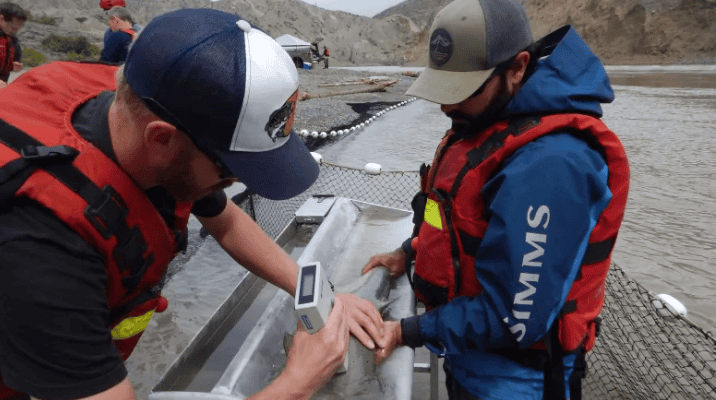
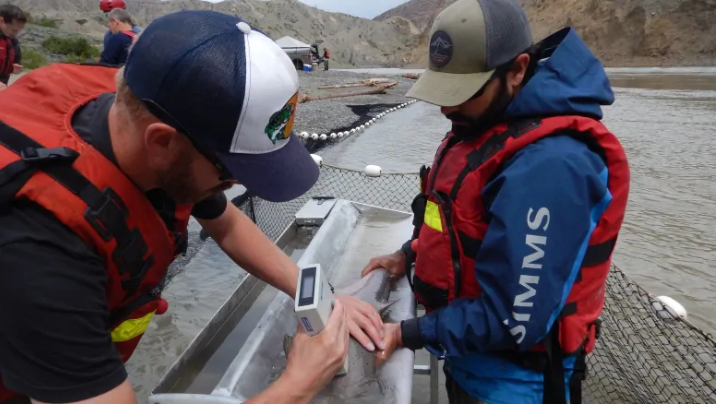
Officials work to capture salmon from the Fraser River west of Clinton B.C. to tag them so that it can be determined how many make it over the partial blockage from a landslide.

Work crews constructing holding pen to capture salmon, tag them and then lift them with helicopter

Tens of thousands of spawning salmon stuck behind a rock slide on the Fraser River in a remote part of British Columbia will be flown over the barrier by helicopter.

The solution was made public Saturday by Fisheries and Oceans Canada and the B.C. government after weeks of speculation over how to help the trapped fish.

In late June, officials discovered a landslide had partially blocked the Fraser River west of Clinton, B.C., and created a waterfall that was preventing thousands of salmon from getting upstream to spawn.

First Nations, conservationists, fishers, officials and others are all worried that if the fish can’t get upstream there could be a permanent loss of Chinook salmon populations.

Work crews are now building a holding pond along a part of the river south of the slide. It’s hoped that once constructed the fish will swim into the channel through a weir. The weir will allow the fish to get in, but not swim back out.

From the pond, the fish will be transferred with nets into aluminum tanks ranging in size from 780 litres to 2,700 litres. The holding tanks will have equipment in them to help oxygenate the water and reduce stress on the fish.

Take flight
Once in the tanks, helicopters will lift them over the landslide.

“This operation is intended to safely transfer the salmon beyond the partial blockage as quickly as possible,” said a release from both governments.

In the meantime, workers have been using nets to capture salmon so that they can be tagged. Officials want to know how many of them successfully get above the blockage.

Scaling crews on the face of the slide continue to remove rock and debris to ensure safe working conditions and prevent another landslide from happening.

The temperature of the water in the Fraser River is also helping the fish.

Officials said on Saturday that the water is cooling, which is beneficial. The level of the water has also decreased, which means there is less debris being carried downstream.

More dead fish found in the Du Lièvre River

Albert Benoît, who lives in Masson-Angers, holds up a dead fish found in the Du Lièvre River in Outaouais.

Earlier mass fish death was blamed on a toxic spill

Officials in Quebec have found dead fish in the Du Lièvre River in the Outaouais for the second time this month.

Quebec’s Ministry of Forestry, Wildlife and Parks got reports about the dead fish on Friday and sent experts to the area who confirmed the deaths.

A preliminary assessment by Quebec government biologists found around 100 dead fish including pike, bass and carp.

Officials are continuing their work in the river on Saturday but say there is no danger to people.

The discovery comes after necropsies determined an earlier mass fish death in the river was caused by a toxic spill.

Fish from the most recent die off will be examined by experts to determine the cause of death.

A sweaty Saturday: Hottest day of the year in Toronto, Ottawa

Keep cool, Canada. There’s hot and humid weather in various parts of the country.

Humidex values in the 40s in parts of Ontario, Quebec with heat warnings across Canada

The sweltering weather continues Saturday with several parts of Canada under heat warnings.

It’s the hottest day of the year so far for Toronto, said Environment Canada meteorologist Sherry Williams, among other parts of southern Ontario.

The Greater Toronto Area has daytime highs of 34 C, though it will feel more like 44 with the humidex.

The evening might not bring much relief — the overnight low will hover around 22, but it will still feel like over 30 throughout the night.

It should cool down the GTA on Sunday, Environment Canada says, as humidity drops and temperatures fall into the mid to high 20s.

There’s hot and humid weather in several parts of Ontario, southern Quebec, Nova Scotia and New Brunswick, the agency warns.

Southern Quebec and Ontario have temperatures in the 30s, with humidex values reaching the upper 40s farther south.

It’s also the hottest day of summer so far for Ottawa and Windsor, said Williams, and it’s likely the same for other places in southern Ontario.

As of 2 p.m. Ottawa was “winning” the heat contest in Ontario with a humidex of 46, Williams said.

But Ontario temperatures could still climb another few degrees by the end of the day, she said.

“I don’t think these are record-breaking temps, but they’re pretty close,” said Williams. “And it’s very widespread.”

As of late Saturday afternoon, there were also severe thunderstorm watches and warnings in several parts of southern Ontario and Quebec, as well as Fort Nelson, B.C., and parts of the Northwest Territories.

The huge blob of hot air that has blanketed several regions is known as a “heat dome.” The heat was also strong on Friday, with the humidex as high as 42 in Toronto and reaching 47 in Sarnia.

Parts of northern Alberta and the Northwest Territories are also under heat warnings, with temperatures reaching 30 C.

Heat warnings different across country
The threshold for heat warnings changes in different parts of the country, said Williams.

Warnings are based on typical temperatures in each region and people’s tolerance for hot weather, she said.

“Someone up in Timmins wouldn’t be as used to the heat as someone in Windsor,” Williams added.

It’s been a hot couple of days for parts of Canada.

“When you go outside, you feel like you’re in the water because it is so humid,” said meteorologist Julie Deshaies, speaking to CBC Montreal earlier in the week.

In Nova Scotia and New Brunswick, humidex values could be as high as 39 in parts of the province Saturday.

Environment Canada is reminding people to check in on loved ones, drink plenty of water and never leave people or pets in a parked vehicle.

The Ontario SPCA called on pet owners to take extra precautions over the next several days to keep their pets cool and safe.

The massive heat wave has also enveloped the U.S. Midwest and has pushed into the Northeast, ushering in temperatures that could top 38 in Washington and prompting utilities to take steps to prevent power outages.