Archives for July 21, 2019

Parrot plans to retire its Mambo and Swing drones

It’s part of the company’s attempt to cut ties with the consumer drone market.

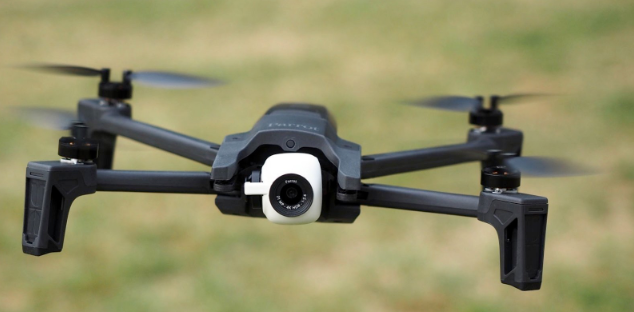
Drone company Parrot, maker of the Anafi 4K folding drone, is reportedly leaving the mini-drone market. Parrot has been shifting its focus away from consumer drones since 2017, but it’s been a slow transition. This week, Wirecutter confirmed that Parrot is retiring its Mambo and Swing drones, and supposedly, websites like Amazon have been slowly running out of stock.

Parrot will continue to sell its Anafi line, but it’s likely the company will market the drones for commercial use. The news isn’t exactly surprise. When Parrot laid off 290 employees a couple years ago, it said lackluster consumer drone sales were to blame. While the hobby drone market is growing, the FAA recently predicted that the commercial drone market could triple in size by 2023. It appears Parrot wants to focus its energy on that growth.
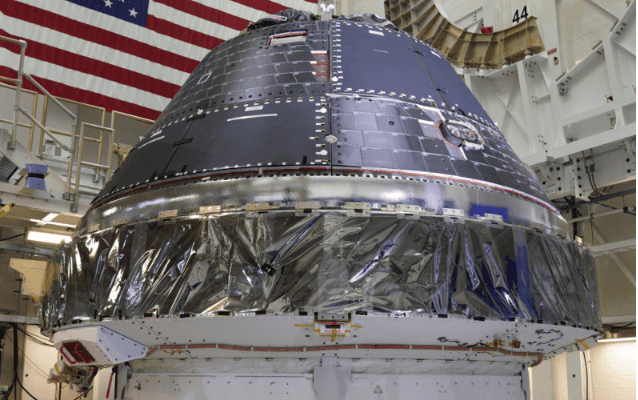
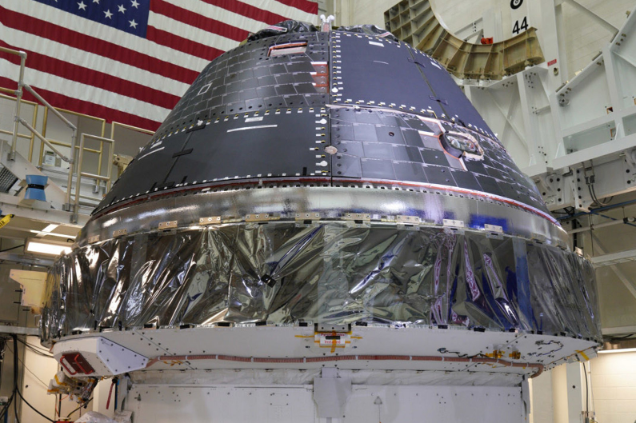
NASA’s Orion crew capsule is ready for its uncrewed trip to the Moon

One step closer to Artemis getting underway.

You knew the US wouldn’t mark the 50th anniversary of Apollo 11 without news about the country’s next trip to the Moon. Both Lockheed Martin and NASA have confirmed completion of the Orion crew capsule that will play a key role in Artemis 1, the uncrewed mission that will fly past the Moon while verifying Orion, the Space Launch System and the associated support systems. Efforts are now focused on integrating the capsule with the service module and testing it ahead of launch processing in early 2020.

The first crewed mission is Artemis 2, currently slated for 2022.

The capsule is a relatively complex beast. It has enough survival equipment for 21 days of active crew time, a modern cockpit, automatic docking and a whopping 12 engines. It needs that volume of equipment, though. It’s meant to be the main crew vehicle not just for Artemis, but for possible asteroid and Mars missions. It needs to be adaptable in ways that even capsules like Crew Dragon haven’t mustered so far.

How HoloLens is helping advance the science of spaceflight

Microsoft’s AR headset is making an impact both on and off the planet.

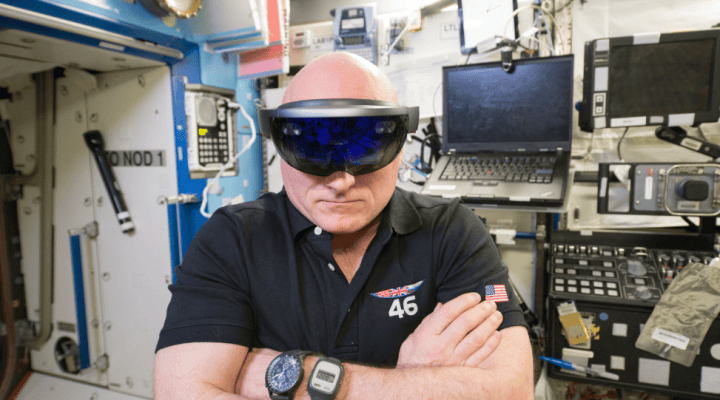
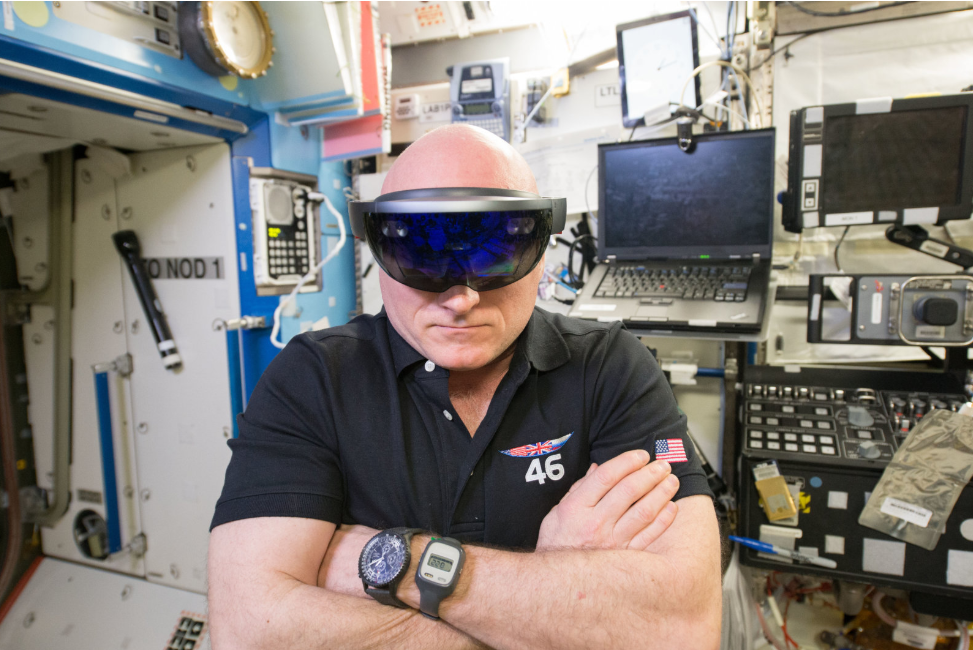
AR headsets haven’t exactly caught on with the general public — especially after the Google Glass debacle. Mixed reality technology has garnered a sizable amount of interest in a variety of professional industries, though, from medicine and education to design and engineering. Since 2015, the technology has even made its way into aerospace where NASA and its partners have leveraged Microsoft’s HoloLens platform to revolutionize how spacecraft are constructed and astronauts perform their duties while in orbit.

Microsoft and NASA’s partnership began on June 28th, 2015 as part of Project Sidekick when a SpaceX supply rocket docked with the ISS and delivered the headsets to the waiting astronauts. “HoloLens and other virtual and mixed reality devices are cutting edge technologies that could help drive future exploration and provide new capabilities to the men and women conducting critical science on the International Space Station,” Sam Scimemi, director of the ISS program at NASA said in a 2015 press release. “This new technology could also empower future explorers requiring greater autonomy on the journey to Mars.”

Aboard the ISS, crews utilized the HoLolens’ “Remote Expert Mode” in many of their tasks. Remote Expert connects the wearer with an Earth-based technician from the flight control team via Skype, allowing them to see what the astronaut is seeing and advise accordingly. The headsets could also be deployed in Procedure Mode, which played locally-stored animated holographic illustrations for times when an expert wasn’t available.

Project Sidekick was short lived, only running until the following March. However, a few months later in the summer of 2016, NASA’s Kennedy Space Center Visitor Complex in Florida launched “Destination: Mars,” a mixed reality guided tour of the Red Planet narrated by none other than Buzz Aldrin. Visitors were taken on a walking tour of several Martian sites using images captured by the Curiosity Mars Rover.

“This experience lets the public explore Mars in an entirely new way. To walk through the exact landscape that Curiosity is roving across puts its achievements and discoveries into beautiful context,” said Doug Ellison, visualization producer at JPL, said in a press release at the time. The OnSight application, which actually stitched those captured images together, went on to win NASA’s 2018 Software of the Year award.

Augmented reality has also found its way into spacecraft design and production with incredible results. Take the Orion Multi-Purpose Crew Vehicle, for example. It’s currently being developed by NASA and the ESA and built by Lockheed Martin. The 4-person crew capsule is designed to ride atop the Space Launch System during the Artemis lunar exploration missions as well as to Mars.

It’s also a fantastically complex piece of engineering. The Orion’s assembly manual alone is a 1,500 page behemoth, requiring technicians to constantly flip back and forth between the instructions and the task at hand. But that’s where the HoloLens comes in.

“Manufacturing was a good place to start because it’s easier to quantify what we’re seeing in terms of a comparison between traditional methods and what AR helping would take,” Shelley Peterson, the principal engineer for Augmented & Mixed Reality at Lockheed Martin Space, told Engadget.

Using the same Procedure Mode as aboard the ISS, Lockheed’s teams were able to drastically reduce the amount of time needed to assemble the spacecraft’s various systems. The team was able to cut down the time spent joining components and torquing bolts to precise specifications by 30 to 50 percent. Rather than having to thumb through the instructions to know how many pounds of pressure a specific bolt requires, that information is displayed directly atop the bolt by the HoloLens, Peterson explained.

“More recently, we’ve been working with position alignment of objects,” she continued. It really just changes things when you can see within your environment where you’re needing to place an object, instead of having to measure or use other methods. It’s a fantastic way to represent the data.”

What used to take a technician a full 8-hour shift to complete can now be done in 15 minutes, Peterson said. What would take a pair of technicians three days to do can now be done by a single technician in two and a half hours. “At Kennedy Space Center, we had an activity that normally takes eight shifts,” Peterson said. “They completed it in six hours.”

The HoloLens doesn’t just reduce the amount of time (and money) spent putting the Orion together, it also helps to mitigate uncertainty in the manufacturing process and prevent costly mistakes. “If [the technicians are] trying to interpret a 2D drawing or 3D model on a 2D screen, and make that mental translation to what it means to the object in the room, there’s still some questions,” Peterson explained, “and they’d like to be absolutely certain when they’re working on the spacecraft.”

Peterson also points to the headsets’ ease of use. A technician typically needs less than a half hour to get orient themselves with the system before jumping into their tasks. “They’re able to put it on and just start working,’ she continued. The current iteration of the HoloLens is still a bit heavy to be worn all day, though technicians can wear them for up to three hours before tiring, or simply pop the headset on and off as needed throughout the day.

The only major sticking point that Peterson notes is the difficulty in entering data. “We need a better way to type or to take the place of typing — voice doesn’t quite do it just yet,” Peterson said. “There’s times where we need to enter data, or capture data as we’re working and they have to move across to a Bluetooth keyboard.” That takes the technician out of their workflow, which is what the HoloLens was designed to minimize in the first place.

Lockheed isn’t the only organization leveraging AR technology in its manufacturing process. Rival aerospace company BAE has also paired with Microsoft, using HoloLens to eliminate the need for paper assembly manuals in its electric bus division, while a team of researchers from Johns Hopkins University Applied Physics Laboratory (APL) have used the tech to design their Dragonfly rotorcraft lander.

The Dragonfly will be heading deep into our solar system when it launches towards Saturn’s moon, Titan, in 2025. It’ll take a whopping nine years to get to the moon’s surface but once there, the Dragonfly’s exploration will help unlock the mysteries of our home system and maybe even — fingers crossed — give us our first glimpse at extraterrestrial life.

Stocks to Watch: Union Pacific (NYSE:UNP) Shares Gap Down to $164.55

Union Pacific Co. (NYSE:UNP)’s stock price gapped down prior to trading on Thursday . The stock had previously closed at $158.10, but opened at $164.55. Union Pacific shares last traded at $172.38, with a volume of 315,279 shares.

A number of equities analysts have commented on the stock. Sanford C. Bernstein raised shares of Royal Mail from a “market perform” rating to an “outperform” rating in a research note on Monday, June 17th. Cascend Securities lowered shares of Union Pacific from a “buy” rating to a “hold” rating in a report on Wednesday. Stifel Nicolaus set a $170.00 target price on shares of Union Pacific and gave the stock a “hold” rating in a report on Tuesday, April 23rd. TD Securities raised their target price on shares of Union Pacific from $170.00 to $180.00 and gave the stock a “hold” rating in a report on Monday, April 22nd. Finally, Deutsche Bank raised their target price on shares of Union Pacific from $197.00 to $206.00 and gave the stock a “buy” rating in a report on Friday. One investment analyst has rated the stock with a sell rating, ten have given a hold rating, twelve have given a buy rating and one has issued a strong buy rating to the company. The stock presently has a consensus rating of “Buy” and an average price target of $177.29.

The business’s fifty day moving average price is $169.67. The company has a market cap of $123.34 billion, a P/E ratio of 22.16, a P/E/G ratio of 1.96 and a beta of 1.04. The company has a debt-to-equity ratio of 1.26, a quick ratio of 0.60 and a current ratio of 0.72.

Union Pacific (NYSE:UNP) last announced its quarterly earnings data on Thursday, July 18th. The railroad operator reported $2.22 earnings per share for the quarter, beating analysts’ consensus estimates of $2.12 by $0.10. Union Pacific had a net margin of 26.95% and a return on equity of 31.74%. The company had revenue of $5.60 billion during the quarter, compared to analyst estimates of $5.62 billion. During the same quarter last year, the business posted $1.98 EPS. The firm’s revenue for the quarter was down 1.3% on a year-over-year basis. As a group, research analysts anticipate that Union Pacific Co. will post 8.91 earnings per share for the current fiscal year.

The business also recently disclosed a quarterly dividend, which was paid on Friday, June 28th. Investors of record on Friday, May 31st were issued a dividend of $0.88 per share. The ex-dividend date of this dividend was Thursday, May 30th. This represents a $3.52 dividend on an annualized basis and a yield of 2.01%. Union Pacific’s payout ratio is 44.50%.

In related news, Director William J. Delaney III acquired 5,000 shares of the firm’s stock in a transaction that occurred on Monday, May 20th. The stock was bought at an average price of $174.06 per share, for a total transaction of $870,300.00. Following the acquisition, the director now directly owns 5,000 shares of the company’s stock, valued at approximately $870,300. The acquisition was disclosed in a document filed with the Securities & Exchange Commission, which is available at the SEC website. Also, EVP Robert M. Knight, Jr. sold 1,380 shares of Union Pacific stock in a transaction dated Friday, May 3rd. The shares were sold at an average price of $180.01, for a total transaction of $248,413.80. Following the sale, the executive vice president now owns 94,943 shares of the company’s stock, valued at approximately $17,090,689.43. The disclosure for this sale can be found here. Company insiders own 9.96% of the company’s stock.

Large investors have recently bought and sold shares of the company. Camarda Financial Advisors LLC raised its holdings in shares of Union Pacific by 673.7% in the 1st quarter. Camarda Financial Advisors LLC now owns 147 shares of the railroad operator’s stock valued at $25,000 after purchasing an additional 128 shares in the last quarter. Squar Milner Financial Services LLC raised its holdings in shares of Union Pacific by 368.6% in the 1st quarter. Squar Milner Financial Services LLC now owns 164 shares of the railroad operator’s stock valued at $27,000 after purchasing an additional 129 shares in the last quarter. Mackey Komara & Dankovich LLC bought a new stake in shares of Union Pacific in the 1st quarter valued at about $29,000. Joseph P. Lucia & Associates LLC bought a new stake in shares of Union Pacific in the 1st quarter valued at about $30,000. Finally, Clarfeld Financial Advisors LLC bought a new stake in shares of Union Pacific in the 4th quarter valued at about $42,000. Institutional investors and hedge funds own 78.95% of the company’s stock.

About Union Pacific (NYSE:UNP)

Union Pacific Corporation, through its subsidiary, Union Pacific Railroad Company, engages in the railroad business in the United States. It offers transportation services for agricultural products, including grains, commodities produced from grains, fertilizers, and food and beverage products; coal and sand, as well as petroleum, liquid petroleum gases, and renewables; and construction products, industrial chemicals, plastics, forest products, specialized products, metals and ores, and soda ash, as well as intermodal and finished vehicles.

Stocks to Watch: Taiwan Semiconductor Mfg. (NYSE:TSM) Shares Gap Up to $41.63

Taiwan Semiconductor Mfg. Co. Ltd. (NYSE:TSM) gapped up before the market opened on Thursday . The stock had previously closed at $40.74, but opened at $41.63. Taiwan Semiconductor Mfg. shares last traded at $43.19, with a volume of 11,049,537 shares traded.

Several equities analysts have issued reports on TSM shares. ValuEngine cut Zumiez from a “hold” rating to a “sell” rating in a research report on Tuesday, July 2nd. CLSA upgraded Taiwan Semiconductor Mfg. from an “underperform” rating to a “buy” rating in a research report on Friday. Zacks Investment Research upgraded First Industrial Realty Trust from a “hold” rating to a “buy” rating and set a $39.00 target price on the stock in a research report on Wednesday, June 5th. Finally, Goldman Sachs Group set a €40.50 ($47.09) target price on Koninklijke Philips and gave the stock a “buy” rating in a research report on Tuesday, May 7th. Two analysts have rated the stock with a hold rating and three have assigned a buy rating to the company. The stock presently has an average rating of “Buy” and an average price target of $48.00.

The company has a quick ratio of 2.33, a current ratio of 2.62 and a debt-to-equity ratio of 0.03. The stock has a market capitalization of $223.99 billion, a price-to-earnings ratio of 21.81, a PEG ratio of 3.41 and a beta of 1.03. The company has a 50-day simple moving average of $39.84.

Taiwan Semiconductor Mfg. (NYSE:TSM) last issued its earnings results on Thursday, July 18th. The semiconductor company reported $0.41 earnings per share for the quarter, missing the consensus estimate of $0.42 by ($0.01). Taiwan Semiconductor Mfg. had a return on equity of 19.01% and a net margin of 31.42%. The firm had revenue of $241 billion during the quarter, compared to analysts’ expectations of $236.65 billion. During the same period last year, the business posted $2.79 earnings per share. The company’s quarterly revenue was up 3.3% compared to the same quarter last year. Equities research analysts expect that Taiwan Semiconductor Mfg. Co. Ltd. will post 2 earnings per share for the current year.

The business also recently declared an annual dividend, which was paid on Thursday, July 18th. Investors of record on Tuesday, June 25th were issued a $1.2756 dividend. The ex-dividend date was Monday, June 24th. This represents a yield of 2.56%. Taiwan Semiconductor Mfg.’s dividend payout ratio is currently 45.54%.

A number of hedge funds and other institutional investors have recently made changes to their positions in TSM. Lazard Asset Management LLC increased its holdings in Taiwan Semiconductor Mfg. by 32.8% in the 1st quarter. Lazard Asset Management LLC now owns 15,770,378 shares of the semiconductor company’s stock valued at $645,953,000 after purchasing an additional 3,897,469 shares in the last quarter. Bank of Montreal Can increased its holdings in Taiwan Semiconductor Mfg. by 158.7% in the 1st quarter. Bank of Montreal Can now owns 6,081,941 shares of the semiconductor company’s stock valued at $249,116,000 after purchasing an additional 3,731,319 shares in the last quarter. FMR LLC increased its holdings in Taiwan Semiconductor Mfg. by 22.1% in the 4th quarter. FMR LLC now owns 15,770,209 shares of the semiconductor company’s stock valued at $582,078,000 after purchasing an additional 2,854,186 shares in the last quarter. Thoroughbred Financial Services LLC increased its holdings in Taiwan Semiconductor Mfg. by 3,765.0% in the 2nd quarter. Thoroughbred Financial Services LLC now owns 2,309,198 shares of the semiconductor company’s stock valued at $230,920,000 after purchasing an additional 2,249,451 shares in the last quarter. Finally, Sanders Capital LLC increased its holdings in Taiwan Semiconductor Mfg. by 6.1% in the 1st quarter. Sanders Capital LLC now owns 35,903,507 shares of the semiconductor company’s stock valued at $1,625,456,000 after purchasing an additional 2,078,500 shares in the last quarter. Hedge funds and other institutional investors own 19.64% of the company’s stock.

About Taiwan Semiconductor Mfg. (NYSE:TSM)

Taiwan Semiconductor Manufacturing Company Limited, together with its subsidiaries, engages in manufacturing, selling, packaging, testing, and computer-aided design of integrated circuits and other semiconductor devices. The company manufactures masks and electronic spare parts; researches, develops, designs, manufactures, sells, packages, and tests color filters; and offers customer and engineering support services.

Stocks to Watch: Levi Strauss & Co. (NYSE:LEVI) Shares Gap Down to $18.89

Levi Strauss & Co. (NYSE:LEVI) gapped down before the market opened on Thursday . The stock had previously closed at $18.58, but opened at $18.89. Levi Strauss & Co. shares last traded at $18.36, with a volume of 29,155 shares traded.

A number of research firms have recently issued reports on LEVI. Goldman Sachs Group set a €100.00 ($116.28) price objective on shares of Henkel AG & Co KGaA and gave the stock a “buy” rating in a report on Wednesday. Guggenheim began coverage on shares of Levi Strauss & Co. in a report on Monday, April 15th. They set a “buy” rating and a $26.00 price objective for the company. Telsey Advisory Group began coverage on shares of Levi Strauss & Co. in a report on Monday, April 15th. They set an “outperform” rating and a $28.00 price objective for the company. Citigroup lifted their price objective on shares of T. Rowe Price Group from $98.00 to $108.00 and gave the stock a “neutral” rating in a report on Monday, April 15th. Finally, JPMorgan Chase & Co. lifted their price objective on shares of Dell from $68.00 to $77.00 and gave the stock an “overweight” rating in a report on Monday, April 15th. One equities research analyst has rated the stock with a sell rating, two have issued a hold rating and four have assigned a buy rating to the company. The company has an average rating of “Hold” and a consensus price target of $24.86.

The company has a current ratio of 2.35, a quick ratio of 1.55 and a debt-to-equity ratio of 0.77. The company has a fifty day simple moving average of $21.03.

Levi Strauss & Co. (NYSE:LEVI) last posted its quarterly earnings results on Tuesday, July 9th. The blue-jean maker reported $0.17 earnings per share for the quarter, topping the consensus estimate of $0.14 by $0.03. The business had revenue of $1.31 billion during the quarter, compared to the consensus estimate of $1.29 billion. Levi Strauss & Co. had a net margin of 7.01% and a return on equity of 42.83%. Levi Strauss & Co.’s quarterly revenue was up 5.4% compared to the same quarter last year. On average, equities analysts predict that Levi Strauss & Co. will post 1.09 EPS for the current year.

Institutional investors have recently bought and sold shares of the business. Commonwealth Equity Services LLC grew its holdings in shares of Levi Strauss & Co. by 33.1% during the second quarter. Commonwealth Equity Services LLC now owns 22,258 shares of the blue-jean maker’s stock valued at $464,000 after buying an additional 5,533 shares during the last quarter. FMR LLC purchased a new stake in shares of Levi Strauss & Co. during the first quarter valued at approximately $14,917,000. Hall Kathryn A. purchased a new stake in shares of Levi Strauss & Co. during the first quarter valued at approximately $137,211,000. Marshall Wace North America L.P. purchased a new stake in shares of Levi Strauss & Co. during the first quarter valued at approximately $2,631,000. Finally, KCL Capital L.P. purchased a new stake in shares of Levi Strauss & Co. during the first quarter valued at approximately $471,000. 9.05% of the stock is owned by institutional investors and hedge funds.

About Levi Strauss & Co. (NYSE:LEVI)

Levi Strauss & Co designs, markets, and sells jeans, casual and dress pants, tops, shorts, skirts, jackets, footwear, and related accessories for men, women, and children. The company sells its products under the Levi’s, Dockers, Signature by Levi Strauss & Co, and Denizen brands; and also licenses its Levi’s and Dockers trademarks for various product categories, including footwear, belts, wallets and bags, outerwear, sweaters, dress shirts, kids wear, sleepwear, and hosiery.