Archives for October 18, 2018

I-79 Technology Park center of ‘high tech movement’

Home to numerous federal facilities, over 30 businesses and 1,200 employees, the I-79 Technology Park has been a provider of high-paying jobs in West Virginia for over 25 years.

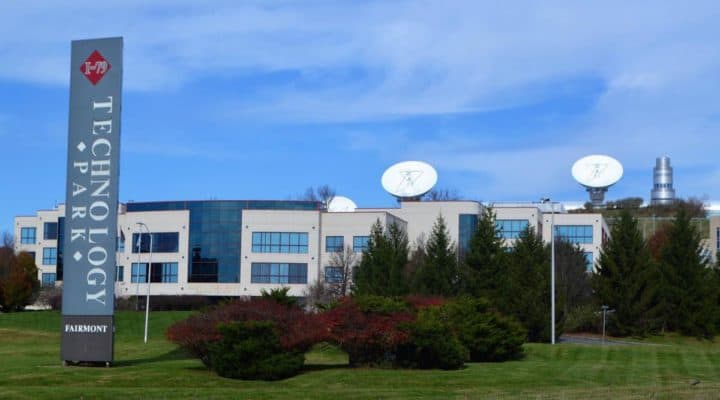
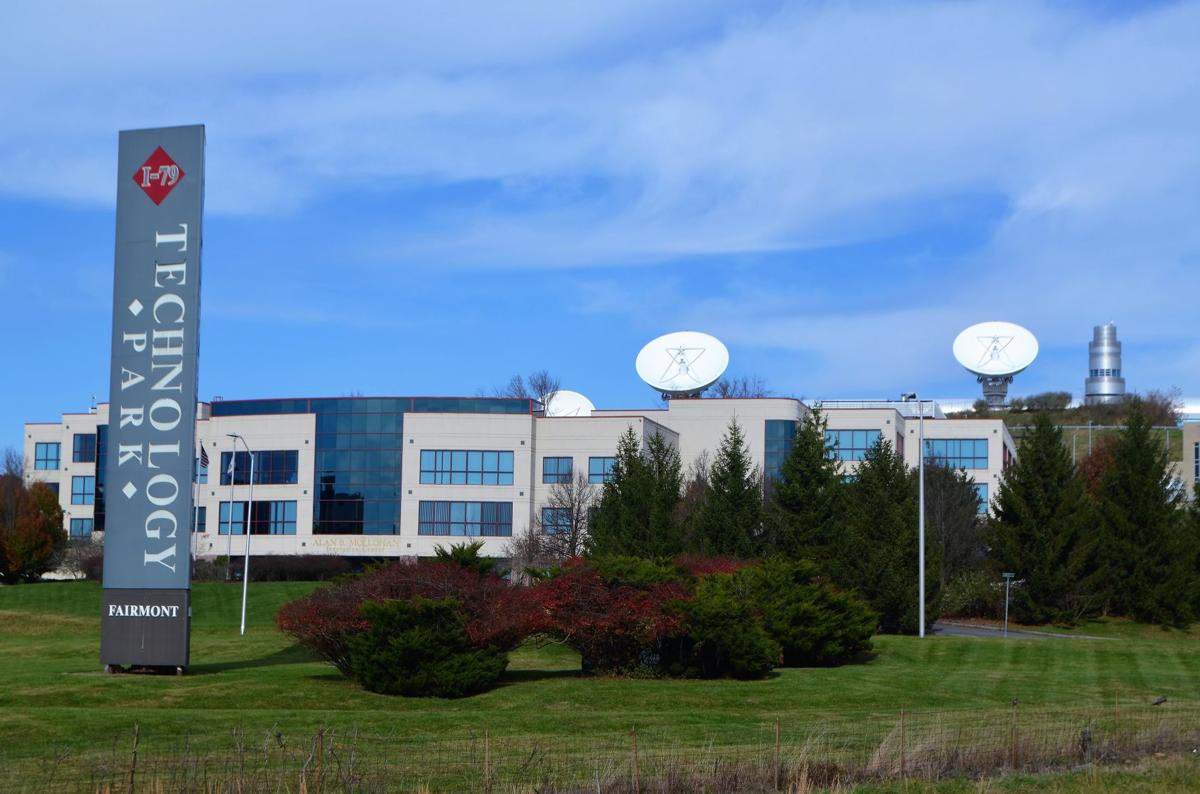
Located on 400 acres of land in Fairmont, the park is perhaps most notable for the numerous government agencies that have offices within there, including NASA, the FBI, the Department of Homeland Security and more.

High Technology Foundation President and CEO Jim Estep said with big agencies come big contracts; the National Oceanic and Atmospheric Association (NOAA), for example, has a major impact in the park.

“NOAA has its environmental security computing center located here in the park,” he said. “It’s one of the most advanced supercomputing centers in the country.”

The contract that supported the setup, maintenance and running of the NOAA center was $553 million, a portion of which went to funding West Virginia-based jobs. In addition to that massive contract, the park also has ties to government satellites.

“We have a backup satellite ground station for NOAA’s Geo-station Area Environmental Satellite Program,” he said. “That’s one of the highest priority civil programs in the United States — responsible for all the satellites that collect all the weather and climate data around the planet.”

Estep said the focus on lucrative science and technology contracts is beneficial to the region, the nation and beyond, fueling world-changing work.

“By focusing on science and technology, we’re attracting businesses who do work in those areas,” he said. “And those businesses are bringing high-paying jobs in their sector to our region.”

While he is proud of the work the park has done, Estep said there is still much more for the state to do to catch up and keep pace with the fast paced technology sector.

“Right now I think West Virginia really needs to carve out a role in the national knowledge sector,” he said. “That’s the fastest growing industry in the country.

Director of facilities and property management Brad Calandrelli is responsible for leasing and construction projects throughout the park, as well as writing up proposals for prospective companies.

Calandrelli has been responsible for bringing in numerous federal agencies, a process which he says can be time-consuming.

“Back in 2006, we submitted an application for the NOAA project,” he said. “It’s a lengthy process; we started in 2006, and they didn’t end up coming here until 2013.”

-The park uses a federal anchor model, explained Calandrelli. By recruiting massive agencies like NOAA and the FBI, private businesses will also begin to take interest in the area, drawn to the work these agencies provide.

“Once you have the federal anchor there, of which we have several, other companies want to locate in your area to do business with them,” he said. “Right now, we are intending to offer land free of charge throughout the park in order to create that anchor and draw these other businesses and employers in.”

Estep expanded on the federal anchor model, describing the park as an ecosystem of businesses and knowledge, with each contributing to the health of the other.

“We’re actively recruiting federal operations from the D.C. area that are looking to relocate from that region,” he said. “There is a ridiculous cost of operation and cost of living and national security concerns associated with that area that can make it unappealing to run a business in.”

Estep said the federal anchor program has been effective for the park, spurring scientific and other industries to relocate.

“When NOAA decided to relocate their supercomputer here, for example, we awarded a $30 million construction contract to a West Virginia company,” he said.

Calandrelli added that one of the park’s biggest goals is bringing prominence to different career paths in West Virginia’s economy.

“One of the most important things to the park is the diversification of the economy,” he said. “West Virginia has been so dependent on the extraction economy over the years that now that coal mines are seeing a downturn, it’s taking the economy down with it.”

As the father of a daughter who left the state to pursue a career in science, Calandrelli said it’s important to him to help bring more STEM careers to West Virginia.

“A diverse economy means that when kids graduate from West Virginia colleges, they will be able to stay in West Virginia and get good-paying jobs,” he said. “Right now, it’s a struggle to keep them there because we just don’t yet have the jobs.”

Believing the recent decrease in population in West Virginia has been a direct result of the lack of viable employment, Calandrelli hopes that by expanding the I-79 Technology Park, he is doing his part in to fix the problem.

“Our state’s population has been decreasing, and that’s because we just don’t have those high-paying jobs,” he said. “We want to change that at the park because this is a great state in which to live.”
Installation for New Entergy Technology Begins

New technology will have new meters in homes by 2019

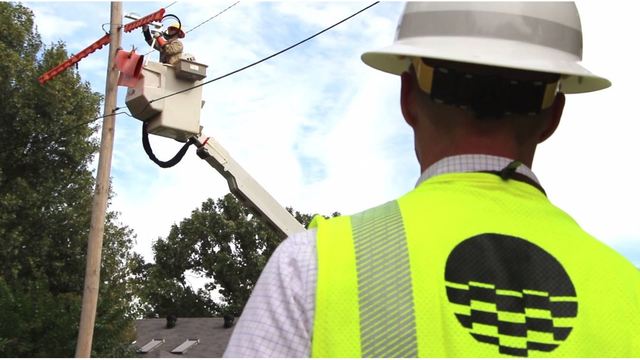
LITTLE ROCK, Ark. — New technology is heading to homes all across Arkansas.

Entergy Arkansas, Inc. is beginning to install new communication networks all across the state. These networks are going up in advance of the meter technologies which coming statewide January 2019.

The commutation network will be able to read the new meters and will send the information back to Entergy. This would eliminate the need for drivers to have to go door to read each meter.

“Today customers are able to see their energy usage in 30-day increments they get a bill and it shows their 30-day usage,” says David Wasson, spokesperson for Entergy Arkansas, Inc. “Tomorrow, we are installing advanced meters in the future that will let customers be able to see their usage the day after the usage occurs in 15-minute increments.”

Only 63 of the 75 counties will be affected by the new technology, including Little Rock. The meters are said to look no different the already digital meters out on the market.

“We have 70,000 customers living in Arkansas,” explains Wasson. “So this process is going to last from now until 2021 – it’s a methodical approach we are taking.”

The new technology will allow customers to track their energy usage and see where they are spending the most energy.

“Residents can sign into a portal to manage their energy usage,” says Wasson.

The new installation comes at no cost to current customers. Customers do have the option to opt-out of the new program but will be charged a fee for a truck having to drive to their individual home in order to read their meter.

How technology is creating the digital ports of the future

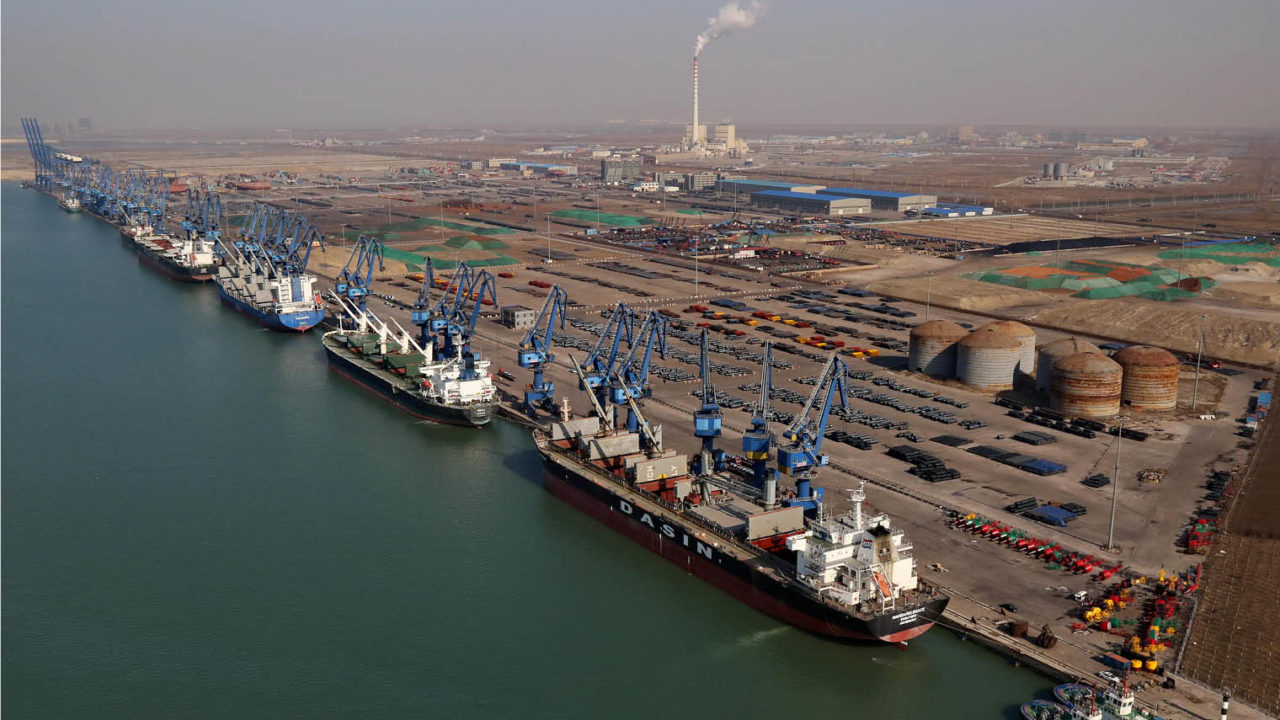
Caofeidian port, 200km east of Beijing, is expected to be completely autonomous by the end of 2018

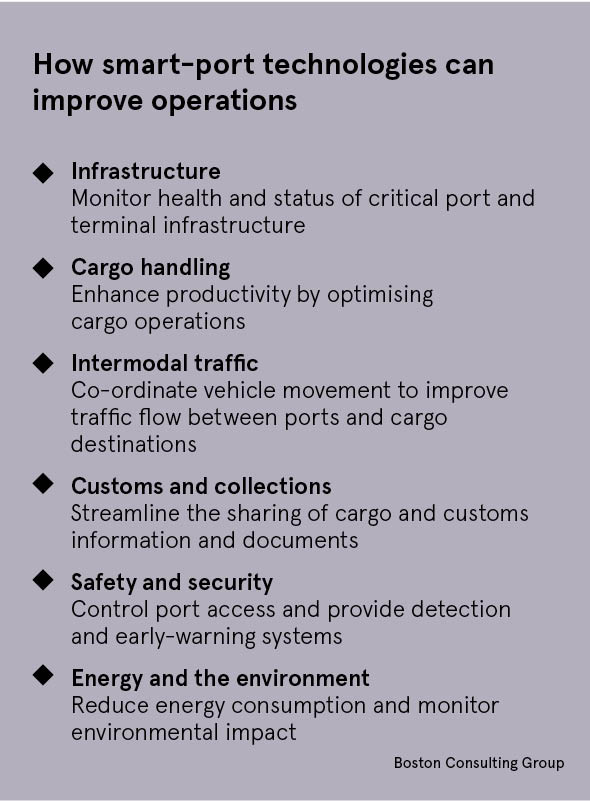
Technology is revolutionising ports, introducing remote-control cranes, self-driving trucks and other innovative systems to speed up loading and unloading of vessels

While the days of broad-shouldered stevedores manhandling cargo nets to the quayside may have slipped by in our maritime past, few could have anticipated that the time when a ship could arrive in port to be unloaded without a human being in sight would arrive so quickly.

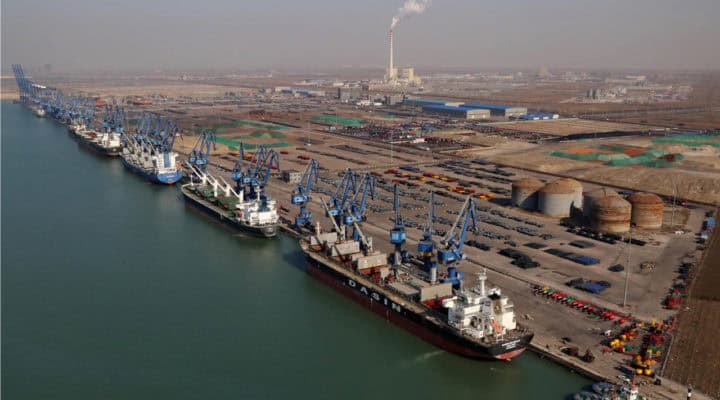
Yet this is exactly the scenario being predicted for the harbour at Caofeidian, a reclaimed chunk of land 200km east of Beijing. Port bosses say that by the end of the year the facility will be completely autonomous, with ships loaded and unloaded by automatic cranes, and containers driven away by self-driving trucks, all co-ordinated from a central remote-control room.

With their restricted, confined roadways, lack of pedestrians and predictable driving scenarios, ports are the . Europe’s biggest port, Rotterdam, is being used to test the concept of truck-platooning in which a series of unmanned trucks follow a lead vehicle, mimicking the actions of its driver. These small convoys make for a smoother traffic flow, as well as cutting CO2 emissions.

How tech is transforming Europe’s largest port
Technology is driving other changes in Rotterdam too, as the port gears up to receive autonomous vessels by 2025. Working with IBM and Cisco, port authorities are creating a new digital dashboard to replace traditional radio and radar communications between captains, harbour pilots and terminal operators.

The system will use a complex array of internet of things (IoT) sensors to collect data around tidal streams, wind strength and visibility, helping to reduce vessel waiting times and automatically guiding the crewless ships into berth.

“We are taking action to become the smartest port in the world,” says the port’s chief financial officer Paul Smits. “Speed and efficiency is essential to our business, and requires us to use all the data available to us.”

It is estimated that using this real-time information could save operators as much as $80,000 each time they dock a vessel.

It’s all about speeding things up and meeting the demand from online consumers, who now expect next-day delivery – Matt Abbott, Head of communications, DP World London Gateway

Embracing automation could create jobs, as well as eliminate them
In the UK, DP World London Gateway is also embracing automation. The state-of-the-art deep-sea port on the lower reaches of the Thames is home to 12 of the world’s largest ship-to-shore cranes, colossal 138m giants which can be controlled remotely as they unload four 20ft containers at a time.

The remote-control cranes bring operational efficiencies and because they’re unmanned, the port can continue to run when high winds make it too dangerous for traditional cranes to operate and force other ports to close.

In addition, the port has 60 automated stacking cranes, unique to the UK, which run up and down tracks straddling the containers, stacking them dockside. The cranes also load and unload around 1,800 trucks a day using sensors and sophisticated cameras, all in a bid to get goods on the road as quickly as possible.

“It’s all about speeding things up and meeting the demand from online consumers, who now expect next-day delivery,” explains Matt Abbott, the port’s head of communications. “We are constantly testing new initiatives. Automation across the port is becoming more and more prevalent.”

Although Mr Abbott is quick to add that docks are still major employers and, while automated cranes may no longer need drivers, the complex machinery is creating more maintenance and engineering jobs.

Tim Morris, chief executive of the UK Major Ports Group, agrees and says the automation of ports is ushering in “ and safer jobs”.

It’s about upskilling, he continues, with digital technology and artificial intelligence taking care of physical tasks, such as moving containers, leaving operators to concentrate on more complex roles.

Digital twins helping to optimise port operations
Another technology being trialled by some ports is This virtual version of the port enables operators to run different scenarios, using real-time information to improve decision-making and problem-solving, and support predictive planning.

Data, information and how it’s handled will be at the core of the way ports operate in the future, says Mr Morris. “Ports are global gateways for physical traffic and there is a role for them as digital gateways as well,” he says.

Take an imaginary widget, which could pass through around 30 different stages moving from Chengdu in China to Wolverhampton.

“Digitisation can streamline this, reduce the number of stages, make it contractually a lot simpler and a lot smoother,” he says. “The greater level of visibility also makes the physical transfer more efficient. Better data flow means better predictability about where the widget is going to be at any given time.”

Using blockchain to improve port connectivity
Which leads to , described by Jody Cleworth, chief executive of digital logistics business Marine Transport International, as “the buzzword of the logistics industry”.

The company has recently signed a memorandum of understanding to work with Associated British Ports to create a pilot programme to use blockchain technology to improve port connectivity.

Blockchain offers a way of securely linking the disparate systems that shippers, port operators and hauliers use to record and track goods, also reducing the time spent manually re-entering data.

“Blockchain-enabled technology has the potential to provide a transparent, secure and accurate way of capturing and sharing data with key parties,” says Mr Cleworth.

“The logistics industry is awash with proprietary technology that forces users to work in a certain way; with blockchain, we can connect all those systems to ensure data is accurately and quickly shared, helping speed up and simplify the flow of trade in and out of the UK.”

Innovation competition encourages alumni partnerships in strategic technology projects

The opening ceremony of Global Innovation and Entrepreneurship Competition co-organized by Beijing University of Aeronautics and Astronautics (BUAA) and Beijing Institute of Technology (BIT). Image Credit: Global Innovation and Entrepreneurship Competition/BUAA and BIT

Two of China’s leading STEM application institutions launched an innovation competition on October 16th in an event that showcased a vast expanse of industrial technology including space technology, industrial vehicle applications, smart manufacturing, information technology, new materials, and highlighting examples of military and civil technology integration.

Winners of the Global Innovation and Entrepreneurship Competition, which is organized by the Beijing University of Aeronautics and Astronautics (BUAA) and Beijing Institute of Technology (BIT), will be announced in December. The competition was first held in 2017.

Offering up to RMB 500,000 (around $72,000) to winners and potential access to investment from alumni, the competition aims to discover early-stage high-tech applications, and emerge as a platform where “innovators meet investors,” according to organizers.

While the blueprint may resemble that of an incubator or accelerator, the BUAA-BIT alliance wants to tap close innovator-investor relationships built on alumni associations. The competition also hopes to become a channel for private financing and help non-state-backed institutions discover tech investment opportunities.

This plan has been welcomed by the administrative and technology departments of Haidian, the district of Beijing that is home to the institutions. Haidian also hosts some of China’s top institutions including Peking University and Tsinghua University.

The competition launch event featured four existing companies or projects with connections to the organizers.

Galaxy Energy is a BUAA alumni project that focuses on innovation in rocket fuel ingredients and supply to reduce launch costs.

“There is massive potential in China’s private space exploration,” a spokesperson from Galaxy Energy said. “State policies are now backing up the field, which signals acknowledgment to guide more private capital to enter.”

Tencent’s AI incubation beneficiary Cool High Technology, a BUAA alumni project and collaboration partner of UC Berkeley, specializes in flying devices for use cases including fire rescue, anti-terrorism, science sample collection, and even flying cars. The company also owns a factory in Virginia, in the US.

Wanting to safeguard their technology, many of the startups were cautious about publicity or sharing their cooperation opportunities, even within the alumni clubs.

For example, FM Aviation Technology, a company that produces high-capacity logistic drones and cooperates with Alibaba’s Cainiao, SF Express, and JD.com, hid the name and other personal information of its chief technology officer when it introduced the background of its R&D activities. The company’s latest drone model FM150, with a max capacity of 1.5 tons and 50-meter departure and landing distance, will complete its first flight by the end of this year.

Adhere Miracle, a company started by undergraduate students who upgraded industrial robots’ ability to process clothing materials with electrostatic technology without causing wrinkles or damage, said the company is extremely cautious regarding market application strategy. Though having already built a cooperation relationship with suppliers of Adidas, Nike, and Uniqlo, Adhere said it sees the competition as one step toward real case application.

Walmart will save $20 million annually on floor wax

Walmart discussed its approach to spending, which includes items and services for business operations

The retail giant once again raises the possibility of higher prices due to tariffs

Walmart Inc. has found a new way to save millions of dollars: Switch the floor wax it uses in its stores.

According to the retail giant’s Chief Financial Officer Brett Biggs, Walmart WMT, +0.78% switched to a new floor wax that’s both cheaper and more effective, reducing the number of times the floors have to be buffed.

“That one change in floor wax will save us over $20 million a year,” he said, according to a FactSet transcript of the company’s Tuesday investment community meeting. “So these small differences can make a big difference to Walmart.”

That is just one example of the ways the company is approaching how it spends, and finding ways to modernize its operations.

“The allocation of capital is quite different from before and aligned with how we’ll serve customers in the future,” Biggs said. “We’ve shifted spending away from new stores and clubs in the U.S… and have allocated more capital to e-commerce, store remodels, supply chain and technology. And this is roughly the type of allocation I think you can expect over the next couple of years.”

In his remarks, Chief Executive Doug McMillon emphasized the “cultural change” that’s happening at Walmart, emphasizing things like the use of blockchain for food safety and the removal of emissions from its supply chain. He also talked about the trial-and-error that it takes for some of the changes to be successful.

“Of course some of the things we’ve tried didn’t work or haven’t worked yet,” he said. “We tried grocery delivery with Uber and Lyft, but switched to others as we all learned it’s different to move a grocery basket than it is to move people or a restaurant order.

“We don’t have the right model to scale associate delivery yet, but it makes sense, so we’re working on the next iteration,” McMillon said.

Analysts left the meeting upbeat about the path Walmart is on.

“Walmart is seizing the moment to transform through innovation and utilization of unique store, grocery and people assets,” wrote Cowen analysts led by Oliver Chen, in a note.

The retailer’s most “important weapons” include its use of 4,761 U.S. locations to execute delivery service (there are also 597 Sam’s Club locations, according to the company website), its academies that will train 500,000 associates in 2018 and its pharmacy relationships. These are also traits that make the company “un-Amazon-able,” the analysts said.

Cowen rates Walmart shares outperform with a $115 price target.

Walmart cut its profit outlook for the year, and Cowen concedes the medium-term pressures that could drive gross margin headwinds and earnings pressure. But analysts think the guidance is “achievable and beatable.”

J.P. Morgan analysts said the company’s risk-taking and ability to invest puts it ahead of the competition.

“Management continues to play long ball with top-line taking priority over profit dollar growth (though ample expense reductions ahead make it easier for the company to prioritize sales growth),” analysts wrote.

J.P. Morgan also highlights the “numerous” cost-efficiency opportunities Walmart has, its continuing effort to build out its merchandise assortment — most recently with the acquisition of online lingerie company Bare Necessities — and increasing delivery speed over the next couple of years.

Analysts also noted how Walmart is handling the threats from tariffs.

“Walmart will take a balanced approach with some price increases, some pushback on vendors, some sourcing changes and some margin degradation,” J.P. Morgan wrote in a note.

Walmart’s Biggs said the retailer procures two-thirds of its U.S. purchases domestically. Walmart, along with Target Corp. TGT, -1.62% and other retailers, have warned that tariffs will drive up the cost of goods for shoppers.

“[W]e’ll do everything we can not to raise prices, but there are certain environments where we would raise prices because of those tariffs and we’ll have to manage margins in a way and price in a way that makes sense for customers and shareholders,” he said.

J.P. Morgan rates Walmart shares neutral with a price target of $108.

Quo Vadis Capital President John Zolidis said Walmart is transforming from a traditional retail model to one that optimizes its assets, like its stores, for customer transactions, whether online or in a brick-and-mortar location.

“We believe this strategy (which is being coupled with retail fundamentals including reinvestment in price and labor) is working based on the current top-line momentum in both the store business as well as in e-commerce sales growth,” the Quo Vadis note said.

Even though it’s unclear when margins and returns will rise, “most important, in our view, is that Walmart continues to grow comps and take share, and that it positions itself for the long term in an environment that has radically changed relative to the one for which its model was originally designed.”

Walmart shares are down 2.2% for the year to date, but have rallied 12.3% for the past 12 months. The Dow Jones Industrial Average DJIA, -0.36% is up 9.8% for the past year.

Stocks end choppy session slightly lower after Fed minutes

The Federal Reserve building

Equities trim heavy early declines

Stocks ended modestly lower Wednesday after the release of minutes from the Federal Reserve’s last policy meeting, but remained above session lows. The weaker tone came a day after major indexes bounced back from technically oversold conditions, posting their biggest one-day jump since late March.

How did the benchmarks perform?

The Dow Jones Industrial Average DJIA, -0.36% fell more than 300 points in early trading, before paring those losses and briefly edging into positive territory. The Dow finished the day down 91.74 points, or 0.4%, at 2706.88. The S&P 500 SPX, -0.03% lost 0.71 point, or less than 0.1%, falling to 2,809.21, while the Nasdaq Composite Index COMP, -0.04% shed 2.79 points to close at 7,642.70.

Wednesday’s action followed a strong day for markets, with the Dow and the S&P both rising 2.2%, and the Nasdaq climbing 2.9%.

What’s drove the market?

The minutes of the Fed’s September meeting, which saw policy makers deliver a widely expected quarter-point increase, showed that a majority of policy makers believe interest rates must continue to rise until policy becomes restrictive.

Minutes aren’t ordinarily a source of volatility, however, the outsize focus on Treasury rates—notably a rise in the yield on the 10-year Treasury note TMUBMUSD10Y, -0.03% to a seven-year high last week—ensured they were closely read. Meanwhile, the market continued to closely watch negotiations between the European Union and Britain as it attempts to exit from the trade bloc with a trade agreement in hand. The potential for a clash between Italy and the European Union over Rome’s budget plans also remains in the spotlight.

Traders also took notice of an interview Commerce Secretary Wilbur Ross gave to CNBC on Wednesday, in which he said that U.S.-China trade talks are on “hiatus” for now, but not at an impasse.

Which data were in focus?

The number of new homes under construction fell 0.6% to a seasonally-adjusted annual rate of 1.201 million in September. The rate was 1% below last year’s levels. The numbers nearly matched the consensus forecast of 1.208 million produced by a MarketWatch survey of economists.

Permits for construction of new homes also fell 5.3% in September from the month before to a seasonally adjusted annual rate of 1.241 million. The number represents a 3.7% increase year-over-year, but still was weaker than average analysts expectations polled by FactSet for a pace of 1.28 million new permits.

What were analysts saying?

“The market is interpreting the Fed minutes as slightly hawkish,” said Lindsey Bell, investment strategist with CFRA. For a while the market didn’t believe the Fed was serious about raising rates four times this year and three times in 2019, she said. But that changed after hawkish comments from Fed Chairman Powell earlier this month. “The FOMC minutes are another reminder that the Fed is serious, and isn’t going to let President Trump bully them” into a more dovish stance, said Bell, referring to comments the president made this week criticizing Fed policy, the latest in a string of criticisms.

“We had a big day yesterday, and today’s open shows that volatility is not going away,” said Jeff Carbone, co-founder of asset management firm Cornerstone Wealth Group. With interest rates markedly higher today than even one month ago, investors will remain cautious, and the early morning downturn is evidence of this change in sentiment, he said. “But when you look at the fundamentals of the economy and the market, we expect the market to ultimately move upward.”

Mark Espisito, chief executive of Espisito Securities shared this optimism. “We still see a strong earnings season and a strong stock market for the next year or so,” he said. “Even when there is a pullback like this morning, it’s met with resistance.”

He argued that the reversal of steep early morning losses in the major indexes is proof that there is “consistent buying interest when markets move down,” because investors are still betting on a strong economy and strong earnings to power stocks higher.

Which stocks were in focus?

Shares of Netflix Inc. NFLX, -0.97% rose a day after the company reported better-than-expected quarterly results. The stock climbed 5.28%

Investors soured on shares of International Business Machines Corp. IBM, -0.29% after the company announced a revenue miss following the close on Tuesday. Shares fell 7.63%.

Shares of United Continental Holdings UAL, +0.89% rose 5.95%, following news that executives raised their forecasts for 2018 profits, even as it missed analysts’ third quarter EPS estimates.

Auto parts retailers had a rough day, with AutoZone, Inc. AZO, -7.60% ranking as the S&P’s second biggest loser Wednesday, down 7.6%. Advance Auto Parts, Inc. AAP, -5.22% was also down 5.22%.

Tesla TSLA, -1.21% stock fell 1.7%, following an SEC filling by the company saying it plans to issue $20 million in stock that will be bought by the company’s founder, Elon Musk. The stock initially popped on the news, but reversed course after the market opened. The filing also announced that a federal court approved a settlement between Tesla, Musk and the Securities and Exchange Commission that has the company and its founder each paying $20 million in fines related to Musk’s proposal to take Tesla private.

Home Depot HD, +0.26% shares slipped 4.3%, on falling housing starts data and new housing permit numbers that missed expectations.

Shares of companies in the cannabis industry garnered investor interest on the first day of legal, recreational marijuana use across Canada. Shares of three of four major, publicly listed cannabis firms were down sharply in early morning trading, though all recovered some from session lows.

Aurora Cannabis ACB, -2.93% was hit hard in early action, falling 12.5%, before paring losses to end the day down 3.4%.

Cronos Group CRON, -6.56% stock was down 6.56% at the market close, while Canopy Growth Corporation WEED, -4.28% was down 4.28%

Shares in Aphria, Inc. APH, +3.80% however, rose 3.8% during Wednesday trading.

How did other markets trade?

Asian stocks ended higher, with Japan’s Nikkei NIK, -0.80% jumping 1.3%, extending Tuesday’s rally in the U.S., while European indexes ended lower as Italian and British political uncertainty buffeted stock benchmarks.

Crude-oil prices CLX8, -0.97% fell, while gold prices GCZ8, +0.01% were up 0.4% as the U.S. dollar index DXY, -0.10% rose 0.6% Wednesday.