Archives for October 18, 2018

PayPal earnings: Venmo progress could breathe life into stalled stock

PayPal reports results on Thursday.

Analysts are also looking for commentary on M&A, international growth

PayPal Holdings Inc. has been talking about making money off Venmo for more than two years but could be finding surprising ways to make that happen.

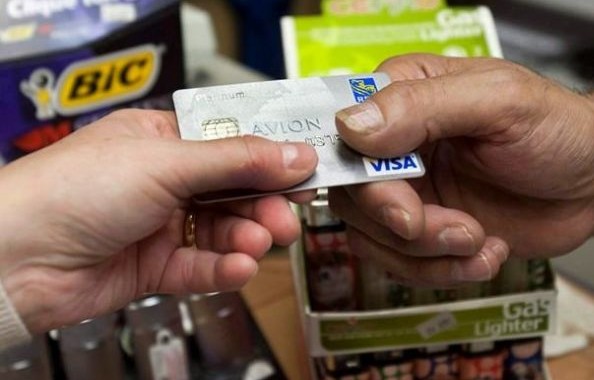
Progress has been slow with the company’s efforts to get consumers to pay with Venmo for e-commerce purchases, yet PayPal PYPL, +0.39% seems to have seen better-than-expected traction for an option that lets Venmo users pay 25 cents to transfer their funds immediately to their bank accounts.

PayPal said on its last quarterly earnings call that 17% of Venmo users have engaged in a “monetized experience” since launch, and Deutsche Bank analyst Bryan Keane suspects that the company’s instant-deposits feature has so far seen the biggest uptake. Perhaps in a sign of high willingness to pay for the feature, PayPal quietly announced last week that it would add a 1% charge for such transfers. Users who want to send money to their bank accounts at regular speed can still do so free, but news of the fee increase angered some Venmo users who complained about the change on social media.

Venmo monetization will be a key issue when PayPal reports third-quarter results on Thursday. Jefferies analyst John Hecht wrote that “management changes within Venmo and some fee changes within the instant-transfer product are “topics of focus” for PayPal’s earnings call. He rates the stock a buy with a $110 price target.

Deutsche Bank’s Keane said that he’ll be looking for indications of “the pace of Venmo monetization” given that efforts have so far moved at a more gradual pace than he expected a year ago. He has a buy rating and $98 target on the shares.

PayPal bulls are betting on the company’s ability to effectively monetize Venmo by getting younger users to pay with the service for online purchases. The company has slowly been getting more merchants to add Venmo buttons to their sites and may provide updates during the conference call on whether users of big platforms like Uber and Grubhub are choosing the Venmo option at checkout. PayPal recently rolled out new checkout-button options for online sellers that make it easy for them to display Venmo buttons to interested shoppers.

Newer growth engines such as Venmo are important for PayPal, which has seen its shares tumble 10% since its last earnings report. Spooking investors are a possible slowdown in cross-border volume growth, looming changes to the company’s relationship with eBay Inc. EBAY, -0.71% and general fears about the resilience of fast-growing fintech companies in a potential downturn.

With the stock up just 9% this year, compared with an 87% gain in 2017, Wall Street could use some encouraging signs about businesses that are expected to be the growth avenues of the future.

What to expect:
Earnings: Analysts surveyed by FactSet expect that PayPal will report adjusted earnings per share of 54 cents for the September quarter, up from 46 cents a year earlier. According to Estimize, which crowd sources projections from hedge funds, academics, and others, the average estimate calls for 56 cents in adjusted earnings per share. The company forecast 53 cents to 55 cents on last earnings call in July.

Mizuho analyst Thomas McCrohan notes that the company has met or exceeded consensus expectations in all 13 quarters that it’s been a stand-alone public company. He expects that trend to continue with the September quarter.

Revenue: The FactSet consensus calls for $3.66 billion in revenue, while the Estimize consensus calls for $3.71 billion. Those compare to PayPal’s outlook for $3.62 billion to $3.67 billion, issued on the company’s July earnings call.

Stock movement: PayPal shares have gained following six of the company’s last 10 earnings reports. The average FactSet price target on the stock is $98.40, 22% above recent levels. Of the 47 analyst who cover PayPal, 36 rate the stock a buy and 11 rate it a hold.

What else to watch for:
Aside from Venmo monetization progress, acquisition updates will also be of interest on the PayPal earnings call. PayPal earlier this year acquired iZettle, a Square Inc. SQ, -0.96% competitor that makes hardware that allows small businesses to accept card-based payments. Now that the deal has closed, Wall Street will be looking for commentary about PayPal’s plans to cross-sell and gain more of an in-store presence.

“Strategic M&A will continue to be a key driver of PayPal’s growth, product innovation, and international expansion efforts,” wrote Stifel’s Scott Devitt, who rates the stock a buy with a price target of $102.

PayPal executives may give more information about their M&A strategy on the earnings call as well as provide insight into how the company is balancing its desire to do deals with its interest in capital returns.

Analysts are also looking for further commentary on eBay’s shift away from PayPal, especially since the retailer has given updates about its early efforts to manage some payments on its site. This is one “idiosyncratic” item that could manifest in the latest results, along with an expected headwind from the PayPal’s sale of its receivables portfolio to Synchrony, according to Hecht.

Bernstein analyst Harshita Rawat will be watching PayPal’s total volume growth closely, as she believes it’s the top driver of share performance. Of interest to Rawat is whether growth can accelerate thanks to recent partnerships, One Touch, and Consumer Choice, an effort that makes it easier for customers to shop with their preferred payment methods.

“We see this quarter as a big test for benefit from recently announced partnerships and net new user growth,” she wrote.

Rawat rates the stock at market perform and recently cut her price target to $85 from $93.

Finally, Stifel’s Devitt said that international growth remains a key area of focus for PayPal. In particular, he’ll be looking for commentary on India and Brazil.


Only two fast-food restaurants received ‘A’ grades for banning antibiotics in beef

McDonald’s and other fast-food chains received failing grades for not implementing policies to curb the use of antibiotics in the beef they source.

A new report comes down hard on companies, including McDonald’s and Burger King, over how they source the meat they serve to consumers

In the fast-food industry, where you find the beef, you may very well find antibiotics.

A new report assigned “failing grades” to 22 of the 25 largest burger chains in the U.S. over their policies regarding antibiotics use in the production of the beef they serve. The report was co-authored by researchers from a range of public-interest organizations including U.S. PIRG, Consumer Reports and the Natural Resources Defense Council, among others.

Only two companies analyzed — Shake Shack SHAK, +0.36% and BurgerFi — received “A” grades. Both companies only serve beef raised without antibiotics. Only Shake Shack and Wendy’s made third-party independent auditing reports public regarding antibiotics use among their producers.

“The results from this morning’s fourth annual 2018 Chain Reaction Report came as no surprise to us,” BurgerFi CEO Corey Winograd said in an email to MarketWatch. “We are known for delivering the all-natural burger experience and we will continue with a commitment to quality food that ensures no steroids, antibiotics, growth hormones, chemicals or additives are ever used.”

Jeffrey Amoscato, Shake Shack vice president of supply chain and menu innovation, said the company is “thrilled to be recognized for our efforts, noting that Shake Shack only serves beef, chicken and pork produced without the use of added hormones and antibiotics.”

Wendy’s WEN, -1.49% received a “D-” because it began purchasing 15% of its beef this year from producers who have reduced their use of the antibiotic tylosin. (MarketWatch reached out to the other 24 companies for comment, but did not receive immediate comments.)

The following burger chains, however, received failing grades:

  • McDonald’s MCD, +1.65%
  • Burger King QSR, -1.54%
  • Sonic SONC, -0.12%
  • Jack in the Box JACK, -0.93%
  • White Castle
  • Hardee’s and Carl’s Jr.
  • Five Guys
  • Whataburger
  • In-N-Out Burger
  • Steak ‘N’ Shake
  • Checkers and Rally’s
  • Krystal
  • Smashburger JFC, +0.54%
  • Freddy’s Steakburgers
  • The Habit HABT, -1.59%
  • Fuddruckers LUB, +3.09%
  • A&W
  • Jack’s
  • Farmer Boys

Researchers graded the companies based on whether or not they had a policy pertaining to antibiotics in beef, how the policy was implemented and how transparent they were regarding the use of antibiotics in the meat they served. Most of these companies received failing grades in large part because they did not complete a survey sent by the researchers and did not have an antibiotics policy listed on their website.

The North American Meat Institute, an industry trade association based in Washington, D.C., said the report’s authors “seem to misunderstand or ignore basic facts.” The organization argued that a 2017 policy ushered in by the U.S. Food and Drug Administration, which banned the use of antibiotics to get livestock to grow larger with less food, made restaurants’ antibiotic policies redundant.

“Antibiotics remain one of many tools used to ensure animal health,” Tiffany Lee, director of science and regulatory affairs at the North American Meat Institute, said. “Livestock producers work with their herd veterinarians to ensure that antibiotics are used judiciously. Sometimes, this means using antibiotics for preventative purposes, but those decisions are made by health professionals and may reduce the amount of antibiotics that would be used if an entire herd got sick.”

Some of the companies have publicly said they plan to make improvements where antibiotics are concerned. A spokesperson for McDonald’s told MarketWatch said that the company no longer serves chicken with medically-important antibiotics and is in the process of finalizing a similar policy for beef, which is expected to roll out before the end of 2018. “Preserving the effectiveness of antibiotics for future generations is highly important to McDonald’s,” the spokesperson said.

Similarly, In-N-Out said in 2016 that it intends to source beef raised without medically-important antibiotics, but the researchers said it “has yet to follow through with a time-bound commitment or provide any updates on its progress.”

The report’s findings show the stark contrast between the fast food industry’s approaches to antibiotics in beef versus antibiotics in poultry. More than half of the 25 largest fast-food and fast-casual restaurant chains have policies in place designed to eliminate or limit antibiotic use in the production of the meat and poultry they serve overall, the researchers found. On that scorecard, only eight chains received a failing grade, an improvement from 11 companies last year.

Antibiotic-resistant bacteria are becoming increasingly common, and research has linked their prevalence to the use of antibiotics in livestock. While antibiotic use is necessary in raising livestock to prevent the animals from contracting disease, improper practices can foster resistance to the medicine and make it more likely that humans will die from food-borne illnesses.

Consumer debt on rise

Equifax Canada, one of two Canadian credit bureaus, warns that delinquency rates could rise in the coming months thanks to a variety of factors.

Increased consumer debt, rising interest rates, slowing economic growth and negative mortgage volume over the last three months means more people might have trouble making ends meet.

Average non-mortgage debt increased three per cent in the last year, climbing to $23,271 per person.

The 90-day-plus delinquency rate dropped 3.1 per cent compared to the second quarter in 2017, but it increased from 1.08 per cent to 1.10 per cent from the first to second quarter this year.

Trump moves to quit 144-year-old postal treaty

The US says the system for global postage charges puts the US at a disadvantage

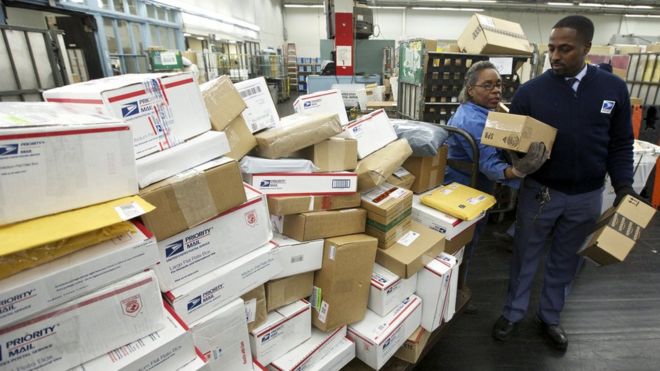
The US has announced plans to withdraw from a 144-year-old postal treaty, which the White House says lets China ship goods at unfairly low prices.

Under the treaty, a UN body sets lower international rates for packages from certain countries, a move originally designed to support poorer nations.

But the US says the discounts put American businesses at a disadvantage.

Officials said they hoped the notice of withdrawal would set the stage to agree a better deal.

“We’re looking for a fair system,” a senior administration official told reporters. “We do hope that ultimately we achieve a negotiated outcome.”

The BBC’s Asia business correspondent Karishma Vaswani says the move to pull out of the treaty is aimed at forcing the Chinese to give up the developing nation status they had when they first entered the pact back in 1969.

How does the system currently work?

International mailing rates are governed by the Universal Postal Union (UPU), a unit of the United Nations that traces its roots back to the 1870s.

It subsidises shipments from developing countries while setting higher rates for wealthier nations, including the US.

But the White House said China – a major global exporter – was now the biggest beneficiary of that system.

The US wants changes to the postal treaty to allow countries to set their own rates for parcels weighing under 2kg (4.4lbs). They are already allowed to do so for bigger packages.

The rise of international online shopping has led to a huge increase in the number of small parcels being sent via the postal system.

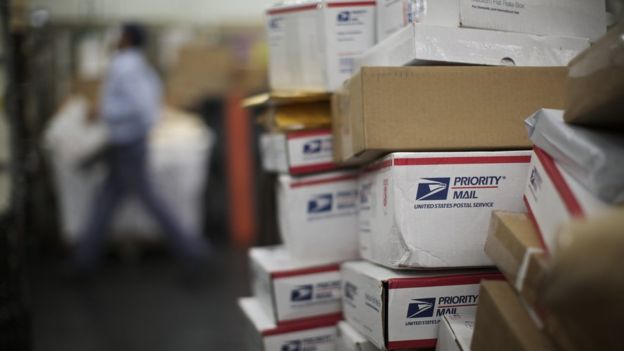
American firms say it can cost significantly more to post an item within the US than it does to send the same item to the US from China.

What is the US argument?

The bid to overhaul the treaty is part of US President Donald Trump’s combative “America First” approach to trade, which has led to tariffs on billions of dollars in goods, attacks on existing trade treaties and criticism of multilateral agreements.

He has frequently singled out China, which exports more goods to the US than any other country.

Officials said the discounts strain the finances of the US Postal Service, facilitate the shipment of counterfeit goods and distort pricing within the US, leading to higher fees for domestic companies.

Due to lower rates, foreign packages cost the US about $300m (£228.5m) each year, according to administration estimates.

The process of withdrawing from the treaty takes at least a year and the White House said it would be willing to remain in the UPU if negotiations were successful.

The US Postal Service and companies such as Amazon and FedEx have complained about the discounts for foreign shippers for many years.

KM posts $1.35B income

A aerial view of Kinder Morgan’s Trans Mountain marine terminal, in Burnaby.

Kinder Morgan Canada Ltd. is reporting third-quarter net income of $1.35 billion, although most of that is a one-time gain from the sale of its Trans Mountain pipeline and expansion project to the federal government.

The energy infrastructure company, which trades on the Toronto Stock Exchange but is 70 per cent owned by Houston-based Kinder Morgan Inc., sold its Trans Mountain assets to Ottawa for $4.5 billion in a deal that closed Aug. 31.

In a news release, it says it realized net income of $1.308 billion from the sale, net of tax.

Kinder Morgan Canada reports it had third-quarter income from continuing operations of $22.2 million, up from $9.8 million in the same period of last year.

It says it had quarterly revenue of $94.3 million, versus $85.9 million in the year-earlier period.

KML’s assets in Western Canada include a network of crude tank storage and rail terminals in Alberta, the Vancouver Wharves Terminal and the Cochin Pipeline system which transports light oil from the United States to the Edmonton area to be used as bitumen diluent.

Ebay sues Amazon

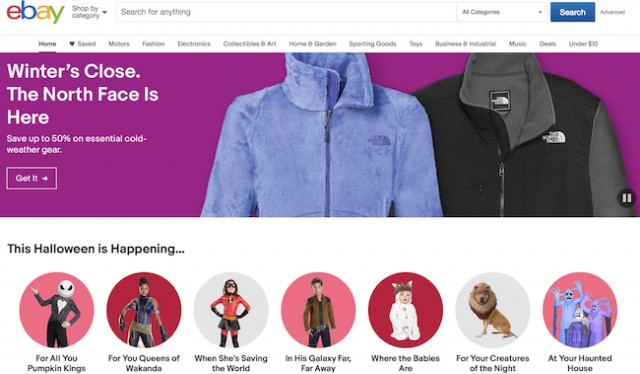
Ebay filed a lawsuit against Amazon Wednesday, saying the online retail giant used eBay’s messaging system to steal its sellers.

In the lawsuit, eBay said Amazon representatives signed up for eBay accounts and messaged sellers to get them to sell their goods on Amazon.com, which eBay said violated its user agreement. According to the complaint, Amazon representatives spelled out their email addresses and asked eBay sellers to talk on the phone in order to evade detection.

Ebay called it an “orchestrated, co-ordinated, worldwide campaign” to “illegally lure eBay sellers to sell on Amazon.”

Seattle-based Amazon declined to comment on the lawsuit.

Both eBay and Amazon rely on independent sellers to boost their revenue, but it’s become a big part of Amazon’s growth. Last year, for the first time, more than half the items sold on Amazon were from third-party sellers.

Ebay, based in San Jose, California, said it wants Amazon to stop misusing its messaging platform and to pay it an unspecified amount.