Archives for October 18, 2018

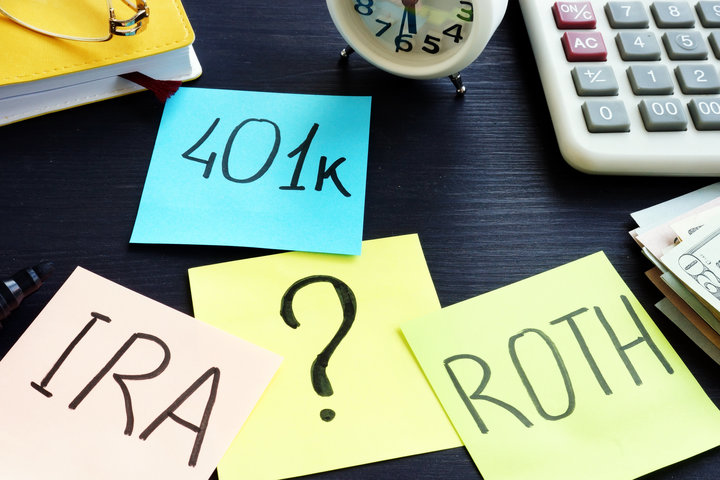
3 Big Reasons To Think Twice About Investing In A Roth IRA

If there’s one tool that financial experts seem to unanimously love, it’s the Roth IRA. It’s often touted as the hands-down best way to save for retirement, even inspiring a full-blown movement to encourage more people to contribute.

Is this retirement account really the slam-dunk experts make it out to be? Not exactly.

But first, what is a Roth IRA?

An individual retirement account, or IRA, is a tax-advantaged savings account for retirement funds. When you contribute to a traditional IRA, your contributions are made pre-tax, meaning your money goes straight into your account without having any income taxes taken out. Then, once you’re ready to use the funds in retirement, you pay taxes on the withdrawals.

A Roth IRA, on the other hand, taxes your contributions up front. Then you can withdraw the principal and earnings tax-free. The biggest benefit to this is that you can pay fewer taxes on your retirement savings now if you expect your income to increase over time (and thus, put you in a higher tax bracket at retirement).

There are some other pretty great benefits to the Roth IRA, such as the ability to withdraw funds before retirement penalty-free and to make contributions past age 70½. And we’re certainly not here to discount those benefits. But if you examine some of the less-discussed downsides, you might think twice before putting your retirement savings in one.

In fact, Miguel Gomez, a certified financial planner at Lauterbach Financial Advisors in El Paso, recently advised one of his clients against making Roth contributions after running the numbers. Though every person’s situation is different, here are the major reasons he said it might not make sense for someone to contribute to a Roth IRA rather than another type of retirement account.

1. You have to contribute more income upfront.

Since your Roth IRA contributions are made with after-tax money, you actually have to contribute more income than what ends up in your account.

Take this example: In order to max out your contribution for the year in a traditional IRA ― which is currently $5,500 for individuals under the age of 50 ― you need to save $5,500. But let’s say you contribute to a Roth IRA instead and your effective tax rate is 15 percent. You’d actually have to contribute $6,325 to save that same amount.

Obviously, the trade-off is that your withdrawals are going to be tax-free. But not everyone has a ton of extra money lying around to save for retirement. In fact, new data from Northwestern Mutual found that a third of Americans have less than $5,000 saved for retirement, while one in five hasn’t saved a dime.

Instead of paying those taxes upfront, you could have an extra $825 every month to spend on other priorities. For example, if you have student loan or credit card debt with interest rates that are higher than what you’re earning in your IRA, you’re effectively losing money at the end of the day. But by paying taxes at retirement rather than right now, you could pay off that high-interest debt, save for a home or contribute to your child’s college savings in the meantime.

And if you do have the financial bandwidth to take that extra savings and invest it somewhere else, “you’re able to invest money that otherwise would’ve gone to Uncle Sam. And I think that’s a very sweet deal,” Gomez said.

2. The tax savings probably won’t be that big.

As mentioned, one of the biggest reasons to contribute to a Roth IRA is to save on taxes in retirement. The assumption is that you will earn a lot more income by the end of your career than you do right now.

But how large will those savings be? Maybe not as much as you think. That’s because we follow what is known as a progressive tax system.

Rather than having all your income taxed at a certain rate, it’s taxed in tiers according to our tax brackets. Here are the 2018 brackets for a single filer:

  • $0 – $9,525: 10 percent
  • $9,526 – $38,700: 12 percent
  • $38,701 – $82,500: 22 percent
  • $82,501 – $157,500: 24 percent
  • $157,501 – $200,000: 32 percent
  • $200,001 – $500,000: 35 percent
  • $500,001 or more: 37 percent

Let’s say you earn $40,000 per year. Though you fall into the 22 percent bracket, most of your income isn’t taxed at that rate. The first $9,525 is taxed at 10 percent, then the next $29,175 is taxed at 12 percent. The remaining $1,300 is what’s taxed at 22 percent, giving you an effective tax rate of just under 12 percent.

So you can see, whether you earn $40,000 or $80,000, you’ll fall into that same bracket and your income would be taxed at the same rates. Even if your income jumped to $100,000, only $17,500 would be taxed at the slightly higher rate of 24 percent ― the difference tacking on an extra $350.

It is possible to save on taxes by contributing to a Roth IRA. However, the tax savings will be minimal unless you earn significantly less today than you will at retirement age ― and you have a lot of time between now and then.

3. It’s impossible to predict the future.

Many of the benefits of a Roth IRA depend on your ability to predict what life will be like in the future. If you’re fairly young, it can be especially difficult to guess what your priorities and goals will be in 20, 30, even 40 years.

For instance, what if you decide you want to move from a high-income tax state like California or New York and spend your golden years sitting along the banks of the Rio Grande or swimming in the Florida Gulf? Your fellow retirees in these income tax-free states will only have to worry about paying federal taxes on their retirement withdrawals. You, on the other hand? Well, you already paid the state taxes decades ago.

Then there’s the bigger picture. Just look at Social Security ― when the program was established, no one predicted that a wave of retiring baby boomers would use up the funds faster than younger generations could replenish them. Many predict that the Social Security trust fund will run dry by 2034, after which retirees would receive diminished benefits that would rely largely on payroll and income taxes.

Finally, there’s the question of what our tax system will look like as a nation by the time you retire. Are you certain the rules won’t change by then? Even the most recent tax reform that went into effect this year ended up lowering taxable income for many Americans. Those who previously contributed after-tax dollars to a Roth locked in the higher rates.

“We know today’s tax rules,” said Gomez. “Who knows if/when the government decides to, for example, make Roth accounts taxable in some way. Personally, I’d rather take the certainty of the deduction today over hoping I’m able to make tax-free withdrawals in 30-plus years.” He noted that this isn’t necessarily the case for all his clients; so much depends on when a person plans to retire.

Hedge your bets.

Like all things in personal finance, there’s never a cookie-cutter solution that works for everyone. So if you’re told there is, it’s worth poking around and questioning whether that’s really true.

For the saver who opts for a Roth IRA due to the potential tax benefits, there’s really only one scenario in which it works in their favor. “It could be a good idea for someone who is not making a lot of money right now … but when they get older and make more money, they could end up in a higher tax bracket,” Gomez said. For example, a young person who is just starting out but ends up hitting it big as a successful attorney or engineer.

However, he noted that unless the income gap is significant, the tax benefit is really not that big. “So you’re giving up that little tax difference for the hope or promise that you will not have to pay taxes on those funds in the future,” Gomez said.

There’s so much uncertainty about what our economy will be like in the future, it’s hard to say for sure what the best option is. That’s why Gomez recommends that you hedge your bets and divide your retirement savings among different types of contributions. “We call it tax diversification. You want to have money in pre-tax accounts, in after-tax accounts and you want to have money in traditional brokerage accounts.”

The only thing that is certain? You need to save, period.

“The most important thing is to do it,” Gomez said.

Pay off the mortgage or not: a guide for retirees

Most people would be better off not having mortgages in retirement. Relatively few will get any tax benefit from this debt, and the payments can get more difficult to manage on fixed incomes.

But retiring a mortgage before you retire isn’t always possible. Financial planners recommend creating a Plan B to ensure you don’t wind up house rich and cash poor.

A mortgage-free retirement is usually best. Mortgage interest is technically tax-deductible, but taxpayers must itemize to get the break — and fewer will, now that Congress has nearly doubled the standard deduction. Congress’ Joint Committee on Taxation estimates that 13.8 million households will benefit from the mortgage interest deduction this year, compared with more than 32 million last year.

Even before tax reform, people approaching retirement often got less benefit from their mortgages over time as payments switched from being mostly interest to being mostly principal.

To cover mortgage payments, retirees frequently have to withdraw more from their retirement funds than they would if the mortgage were paid off. Those withdrawals typically trigger more taxes while reducing the pool of money that retirees have to live on.

That’s why many financial planners recommend that their clients pay down mortgages while they’re still working so they’re debt-free when they retire.

Increasingly, though, people retire owing money on their homes. Thirty-five percent of households headed by people ages 65 to 74 have a mortgage, according to the Federal Reserve’s Survey of Consumer Finances. So do 23 percent of those 75 and older. In 1989, the proportions were 21 percent and 6 percent, respectively.

But rushing to pay off those mortgages may not be a good idea, either.

Don’t make yourself poorer. Some people have enough money in savings, investments or retirement funds to pay off their loans. But many would have to take a sizable chunk of those assets, which could leave them short of cash for emergencies or future living expenses.

“While there are certainly psychological benefits related to being mortgage-free, financially, it is one of the last places I would direct a client to pay off early,” says certified financial planner Michael Ciccone of Summit, N.J.

Such big withdrawals also can shove people into much higher tax brackets and trigger whopping tax bills. When a client is wealthy enough to pay off a mortgage and wants to do so, CFP Chris Chen of Waltham, Mass., still recommends spreading the payments over time to keep the taxes down.

Often, though, people in the best position to pay off mortgages may decide not to do so because they can get a better return on their money elsewhere, planners say. Also, they’re often the ones who are rich enough to have big mortgages that still qualify for tax deductions.

“Mortgages many times have cheap interest rates that are deductible and thus may not be worth paying off if your portfolio after taxes can outpace it,” says CFP Scott A. Bishop of Houston.

When a payoff isn’t possible, minimize the mortgage. For many retirees, paying off the house simply isn’t possible.

“The best case ‘wishful thinking’ scenario is that they’ll have a cash windfall via an inheritance or the like that can be used to pay off the debt,” says CFP Rebecca L. Kennedy of Denver.

In pricey Los Angeles, CFP David Rae suggests that mortgage-burdened clients refinance before they retire to lower their payments. (Refinancing is generally easier before retirement than after.)

“Refinancing can spread your remaining mortgage balance out over 30 years, greatly reducing the portion of your budget it eats up,” Rae says.

People who have substantial equity built up in their homes could consider a reverse mortgage, planners say. These loans can be used to pay off the existing mortgage, but no payments are required and the reverse mortgage doesn’t have to be paid off until the owner sells, moves out or dies.

Another solution: Downsize to eliminate or at least reduce mortgage debt. CFP Kristin C. Sullivan, also of Denver, encourages her clients to consider this option.

“Don’t fool yourself that your grown kids will be back visiting all the time,” Sullivan says. “Certainly don’t keep enough space and comfort for them to move back in with you!”

Which Comes First: Debt Payoff or an Emergency Fund?

Saving up an emergency fund is a well-trodden piece of personal finance advice. Having a cushion in place when things get tough can mean the difference between a catastrophe and a mere setback.

But debt repayment can also do wonders for your financial health. And it’s hard to get serious about saving cash when you’re constantly bleeding it in the form of interest payments.

So which of these two important budgeting objectives comes first: getting out of debt or saving up a few months’ worth of living expenses?

Save it up or pay it off?

If you have absolutely no emergency savings — like the majority of Americans — most advisors would counsel you to build at least a small buffer before you go all out on debt repayment. Financial advisor Dave Ramsey famously tells people to save up a $1,000 “baby” emergency fund before paying off a single cent of debt, even if they’re drowning in it. This is life, after all; something is bound to go wrong.

But other advisors suggest a bilateral approach in which you contribute as much as possible to both goals. That way, you can start chipping away at that towering debt while still working toward an emergency cushion.

It can be difficult to decide how to allocate your funds, particularly if they’re limited. So if you’re stuck in this conundrum yourself, we suggest you consider the following factors.

What kind of debt is it?

While it’s never an ideal scenario to owe money, certain types of debt are more harmful than others.

For example, credit card debt is pretty much always terrible. Most consumer cards come with high interest rates, and carrying a revolving balance offers you no real benefit. Auto loans are another not-so-nice form of debt, thanks to vehicles’ tendency to rapidly depreciate. (Yes, you may need a way to get around, but from a financial standpoint, a paid-off beater is the way to go.)

On the other hand, a home loan can help you build equity while keeping a roof over your head, and even a so-so mortgage usually carries less than 5% interest. There are also reasons to consider taking your student loan payoff strategy slowly. For one, most of us have five-digit educational debt totals — and if you prioritize paying off every cent of it before you invest, you’ll miss out on valuable years of compound interest.

So while repaying any debt is a commendable goal, it’s worth taking a moment to assess what kind of debt you’re carrying and how harmful it really is to your financial health and future. (Hint: If it’s credit card debt, get on it.)

What’s your current income — and how can you make more?
Naturally, your ability to work toward any financial goal is profoundly influenced by your cash flow. If nearly every cent you earn is tied up in necessary expenses, you won’t get far toward either objective, no matter how diligent you are.

The first step is to honestly analyze not only how much you’re earning, but where exactly it’s all going. If you don’t have a line-by-line budget, creating one can be a real eye-opener — and it may help you discover expenses ripe for cutting.

But in the end, you can only skip so many caramel macchiatos or after-work beers. Finding ways to increase your income will make your quest for financial independence a whole lot easier, as will diversifying it (i.e., finding new income streams so you’re not completely reliant on just one). For example, you could try picking up a part-time job. Some side hustles can actually earn you a lot of money.

How stable is your lifestyle?

Nobody can predict the future, but chances are you have some idea of your overall level of financial risk.

Are you young and in good health, or do you think you may someday need costly drugs and/or medical operations? Have you been with the same company for decades, or are you a fresh new face at a bootstrapped start-up? While emergencies can happen to anyone at any time, you might want to prioritize your savings goal if you’re in a financially precarious situation.

While your exact ratio of saving to debt repayment should depend on your personal lifestyle and financial choices, it’s always a good idea to have at least a little cash on hand for life’s inevitable surprises. And it’s easier to repay your debts with gusto when you’re not scraping by, paycheck to paycheck.

Want to get a better idea of exactly how big an emergency fund you need? Try this handy calculator. And if you’re looking for ways to pay off your credit card debt in a hurry, check out these tips.

And don’t forget: Whether it’s debt repayment, saving up an emergency fund, or stashing cash for retirement, every penny you can put toward your goal helps — so no matter what you decide, get busy.

Neighbors of lottery winners are more likely to go bankrupt

With the Mega Millions jackpot at an estimated record high of $868 million ahead of Friday’s drawing, many are dreaming of what they would do with life-changing money.

Neighbors of lottery winners may want to mentally prepare themselves, too. They’re more likely to go bankrupt, a 2016 study by the Federal Reserve Bank of Philadelphia found. Researchers theorized that neighbors of lottery winners were unconsciously trying to match their spending and going broke in the process.

But there are better ways to compare yourself to others. It all depends on who you choose to compare yourself to, and which direction you look when comparing yourself to others.

Those are the findings of a 2018 study by behavioral economist Sarah Newcomb at the Chicago-based investment research company Morningstar.

“Our results lead us to conclude that harnessing the power of social comparisons might be able to meaningfully improve everyone’s financial well-being, which could help us make better financial decisions,” Newcomb wrote.

She surveyed 699 people across a range of income levels to see how they felt after comparing themselves to others. The survey wasn’t nationally representative and didn’t prove a causal link, but Newcomb found strong evidence that people feel better about their own financial health when they do it in certain ways.

Here are the take-aways:

Don’t fight the urge to compare yourself to others — do it better

Humans have a natural urge to see where they rank in the pecking order, and ignoring it is nearly impossible. It’s worth learning how to do it the right way, because people’s feelings about their relative status affect their view of their financial health more so than their income level, age, gender or occupation, Newcomb found.

In fact, people’s happiness tops out when they earn about $95,000 a year, psychologists at Purdue University and University of Virginia found, and even people with six-figure incomes worry about money, according to a 2017 PricewaterhouseCoopers survey. So if want to feel better about your finances, it makes sense to explore other ways of doing so. (One note: The more often you compare yourself to others, the worse you feel about your own financial life, Newcomb found, so try not to do it too often.)

Look down instead of up, but be careful about over-analyzing

People have a tendency to look up and measure themselves against others who seem to have more money and resources than they do. This holds true across all income groups, even for people on the top rung of the income ladder, Newcomb said.

It’s easy to assume that looking up is good for us because it’s a way of challenging ourselves to do better and be aspirational. The problem: It makes us feel worse about our own financial well-being. “It backfires,” Newcomb said. “It’s not working. We may actively be participating in lowering our own financial well-being.”

The easy solution: Look down and compare yourself to people who don’t have as much as you do — it can even be yourself at an earlier time in your own life, if you don’t like the idea of looking down your nose at people. It’s a cliché, but it works, because it’s a way to be grateful for what you have, Newcomb said.

That said, choose wisely. Make sure the person is someone who’s enough like you that you can identify with them, but they shouldn’t be too similar to yourself. If they’re too much like you, you could hurt your sense of financial well-being by becoming scared that you’ll end up like them.

Find a financial role model, someone who is within reach

Participants in Newcomb’s survey felt better about their financial health when they compared themselves to role models rather than family, friends, neighbors or colleagues. A role model is someone whose behaviors and qualities you want to emulate — and someone who feels the way you want to feel about money.

“A very wealthy person who works 80 hours a week and is sick from stress may not be a good role model,” Newcomb said. “Someone who has managed to achieve the lifestyle you want while also finding balance is a more likely choice.”

Once you identify this role model, Newcomb advises, ask yourself what behaviors led them to where they are today? How long did it take them, and how long might it take me? And lastly, what is something specific I can do right now to be more like them?

Be mindful on social media when keeping up with the Kardashians

Of course, Facebook FB, +0.40% Instagram and other social media platforms make it easier than ever to “compare and despair” — and all that time scrolling can take a toll on mental health. Newcomb says it’s key to remember what you’re looking at when you see your friends’ photos.

“We have to understand that when we see someone else’s highlight reel, we’ll compare it our own blooper reel,” Newcomb says. “It’s their best most staged moments compared to our private humiliations. What we have to do is catch ourselves and add some conscious thought to unconscious thought.”

The effects of comparing our financial decisions to other people’s decisions is a growing area of study for behavioral economists. Other research by Duke University’s Center for Advanced Hindsight has suggested comparing yourself to others could help control spending. Researchers conducted an experiment last year where members of an Arizona credit union were given the chance to see how their spending on restaurant meals compared to their peers.

Many of the participants had mistakenly assumed their peers were spending more than they did, and, when they found out their peers were actually spending less than they thought, they decided to reel in their own spending.

“Something about social norms is powerful in changing behaviors, but we still have a lot to learn,” said Andrea Dinneen, a senior behavioral researcher with the Center for Advanced Hindsight. “There’s a lot of ways in which it can backfire.”