Archives for March 9, 2018

Facebook Scores Deal With Last Major Record Label

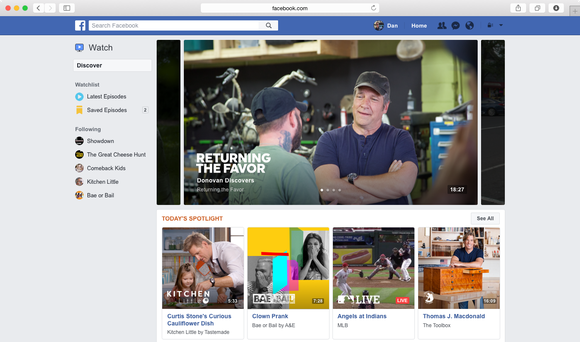
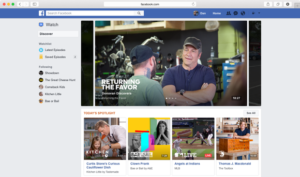
Facebook Watch on desktop

Social networking giant Facebook (NASDAQ: FB) has been hard at work making licensing deals with the three major record labels. Universal Music was the first to sign on the dotted line in December, followed shortly by Sony/ATV Music Publishing in January. The third and final label to get onboard is Warner Music, which has just announced that it has entered into a “holistic partnership” with Facebook that includes licensing agreements allowing its music to be used in “social experiences such as videos and messages.”

The terms of the deal sound pretty similar to the other two agreements, focusing primarily on user-generated content, which previously could be taken down due to copyright violations. The agreement covers Facebook’s core platform, was well as Messenger, Instagram, and Oculus.

Three’s company

With these deals in hand, Facebook can really start to ramp up its ongoing efforts to compete with YouTube. Facebook’s new Watch platform launched late last year, and for now primarily focuses on professionally produced shows, but it’s just a matter of time before user-generated videos start to show up on Watch. The company recently hired two video execs, one to help “lead global video content strategy and planning” and another to be the head of product for Watch.

Without a doubt, Alphabet (NASDAQ: GOOG) (NASDAQ: GOOGL) subsidiary Google is keeping a close eye on the developments with Watch, particularly after Facebook poached music exec Tamara Hrivnak from YouTube in early 2017 to be its head of music business development and partnerships. In the Warner announcement, Hrivnak added, “We are delighted to partner with Warner, its artists and songwriters, and welcome them to our platforms.”

Last month at Recode’s Code Media conference, YouTube CEO Susan Wojcicki dismissed Facebook’s video aspirations, joking that Facebook “should get back to baby pictures and sharing.” On a more serious note, Wojcicki said, “And look, we should all compete for content. I build our business and I focus on what we need to do, and I know that we have a lot of things to do.”

That last comment refers to the ongoing controversy regarding the rampant, algorithmically enabled spread of fake news and misinformation that is consuming all social media platforms, including Facebook and YouTube.

The long game

Quips aside, Wojcicki surely realizes that it’s not wise to ignore Facebook. As Facebook’s business has grown remarkably in recent years, the company now has considerable resources at its disposal to invest in strategically important initiatives like video. Total costs and expenses are expected to jump 45% to 60% in 2018, which translates into $30 billion to $33 billion in total expenses this year.

Facebook is in it for the long haul, and these licensing deals will be a crucial tool in the fight.


Here’s Why Shares of Cirrus Logic Slid 10% Last Month

Grey and red chalk arrows on a blackboard, pointing down

What happened

Shares of Cirrus Logic, Inc. (NASDAQ: CRUS) tumbled 10.6% in February, according to data provided by S&P Global Market Intelligence, after the company’s third-quarter fiscal 2018 sales failed to meet Cirrus’ own guidance.

So what

The company’s revenue for the quarter was $482.7 million, which was a 7.7% year-over-year drop, and fell far short of the company’s sales guidance of between $510 million and $550 million for the quarter.

Investors were clearly upset with the revenue miss, and pushed the company’s share price down throughout the month. Cirrus’ management blamed the revenue problems on weak smartphone demand: “While our design position with key customers remains strong, revenue was below expectations due to unanticipated weakness in smartphone demand that materialized in late December.”

In addition to its sales problems, GAAP (generally accepted accounting principles) net income also fell by 72% from the year-ago quarter, to $33.8 million.

Now what

Cirrus shares have gained more than 2% so far this month, but the company may not be completely out of the woods yet.

Cirrus said in its latest quarterly filing that it earns about 80% of its revenue from Apple, which means the smartphone weakness is very likely due to sales of the iPhone X underperforming expectations. In late January Apple cut production of its new device by half after a lackluster holiday season, according to the Nikkei Asian Review.

If iPhone X production is indeed cut back, then Cirrus will likely feel the effects at least through the current quarter.

RRSP Investors: 3 Top Canadian Stocks to Hold for 30 Years

Young Canadians are searching for top stocks to add to their RRSP portfolios.

Let’s take a look at three top Canadian companies that should be solid buy-and-hold picks until you retire.

Nutrien Ltd. (NYSE:NTR)

Nutrien might not be well known to many investors, but its predecessors certainly were, and the company it created through the recent merger will likely become a household name.

What’s the scoop?

Potash Corp. and Agrium Inc. got hitched to create Nutrien, one of the planet’s largest crop nutrients companies. The strength of Agrium’s retail business was a great addition to Potash Corp.’s powerful wholesale position, and the new company should be more stable as a result.

Fertilizer prices are starting to recover after a multi-year slump, and the long-term outlook for the industry should be positive. Global food demand is rising, and farmland is disappearing, so growers will have to find ways to get more out of less property, and fertilizer will play a large part in that effort.

Canadian National Railway Company (NYSE:CNI)

CN is the only rail operator in North America with lines connecting three coasts. That’s a powerful advantage, and it’s unlikely to change anytime soon.

Why?

Attempts to merge railways tend to run into serious regulatory roadblocks, and the odds of new tracks being built along the same routes are pretty slim.

CN generates significant free cash flow and is good about sharing it with investors through rising dividends and stock buybacks. The company recently raised the payout by 10% for 2018.

A large part of CN’s revenue comes from the U.S. operations, providing a nice hedge against any weakness in Canada.

Bank of Nova Scotia

Investors often skip Bank of Nova Scotia in favour of its larger peers, but that might be a mistake, especially when you plan to hold the stock for two or three decades.

The attraction lies in the fact that Bank of Nova Scotia has invested heavily in its international operations, with a specific focus on Latin America. The region holds significant potential and already generates nearly 30% of the bank’s net income.

As the middle class expands in the core markets of Peru, Colombia, Mexico, and Chile, Bank of Nova Scotia should benefit.

The stock trades at a reasonable 11.8 times trailing earnings and offers an attractive 4% dividend yield.

The bottom line

These three companies should prove to be solid buy-and-hold picks for an RRSP portfolio. If you are looking for top-quality names you can own for decades, Nutrien, CN, and Bank of Nova Scotia deserve to be on your radar.

Better Buy: Square, Inc. vs. American Express

By 2026, global credit and debit card payment volume is expected to reach $52.39 trillion, a greater than 150% increase of today’s total, according to the Nilson Report. If anything, that might be underestimating the future total. Regardless if that projection is slightly more or less than the actual 2026 total, what cannot be denied is that the general trend is toward a greater use of electronic and digital payments and less use of cash. As emerging markets mature and e-commerce becomes even more commonplace, this trend should only accelerate.

Two companies poised to benefit from this megatrend are Square Inc (NYSE: SQ) and the American Express Company (NYSE: AXP). Indeed, both companies have outperformed the S&P 500 index over the past year. But which of these companies make for a better investment today? Let’s take a closer look at each to see if we can come to a clear conclusion.

SQ data by YCharts.

The case for Square

Square was founded on the principle of bringing economic empowerment to small businesses. When the company first launched, this meant providing hardware that plugged into smartphones that merchants could then use to accept card payments. In the years since, Square’s payment processing business has exploded. In the fourth quarter, gross payment volume rose to $17.9 billion, a 31% increase year over year, and transaction-based revenue grew to $525 million, a 30% increase year over year.

The great thing about Square’s business model, though, is that its mission of economic empowerment for small businesses has grown into much more than payment processing. Seemingly every quarter, Square introduces a new application or service for its payment processing clients to subscribe to. These features are accounted for in Square’s subscription and services-based revenue segment. In the fourth quarter, this segment once again experienced explosive growth, as revenue came in at $79 million, a whopping 96% increase year over year.

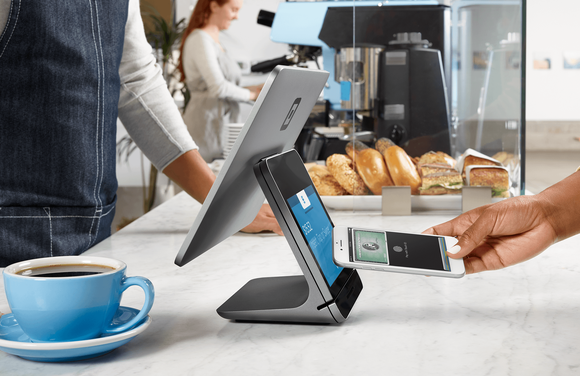
Customer pays at a Square point-of-sale with smartphone using contactless payments.

Both Square and American Express have outperformed the market over the past year, but which is a better buy now for investors? Image source: Square Inc.

There are several such features that now comprise Square’s subscription and services-based revenue segment, but the three that are consistently called out for driving most of the revenue are Caviar, Instant Deposit, and Square Capital. Originally acquired as a restaurant delivery service, Caviar is now a robust food-ordering platform that allows customers to place their orders ahead, either online or through a mobile app. Instant Deposit is a feature that allows sellers instant access to their money after a customer makes a purchase, a process that traditionally takes a few days. Square Capital is a business loan platform for small businesses; in the fourth quarter, Capital facilitated 47,000 business loans totaling $305 million, up 23% year over year.

Besides being lucrative and contributing mightily to Square’s top and bottom lines, these services also make Square’s entire ecosystem incredibly sticky, making it harder for Square’s clients to abandon the company’s core payment processing services.

In Square’s Q4, adjusted revenue rose to $283 million, a 47% increase year over year, and adjusted EBITDA grew to $41 million, a 38% increase year over year. As I’m sure you can guess, this kind of growth does not come at a cheap valuation: Based on the midpoint of its full-year adjusted EPS guidance, Square is currently trading at a forward P/E ratio of 102. The company does not pay a dividend or buyback shares, though that is probably wise as it is going through a nascent hyper-growth stage.

The case for American Express

Since losing Costco Wholesale’s co-brand card business, American Express has focused on growing its loan portfolio through initiatives with existing customers and by increasing acceptance with merchants.

In the company’s 2017 third-quarter conference call, AmEx management stated that 50% of its loan growth had come from existing account holders. During that conference call, CFO Jeffrey Campbell called out the success the company has had in recent quarters after enhancing the rewards benefits to its card holders:

The thing you need to remember, we made a very conscious decision late last year, early this year, to make some significant value proposition enhancements in the U.S. in both the Business Platinum card and the Consumer Platinum card. And those are both very substantial and material franchises for us. So it worked tremendously well. We’ve really exceeded our own expectations even in terms of Card Member engagement, new Card Member acquisition as well as continued, really, de minimis attrition rates.

These reward benefits involved greater airport lounge access for frequent travelers and newer reward options the company experimented with, such as Uber credits. Of course, it also doesn’t hurt that the company is consistently recognized for its strong customer loyalty and satisfaction rates within the credit industry.

In an effort to be accepted by more merchants, OptBlue is a program designed to get smaller-sized businesses to take American Express as a method of payment. The program offers incentives to merchants who accept AmEx cards such as free window signage, placement on Amex’s ShopSmall map, and even the ability to create free online ads. As it expands its merchant coverage, the company’s discount rate, the fees retailers pay for card payments, is dropping, but AmEx management insists this is a strategic decision designed to drive revenue growth.

In the company’s fourth quarter, revenue rose to $8.84 billion, a 10% year-over-year increase, and earnings per share grew to $1.58, a 73% increase year over year, once adjusted for the one-time effects of the Tax Cut and Jobs Act. Based on the midpoint of its full-year 2018 earnings-per-share guidance ($7.10), AmEx trades at an attractive forward P/E ratio of 13.5. The stock pays a quarterly dividend of $0.35, giving it a yield of 1.46% and a low payout ratio of 24%. The company suspended its buyback program for the first half of 2018 due to impacts from the tax legislation, but it expects to reimplement it in the second half of the year.

The final verdict

I believe American Express can be had at nice valuation right now, and I would not be at all surprised if it were to beat the market going forward. For more conservative investors looking for a solid company trading at a reasonable value, and paying a growing dividend, it just might fit the bill. That being said, between these two stocks, I prefer Square for its higher ceiling and growth rate. Square’s culture of innovation is responsible for a slew of new services and products that are being introduced to customers at a near-dizzying rate, each of which can act as a gateway drug to Square’s entire ecosystem of products. The end result is a sticky suite of services that make leaving Square’s ecosystem an extremely difficult thing for businesses to do.

MoviePass: The new face of unbridled data greed

(Paul Thomas Anderson / Miramax)

In a presentation during the Entertainment Finance Forum last week, MoviePass CEO Mitch Lowe bragged to the attendees about his company’s app saying, “We know all about you.”

“We know your home address, of course, we know the makeup of that household, the kids, the age groups, the income.” he continued. Once more, we’re reminded that every app on our phones has the potential to pool various data on us, enough to paint a remarkably accurate portrait of our life. As if to drill that point home, Lowe added: “We watch how you drive from home to the movies. We watch where you go afterwards.”

This wasn’t backstage bravado between peers, this was his keynote in front of an audience. A keynote titled, without one ounce of shame, a sliver of self-reflection, or any indication he’d ever heard the word “consent” whispered on the wind, “Data is the New Oil: How Will MoviePass Monetize It?”

Perhaps no one told him about the backlash against the NSA over the past few years, where people were not so happy to find out about all that nonconsensual surveillance and stuff. Or he somehow missed how angry and freaked out Uber’s customers were after the company bragged about tracking people with its in-app, consent-free “God view” spying mode.

Or it might just be that the National Association of Data Mining App Psychopaths (not a real thing… we hope) forgot to tell him that the first rule of Scary Data-Clown Club is not to talk about it in public.

Anyway, everyone freaked out when actual human beings found out about his remarks.

With the sensitivity of a Facebook PR flack pretending that actually doing awful things to your users is just a temporary reputation issue, a MoviePass representative sent the following statement to press:

We are exploring utilizing location-based marketing as a way to help enhance the overall experience by creating more opportunities for our subscribers to enjoy all the various elements of a good movie night. We will not be selling the data that we gather. Rather, we will use it to better inform how to market potential customer benefits including discounts on transportation, coupons for nearby restaurants, and other similar opportunities.

Calm down, everyone. They say they won’t sell you. I mean, it. Your data. Not now. And definitely not in the way you make money from oil, which requires drilling first. They’re not drilling people. Maybe. But oil needs to be refined. Deals need to be made. You can’t just sell it. Plus, data is better than oil, which can be spilled in embarrassing tanker crashes with drunk sea captains. Data can’t be spilled and have to be scrubbed off birds. Unless you mean hacking, which is kind of like a spill. But let’s not mention that.

Anyway.

The MoviePass app gives its users “Unlimited access to movies in theaters” for the monthly fee of $7.95 a month. Plus a $9.95 processing fee, and the data equivalent of your first born child, which won’t be sold. According to the MoviePass Privacy Policy, the company does also “supplement the personal information you provide with publicly available information about you as well as information from other sources.” Tres mysterious.

Interestingly, its policy states that your location is requested only once “when selecting a theater.”

Which is a little different than what MoviePass CEO Mitch Lowe was talking about.

(Getty Images for MoviePass)

But what can we do? Nothing, that’s what. This is normal. We are ten years into living with phone apps that literally tell us one thing about our privacy and security, and arrogantly do something else when they feel like it. It’s how the app world works.

Case in point: Onavo Protect. Facebook’s app recently added a “Protect” button, compelling users to install Onavo Protect via the App Store. It’s a cute little VPN app for mobile devices that Facebook owns.

You’re not going to believe this (or maybe you will), but Onavo used to be a data mining app. Researcher Will Strafach recently looked into the app to see how it ticks, and along the way he revealed its history.

He wrote:

In April 2011, Onavo [is] positioned as a data-saving tool … (“We will not sell the data or introduce ads to Onavo”). In late 2012, initial citations attributable to “Onavo Insights” appear in the press, regarding app download and usage statistics.

In early 2013, Onavo Insights is publicly launched, enabling subscribers to find out market share, usage data, and Monthly Active Users for different iOS apps (This data is most certainly derived from analysis of Onavo user network traffic).

In summer of 2013, Onavo Acquisition Insights is publicly launched, enabling subscribers to attribute app downloads to specific methods of advertising (This data is also most certainly derived from analysis of Onavo user network traffic). In October 2013, Onavo is purchased by Facebook for an undisclosed sum, estimated to be between $100 million and $200 million.

Onavo’s data wasn’t for sale either! It was just like oil. Slippery yet profitable. This sounds like a false equivalency, but it’s not. Bear with me, I’m a million years old in internet years. Sex blogger grandma (me) is going to tell you a story.

When the general public started switching over to smartphones and the app ecosystem, I had been using a connected phone for years. I saw the way apps were taking over people’s experience of the internet — replacing it — and how the people making apps (mostly here in San Francisco, some in the circles I ran in) were greedy, dishonest, conservative, and extremely entitled. I thought, once people understand how horribly these apps are spying on them and lying about it, they won’t suffer through this bullshit anymore.

And then everyone just went along with it. Major press outlets didn’t hold any of the app barons accountable. Also, everyone was either trusting, or arrogant, or naive, or just trapped when they needed a safe ride home and Uber was there.

But once the Pandora’s Box was opened, of what was really happening with apps data mining and collecting and spying on things we really don’t want them to, we were all suddenly citizens of a different world. One where no one was on our side, and the gods were capricious assholes, and awful things happen with our locations, our private moments, and our identities, for no reason.

All of this, these egregious consent violations and the endless doublespeak statements about privacy and security when caught? It all happened while companies like Palantir and Google and Facebook gathered up the data and made it weaponizable. Psychopaths got very rich. Women, people of color, poor people, and LGBTQ people were targeted online and doxxed with data collected by the offshoots of this industry — thanks to things like “people finder” websites. Then data collectors like Equifax were hacked because they were negligent, and real people got hurt, lost their identities.

Basically, the absolute worst happened.

So when fatcat CEOs of greedy, consent-violating apps like MoviePass brag about profiteering on our data oil, then try to backtrack when people take them at their word, we can’t be expected to take them seriously.

Because the word “privacy” in any app’s policy at this point is so cynical a euphemism that we can only say it now with a smirk. I mean obviously, they must be joking.

Images: Paul Thomas Anderson / Miramax (There Will Be Blood movie still); Getty Images for MoviePass (CEO Mitch Lowe)

This article originally appeared on Engadget.

Motorola’s next Moto Mod may be a VR headset

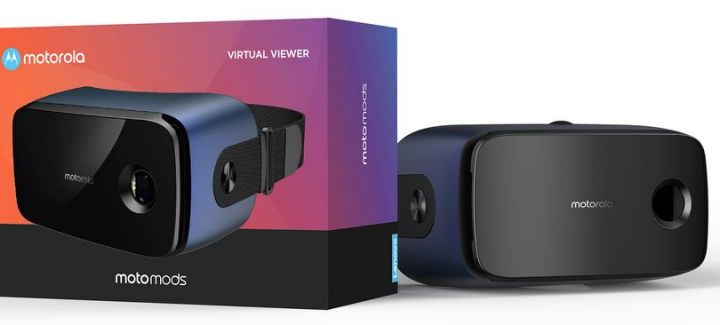
New Moto Mods are becoming rather de rigueur lately, with tons of interesting if not completely practical gadgets made to snap onto the company’s compatible phones. Moto Z users have had keyboards, snap-on Polaroid photo printers, 360-degree cameras and Alexa speakers to add on to their phones. Now the company is reportedly set to release a VR rig as a Moto Mod. VentureBeat’s Evan Blass tweeted out what looks like a render of a new “Virtual Viewer” Moto Mod headset.

Details are scarce, and Motorola declined to comment when we reached out for more info. Still, it makes sense for the phone maker to join the mobile VR scene to compete with the likes of Samsung and Google, especially since they already have a system that only requires you to slide in your phone.