Archives for February 26, 2018

3 Things to Watch in the Stock Market This Week

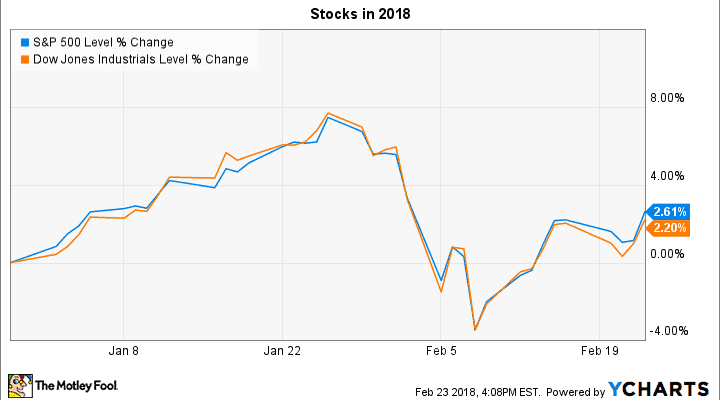
^SPX data by YCharts.

Stocks posted solid gains for the second straight week last week as strong earnings reports sent both the Dow Jones Industrial Average (DJINDICES: ^DJI) and the S&P 500 (SNPINDEX: ^GSPC) higher by more than a full percentage point. Indexes are now back up by more than 2% since the start of the year.

Earnings season doesn’t let up over the week ahead. In fact, dozens of big-name companies are set to announce their holiday-quarter results in the next few trading days.

Let’s see what we can expect from the companies set to release some of the most anticipated earnings reports: Lowe’s (NYSE: LOW), 3D Systems (NYSE: DDD), and TJX Companies (NYSE: TJX).

Lowe’s market share

Lowe’s reports its earnings on Wednesday and, given the recent stellar performance from Home Depot (NYSE: HD), its results should show healthy growth powered by a robust home improvement market. However, Lowe’s isn’t benefiting from the industry gains to nearly the same degree as Home Depot.

Comparable-store sales are on track to rise by just 3.5% for 2017, while Home Depot managed roughly twice that expansion pace. Lowe’s is trailing its bigger rival on key financial metrics, too, including operating margin and return on invested capital.

Investors will be watching the retailer’s customer traffic figure, since that has been a persistent area of weakness for much of 2017. It’s a metric that CEO Robert Niblock and his team have vowed to improve, but traffic slipped to below 1% in the third quarter from 3% in the prior quarter. Without evidence of a rebound on that number, Lowe’s 2018 comps forecast is likely to imply more market-share losses in the year ahead.

3D Systems’ sales forecast

Slated for release following the market close on Wednesday, 3D Systems’ fourth-quarter report isn’t likely to wow investors. After all, the 3D printing specialist’s last quarterly showing was marked by shrinking sales, diving profitability, and an operating loss that worsened to $32 million from $22 million a year ago. Executives warned at the time that it had become so difficult to predict operating trends that they were withdrawing their 2017 guidance.

Woman looking at 3D printer.

Thus, investors have low expectations for the fourth quarter. Specifically, shareholders are hoping to see an improvement in the pace of sales declines for the core 3D printer segment, but that’s a tall order given the aggressive competition in the industry.

Cost cuts will likely feature prominently in this week’s report, too, as executives struggle to bring the company closer to profitability. 3D Systems should provide an update on its new Figure 4 system. The product’s launch has been delayed into the first half of 2018, and we’ll find out this week whether executives stand by the delayed timeline.

TJ Maxx Companies’ customer traffic

Off-price retailer TJX Companies, which owns the popular TJ Maxx, Marshalls, and HomeGoods banners, will announce its holiday-quarter results on Wednesday morning. Investors are skittish heading into this report, since sales growth slowed to a halt in the third quarter after expanding by 3% in the prior quarter.

Executives blamed hurricane store closures and unseasonably warm weather for that decline, and they cited a few metrics that support the idea that their operating trends should bounce back into modestly positive territory. Customer traffic was positive across all its retailing segments, for example, and TJX Companies saw a slight uptick in profitability as gross margin improved to 29.8% of sales from 29.5%.

Overall, management is targeting comps of between 1% and 2% for the fourth quarter. The retailer might forecast roughly the same pace of growth for 2018, and those returns should be bolstered by a quickly growing dividend payment.


Himax Technologies Is Down, but Not Out

A bull and a bear fighting each other.

Himax Technologies (NASDAQ: HIMX) hasn’t had the best start to 2018 with shares falling 22% since the start of the year. Shares of the chipmaker have been in a sell-off since last month after a tweet from short-seller Citron Research. This was followed by reports of weak demand for the iPhone X (which uses a Himax chip to enable Face ID) that is rumored to be forcing Apple (NASDAQ: AAPL) to consider slowing down the production of the device.

Investors were expecting Himax to turn things around with a strong fiscal fourth-quarter report, but Q4 revenue fell short of expectations, while the outlook for the quarter that includes March also left a lot to be desired. For a company that’s had recent success supplying 3D sensing chips to Apple for the iPhone X and has struck a deal with Qualcomm (NASDAQ: QCOM) to make the same for Android smartphones, the results were no doubt disappointing.

But a closer look at the results and the guidance indicates that the weakness could be temporary.

A look at the problems

Himax’s revenue fell both sequentially and year over year during the fourth quarter to $181.1 million, short of the $184 million consensus forecast. The 11% year-over-year revenue decline was a result of the phaseout of some old customer programs, as well as the company’s failure to convert some of its earlier design wins into actual contracts earlier in the year.

A weak smartphone scenario in China also impacted Himax’s results. Its smartphone sales fell 11.5% sequentially and 35% year over year as new Chinese smartphone models failed to attract customers’ attention, leading to a buildup of inventory that hurt demand. Additionally, the shift in smartphone display technology to active-matrix organic light-emitting diodes and touch-and-display driver integration (TDDI) proved to be a headwind for the company.

As a result, Himax’s revenue fell 8.1% sequentially during the fourth quarter. Investors would have expected Himax’s Apple contract to help it score a big win in mobile during the quarter that included December. After all, the company’s revenue had shot up close to 30% sequentially during the third quarter when Apple was ramping up iPhone production.

But it looks like Apple had bought the majority of its 3D-sensing chips from Himax during the quarter that included September, which led to a cooling of demand last quarter. What’s more, Apple reached demand-supply parity for the iPhone in December, further evidence that Cupertino was done sourcing components earlier than expected.

But Himax management believes that the problems won’t last long.

The turnaround prospects

As already mentioned, Himax is being hurt by a shift in smartphone display technology. But the company claims to have landed several TDDI-related design wins that will be used by smartphone original equipment manufacturers for making devices with high display resolutions such as full HD.

The transition isn’t going to be smooth because Himax expects a 30% sequential decline in smartphone driver sales this quarter as a weak demand environment persists and product transition is taking place. Management believes that a tangible turnaround can be expected only from the second half of 2018 when smartphone makers start replenishing their inventories in preparation for new launches.

More important, Himax’s focus on the use of 3D sensing chips in smartphones could prove to be a big catalyst. Himax and Qualcomm struck a partnership last year to develop a 3D sensing solution, called SLiM, for deployment in Android smartphones and other applications. Himax believes that this venture could start generating revenue soon.

The company is currently negotiating with several Tier-1 smartphone makers that will start offering 3D sensing on their devices from the first half of the year. Additionally, Himax is well placed to meet the potential demand, as it has built up an initial production capacity of 2 million units after the first phase of its capacity expansion.

The market for 3D sensing chips is estimated to grow from $1.7 billion last year to $14 billion by 2020, according to TrendForce. And the company’s focus on 3D sensing and TDDI chips can help it tap other lucrative markets such as the automotive sector.

Last quarter, Himax’s automotive-related revenue shot up 25% year over year to $25 million. This quarter, the company expects a massive year-over-year jump of 50% in automotive revenue thanks to its partnerships with the major manufacturers of display systems for vehicles.

Therefore, Himax has a number of catalysts that could help it get back on track. In fact, the company is calling for revenue growth in the mid-single digits in the first quarter of 2018 as compared to the year-ago period. By comparison, the company’s top line had dropped almost 14% year over year during the first quarter of 2017, which makes it evident that business is picking up the pace.

In all, investors shouldn’t get discouraged by Himax Technologies’ tepid quarterly performance as it looks set to make a comeback.

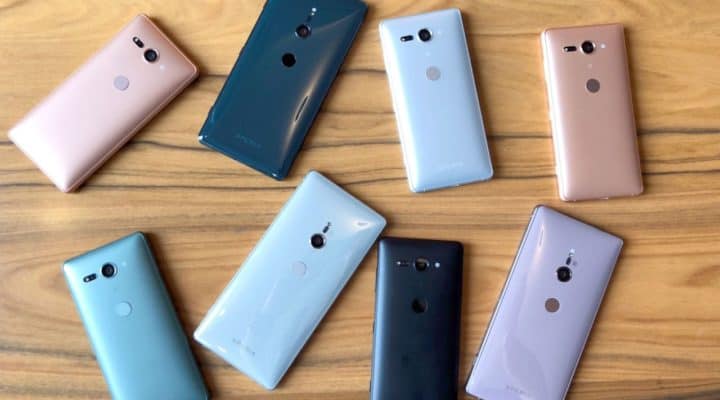
The Xperia XZ2 is Sony’s fastest, strangest flagship phone yet

(Chris Velazco/Engadget)

Sony has longed to find lasting success in the smartphone market, but none of the devices it released in the past few years have done the job. It’s clearly time for a change, and Sony knows that — that’s why the new Xperia XZ2 and XZ2 Compact are notable steps away from the company’s smartphone norm.

They’re fast, fascinating and pretty (to me, anyway), and it seems obvious that Sony wanted to strike a balance in these devices between immersive media consumption and powerful content creation. After a little bit of hands-on time with the XZ2 and its little sibling, I don’t think Sony hasn’t gotten everything right, but at least these things are pleasantly strange.

The basics

The XZ2 is one of many smartphones we’ll see this year that use Qualcomm’s Snapdragon 845 chipset, paired here with 4GB of RAM and 64GB of internal storage. (Most versions of this phone will take microSD cards as large as 400GB, but some will use a dual SIM setup instead.) In our limited time together, the XZ2 felt as fast as the Galaxy S9 when launching apps and frantically multitasking, and it’s nice to see that Sony’s custom interface doesn’t bog things down noticeably. Curiously, Sony says its implementation of Qualcomm’s X20 modem features more RF antennas to help it reach peak download speeds as high as 1.2Gbps.

The XZ2 also runs Android 8.0 Oreo, and you’ll take in all of those software flourishes on a 5.7-inch Full HD+ HDR display. Sony hasn’t confirmed why it didn’t use a higher resolution screen, but considering its 3180mAh battery, concern over power consumption is a safe bet. That screen also has one fascinating new trick we haven’t had much chance to test yet. Thanks to Sony’s XReality engine, the XZ2 will up-convert standard SDR videos into HDR on the fly, a trick that’s been a part of televisions for a few years now already. Given how nice the screen is to look at under normal circumstances, consider us cautiously optimistic about how well this actually works.

Look and feel

If you’ve picked up a Sony phone in the past few years, there’s a very good chance it looked and felt like many of the devices that came before it. That’s because Sony has been using the same aesthetic — “OmniBalance,” they call it — since the launch of the Xperia Z more than five years ago. Well, no more. For its new flagships, Sony has embraced a curvier, arguably more organic approach you can also spot hints of in the company’s PlayStation 4 controller and, erm, its robot dog Aibo.

As far as I’m concerned, it’s a big improvement over Sony’s older, flatter design. The curved Gorilla Glass 5 back helps it sit nicely in the palm of your hand, and the company’s decision to use a taller, narrower 18:9 display makes the XZ2’s 5.7-inch screen feel very manageable. Make no mistake, though. Sony might’ve gone with an 18:9 display, but it hasn’t gone as far as companies like Samsung in trimming the bezels around that screen, and I’m sure not everyone will find the look anything to write home about. If nothing else, you’ll find some small, helpful changes here. The rear-mounted fingerprint sensor sits low on the phone’s back, which made it a little easier for me to access without having to stretch for it. And at long last, Sony aligned the camera near the phone’s center rather than off in a corner, so you’re less likely to accidentally dangle a finger in front of it when trying to shoot stills.

The camera

Impressive Sony-made camera sensors are almost impossible to avoid when smartphone shopping, but Sony seems to be playing it safe with the XZ2. Much like its predecessor, the XZ2 packs a 19MP Motion Eye sensor around back, and yes, there’s still only one of them. It’ll be a little while before you can nab a Sony phone with a dual camera, but the company has suggested we’ll hear a little more about those plans shortly. We’ll be waiting. In the meantime, though, the results I squeezed out of the XZ2’s camera were mostly impressive: lots of bright colors and sharp detail appeared, even with non-final software and drab New York weather throwing a wrench into things.

The actual sensor Sony used might not have changed, but it has picked up a few new tricks. Smartphone videographers can now shoot 960FPS, super-slow-motion video in full HD (up from 720p), and since there’s a Snapdragon 845 tucked away inside, the XZ2 can capture 4K HDR video as well.

Meanwhile, a more modest 5-megapixel camera sits above the screen, but it captures more than standard selfies. The original Xperia XZ came with a 3D creator mode that let you “scan” objects with the phone’s main camera to build 3D models for sharing on Facebook or printing. Sure, it was gimmicky; it was also a classic case of Sony being weird for reasons that are never really clear. In any case, the feature had one notable shortcoming: it was fine for scanning objects in front of you, but less than ideal for scanning your own head. Sony has finally fixed that tragic oversight — those scans can now be created using the front-facing camera, and while the process can be awkward (I was prompted to remove my glasses and do everything blind), the results can be surprisingly impressive. These 3D scans also get bonus points for being slightly less creepy than the Galaxy S9’s AR emoji.



Rumbling audio

Sony paid a lot of attention to the XZ2’s audio performance, too. Mostly, the work paid off: the phone supports high-resolution audio, and a set of S Force stereo speakers pump up the jams with more power than I expected. (All told, the XZ2 is 20 percent louder than its immediate forebear.) So far, so good, right? Well, things get strange pretty quickly.

As some leaks suggested, the XZ2 has a significantly larger haptic actuator inside of it. On the most basic level, that means you’re more likely to notice the vibration of a notification rolling in. Sony took things a bit further by whipping up an algorithm to turn that actuator into a sort of video-gamey rumble feature. The idea is that an algorithm processes the audio data of whatever’s playing and vibrates the phone when appropriate. If you’re playing a game like Angry Birds, the effect can be mildly cool — I felt some haptic jolts as I pulled a bird back in its slingshot, released it and watched it crash into a tower of pigs. Listening to music and feeling the phone rumble in time with the beat, however, was occasionally neat but mostly just odd. At least in its current form, this feature isn’t particularly helpful or fun, but I’ll reserve final judgment until I get to test a retail-ready model.

What about the Compact?

As mentioned, the XZ2 has a diminutive sibling: the XZ2 Compact. It packs just about every feature that makes the XZ2 so capable and squeezes them into a smaller, curvaceous polycarbonate frame that feels fantastic to hold onto. There are a few notable absences, like wireless charging and that weirdo haptic rumble features. Sony obviously had to go with a smaller screen, too — in this case, a 5-inch Full HD+ HDR panel.

Overall, my eyes couldn’t make out much difference in quality between this screen and the XZ’s bigger one, but there’s a caveat here: smaller 18:9 panels like this one mean keyboards can feel especially cramped. Most of my test texts came out looking like garbage because my chubby thumbs weren’t used to this layout. Beyond that though, it shares every major feature with its big brother, and it’s awfully nice to know I could get full flagship power in a package this small. My biggest concern right now is just how well the Compact’s 2870mAh battery will stand up to the needs of a Snapdragon 845, but we’ll have to wait and see how that turns out. Those kinds of trade-offs are unavoidable for smaller phones, but here’s hoping the final experience is worth it.

Netflix lands sci-fi movie from ‘Planet of the Apes’ director

Netflix’s sci-fi adaptations are about to expand beyond the likes of Altered Carbon and Lost in Space.

Netflix’s sci-fi adaptations are about to expand beyond the likes of Altered Carbon and Lost in Space. Deadline has learned that Netflix has secured the rights to Life Sentence, a movie take on a Matthew Baker short story about a future where authorities wipe the memories of criminals instead of sending them to prison. Matt Reeves, the director of the two most recent Planet of the Apes movies, is producing the title. It’s not known when the movie would premiere, but apparently that’s not the big story — there was reportedly a fierce bidding war.

Reeves apparently had to contend with offers from conventional studios like Fox, Universal and Warner as well as Amazon and newcomer Apple. The choice came down to the format, according to sources. Apple and its production partner Gaumont would have made Life Sentence as a TV series, but Reeves preferred the movie format and thus headed to Netflix.

The battle underscores just how much the video entertainment industry has changed in recent years, or even months. Where streaming services previously had to make do with studio leftovers (and are still happy to go that route), they’re now fighting with and sometimes prevailing over traditional companies. It’s not hard to understand why. Streaming reduces the pressure to dilute a project and target the widest audience possible, since producers aren’t competing for limited theater space or fretting over opening weekend box office numbers. Netflix and its peers only care about overall viewership and how it grows the subscriber base — they can take chances on relatively niche productions knowing that there will probably be enough of an audience to justify the cost.

Tesla’s electric trucks may be more cost-effective than expected

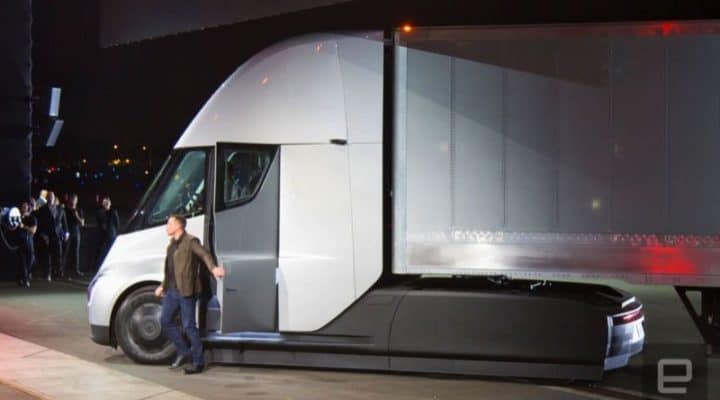
When Tesla unveiled its Semi electric truck, it made audacious claims about the big rig’s value — namely, that companies would recoup the cost of the vehicle in 2 years thanks to the savings on fuel.

When Tesla unveiled its Semi electric truck, it made audacious claims about the big rig’s value — namely, that companies would recoup the cost of the vehicle in 2 years thanks to the savings on fuel. As it turns out, that might have been conservative. DHL exec Jim Monkmeyer told Reuters in an interview that he expects the shipping company to reach that point in a year and a half, saving tens of thousands of dollars per year. The absence of fuel is only part of the equation, he noted. As EV motors are much less complex than the big diesel engines that power conventional trucks, the Semi shouldn’t need as much maintenance.

Appropriately, Tesla’s Elon Musk has hinted that the Semi’s performance might see an upgrade. He’s “feeling optimistic” that Tesla can outdo the specs from the November 2017 debut without hiking the price. We’d take that with a grain of salt when Musk’s companies tend to set overly ambitious goals, but it’s not an idle claim when the first deliveries are slated to start in 2019.

DHL’s hopes depend on the Semi living up to initial expectations, of course, and there’s a lot that could go wrong. It’s no mean feat to produce an EV that large with a range of 300 to 500 miles (the battery will be gigantic), and a lot of Tesla’s math is predicated on the assumption that diesel prices remain the same. If there are unforeseen technical hurdles or diesel becomes cheap, the Semi’s value may go down the tubes. However, it’s not often that customers suggest a vehicle maker is underselling its product — while caution is definitely warranted, this bodes well for the future of electric trucks.

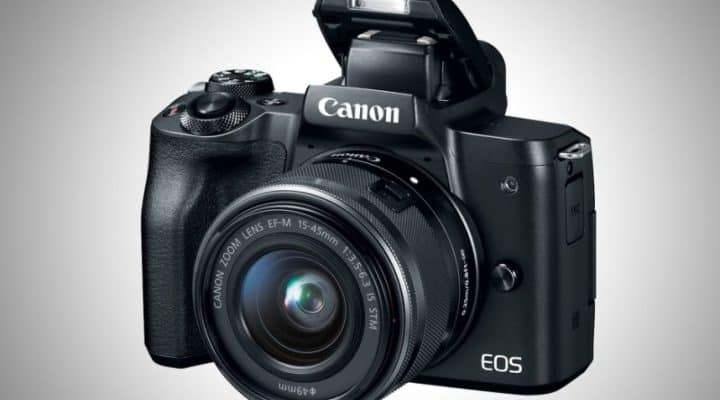
Canon mirrorless M-series finally goes 4K with mid-level EOS M50

The new Canon EOS M50 inherits much of the tech from the similar-looking, but higher-end EOS M5. It also adds one feature that has been notably lacking from Canon’s mirrorless cameras until now: 4K video.

Alongside the Rebel T7 DSLR and 470EX-AI flash, Canon introduced a new mid-level mirrorless camera on February 25. Called the EOS M50, it inherits much of the tech from the similar-looking, but higher-end, EOS M5. But it also adds one feature that has been notably lacking from Canon’s mirrorless cameras until now: 4K video.

At just $780 for the body only, we’re a bit surprised that the M50 is the first EOS M camera to go 4K, but we’re certainly not complaining. Canon has been slow to make the move to 4K across its still camera lineup, with only a couple of high-end DSLRs offering the feature (the EOS 1D X Mark II and EOS 5D Mark IV). Along with 4K, 1080p can now be captured up to 120 frames per second for slow-motion playback.

That said, the M50 doesn’t offer much in the way of professional options for video shooters, and 4K is only offered at a single frame rate of 23.98 frames per second. Still, we expect the video quality will be a noticeable improvement over the 1080p in the EOS M5, which wasn’t exactly a highlight of that camera. A plus is a mic input.

The extra video power is thanks in part to the new Digic 8 processor, which also helps push the continuous shooting speed up to 10 frames per second, or 7.4 with continuous autofocus. That’s some good speed in a camera at this price point, but the buffer is too small for serious sports photography, allowing for just 10 frames (or a single second of burst shooting) when shooting RAW files, increasing to 33 for JPEGs. Still, this should offer enough performance for the M50’s target demographic of beginner and intermediate photographers. The M50 also has an expanded high ISO setting of 51,200, which wasn’t available in the other M-series models.

Thanks to the Digic 8, autofocusing has also been greatly enhanced. Canon said Dual Pixel AF system is an improvement over the DPAF system in the M5. The M50 has a 99-point system versus the 49 points in the M5, M6, and M100, covering a sensor area of 80 x 80 percent. However, with select lenses, focus area increases to 88 x 100 percent of the sensor, and up to 143 point.

With the M50, Canon also introduces a new RAW format, CR3. Besides a full RAW file, CS3 offers the option of C-RAW. Unlike M-RAW and S-RAW in CR2, which lowered the resolution of a photo to achieve smaller file sizes, C-RAW maintains the full resolution, but 40-percent smaller in file size. Canon said there’s less data to work with for editing purposes, but the image quality would be difficult to differentiate for most people.

The rest of the features are quite similar to those offered in the M5, including a 24-megapixel APS-C sensor that’s similar but not the same. The M50 also uses a 2.36-million-dot electronic viewfinder (EVF). Like the EVF of the M5, it is situated DSLR-style, directly above the lens mount. The touch-sensitive LCD can be flipped out, with vari-angle tilting — a request from customers.

Arriving in April, the M50 will be available in three kits in addition to the body-only option. The EF-M 15-45mm lens kit will sell for $900, while a two-lens kit that also includes the EF-M 55-200mm lens will go for $1,249. A Video Creator Kit will be available for $1,000, but Canon did not offer specifics of what it would include.