Archives for February 13, 2018

3 Top Index Funds for Your IRA

We Fools are stock market junkies, but we realize that not everyone has the time or desire to build their own portfolio from scratch. That’s why we are huge proponents of index funds, which offer investors one-stop shopping, instant diversification, and a low fee.

But which index funds, in particular, are a good choice for a retirement fund? We asked our investing team to weigh in, and they picked Vanguard Total World Stock (NYSEMKT: VT), PowerShares Dynamic Software ETF (NYSEMKT: PSJ), Guggenheim S&P 500 Equal Weight ETF (NYSEMKT: RSP).

Get the whole world in one fund

Dan Caplinger (Vanguard Total World Stock): Most U.S. investors focus almost exclusively on domestic stocks in their portfolios. That’s a natural inclination since the companies with which you’re most familiar are the ones that you encounter regularly in your everyday life. But if you rely solely on U.S. stocks, you’ll miss out on some of the hottest growth prospects in the market, many of which you can only find by venturing beyond borders.

Vanguard Total World Stock provides an all-in-one investing option for retirement investors looking for exposure to the global stock market. Despite its cosmopolitan bent, the ETF has 55% of its assets invested in North American stocks, the majority of which are U.S. names with which investors will be quite familiar. Beyond that, though, you’ll get about 20% of assets in European stocks, with another 15% allocated to the Asia-Pacific region and 10% in emerging markets. All told, the ETF holds almost 8,000 different stocks, making it one of the most diversified fund choices in the ETF universe.

In recent years, U.S. stocks have largely outperformed their international counterparts. In some investors’ eyes, that puts foreign stocks at an advantage going forward. That could make Vanguard Total World Stock a timely pick in an increasingly turbulent environment for the U.S. stock market.

It’s worth paying a little more for this software ETF

Brian Stoffel (PowerShares Dynamic Software ETF): I don’t invest in ETFs. Spending all day researching and writing about individual companies, I prefer to put my skin on the players I think are best positioned to outperform over the long run. Most people, however, don’t have that kind of time and prefer to invest via ETFs. Nine times out of 10, I suggest picking a fund with uber-low expense ratios — usually less than 0.20% per year.

But for this Dynamic Software ETF, I’m breaking my rules. The expense ratio isn’t outrageous, at 0.63%, but it’s still higher than I like. The reason I choose it is that it invests in 30 stocks that have largely adopted a business model I can’t get enough of: cloud computing, specifically software-as-a-service (SaaS). In plain English, this means customers pay recurring monthly revenue to use software that’s hosted in the cloud — no hardware sales are involved. Updates to the software can happen seamlessly and in real time, and the revenue is sticky and has high switching costs.

The ETF’s biggest investments are in behemoths like Microsoft and Activision Blizzard, but almost half of the ETF has small-cap growth stocks with huge potentials, like Paycom, AppFolio,and The Trade Desk (NASDAQ: TTD). It should be noted that with such a concentrated portfolio — 30 stocks isn’t many for an ETF — and a collection of stocks that are fairly expensive by traditional metrics, this could be a volatile investment. That said, I think it could be a very profitable one for patient investors with a long-term time horizon.

A balanced approach

Brian Feroldi (Guggenheim S&P 500 Equal Weight ETF): The S&P 500 is the gold-standard index fund, and for good reason. This index holds 500 of most profitable companies in the U.S., and it has produced wonderful returns over the long run.

I’m as big of a fan of the S&P 500 as the next guy, but I often wondered if the index’s capitalization-weighted approach is the best strategy. After all, small caps tend to outperform large caps over the long term, so why is the S&P 500 so heavily concentrated in large caps?

To see what I mean, consider Apple (NASDAQ: AAPL). It’s the largest component of the S&P 500 and it currently holds a weighting of about 3.57%. That’s roughly the same weighting as the bottom 100 companies combined. For S&P 500 investors, that means the future performance of Apple matters just as much as the performance of those other 100 companies.

To fix this problem, Guggenheim launched an equal-weight S&P 500 index fund in 2003. This fund holds the same 500 companies as the famous index, but it rebalances itself quarterly so that each component maintains a 0.2% weighting.

This difference between the equal-weight fund and the S&P 500 may seem trivial, but a look at the long-term data tells a different story.
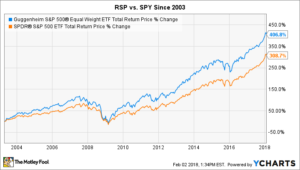
Better yet, the cost to own this fund is trivial at just 0.20%.

If you’re looking for a set-it-and-forget-it index fund that can perform over the long run, then the Guggenheim S&P 500 Equal Weight ETF could be for you.
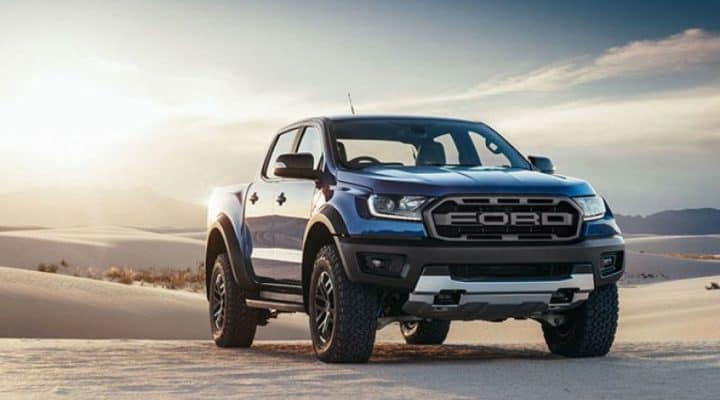
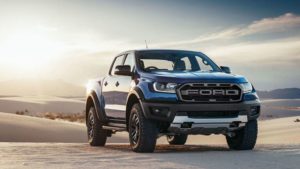
Ford hints at Ranger Raptor coming to the US, possibly with a gas engine

U.S. enthusiasts watching the Ford Ranger Raptor have 1.5 questions about Ford’s new baby Baja truck. The matter of American launch is only half a question – almost everyone expects it here, timing being the known unknown. The chief engineer at Ford Performance, Jamal Hameedi, bolstered such expectations when he told Australian outlet Drive during the launch in Bangkok, “Raptors are a slam dunk for the U.S. I think it [the Ranger Raptor] would do really well in the States.” He added, however, that since the U.S. already has the F-150 Raptor, “our first priority is to get a Raptor available to everyone on the planet earth.”

The high-octane question is what kind of engine a U.S.-market Ranger Raptor would utilize. The overseas model gets on with a 2.0-liter twin-turbo diesel based on the lump sold in the European Ford Transit. That motor makes 210 horsepower and 369 pound-feet of torque, re-engineered for throttle response and durability during fast-paced, hot-weather work. Even with improved reflexes, that engine wouldn’t suit our buyers, Hameedi saying, “I think most American off-roaders would actually prefer a petrol gas engine, but a diesel is the absolute way to go for the rest of the world.”

When we surveyed the possible range of engines for the standard Ranger, we wondered whether the Ranger would be a one-engine truck, sticking with the 2.3-liter EcoBoost shared with the Mustang and Focus RS. We don’t have exact power numbers yet, but based on Ford’s claim of class-leading numbers, we assume something a little more than 308 horsepower to keep the Ranger ahead of the Chevrolet Colorado, and more than 281 pound-feet to keep it ahead of the Nissan Frontier. If Ford stuck with that engine for a U.S. Ranger Raptor, Performance engineers would have plenty of room between those numbers and the F-150 Raptor’s 450 hp and 510 lb-ft. A long-shot option is the 2.7-liter EcoBoost V6 in the standard F-150, which would offer more relaxed power but more weight in the nose.

Power isn’t how the Ranger Raptor does its thing, though, proved by the overseas diesel output. Hameedi said of that truck’s performance, “It’s the suspension, it is so incredible [with] the Watt’s link. It really is the best handling pick-up truck I’ve driven and not by an insignificant margin.” Notice, he didn’t make an exception for the F-150 Raptor, so a tweaked 2.3-liter might be all we need for a Ranger Raptor to impress. For starters at least.

Toronto 2018 budget keeps property tax down, drawing concerns

Real estate board warns city not to keep relying on land transfer tax

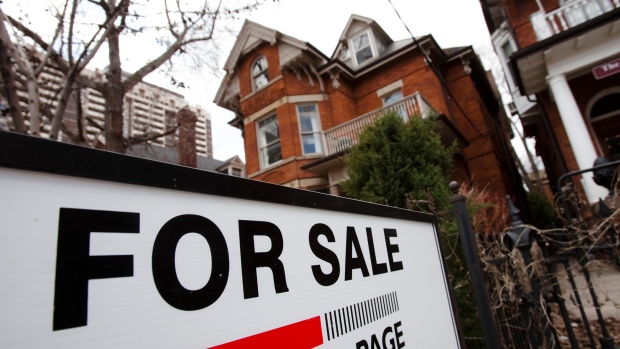
The city of Toronto is raking in nearly $800 million from its land transfer tax, but holding property tax increases at the rate of inflation. (Mark Blinch/Reuters)

Toronto’s mayor says this year’s budget is “just right,” but one critic argues failing to hike property taxes above the rate of inflation will make the city less affordable for everyone.

A 2.1 per cent property tax hike anchors the 2018 budget, which goes to city council on Monday. For an average homeowner, that amounts to about $81 more than last year.

Parkdale-High Park Coun. Gord Perks says he’ll push to increase that rate to generate more money that can be put toward city services from the TTC to recreation to childcare, even if it’s unlikely to pass.

‘The quality of the services we’re providing is getting worse. And that’s going to wind up costing you money.’
– Coun. Gord Perks

“Right now, if you own a lot of real estate, the city of Toronto is a gold mine for you,” Perks told CBC Toronto.

“If you’re someone who’s just trying to go about their business and live your life the city’s becoming less and less affordable.”

Mayor John Tory has rejected that notion. He says the budget will help homeowners and also includes “significant” spending in a number of areas, from shelters to recreation to two-hour transfers on the TTC.

For Tory, holding the line on property tax increases is something to tout as a campaign promise kept.

“We’ve restrained the level of increase in property taxation to the rate of inflation for four years in a row,” he said at the last executive committee meeting.

Property taxes have been kept low for years

However, that rate has been held down for a decade now, with an average hike of just 2.4 per cent. City records show over that time the biggest increase was four per cent, approved by David Miller’s administration in 2009. In 2011, Rob Ford froze the tax completely.

A city of Toronto chart tracks the property tax rates, plus additional fees like that charged to raise funds for the Scarborough Subway Extension (SSE), over the past decade. (City of Toronto)

Toronto Real Estate Board (TREB) statistics show over that same time the average sale price of homes has more than doubled, leaping from $379,347 in 2007 to $822,727 last year.

In 2007 the city estimated the average tax bill was $2,175. This year, the estimate is just under $3,000.

Of course, as the value of homes has climbed — based on Municipal Property Assessment Corporation assessments — so have their bills. But Toronto still has the lowest property tax rate in the GTHA.

To make up for that, the city has in part been relying huge on proceeds from the Municipal Land Transfer Tax (MLTT) to balance its books. The fee, charged to buyers and sellers when a property changes hands, generated nearly $800 million in 2017.

City shouldn’t rely on MLTT, says real estate board

Von Palmer, TREB’s chief government relations and communications officer, warns that continuing to rely on the MLTT would be a mistake, especially given the changes in the city’s housing market.

“The City of Toronto does have room to increase its property tax rates,” he said.

“They can do that, but it’s more of a political question.”

Miller’s administration approved the MLTT, launched in 2008, in part to avoid what then would have been a property tax increase of some 20 per cent.

Even back then, past media reports show, some Toronto residents were calling on the city to raise property tax rates to help pay for services.

Perks says he’s hearing the same things today.

“The quality of the services we’re providing is getting worse,” he said. “And that’s going to wind up costing you money.”

NASA’s InSight lander passes its final tests, ready for the trip to Mars

The next mission to the red planet just passed its final pre-flight tests, and engineers say it’s now ready to “ship and shoot.” The InSight Mars lander will soon be transported from the Lockheed Martin test facility in Colorado to Vandenberg Air Force Base in California for a scheduled May 5 launch aboard an Atlas V rocket.

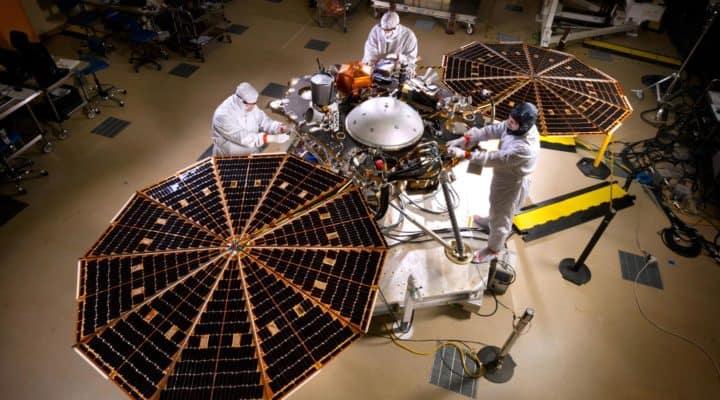
InSight’s solar arrays were deployed for the final test, unfurling into large circular panels that will provide power to the lander. “This was our last major test before we start building up into a launch configuration,” Scott Daniels of Lockheed Space told Space.com. “This test worked really successfully.”

“Mechanical inspections looked really good and clean,” he added. “Everything happened when it was supposed to happen.”

Unlike the Curiosity Rover, the InSight lander (short for Interior Exploration using Seismic Investigations, Geodesy, and Heat Transport) won’t be wandering around the surface of the planet taking selfies. Rather, it’s designed to plumb the depths of the red planet using an array of seismic sensors to monitor “Marsquakes” and other geologic activity deep below the surface.

The landing site is an area known as the Elysium Planitia, near the Martian equator. It’s an unremarkable, flat landing spot — and that’s a good thing, according to scientists. “Just a bland, normal place,” said Bruce Banerdt of JPL. “We’ve mapped the topography of Mars, the geology, and we have a good characterization of the planet’s atmosphere, ionosphere and exosphere. The deep interior of Mars was sort of the last piece in that puzzle.”

The mission was originally planned for 2016, but a leak in one of the seismometers forced NASA to abort the mission. The lengthy delay was due to the fact that Earth and Mars are only in a favorable alignment once every 26 months. If all goes well, the lander will touch down on Mars in November 2018.

The InSight Lander will also be carrying an unusual cargo — two tiny microchips containing the names of more than 2.4 million people. NASA invited the public to sign up at its website, and millions of would-be space travelers responded.

Among those was the original Captain Kirk, William Shatner. NASA issued a “boarding pass” to everyone who participated, and Shatner shared his with his flowers on Twitter.

Although a manned expedition to Mars is still some years away, missions like the InSight Lander and the upcoming new Mars rover in 2020 get us closer to the red planet every year.