Archives for January 22, 2018

Visa CEO Al Kelly is Planning for the Day Washing Machines Can Make Purchases

Kelly said the payments processor is thinking ahead to an eventual move beyond physical payment methods and traditional points of sale.

Visa CEO Al Kelly is planning for the so-called internet of things and the day when, he says, washing machines will make purchases.

“As the internet of things emerges and we see many more connected homes, connected cars and connected offices, you may end up with four, five, six, eight places in your home where you could actually buy from,” Kelly told CNBC for Fortt Knox.

The payments processor has traditionally dealt in credit and debit cards but has moved into mobile payments as contactless systems like Apple Pay, which simply let users tap their device to a receiver, become more popular.

Kelly said the company is thinking ahead to an eventual move beyond physical payment methods and traditional points of sale.

“Over time we want to talk much more about payment credentials, which could be real — a real form factor — or they could simply be numbers in the digital world,” Kelly said. “The word[s] ‘merchant locations’ or ‘businesses’ are also going to become obsolete.”

A growing catalog of connected devices — cars, refrigerators and washing machines all connected to a global internet — means broader purchasing power, he said.

“We at Visa are trying to make sure that we work with manufacturers around the world to create an on-ramp to facilitate payments from any of those locations,” Kelly said. “We just want to be in the middle of that.”

Kelly does draw a line for new-age payment methods, though. He told CNBC Visa wouldn’t process transactions in bitcoin .

Kelly also discussed his leadership style, years in the White House and decision to expand Visa’s 401(k) program.
Safety Group Preaches Planning, Training, Proper Tools for Avalanche Safety

Adventure Smart B.C. surprised by how few people actually check conditions before heading into backcountry

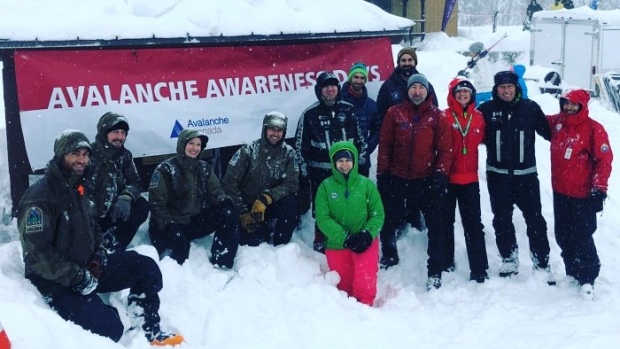
Adventure Smart B.C. along with local SAR groups and B.C. Parks hosted backcountry safety engagement with hikers on Mt. Seymour on Saturday, Jan. 20, 2018.

Advocates for backcountry safety in B.C. say they’re surprised by how many people head into remote areas without truly knowing what awaits them.

On Saturday officials with Adventure Smart B.C., local search and rescue groups, and B.C. Parks talked to people snowshoeing on Mt. Seymour as part of regular engagement and education about avalanche safety.

People on Mt. Seymour in North Vancouver head up to trails under heavy snow on Saturday, Jan. 20, 2018.

Marc D’Aquino with Adventure Smart B.C. says people want to stay safe, but they need to do more.

“A lot of people did not even know today that [the avalanche risk is] high in that backcountry right now,” he said. “So there’s good risk and if you don’t have the training you shouldn’t be out there.”

There is currently significant avalanche danger across the province according to Avalanche Canada, with many areas above the tree line at high risk.

A week ago a Calgary man died skiing near Fernie B.C. died after being caught in an avalanche.

D’Aquino says Adventure Smart B.C.’s mission is to push the ‘three Ts’ to people wanting to get out into the backcountry.

They are trip planning, proper tools and training.

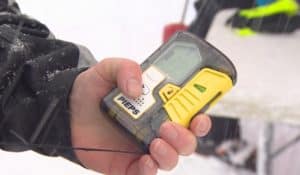
Backcountry safety experts say people should have and know how to use transponders like this, which can help rescuers locate people buried in avalanches.

Tyler Branzon stopped at the engagement event on his way to snowshoe with friends up Dog Mountain near Mt. Seymour for the first time.

He said his group ended up doing more preparation from what he learned.

“Just letting people know where we’re going before we head out,” he said.

Part of the engagement demonstrated how to properly use signalling devices or beacons if you get trapped in an avalanche.

Safety advocates demonstrate the use of probes to find a person buried under snow during a training exercise on Mt. Seymour in North Vancouver on Jan. 20, 2018.

North Shore Rescue, which conducts more than a hundred rescues every year, is often preaching the importance of 10 essentials for trips.

They are:

  1. Lights.
  2. A signalling device.
  3. A fire starter.
  4. Extra clothes.
  5. A pocketknife.
  6. Shelter.
  7. Water.
  8. A first-aid kit
  9. A compass or navigation tools such as a GPS.
  10. A cellphone.

While officials like D’Aquino encourage people to take training courses, Avalanche Canada does offer an online tutorial.

LG Unveils Two Patents for Foldable Smartphones

LG Display

Foldable smartphones are slowly becoming a reality with the likes of the ZTE Axon M having arrived on the scene last year. However, ZTE is far from being the only company to work on a foldable display. Samsung, LG, and Huawei all reportedly working on foldable devices

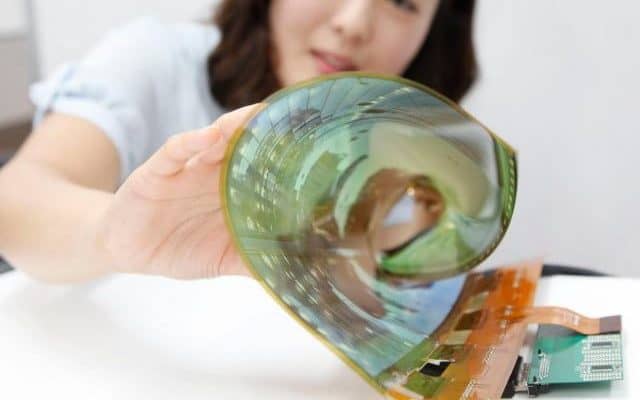
The details surrounding most of these devices are still under wraps, but we’ve gotten the first look at the patents for two of LG’s foldable devices. The first design shows a device made out of two bodies which share a single large display. When the phone is open, you’ll get a tablet-sized display. When it is closed, you will have access to a smaller device similar to a traditional smartphone. The front of the devices houses a screen which can provide additional information such as notifications.

The second design is similar to the first, but features a sliding back panel which can be moved to reveal a portion of the main display used for notifications, messages, and other features.

Of course, the company is no stranger to the flexible display — we’ve seen plenty of flexible prototypes from the company over the past few years, and while certainly not ready for consumer devices, they have been getting better. Now, however, it seems as though the company is ready to take things to the next level.

In fact, the firm has reportedly started outfitting one of its factories with the tools needed to mass produce flexible displays, and has completed much of the research required to mass produce a flexible-display device. LG has also signed contracts with Ignis Innovation, a Canadian company that builds flexible circuits.

Ignis’ tech addresses a number of problems often associated with foldable displays. The technology uses both hardware and software charged with constantly monitoring the pixels, ensuring that they’re rendering the right images, no matter what position the flexible circuits are in. The company has filed hundreds of patents for its related tech, and is apparently the only firm to have come up with a solution — which would make sense considering how eager LG seems to be to work with the company. Even more interesting is the fact that Ignis’ contract is non-exclusive, meaning that if the tech proves itself, it could end up with plenty more customers.

As mentioned, LG isn’t the only one developing foldable devices. Samsung is also reported to be working on a foldable phone, to be released sometime in the future. It looks liked 2018 will be a very interesting one for new technology.

The NSA was light years ahead of Siri and Alexa with voice recognition technology: Report

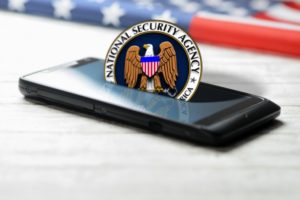
The NSA has “reigns supreme” for years with voice identification tech that predates Alexa or Siri, according to documents obtained by The Intercept.

For technology users who have marveled at the ability of Siri or Alexa to recognize their voice, consider this: The National Security Agency has apparently been way ahead of Apple or Amazon.

The agency has at its disposal voice recognition technology that it employs to identify terrorists, government spies, or anyone they choose — with just a phone call, according to a report by The Intercept. The disclosure was revealed in a recently published article, part of a trove of documents leaked by former NSA contractor Edward Snowden.

The publication wrote that by using recorded audio, the NSA is able to create a “voiceprint,” or a map of qualities that mark a voice as singular, and identify the person speaking. The documents also suggest the agency is continuously improving its speech recognition capabilities, the publication noted.

According to a classified memo obtained by The Intercept, the agency has employed this technology since at least 2006, with the document referencing technology “that identifies people by the sound of their voices.”

In fact, the NSA used such technology during Operation Iraqi Freedom, when analysts were able to verify that audio thought to be of Saddam Hussein speaking. It suggests that national security operatives had access to high-level voice technology long before Amazon, Apple and Google’s solutions became cultural touchstones.

A “voiceprint” is “a dynamic computer model of the individual’s vocal characteristics,” the publication explained, reated by an algorithm analyzing features like pitch and mouth shape. Then, using the NSA’s formidable bank of recorded audio files, the agency is able to match the speaker to an identity.

Identifying people through their voiceprints is a skill at which the “NSA reigns supreme,” according to a leaked document from 2008. And, they’re only getting better.

The NSA did not immediately reply to CNBC’s request for comment. The full story can be found on The Intercept’s website.