Archives for October 16, 2017

Viacom, Charter agree to extend renewal deadline: source

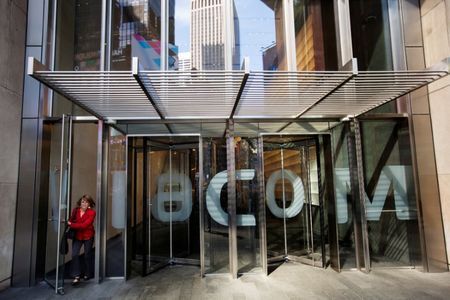
FILE PHOTO: A woman exits the Viacom Inc. headquarters in New York, U.S. on April 30, 2013. REUTERS/Lucas Jackson/File Photo

(Reuters) – Viacom Inc and Charter Communications Inc agreed on a short-term extension of their renewal deadline, a source familiar with the matter said, as the companies aim to avoid the immediate blackout of Viacom networks.

If no deal is reached, 16.6 million subscribers of Charter’s Spectrum service will lose Viacom’s networks, which include Comedy Central, MTV and Nickelodeon.

Viacom and Charter are working to “reach a mutually beneficial deal,” said the source, who did not want to be identified.

Viacom stands to lose $760 million, or about 16 percent, of its annual affiliate revenue if an agreement is not reached, according to an analyst at Gabelli & Co, Viacom’s second-largest voting shareholder.

Both sides are under pressure from cord-cutting, or dropping of pay television, as audiences flock to cheaper streaming services that have emerged in the past decade.

An agreement between the two companies would be “mutually beneficial,” wrote Evercore ISI in an note Sunday.
Gold eases on firm dollar, stronger equities

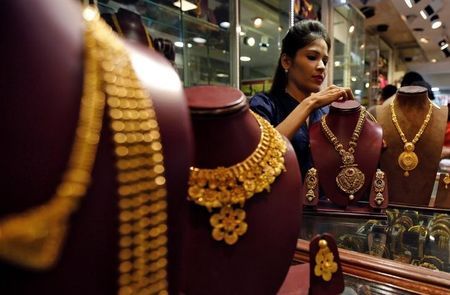
A salesperson attends to a customer (not pictured) inside a jewellery showroom, during Akshaya Tritiya, a major gold-buying festival, in Mumbai, India April 28, 2017. REUTERS/Shailesh Andrade/Files

By Apeksha Nair

REUTERS – Gold slipped on Monday on a firmer dollar and stronger Asian equities, but stayed above the key psychological level of $1,300.

The metal gained about 0.9 percent on Friday after U.S. President Donald Trump warned he might ultimately end a 2015 nuclear agreement with Iran and after data showed underlying inflation remained muted in the United States.

The weaker-than-expected U.S. inflation print helped push Treasury yields lower, giving a fillip to gold trade above $1,300, said John Sharma, an economist with National Australia Bank.

The recent rise in the dollar as Treasuries shed some of their earlier gains put a bit of downward pressure on gold, Sharma added.

Spot gold was down 0.2 percent at $1,302.51 an ounce as of 0358 GMT, while U.S. gold futures for December delivery were unchanged at $1,304.80 per ounce.

The dollar edged up but lacked momentum, while the euro was on the defensive after Austria’s election and on concerns over Catalonia’s confrontation with Madrid.

Asian shares, meanwhile, advanced to new highs following the lead of Wall Street, while escalating tensions between Iraq and Kurds saw U.S. oil futures jump.

Senior Trump administration officials said on Sunday that the United States was committed to remaining part of the Iran nuclear accord for now, despite Trump’s criticisms of the deal and his warnings that he might pull out.

“There’re obviously some geopolitical issues… but at the moment investors are still focused on the United States,” ANZ analyst Daniel Hynes said.

“The market’s still surely pricing in a rate hike this year by the Federal Reserve.”

The U.S economy remains strong and the strength of the labour market calls for continued gradual increases in interest rates despite subdued inflation, Fed Chair Janet Yellen said on Sunday.

Rising interest rates tend to boost the dollar and push bond yields up, putting pressure on the greenback-denominated, non-yielding gold.

“Prices have established themselves above $1,300, although upside may be little bit limited, so we would expect to see them remain at $1,300-1,310 mark over the course of the week,” said Hynes.

Spot gold may break a resistance at $1,305 per ounce and rise to the next resistance at $1,318, Reuters technicals analyst Wang Tao said.

Speculators cut their net long position in COMEX gold contracts for a fourth straight week in the week to Oct. 10, data showed on Friday.

Silver was flat at $17.35 an ounce after hitting its highest since mid-September earlier in the session.

Platinum eased 0.2 percent to $942.50 an ounce, while palladium was 0.4 percent higher at $992.40.

(Reporting by Apeksha Nair in Bengaluru; Editing by Joseph Radford and Subhranshu Sahu)

Wall Street week ahead: The Senate takes on Trump’s tax plan. Plus, a big week for earnings

There’s an interesting debate going on in the markets now: Has this year’s rally in stocks been all about tax reform and the rest of the Trump trade, or is something bigger at work?

The market is up big this year, so it’s worthwhile to know whether the wind is at investors’ backs or if there’s a gale blowing that could knock the bull off its hooves.

One side argues that it’s really a strong fundamental picture that has lifted the Dow 15.8 percent this year, while the other believes it’s all about the anticipation that another package of goodies could be coming the market’s way now that the Federal Reserve has eased up on its economic stimulus measures.

We could get a better handle on what the answer is as events develop through the week.

Getty Images

Big budget vote

The Senate returns to work this week after a one-week break and is expected to take up the budget resolution passed in committee earlier this month.

Part of that budget includes the White House tax plan, complete with its $1.5 trillion cut and the administration’s hopes to take on historic reform of the nation’s antiquated system.

Credit Suisse analysts last week said the market hasn’t been all about tax cuts, as companies with the highest effective tax rates, and thus those that stand to benefit most, have underperformed those with lower tax rates.

It’s an argument that certainly makes some sense. Still, it’s hard to discount the market’s 24 percent rally since President Donald Trump‘s election as coming coincidentally with a host of other bullish factors.

The market’s all about fear and greed, and the latter seems pretty well in play now. Investors should be watching whether this week’s vote uncorks any fear.

A Fed decision coming

The derby to see who will be leading the Federal Reserve into the future got a lot more interesting last week as Jerome “Jay” Powell seemed to vault into the lead, while outgoing Vice Chairman Stanley Fischer urged Trump to stick with Janet Yellen.

More than two weeks have passed since the president said he would name a new central bank chief in two or three weeks. That would make the decision due by Friday.

In the meantime, we’ll get some more insight from current Fed officials and where they see interest rates specifically and monetary policy in general heading.

The market will hear from Minneapolis Fed President Neel Kashkari on Monday, Philadelphia President Patrick Harker on Tuesday, New York’s Bill Dudley on Wednesday, Cleveland’s Loretta Mester on Thursday, and then (drum roll, please) Yellen herself on Friday. The chair will be speaking to the National Economists Club in Washington and likely will garner plenty of attention.

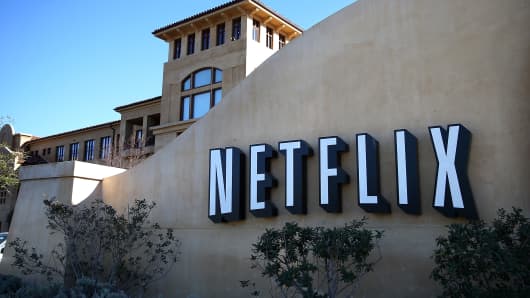
A sign is posted in front of the Netflix headquarters in California

Justin Sullivan | Getty Images – A sign is posted in front of the Netflix headquarters in California

The economy and earnings

Banks kicked off earnings season in decent fashion, but so far the picture hasn’t been terribly pretty.

With a pretty limited sample size to draw from, S&P 500 companies so far are showing growth of just 2.1 percent, according to FactSet. As recently as Sept. 30, analysts figured the number would be closer to 3 percent.

This week brings a big slate. A few highlights: Netflix reports Monday; Goldman Sachs, Johnson & Johnson, Morgan Stanley and IBM happen Tuesday; Wednesday will see American Express; Thursday’s big one is Verizon and Friday features GE and Procter & Gamble.

On the economic front, highlights will be industrial product on Tuesday, housing starts and the Fed’s Beige Book of regional economic reports on Wednesday, jobless claims and the Philadelphia Fed manufacturing index comes Thursday, and Friday will be existing home sales.

Lots of market movers there.

The last word

An earnings-driven market is what we all really want to see. The bull run of the past eight years has been overly dependent on accommodative monetary policy, which now is being slowly tightened.

Brad McMillan, chief investment officer at Commonwealth Financial Network, brings soothing words this week for those worried that corporate profits might be a letdown:

“I don’t think we need to be worried about earnings, certainly not in the next quarter or two. Right now, trends remain positive and may get even better. Sectors such as energy continue to recover, and insurance will certainly benefit from higher pricing in the aftermath of the storms, to name just two more.

“We always need to watch the fundamentals, of course. For right now? They look pretty good.”

Busy IPO Season Beckons for Cairo as Reforms Seen Bearing Fruit

Busy IPO Season Beckons for Cairo as Reforms Seen Bearing Fruit
  • At least six Egypt companies plan to list by end of next year
  • Franklin Templeton says state company IPOs would boost market

Egypt’s stock market is shaping up to be the Middle East’s hot spot for initial public offerings next year.

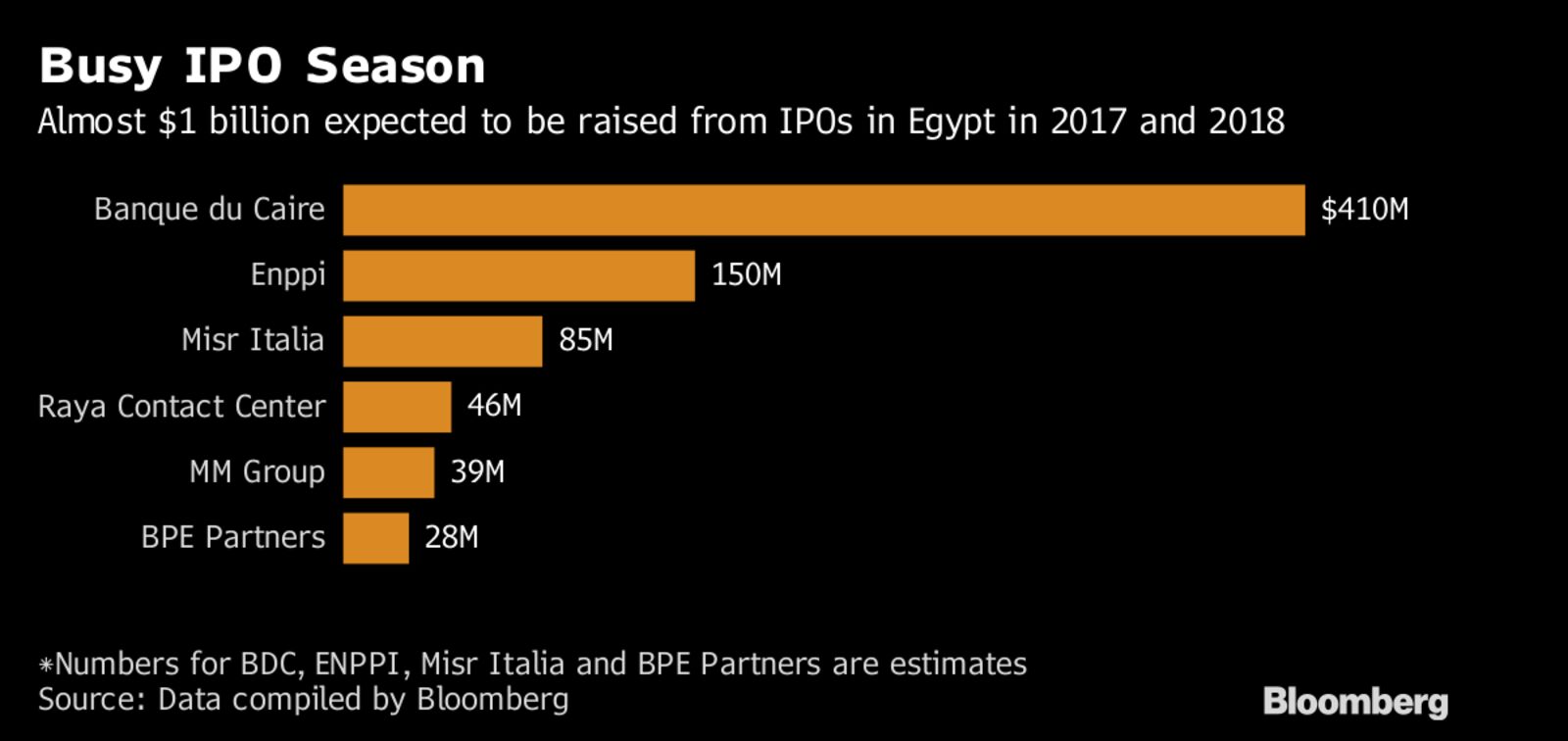
At least six companies plan IPOs by the end of 2018, following two sales since January, according to data compiled by Bloomberg. That’s a marked increase on the average of three in the past three years as foreign investors fretted that a severe dollar shortage would trap their money.

Between 2011 and 2014, there were no IPOs at all as the aftermath of a popular uprising destroyed the conditions for listings. The turning point came in November, when authorities removed almost all restrictions on the pound to help end the hard-currency crunch and secure a $12 billion loan from the International Monetary Fund.

Hazem Barakat, the chairman of Cairo-based BPE Partners, has intended to sell shares in his private equity firm for longer than a year. He has now hired managers to oversee a share sale that could raise about 500 million Egyptian pounds ($28 million) in the first quarter of 2018.

“The only foreign investors in the market were the ones who couldn’t get their money out,” said Barakat. “After the float, Egypt is on the investment map and people are looking at it. Now there is a chance to do an IPO.”

Share trading has almost doubled, averaging 1.1 billion pounds a day in the 12 months ended Oct. 10, compared with 540 million pounds a year earlier, data compiled by Bloomberg show. And foreigners have returned, their net buying of stocks tripling to $497.3 million in the fiscal year to June 30.

The prospects for further IPOs look promising, said Mohamed Farid, the chairman of the Egyptian Exchange. “We have plenty of requests from various companies of various sizes to list and partially float. Also there is plenty of traction when it comes to companies asking for listing requirements and trying to comply with them.”

Oil, Banks

While the uptick in IPOs is a boost for Africa’s third-biggest economy after years of political and economic instability, the relatively small size of most of the planned new listings may discourage some foreigners from buying the securities.

“Egypt’s market cap remains fairly underrepresented compared to the economy and liquidity is still low, although improving, which limits international participation in the market,” Salah Shamma, Franklin Templeton Investments’ head of Middle East and North African equities, said in an interview.

Two of the six IPOs planned for the coming months involve state-owned businesses: Engineering for the Petroleum & Process Industries and Banque Du Caire SAE. They’re part of a government plan announced last year to raise as much as $10 billion from share offerings. Better progress on that plan would attract bigger companies to market, generating greater foreign interest and higher trading volumes, Shamma said.

Past attempts to bring large government companies to market have proven complicated and time-consuming. Telecom Egypt Co. was the last state-owned company to sell shares to the public more than a decade ago.

Regional Competition

Egyptian companies will also have to compete for investor money with the main event on next year’s Middle East IPO calendar: Saudi Arabian Oil Co., which may sell a stake of as much as 5 percent for what could potentially be the world’s biggest offering. In the United Arab Emirates, regulators say they are working on five applications for IPOs as the country joins other Gulf Cooperative Council neighbors in diversifying its economy and reducing reliance on crude oil.

“Egypt is one of the busier markets in the region, but low oil prices and ongoing economic restructuring means that we are likely to see IPOs of state-controlled assets in the GCC as well,” said EFG-Hermes’ Strategist Simon Kitchen. Appetite for broader emerging market IPOs should remain robust in 2018, with Egypt in line for a “bigger piece of the pie” following the currency float.


All the money milestones to hit in every decade of your life

Experts say this is the ideal retirement savings timeline.

Planning how much to save for retirement, let alone actually putting away the money, can be overwhelming. Knowing is half the battle, but it can be difficult to wade through all the advice out there and get a clear answer to the question, am I where I should be?

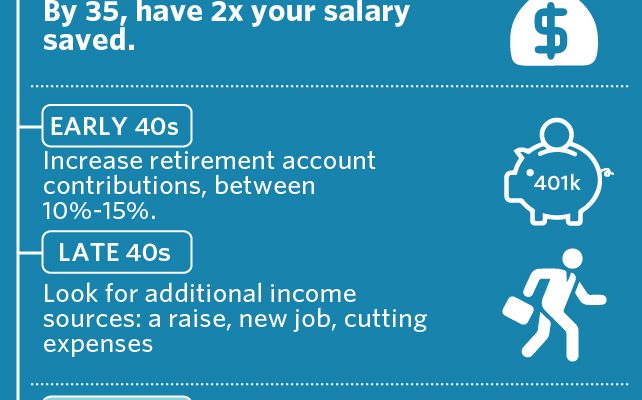
Many studies and experts provide guidelines on how to save for retirement, depending on where you are in your life. We’ve compiled the best of those guidelines into one graphic that lays out an ideal timeline for your retirement savings:

Americans as it stands are drastically undersaved for retirement. Only a third of employees contribute to a 401(k) plan, and that’s if their employers even offer such an account (only 14% actually do, according to U.S. Census Bureau researchers). The typical working-age American couple only has $5,000 saved for retirement, according to an analysis of the Federal Reserve’s 2013 Survey of Consumer Finances done last year, and not many baby boomers are financially prepared for retirement just yet.

Employees are beginning to take saving for retirement more seriously, though. Two recent studies, one from Fidelity Investments and the other from Bank of America, suggest the balances for 401(k) plans and individual retirement accounts have reached an all-time high, and that more people are enrolling in these plans and contributing more than they did a decade before. Millennials, in particular, seem to be very interested in saving for their futures, likely a result of watching their parents and grandparents suffer from the financial crisis from the late 2000s, experts say. Still, many young Americans struggle with seeing themselves in retirement, or wonder if it’s worth it to put away $5 or $10 a month until they can contribute more. (The answer: yes, it is).

People in their 20s should start saving for retirement, no matter how much they can actually contribute to their accounts, and 30 year olds shouldn’t let mortgages, marriages and babies deter them from continuing, if not ramping up, contributions to their retirement accounts. The 40s are a critical time to save for retirement, as it’s when many people reach their peak income, and for those who couldn’t save as much as they wanted or needed, the 50s are a great time to catch up, because some financial responsibilities like raising kids and mortgages are dwindling down while contribution limits of 401(k) plans and IRAs are increased. Then of course, there’s the 60s decade, when people decide if they have enough to retire, or if they need to keep working just a little longer.

JD.com shares are a better deal than Alibaba’s: Barron’s

FILE PHOTO: A sign of China’s e-commerce company JD.com is seen at CES (Consumer Electronics Show) Asia 2016 in Shanghai, China, May 12, 2016. REUTERS/Aly Song/File Photo

NEW YORK (Reuters) – Shares of China’s No.2 e-commerce firm JD.com <JD.O> are a better deal for investors than Alibaba Group’s <BABA.N> stock and could rise 30 percent or more over the next year, Barron’s said on Sunday.

JD.com’s shares have underperformed Alibaba’s since the beginning of August due to misplaced concerns, and JD.com stands to be among the biggest beneficiaries of China’s shopping holiday on Nov. 11, the Barron’s report said.

A decline in gross profit margin when the JD.com reported quarterly results in mid-August spooked investors but was not as worrisome as it seemed, Barron’s said.

The slip was due to aggressive promotions in June and a change in the way JD.com accounts for some third-party logistics costs, Barron’s said.

Worries about increased competition from Alibaba were also overdone after it said in September that it would raise its stake in Cainiao Smart Logistics Network Ltd. JD.com has superior capabilities in middle and last-mile delivery, Barron’s said, citing MKM Partners analyst Rob Sanderson.

JD.com’s shares, which have gained 52 percent this year, have slipped 14 percent since the start of August, compared with a 15 percent gain for Alibaba shares over the same period.

Alibaba shares have doubled in price this year.

(Reporting by Saqib Iqbal Ahmed; Editing by Cynthia Osterman)