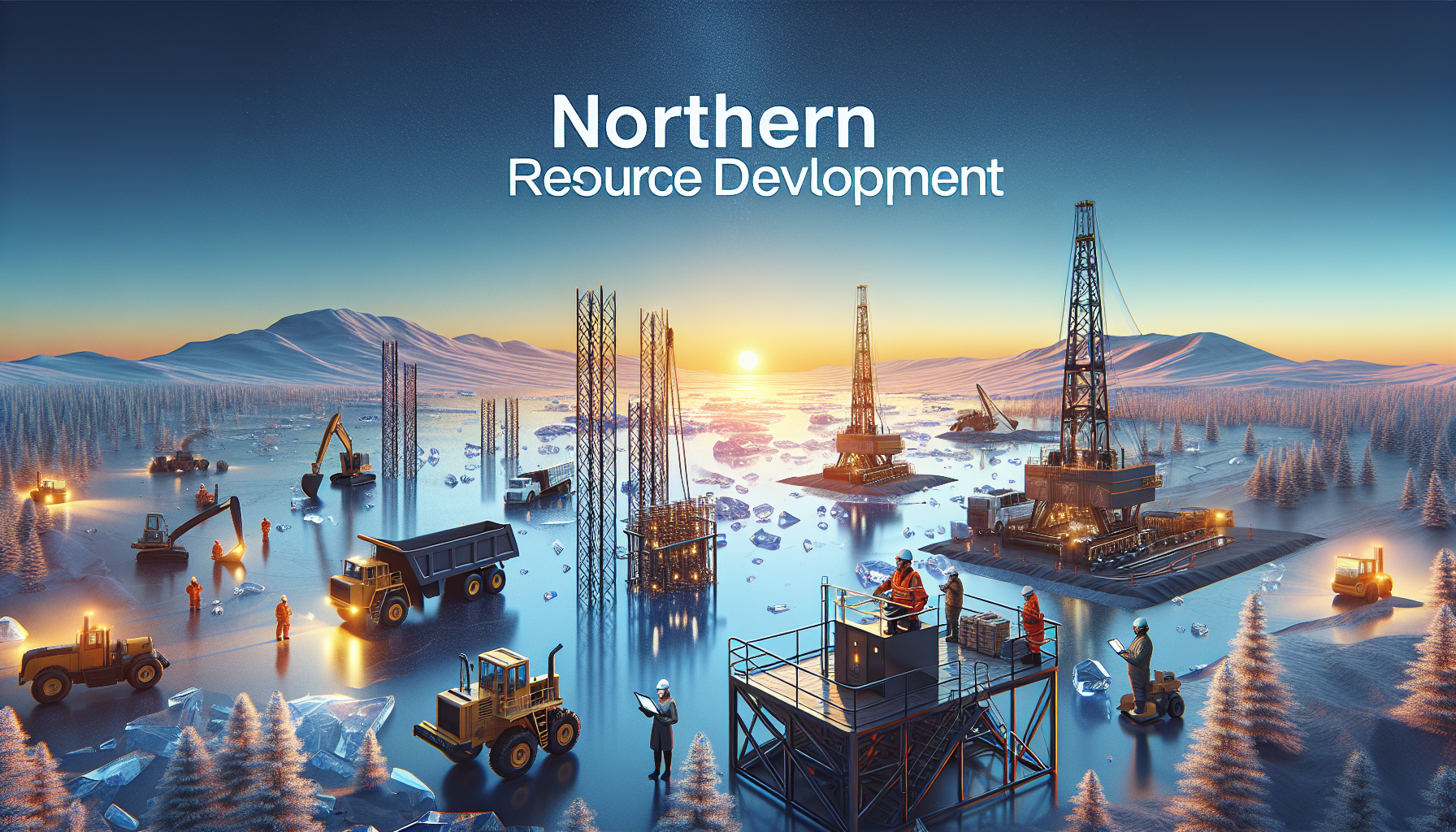
The Arctic’s vast mineral wealth is no longer locked beneath sheets of ice and permafrost, as breakthrough technologies are revolutionizing northern resource development across Canada, Alaska, Greenland, and northern Scandinavia. Investment capital is flowing into these frontier regions at unprecedented levels, driven by sophisticated extraction methods and the growing global demand for critical minerals essential to the clean energy transition.
Remote sensing technology has emerged as a game-changer for northern resource development, allowing companies to identify mineral deposits with pinpoint accuracy before committing to expensive ground operations. Advanced satellite imaging and drone surveys can now penetrate cloud cover and map geological formations in real-time, dramatically reducing exploration costs in regions where traditional surveying would cost millions. Machine learning algorithms analyze this data to predict ore body locations with accuracy rates exceeding 85%, making previously uneconomical projects suddenly viable.
The logistics challenge that once made northern resource development prohibitively expensive is being solved through innovative transportation solutions. Modular processing facilities can now be airlifted to remote locations and assembled on-site, eliminating the need for costly road construction through pristine wilderness. These mobile units process raw materials at the source, shipping only refined concentrates rather than bulk ore, reducing transportation costs by up to 70% compared to traditional methods.
Climate change, while presenting environmental concerns, has paradoxically opened new opportunities for northern resource development by extending the operational season in many Arctic regions. Ice roads remain passable for longer periods, and previously inaccessible coastal areas now allow seasonal shipping routes that reduce dependency on expensive year-round air transport. Companies are adapting their operational calendars to maximize these extended windows of accessibility.
Energy infrastructure represents both the biggest challenge and opportunity in northern resource development. Solar panel efficiency improvements and battery storage technology now make renewable energy viable even in regions with limited daylight during winter months. Several mining operations have achieved energy independence through hybrid systems combining solar, wind, and advanced battery storage, reducing operational costs while meeting increasingly strict environmental standards.
The geopolitical landscape surrounding northern resource development has shifted dramatically as nations recognize the strategic importance of Arctic mineral reserves. Canada’s updated Arctic framework provides streamlined permitting for projects meeting environmental benchmarks, while maintaining sovereignty over key shipping routes. Similar policy changes across northern nations have created a more predictable regulatory environment that encourages long-term investment planning.
Indigenous partnerships have become central to successful northern resource development, moving beyond traditional consultation models toward genuine revenue-sharing agreements and operational partnerships. These collaborations provide projects with essential local knowledge while ensuring communities benefit directly from resource extraction on their traditional territories. Companies that embrace this partnership approach report significantly smoother regulatory approval processes and lower operational risks.
Automation technology continues to reduce the human footprint required for northern resource development, addressing both cost and safety concerns in harsh environments. Autonomous vehicles handle material transport in conditions too dangerous for human operators, while AI-powered processing systems maintain optimal efficiency despite extreme temperature fluctuations. These systems can operate continuously through Arctic winters, maximizing productivity during periods when human crews would traditionally rotate out.
The investment outlook for northern resource development remains robust as institutional investors recognize the sector’s potential for delivering both financial returns and strategic mineral security. With global supply chains still recovering from recent disruptions, domestic and near-domestic mineral sources command premium valuations. Projects with proven reserves, established partnerships, and modern technology deployments are attracting capital at valuations that seemed impossible just five years ago, positioning the Arctic as the next major frontier for resource investment.